
 Photo: LinasD · CC BY-SA 4.0
Curonian Spit Road Trip
Cross Lithuania from Vilnius to Klaipėda, carry the car to Smiltynė and follow the protected spit through Juodkrantė to Nida over five or six days.
- Allow
- 5–6 days
- Route
- 719 km
- Drive time
- 7 hr 46 min
- Stops
- 7
The country’s defining long road trip crosses from baroque Vilnius through Kaunas to the port city of Klaipėda, then changes character completely on the ferry. Beyond Smiltynė, one road threads forest, lagoon villages and the Dead Dunes to Nida near the Lithuanian end of the Curonian Spit.
This roadbook returns the same way to Klaipėda; it never routes through the Russian border. Check ferry operation, the current national-park vehicle fee and trail closures, and reserve Nida early. The protected landscape is for marked roads, car parks and paths only.
The road, in one glance
Pinch or scroll with Ctrl / ⌘ to zoom
Drawing the route…
The route earns
its distance
Each pin is selected as a place to do something—not merely proof that you passed through.
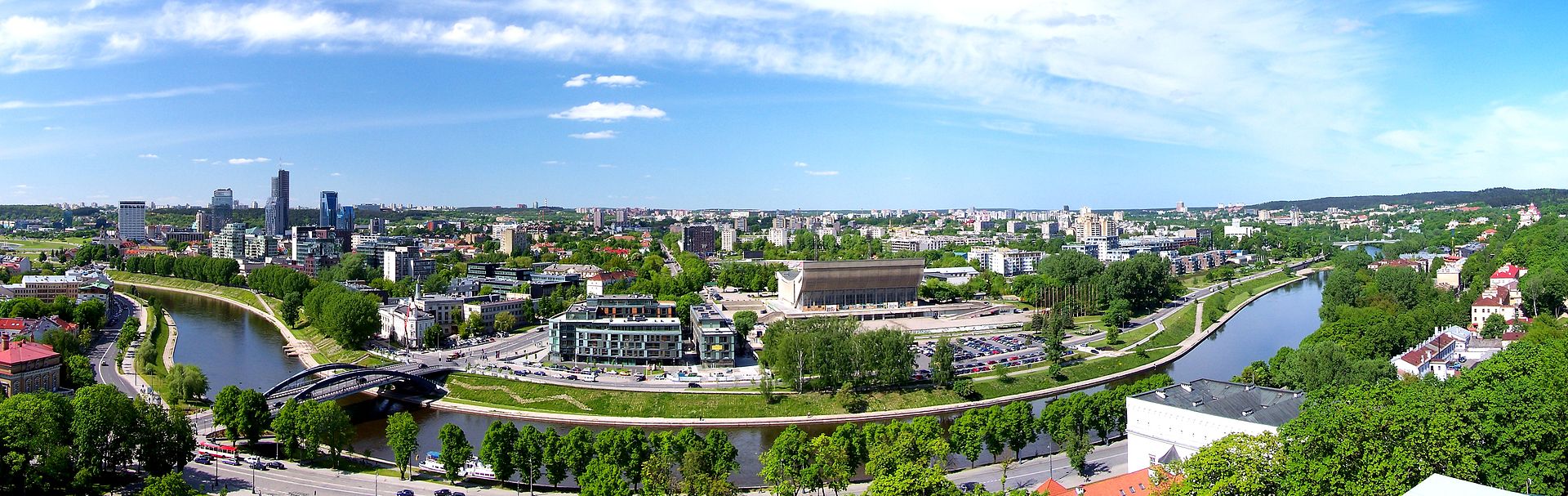 Photo: Lestat (Jan Mehlich) · CC BY-SA 3.0
Vilnius
Leave after the capital stay with Klaipėda and Nida nights confirmed.
Vilnius ( VIL-nee-əs, Lithuanian: ) is the capital of and largest city in Lithuania and the most-populous city in the Baltic states. The city's estimated January 2026 population was 617,984, and the Vilnius urban area (which extends beyond the city limits) has an estimated population of 767,907. Vilnius is notable for the architecture of its Old Town, considered one of Europe's largest and best-preserved old towns.
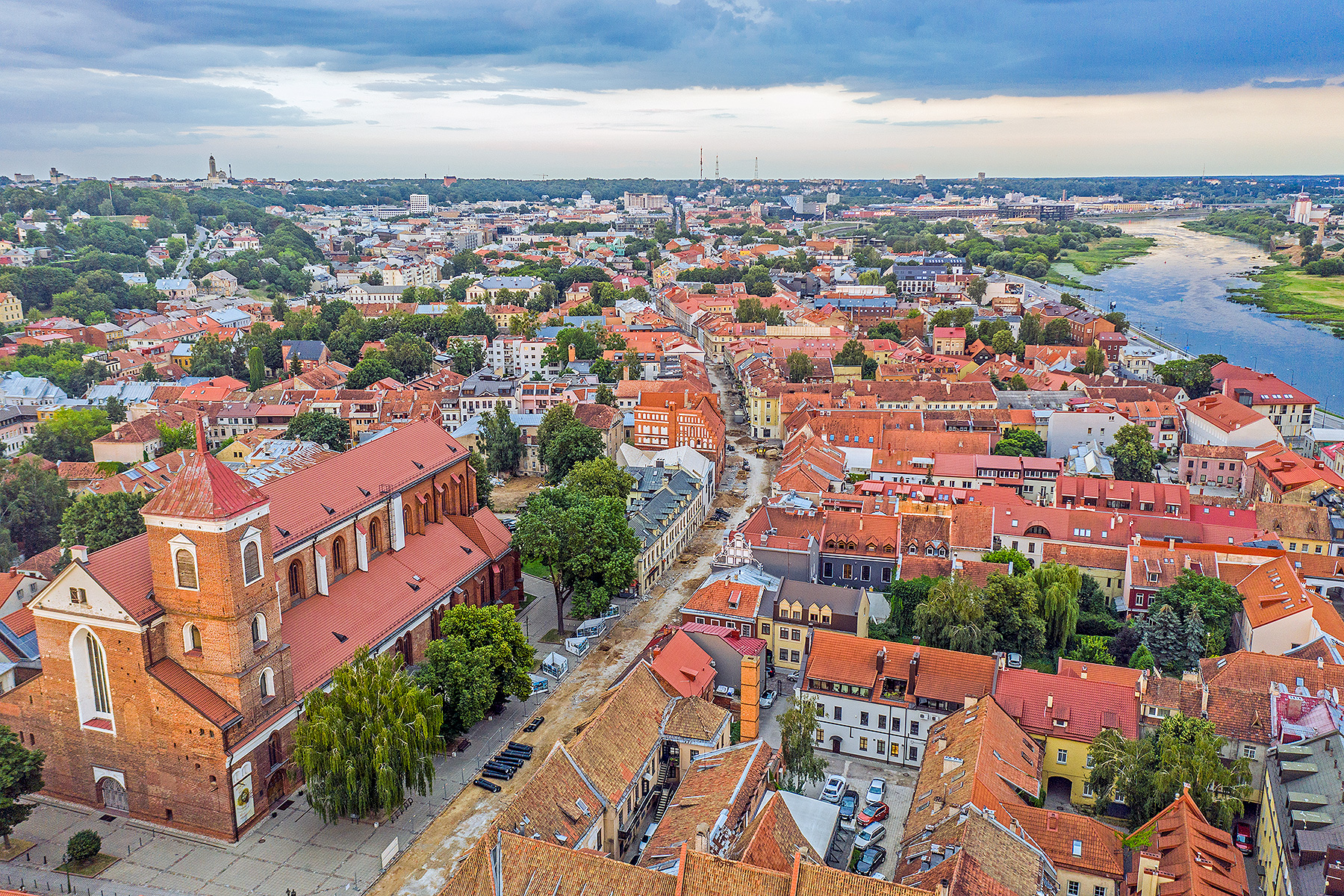 Photo: BigHead · CC BY-SA 4.0
Kaunas
Lithuania’s modernist second city breaks the westbound journey with architecture and food.
Kaunas (; Lithuanian: ) is the second-largest city in Lithuania (after Vilnius), the fourth-largest city in the Baltic States, and an important centre of Lithuanian economic, academic, and cultural life. Kaunas was the largest city and the centre of a county in the Duchy of Trakai of the Grand Duchy of Lithuania and Trakai Palatinate since 1413.
 Photo: Mantas Volungevicius · CC BY 2.0
Klaipėda
A compact port city and ferry terminal form the mainland base for the protected spit.
Klaipėda ( CLAY-ped-ə; Lithuanian:; German: Memel) is a city in Lithuania on the Baltic Sea coast. It is the third-largest city in Lithuania, the fifth-largest city in the Baltic states, the capital of Klaipėda County, the only major seaport in the country and the busiest port in the Baltic states. The city has a diverse recorded history, partially due to the combined regional importance of the usually ice-free port at the mouth of the river Akmena-Danė.
 Photo: LinasD · CC BY-SA 4.0
Juodkrantė
A lagoon village, forest paths and nearby dune landscapes reward the first island night.
Juodkrantė (literally: Black Shore, Kursenieki: Šatnūrta or Šatnūrte, German: Schwarzort) is a Lithuanian seaside resort town located on the Curonian Spit with a permanent population of about 720 people. A part of Neringa municipality, Juodkrantė is the second largest settlement on Lithuania's part of the spit. For centuries it was a fishing village, which underwent a tourist boom in the late 19th–early 20th century.
 Photo: fintlandia · CC BY 2.0
Nagliai Nature Reserve
A controlled trail enters the Dead Dunes and opens wide views across the Curonian Lagoon.
Nagliai protects the Curonian Spit’s shifting Grey Dunes, where wind-blown sand buried former settlements. Visitors cross the most sensitive section on a designated boardwalk that reveals the scale of the dunes without opening the reserve to free roaming.
Photo: LinasD · CC BY-SA 4.0Nida
Lagoon harbor, artists’ history and the Parnidis dune create a calm two-night endpoint.
Nida (German: Nidden, Kursenieki: Nīde) is a resort settlement in Lithuania, the administrative centre of Neringa municipality. Located on the Curonian Spit between the Curonian Lagoon and the Baltic Sea, it is the westernmost point of Lithuania and the Baltic states, close to the border with the Russian Kaliningrad Oblast exclave.
Photo: Mantas Volungevicius · CC BY 2.0Klaipėda Return Ferry
The return ferry closes the protected-spit section before the drive back east.
Klaipėda ( CLAY-ped-ə; Lithuanian:; German: Memel) is a city in Lithuania on the Baltic Sea coast. It is the third-largest city in Lithuania, the fifth-largest city in the Baltic states, the capital of Klaipėda County, the only major seaport in the country and the busiest port in the Baltic states. The city has a diverse recorded history, partially due to the combined regional importance of the usually ice-free port at the mouth of the river Akmena-Danė.
Drive the conditions,
not the itinerary.
Use the Klaipėda–Smiltynė vehicle ferry in both directions, pay current protected-area charges and do not approach or attempt the international border beyond Nida.
Checked against
the people who run it
Distances and driving times are planning estimates. Conditions, closures, ferries, permits and park rules can change, so check the linked official guidance before setting out.