
Things to Do in Vilnius
The complete guide to things to do in Vilnius — culture and creativity, nature and outdoors, saunas and markets, family days out, and easy escapes beyond the city. Adventures, rituals and slow moments to pencil in.
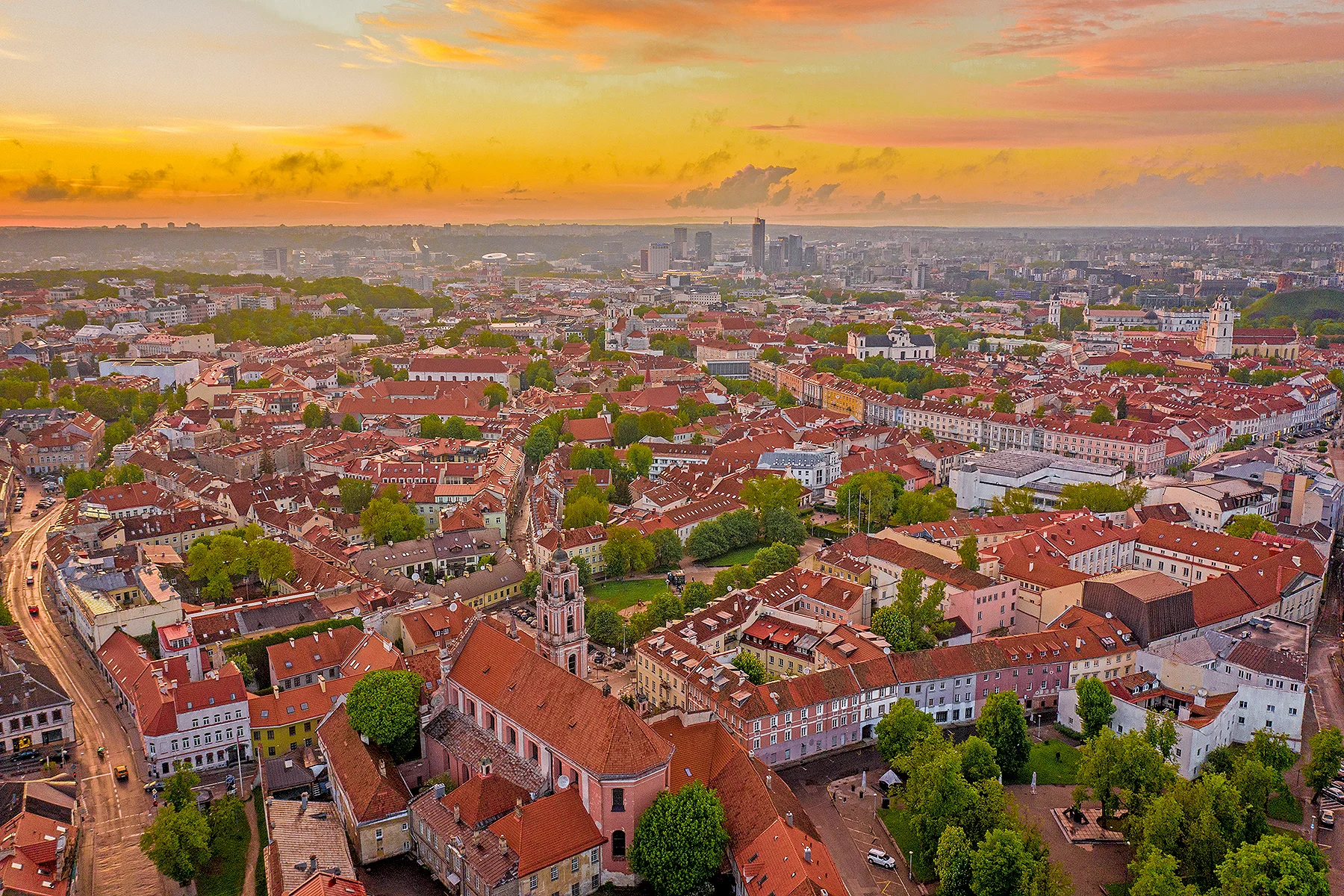
- ✓Adventures, rituals and slow moments to pencil in — museums, parks, saunas, markets and day trips.
- ✓Choose your rhythm: cold-plunge sauna rituals, design-led strolls, family adventures or after-dark culture.
- ✓The UNESCO Old Town anchors the city, the biggest Baroque ensemble in Central and Eastern Europe.
- ✓Everything sits close together — most of the headline sights are a walkable cluster.
- ✓Browse by category below, or jump straight to our ranked first-trip shortlist.
How to use this hub
See & Do is the heart of any Vilnius trip, and the city makes it easy: the headline sights cluster inside a compact, walkable Old Town, so you can string together a museum, a viewpoint and a long lunch without ever needing a car. This hub organises everything into four experience groups — Culture & Creative, Nature & Outdoors, Recharge & Social, and Day Trips & Escapes — so you can plan around your mood rather than a rigid checklist. Within each group you'll find both the filterable category pages (the full directory of every place we cover) and our ranked editorial guides, which pick favourites and tell you what's actually worth your time.
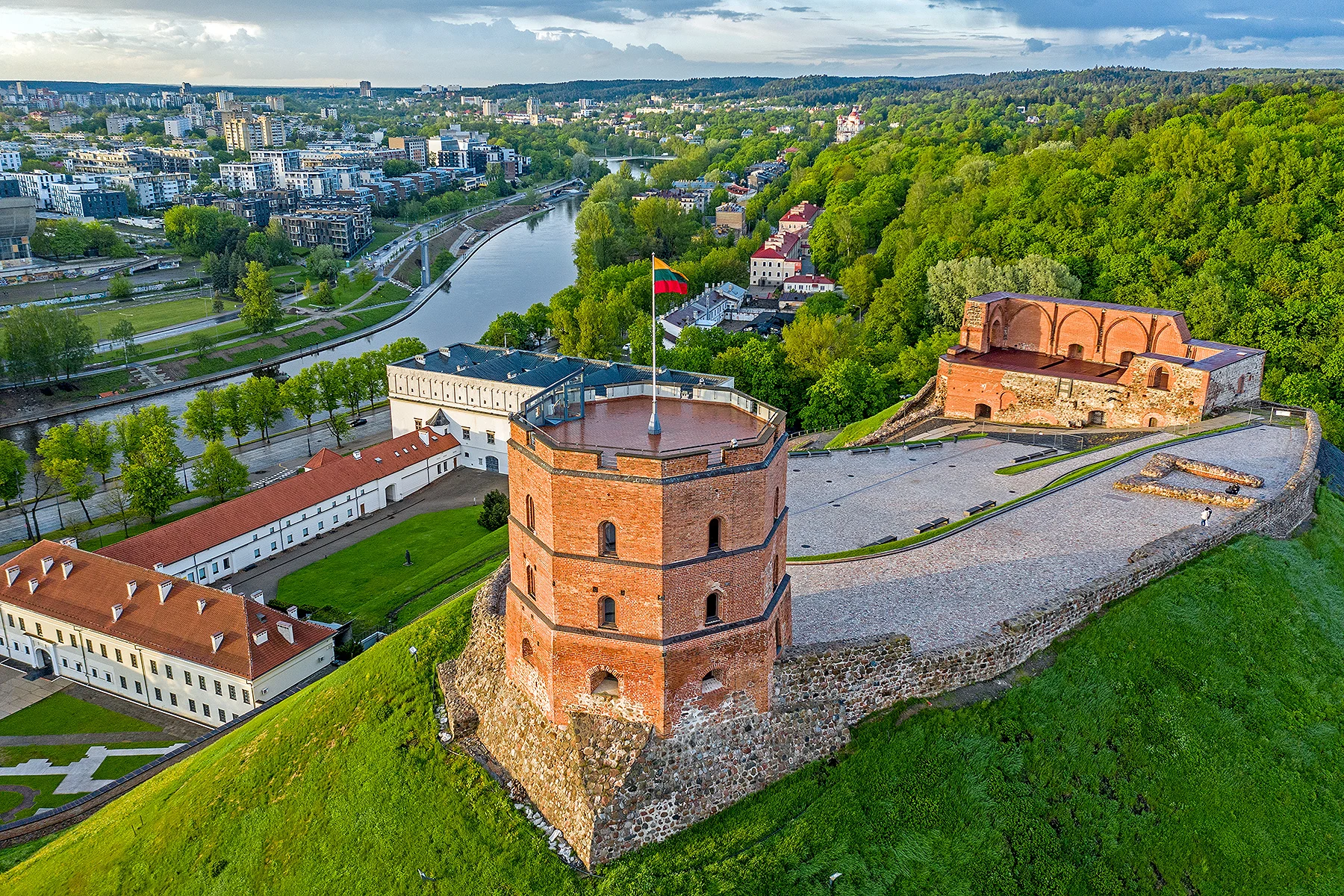
If this is your first visit, start with the ranked shortlist of the best things to do, then dip into whichever category fits the day. If you've been before, the deeper category pages and individual guides are where the lesser-known corners live — the quiet churches, the modernist parks, the saunas locals actually use. Either way, the idea is the same: choose your rhythm, leave room to wander, and let the city's compactness do the rest. Most of the famous sights — Castle Hill, the Cathedral, the university, Užupis — sit within a fifteen-minute walk of one another, so you rarely need to choose between them on the same day.
A note on planning: Vilnius rewards a loose hand. The weather can turn, queues form at the obvious sights in summer, and the best afternoons often start with a plan you happily abandon. Keep one indoor option in reserve, and treat the lists below as a menu, not a to-do list. A good rule of thumb is two or three anchored highlights a day, with the walking, the coffee stops and the inevitable detours filling in everything between them.
Most of the city's truly iconic experiences are free or nearly so — the climb up Castle Hill, the walk across into Užupis, the hush of a Baroque church, the panorama from Three Crosses Hill. Tickets, where they apply, are modest: a tower museum, a special exhibition, a guided ritual. That keeps Vilnius an unusually affordable place to be curious, and it means you can pack a day with experiences without watching the budget closely.
Culture & Creative
Vilnius wears its history on its sleeve and its creativity in its courtyards. Start in the Old Town, the UNESCO-listed Historic Centre that covers roughly 352 hectares and gathers the largest Baroque ensemble in Central and Eastern Europe — an authentic medieval street network of some 112 quarters, layered with Gothic, Renaissance, Baroque and Classicist buildings. Within it sit landmark churches, the Cathedral and its square, Gediminas' Tower on Castle Hill, and the university's nested courtyards, one of the oldest universities in this part of Europe.
Beyond the obvious, the city's cultural pulse runs through its museums and galleries — from the contemporary collection at the MO Museum to the layered story told at the Palace of the Grand Dukes and the sobering Museum of Occupations and Freedom Fights, housed in the former KGB headquarters. The creative streak spills outdoors too: Užupis's bohemian galleries, the Open Gallery street art around the station district, and hands-on workshops where you can make rather than just look. Churches are almost a genre of their own here — there are more than forty across the city, from the red-brick Gothic of St Anne's to the Orthodox cathedrals and the pilgrimage shrine at the Gates of Dawn.
If you have only a day for culture, the natural loop runs from Castle Hill down to Cathedral Square, along Pilies Street through the university quarter, and out across the Vilnia into Užupis — taking in landmarks, churches and galleries on a single walkable thread. With more time, the museums reward unhurried visits, and the photo spots and viewpoints are worth timing for golden hour.
What sets Vilnius apart is how casually the layers coexist. A baroque church stands beside a Soviet-era relic; a contemporary gallery occupies a courtyard older than most countries; a street-art mural answers a centuries-old fresco a few blocks away. You don't have to choose an era — a single afternoon's wander takes you through all of them, and the small scale means even a half-day of culture feels generous.
This group covers museums, galleries and contemporary art, landmarks and architecture, churches and sacred sites, viewpoints and photo spots, street art, and workshops and experiences — the design-led strolls and culture drops that give the city its texture. Use the category pages to browse everything in each, and the ranked guides when you want us to pick the highlights for you.
- Museums, galleries and contemporary art — from the MO Museum to house-museums and design collections.
- Landmarks and architecture — Gediminas' Tower, the Cathedral, the university courtyards.
- Churches and sacred sites — Baroque masterpieces, Orthodox cathedrals and pilgrimage shrines.
- Viewpoints, photo spots and street art — hilltop panoramas, Old Town lanes and murals.
- Workshops and experiences — make-your-own crafts, tastings and guided deep-dives.
The full directory of Vilnius museums to filter and browse.
Landmarks & ArchitectureThe city's defining buildings and monuments.
Churches & Sacred SitesVilnius's extraordinary density of churches, by tradition.
Viewpoints & Photo SpotsWhere to catch the city at its most photogenic.
Map pins
Map data © OpenStreetMap contributors · Tiles © OpenFreeMap
Nature & Outdoors
For a capital, Vilnius is astonishingly green — roughly half the city is parks, woods and water, and you're rarely more than a few minutes from somewhere to breathe. The city greens, forest trails and time on the water are never far from the Old Town: the Bernardine Garden unfurls beside the river within the historic core, while broad parks like Vingis give the city its lungs and the leafy Sapiegine trail climbs into quieter hills behind Užupis. Out past the ring road, regional parks and forest paths open into proper countryside, with marked trails for an afternoon's walk.
Water is part of the city's character too. The Neris loops past Castle Hill, the smaller Vilnia threads through Užupis, and a string of lakes — the Green Lakes among them — sit close enough for a half-day escape. In summer the rivers and lakeshores become the city's social spaces, with paddleboards, picnics and the occasional swim; in autumn the same trails turn gold and quiet. Cycling and running paths follow the riverbanks, linking the parks into one long green corridor.
This group covers parks and gardens, regional parks and trails, and rivers and lakes — the slow, outdoor counterpoint to the Old Town's stone, and the easiest way to balance a culture-heavy day with something restful.
- Parks and gardens — the Bernardine Garden, Vingis Park and the city's leafy squares.
- Regional parks and trails — forest walks and longer routes beyond the centre.
- Rivers and lakes — the Neris and Vilnia, plus the Green Lakes for a half-day out.
Recharge & Social
Some of the most memorable things to do in Vilnius aren't sights at all — they're rituals. The sauna tradition runs deep across the Baltics, and a proper session — heat, a birch-branch whisk, a gasping cold plunge, repeat — is as much social as it is restorative, often stretched over a whole evening with friends and breaks for tea. Spas and bathhouses across the city offer everything from a quiet solo soak in a hotel spa to a full guided pirtis ritual led by a bath master, and several sit by the rivers and lakes for an outdoor plunge.
Markets and fairs are the other great social engine. Whether it's a weekend craft fair, the spring Kaziukas market — a centuries-old tradition that fills the Old Town with handicrafts each March — or a food-hall lunch shared across long tables, these are the places where the city gathers. Add the family-friendly hangouts — playful museums, parks with room to run, and easy outings — and you have a whole side of Vilnius built around slowing down and being together rather than ticking off sights.
This group covers saunas and spas, markets and fairs, and family and kids — the recharge-and-reconnect end of the city.
- Saunas and spas — Baltic cold-plunge rituals and quiet city bathhouses.
- Markets and fairs — weekend craft markets, Kaziukas and food halls.
- Family and kids — playful museums, parks and easy outings with children.
Day Trips & Escapes
When you want a change of scene, Vilnius is a brilliant base. Easy adventures sit within an hour or two: Trakai's storybook island castle on its lake — the single most popular day trip, about half an hour west — the ancient hill-forts of Kernavė (itself a UNESCO site), the open-air village museum of Rumšiškės, and the bigger city of Kaunas down the rail line. Several are reachable by train or bus, making them simple half- or full-day escapes without a car; others are easiest with a tour or a hire car.
Closer in, the Paneriai Memorial and the sculpture-filled Europos Parkas offer quieter, more reflective days out, while the Green Lakes give you nature within the city's reach. The Hill of Crosses near Šiauliai is a longer but unforgettable full-day pilgrimage. Our live Trakai day-trip guide remains the anchor for the region's headline excursion; the wider Day Trips hub gathers and compares the rest, so you can match the trip to your time and transport.
This group covers day trips and escapes — the things you do when you want Vilnius in the rear-view mirror for an afternoon, whether that's a castle on a lake or a forest full of birdsong.
- Trakai — the island castle on the lake, the classic day trip.
- Kernavė and Kaunas — ancient mounds and Lithuania's second city.
- Paneriai and Europos Parkas — reflective and creative escapes near the city.
- Green Lakes — nature within easy reach for a half-day out.
Getting around the sights
Most of what you'll want to see is walkable, and that's the easiest way to experience the city — the Old Town's lanes are made for it, and you'll discover half the best corners by simply following your feet between bigger sights. Wear comfortable shoes: the cobblestones are charming but unforgiving, and they get slippery after rain or snow. The terrain is gently hilly around the castle and the Three Crosses, so build in a little extra time and breath for the climbs.
For the longer hops — out to the TV Tower, the bus or train stations, or the airport — Vilnius has a simple, cheap public-transport network of buses and trolleybuses, plus widely used ride-hailing apps that make door-to-door trips effortless and affordable. A funicular saves the steep climb up Castle Hill, and the train and coach links make the headline day trips genuinely easy without a car. Cycling and e-scooters are popular in the warmer months, especially along the riverside paths.
Accessibility varies by site: the public spaces and newer museums are largely step-free, but historic towers, church galleries and the hilltop viewpoints involve stairs and uneven ground. Where it matters, the individual guides flag the practicalities — lifts, funiculars, step-free routes — so you can plan around them.
First-timers: the unmissable shortlist
If you only have a day or two, a handful of experiences capture the city best. Climb Castle Hill for Gediminas' Tower and the orientation view that makes sense of everything below — the Cathedral belfry, the green dome of St Casimir's, the bristle of Baroque spires. Cross into Užupis, the self-declared artists' republic with its own tongue-in-cheek constitution, the bronze Angel on its column and a scatter of galleries and riverside cafés. Step inside at least one great church — the Cathedral, the soaring St Peter and St Paul with its thousands of stucco figures, or the red-brick Gothic of St Anne's — and let the contrast between austere stone and exuberant interiors land.
Add a single big museum to suit your taste: the MO Museum for modern Lithuanian art, the Palace of the Grand Dukes for the city's deep history, or the Museum of Occupations and Freedom Fights for its difficult twentieth century. Then finish high again — Three Crosses Hill at sunset, the Bell Tower for a central panorama, or the TV Tower for the wider view. That sequence alone is a complete first trip, and almost all of it is within walking distance, so you can take it at a strolling pace with long stops for coffee and photos.
With a second day, widen the net: a neighborhood walk through Užupis or the new town, a sauna in the evening, a market lunch, or an easy half-day trip to Trakai. The beauty of a city this compact is that you're never committing to a single theme — you can mix a church, a gallery, a park and a great meal into one unhurried day.
Our ranked guides go further than any category directory can: they pick favourites, compare the options and tell you what to skip when time is short. Start there, then let the individual place guides fill in the practical details — tickets, timing and how to combine each stop with the next.
The ranked first-trip shortlist in full.
Best viewpoints in VilniusCastle Hill, Three Crosses, bell towers and the TV Tower compared.
Free things to do in VilniusHow much of the city you can enjoy without paying a cent.
Vilnius hidden gemsQuiet corners for when you've done the headline sights.
When to come: the city through the seasons
Vilnius is a year-round city, but each season changes what's worth doing. Summer brings long, golden evenings, café terraces, river swims and the busiest run of festivals and markets — the warmest window for viewpoints, parks and day trips to Trakai's lake. Spring is the city waking up: the Kaziukas craft fair fills the Old Town in early March, gardens green over, and the crowds are thinner than in peak summer.
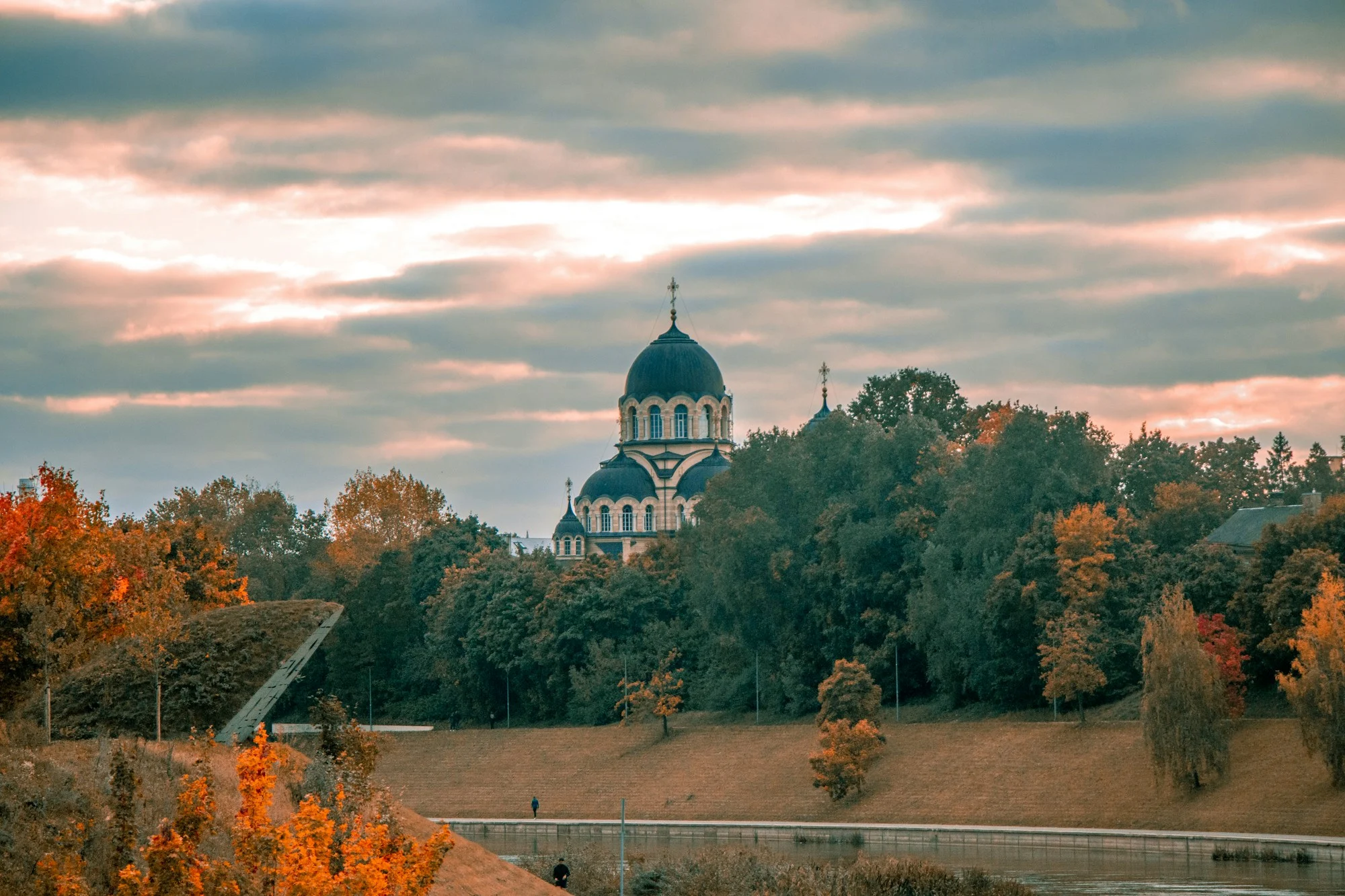
Autumn is arguably the photographer's season, with the parks and hillside trails turning gold and the light going soft and low — ideal for the viewpoints and the slow Old Town wander. Winter is cold and dark but genuinely magical: the Christmas markets glow on Cathedral Square, the city's churches and cafés become refuges, and the Vilnius Light Festival in January throws projections across the Old Town's facades. Whatever the month, the indoor culture — museums, churches, saunas, food halls — means a wet or freezing day is never a wasted one.
Because openings, ticketed exhibitions and event dates shift with the season, check the individual guides and official sources before you lock in plans, especially for festivals, day trips and anything weather-dependent like the towers and the balloon flights.
Plan your See & Do days
With this much on offer, the trick is editing rather than cramming. Anchor each day on one or two highlights — a hilltop view, a single big museum, a sauna at dusk — and let the walkable Old Town fill the gaps between them. Pair See & Do with the city's food scene and a sensible base, and even a short visit feels full without being frantic. A typical good day might pair a morning landmark with an afternoon neighborhood walk and an evening meal, with a viewpoint at sunset to tie it together.
Think in clusters rather than crossings: the Castle Hill–Cathedral–university–Užupis corridor is one natural loop; the museums and galleries of the new town another; the parks and riverside a third. Grouping sights by area saves backtracking and leaves more time for the unplanned detours that make the city memorable.
When the weather turns, lean on the indoor culture; when it's glorious, head for the parks, the rivers and the day trips. Whatever you choose, prices, hours and seasonal openings shift, so check the individual guides and official sources before you go — we flag the volatile details so you're never caught out, and we'd always rather you confirm a ticket price than be surprised at the door.
Everything in See & Do
Start here
6
Best Things to Do in Vilnius
A first-trip shortlist of the best things to do in Vilnius — from Gediminas' Tower and the UNESCO Old Town to Užupis, the MO Museum, food halls and Trakai.
Read guide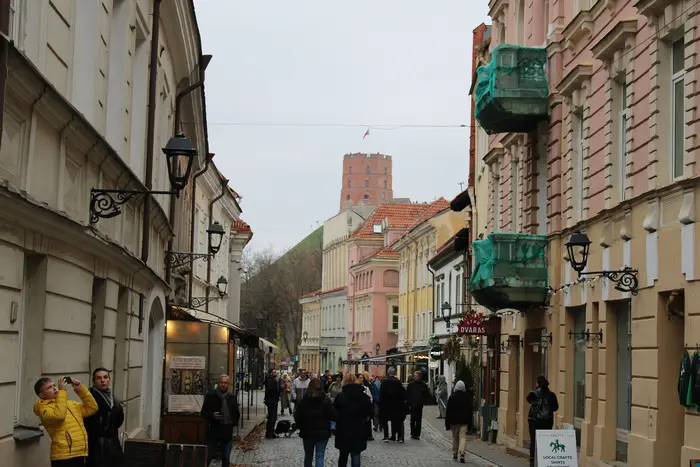
Free Things to Do in Vilnius
The best free things to do in Vilnius — free walks and viewpoints, churches, parks and courtyards, Užupis, street art and markets, plus tips to keep a Vilnius trip affordable.
Read guide
Vilnius Hidden Gems Worth Seeking Out
The Vilnius hidden gems worth your time — quiet courtyards, lesser-known churches, art streets, atmospheric cemeteries, modernist corners and green spaces for slower, more local travellers.
Read guide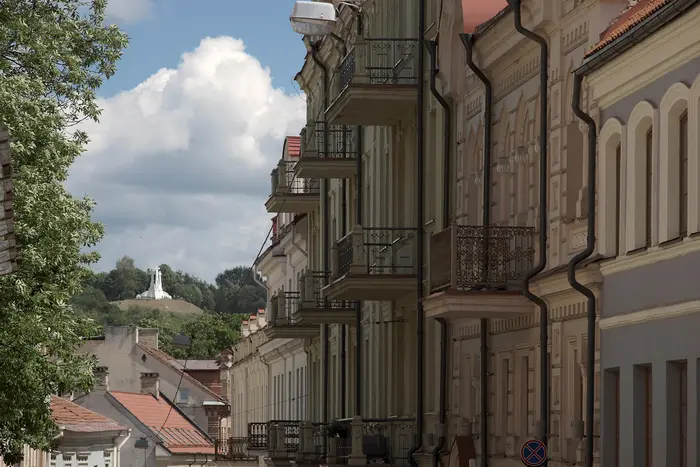
The Best Viewpoints in Vilnius
Compare the best viewpoints in Vilnius — Gediminas Tower, Three Crosses Hill, church bell towers, the TV Tower and rooftop bars — ranked by effort, payoff and the time of day to go.
Read guideViewpoints & Photo Spots in Vilnius
Skyline lookouts, hilltop towers and river bends that deliver sweeping Vilnius panoramas and golden-hour photos — and exactly where to stand for each one.
Read guide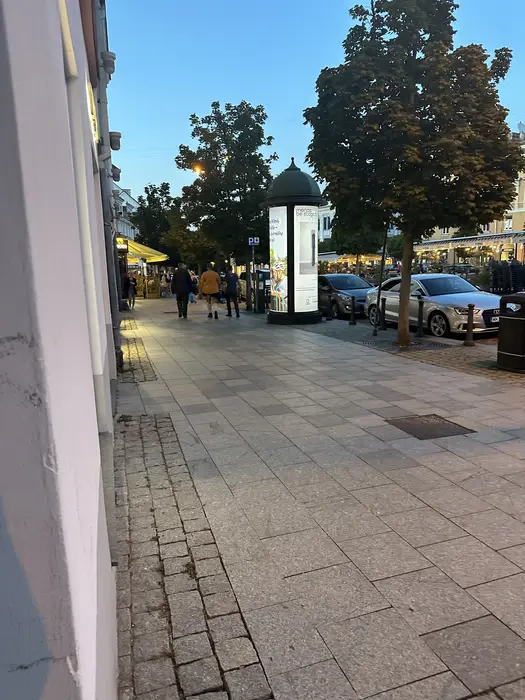
Self-Guided Vilnius Old Town Walk
A step-by-step self-guided walking route through Vilnius Old Town — from the Gates of Dawn through the Town Hall, Pilies Street, the university and Cathedral Square to Užupis.
Read guideLandmarks & Old Town
8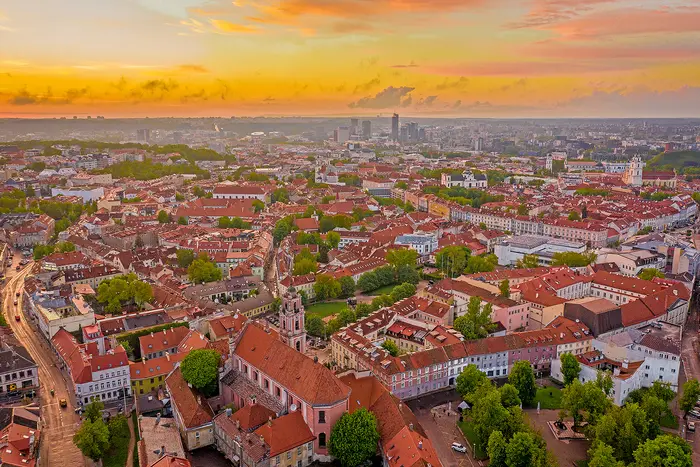
Vilnius Old Town
A guide to Vilnius Old Town: the UNESCO-listed heart of the city, its gates, churches, courtyards, squares, cafés, Jewish history and best photo stops.
Read guideGediminas Castle Tower
The red-brick tower on Castle Hill is the symbol of Vilnius and the easiest panoramic view in the city — reached by a steep cobbled path or a one-minute funicular, with a small history museum at the top.
Read guide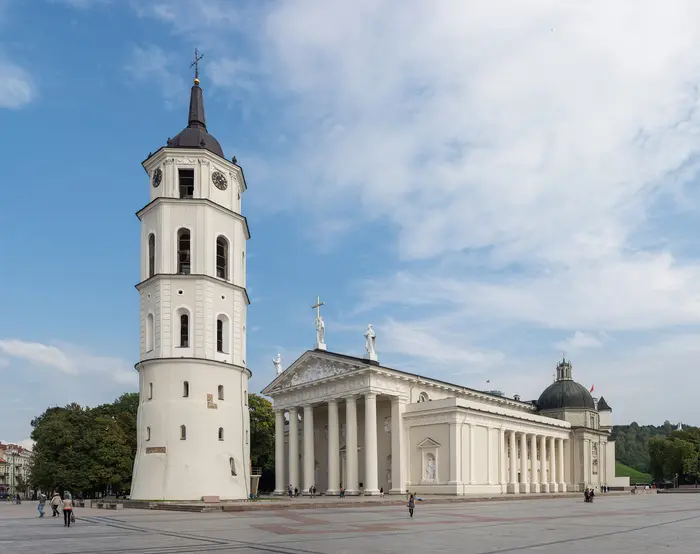
Vilnius Cathedral
Vilnius Cathedral is the white neoclassical heart of the Old Town, free to enter, home to the ornate baroque Chapel of St. Casimir, royal tombs and the 'Stebuklas' miracle tile on the square outside.
Read guide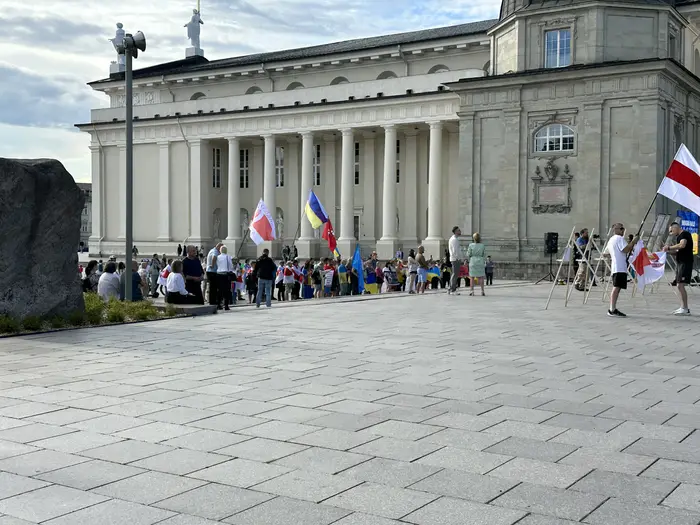
Cathedral Square (Katedros aikštė) — the heart of Vilnius
Cathedral Square is the historic heart of Vilnius — a vast plaza framed by the Cathedral and its free-standing Bell Tower, and the city's stage for festivals, parades and the Christmas market.
Read guide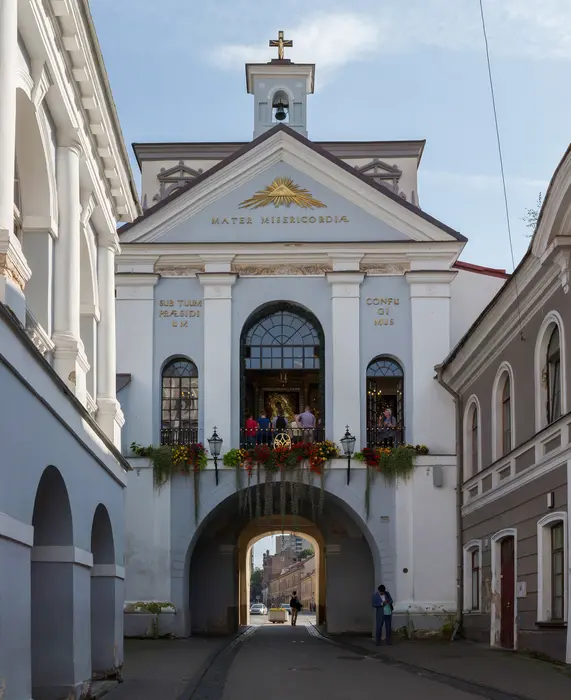
Gates of Dawn
The Gates of Dawn (Aušros Vartai) is the last surviving city gate of Vilnius and one of Eastern Europe's most revered Catholic pilgrimage sites, home to the miraculous icon of Our Lady of Mercy.
Read guide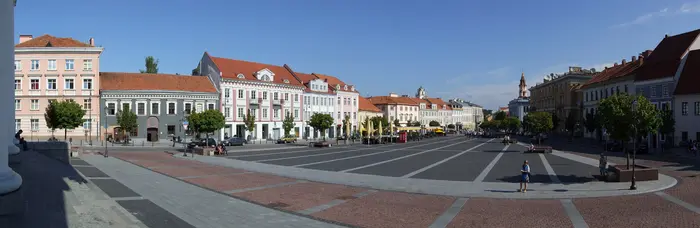
Town Hall Square
The lively heart of Vilnius's Old Town, a grand square anchored by the neoclassical Town Hall on Didžioji gatvė, ringed with cafés and used year-round for concerts, festivals and official ceremonies.
Read guidePilies Street, Vilnius
How to enjoy Pilies Street — Vilnius's oldest and liveliest Old Town artery — without the tourist-trap fatigue: the cafés and courtyards worth your time, the amber and craft stalls, the university edges and the best photo angles.
Read guide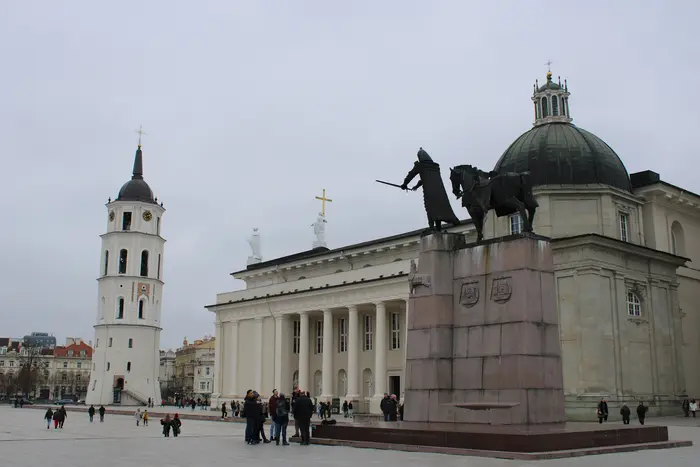
Landmarks & Architecture in Vilnius
Signature castles, bastions, university courtyards and modernist icons that map the architectural story of Vilnius — the landmarks that define the city's skyline and squares.
Read guideMuseums & galleries
6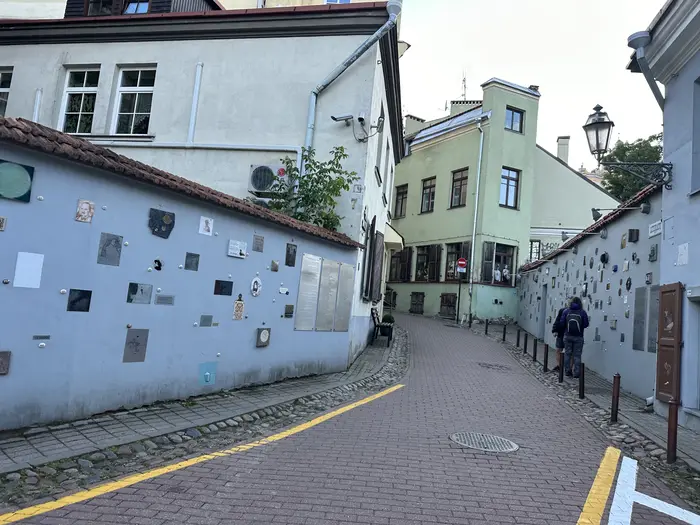
Museums in Vilnius
A guide to the museums of Vilnius — national history at the Palace of the Grand Dukes, modern art at MO, the sobering KGB cells, plus design, science and quirky family collections, with how they connect and how to plan a visit.
Read guide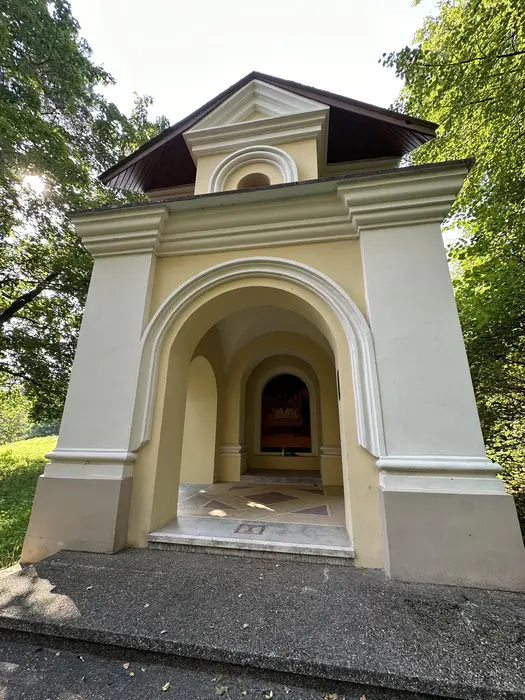
Best museums in Vilnius
Choose the right Vilnius museums for you — by history, art, Jewish heritage, rainy-day comfort, kids and value. A ranked, honest guide to MO Museum, the Palace of the Grand Dukes, the occupation museums, the National Museum and more.
Read guide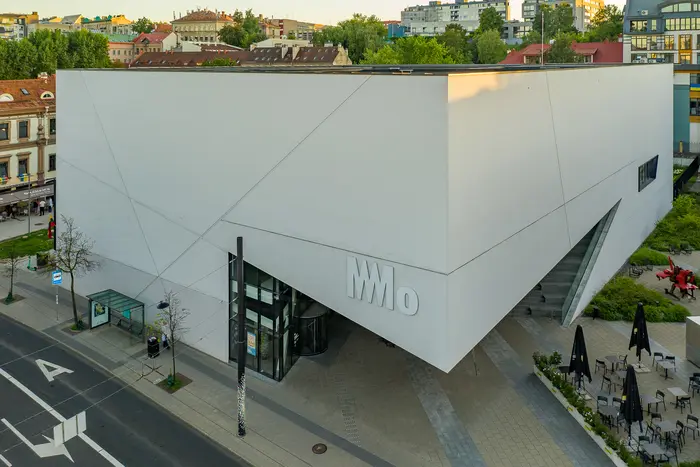
MO Museum guide
Tickets, exhibitions, architecture, family fit, bistro and how MO fits a modern-art and rainy-day Vilnius day.
Read guide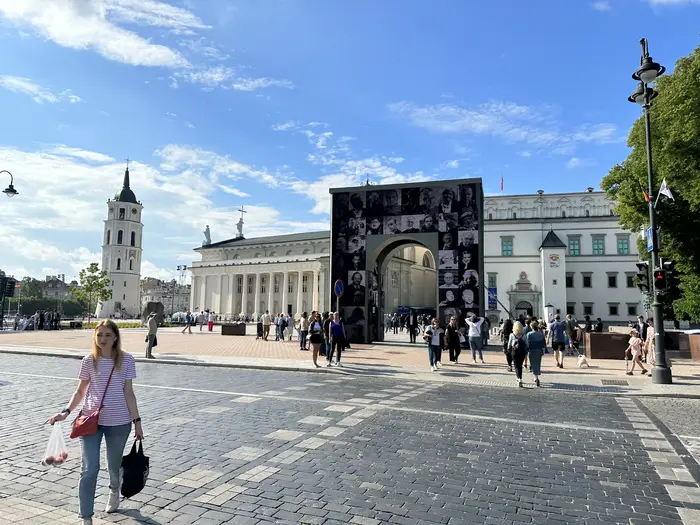
Palace of the Grand Dukes of Lithuania
A reconstructed royal residence beside Cathedral Square, now a national museum that walks you through Lithuanian history across four themed routes — archaeology, restored Gothic-to-Baroque halls, weaponry and major exhibitions.
Read guide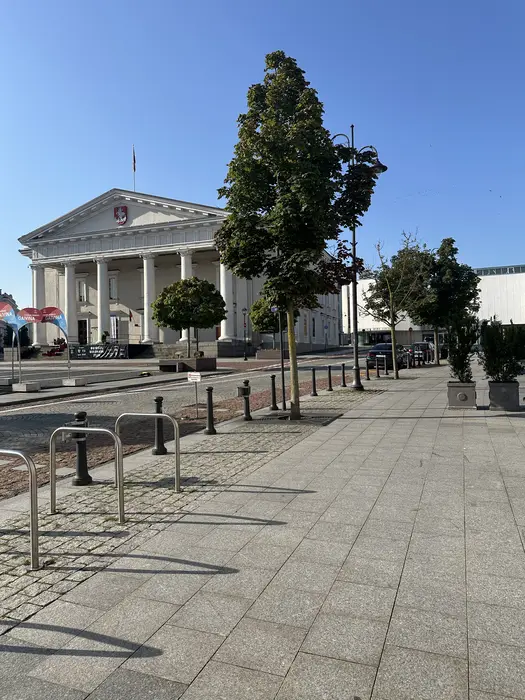
Galleries & Contemporary Art in Vilnius
Artist-run spaces, residencies and contemporary galleries in Vilnius showing rotating installations, openings and pop-up shows — the city's living, experimental art scene.
Read guide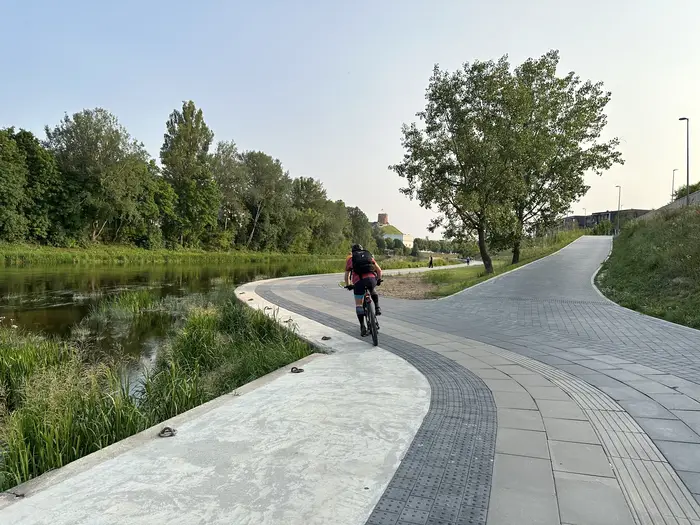
Vilnius Picture Gallery
The Vilnius Picture Gallery, housed in the late-classical Chodkevičiai Palace on Didžioji Street, presents Lithuanian art from the 16th to early 20th centuries alongside concerts, lectures and rotating exhibitions.
Read guideChurches & sacred sites
5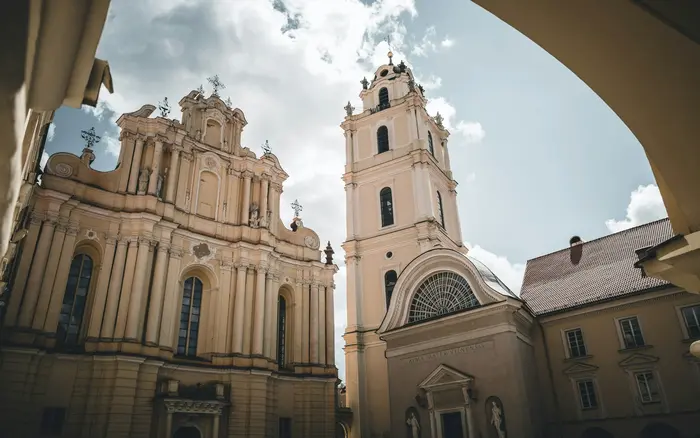
Best churches in Vilnius
Compare Vilnius's most beautiful churches by architecture, access, route fit, photos and quiet visiting etiquette.
Read guideChurches & Sacred Sites in Vilnius
Baroque churches, Orthodox iconostasis, monasteries and sacred sites that anchor the spiritual heritage of Vilnius — what to see, how they connect and how to visit respectfully.
Read guide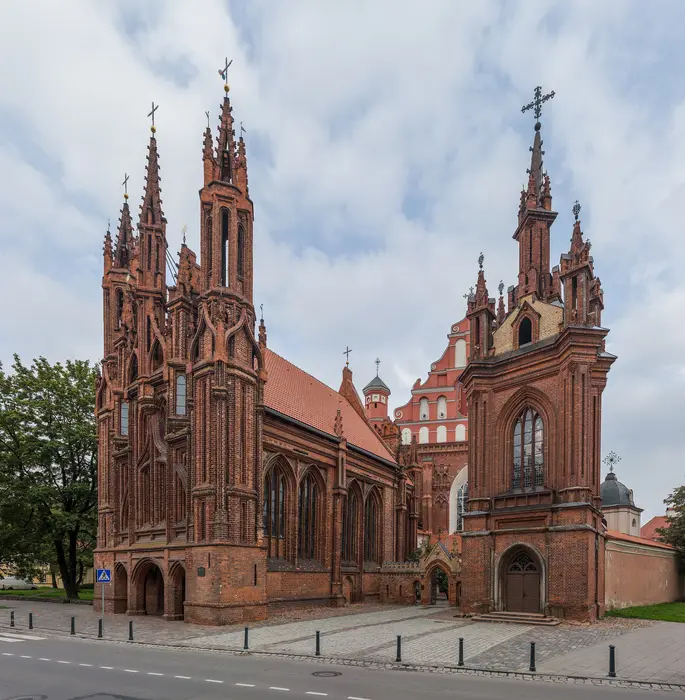
St Anne's Church, Vilnius
A guide to St Anne's Church — Vilnius's red-brick Gothic icon — its Flamboyant brickwork, the Napoleon legend, the neighbouring Bernardine ensemble and gardens, the best photo angles and how to combine it with Užupis.
Read guide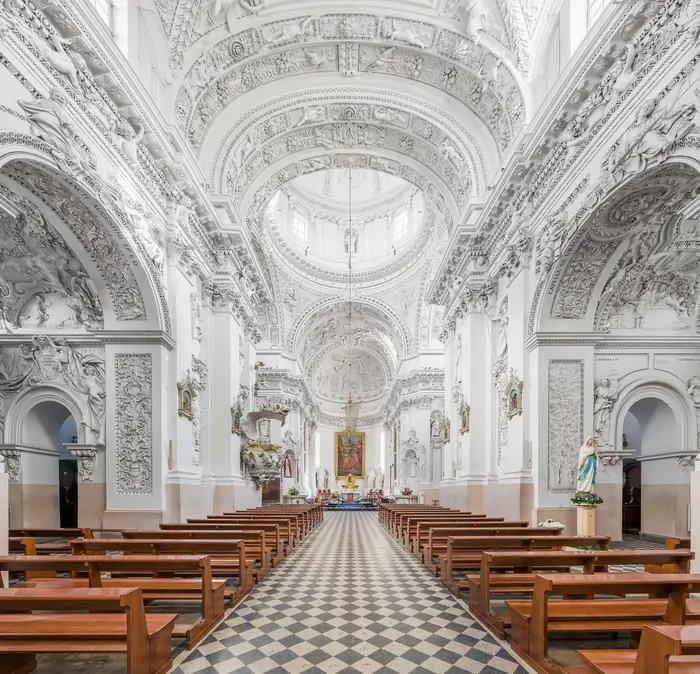
Church of Sts Peter and Paul
A Baroque masterpiece in Antakalnis whose plain exterior hides an all-white interior covered in more than 2,000 intricate stucco sculptures. Free to enter.
Read guide
Vilnius Cathedral Crypts
How to book and visit the Cathedral Crypts in Vilnius: the guided-tour-only rules, languages and times, how long to allow, and the layers of history — the Royal Mausoleum, ancient burials and one of Lithuania's earliest frescoes — waiting underground.
Read guideUžupis & street art
6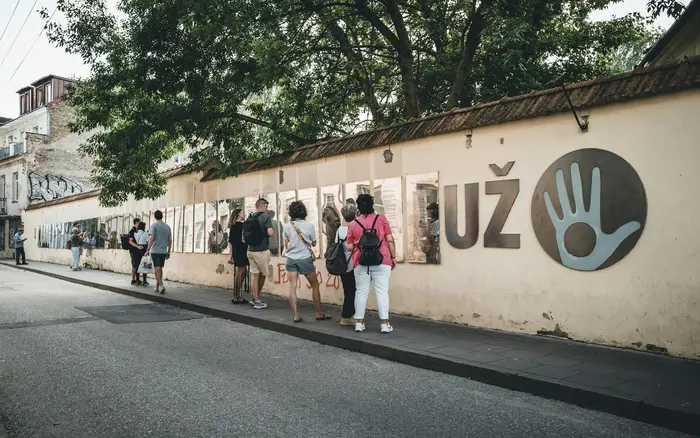
Užupis guide
Explore the self-declared republic: constitution, the Angel, river bridges, galleries, cafés and April 1 spirit.
Read guide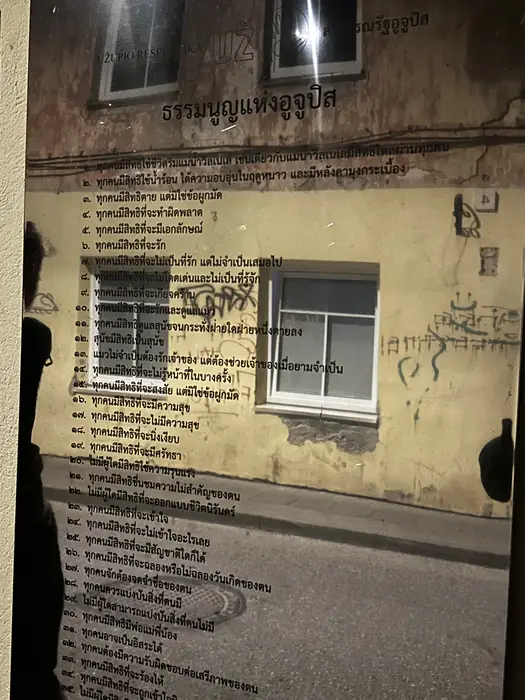
Užupis Constitution guide
Find and read the wall of constitutional plaques, with context, photos and respectful visiting notes.
Read guide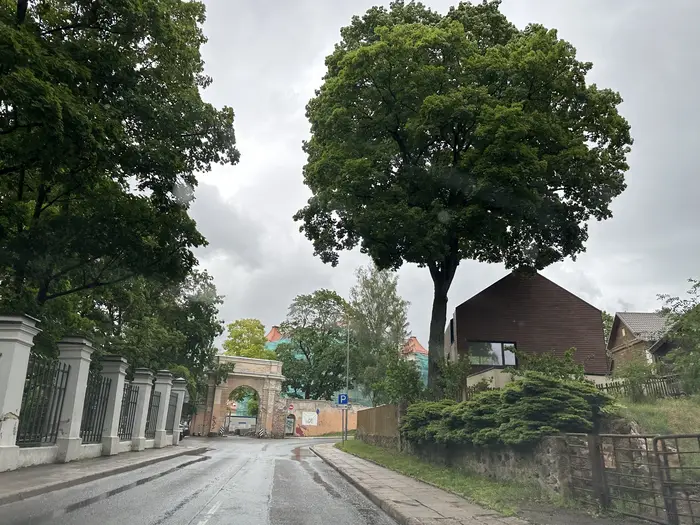
Angel of Užupis
The bronze angel that crowns the central square of Užupis — the symbol of Vilnius's self-declared bohemian 'republic' and one of the city's most-loved photo spots.
Read guide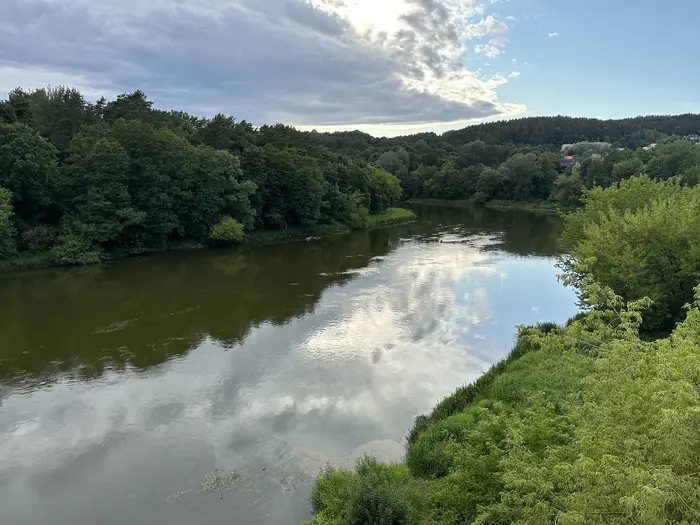
Street Art in Vilnius
Where to find Vilnius's street art — the Open Gallery murals in Naujamiestis, the changing walls of the Station district and Užupis, plus bridge installations and photo stops — with a walkable route and how to explore it respectfully.
Read guide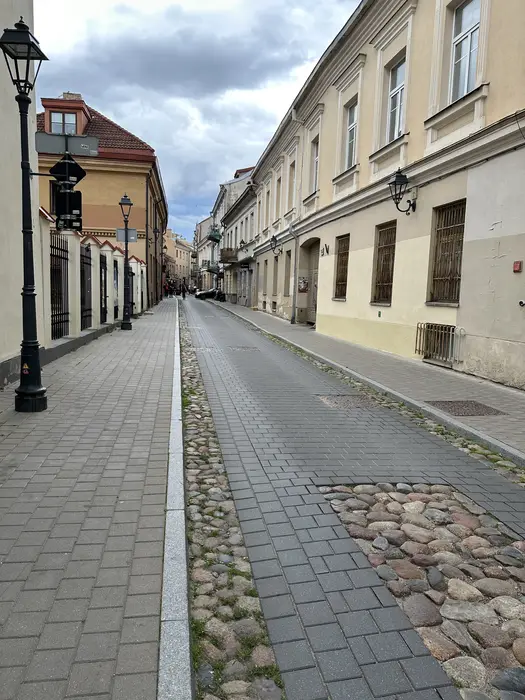
Vilnius Street Art & the Open Gallery
A walking guide to Vilnius street art — the Open Gallery courtyard in Naujamiestis, station-district murals, Užupis and Old Town pieces, photo stops and respectful routing.
Read guideLiteratų Street guide
A compact guide to Vilnius's literary-art wall, photo details, the Old Town route and nearby cafés.
Read guideJewish Vilnius & 20th-century history
6
Jewish Vilnius heritage guide
A careful, full guide to Jewish Vilnius — the 'Jerusalem of the North': the Vilna Gaon and the city's scholarship, the surviving synagogue, the ghetto streets and memorials, the Vilna Gaon Museum branches, Paneriai and how to plan a respectful visit.
Read guide
Jewish Quarter Vilnius guide
A respectful guide to Vilnius's former Jewish quarter and ghetto streets: the lanes of old Jewish Vilna, the site of the Great Synagogue, the Vilna Gaon's legacy, the ghetto memorials and where to find context before you walk.
Read guide
Vilna Gaon Museum guide
How to use Vilnius's state Jewish-history museum — the Vilna Gaon Museum of Jewish History — and its branches, from the Tolerance Centre and the Holocaust exhibition to the Samuel Bak and Litvak museums and the Paneriai Memorial.
Read guide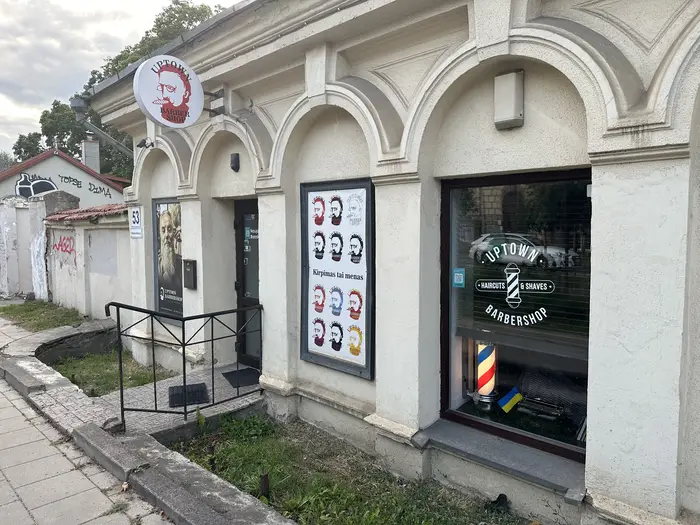
Soviet history sites in Vilnius
A careful guide to Soviet-era Vilnius: the KGB building and Museum of Occupations and Freedom Fights, Lukiškės Prison, the TV Tower of January 1991, Tuskulėnai and the memorials where the city remembers occupation and resistance.
Read guide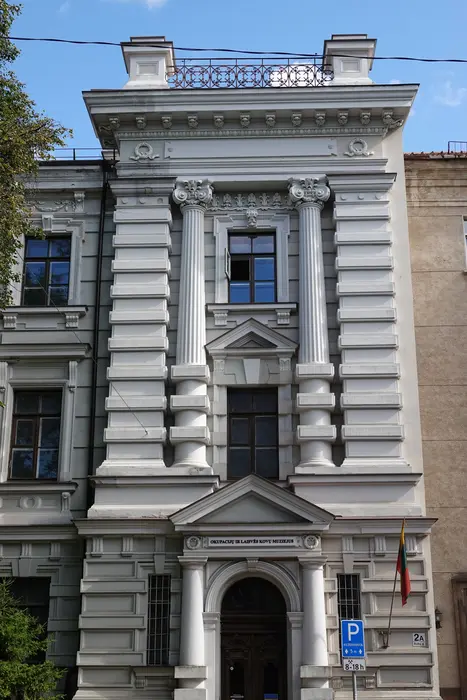
Museum of Occupations and Freedom Fights (KGB Museum)
Set in the former KGB headquarters and prison, this sobering museum tells the story of Lithuania's 20th-century occupations and resistance — including the preserved cells in the basement.
Read guide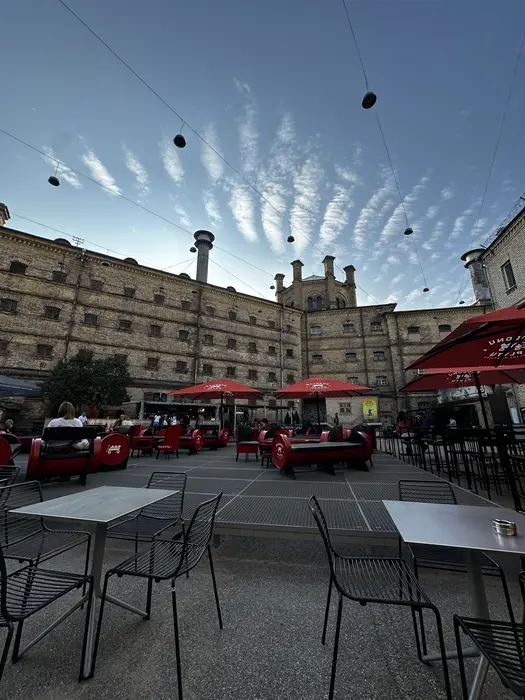
Lukiškės Prison 2.0
A century-old Vilnius prison reborn as a cultural hub — guided history tours by day, spooky adults-only tours by night, plus bars, concerts and events inside the cell blocks.
Read guideParks & outdoors
6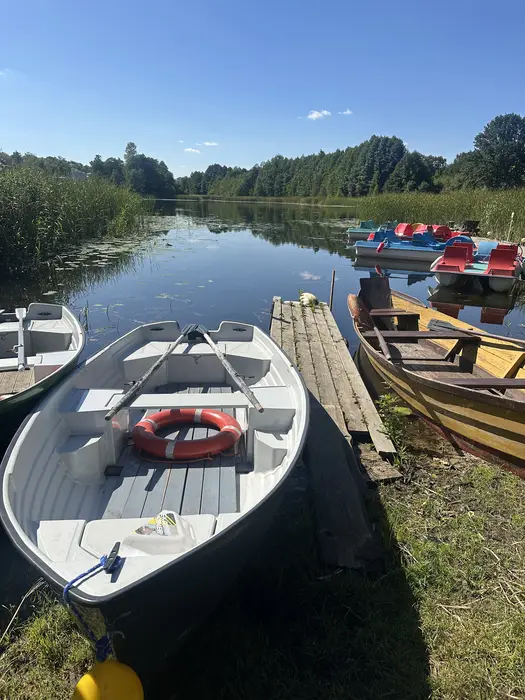
Parks & Gardens in Vilnius
Vilnius's parks and gardens — from the Old Town's Bernardine Garden and the riverside cherry park to the vast Vingis Park and quiet hilltop greens — with where to find them, what each is good for and how to string them into an easy green day.
Read guide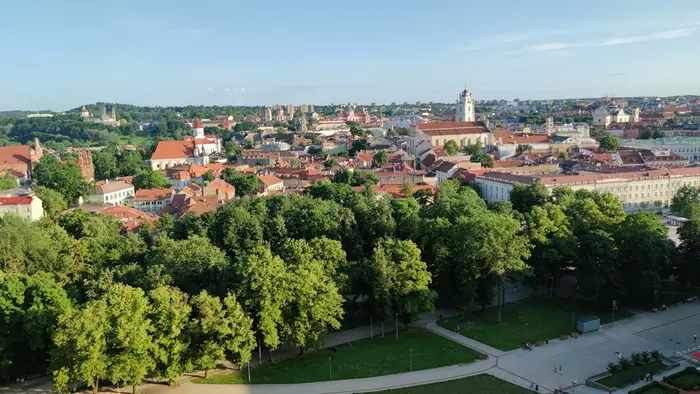
Vingis Park
Vilnius's largest park — a vast, forest-like green space in a bend of the Neris, with walking and cycling paths, open meadows and the iconic Song Festival stage.
Read guide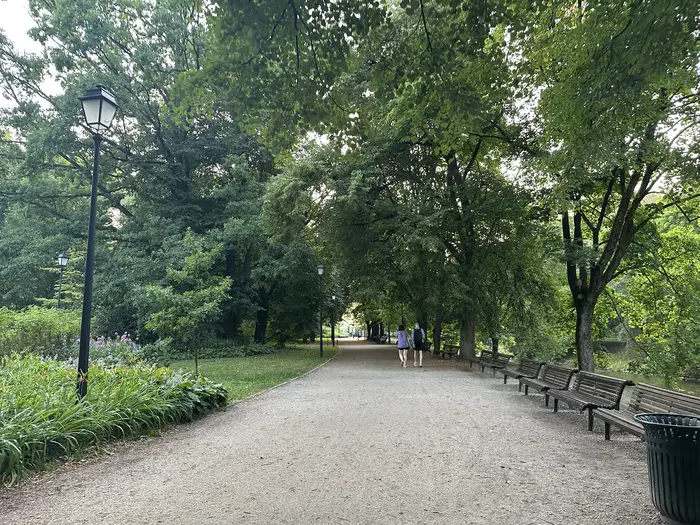
Bernardine Garden — Vilnius
A beautifully restored 7.8-hectare 19th-century garden along the Vilnelė river in Vilnius Old Town, with botanical displays, a musical fountain, playgrounds and the city's oldest oak.
Read guideThree Crosses Hill guide
Climb for classic Vilnius views, with route choices, sunrise/sunset timing, winter caution and photo angles.
Read guide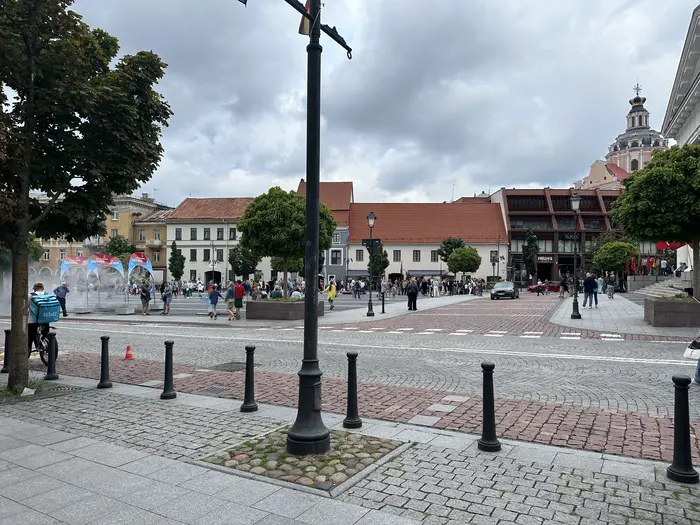
Rivers & Lakes in Vilnius
Vilnius on the water — the Neris and Vilnelė rivers, the city's free river beaches, kayak and SUP runs, and the clear-water Green Lakes just north of town — with where to swim, paddle and walk, and how to do it safely.
Read guide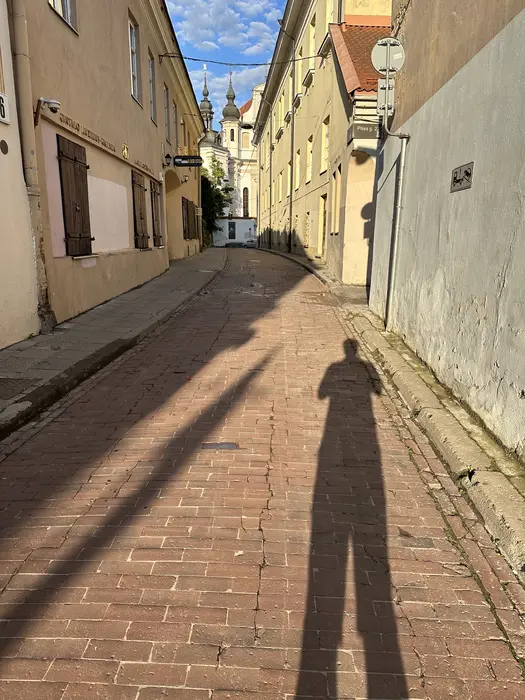
Regional Parks & Trails near Vilnius
The forest and cliff country on Vilnius's doorstep — Pavilniai's Pūčkoriai outcrop, the Verkiai estates and ravines, the Sapieginė hills and Visoriai woods — with the best loop walks, how to reach each trailhead and what to expect underfoot.
Read guideWith kids & experiences
7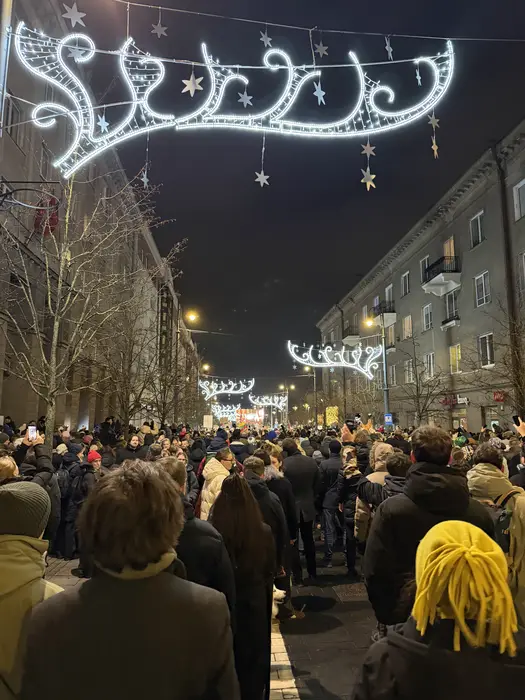
Family & Kids in Vilnius
Interactive museums, play-forward attractions and rainy-day saviours in Vilnius built for families and kids — what to do with children, indoors and out.
Read guide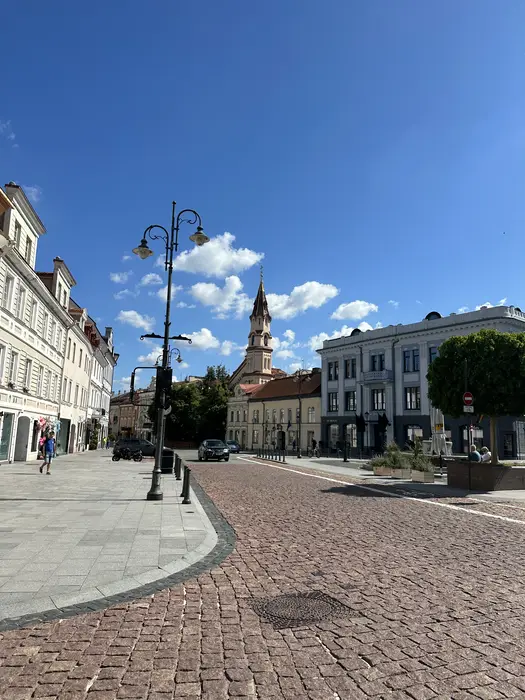
Vilnius with Kids
Family-friendly Vilnius: museums, parks, tower views, Trakai, food halls, rainy-day ideas and easy, stroller-aware routes for travelling with children.
Read guide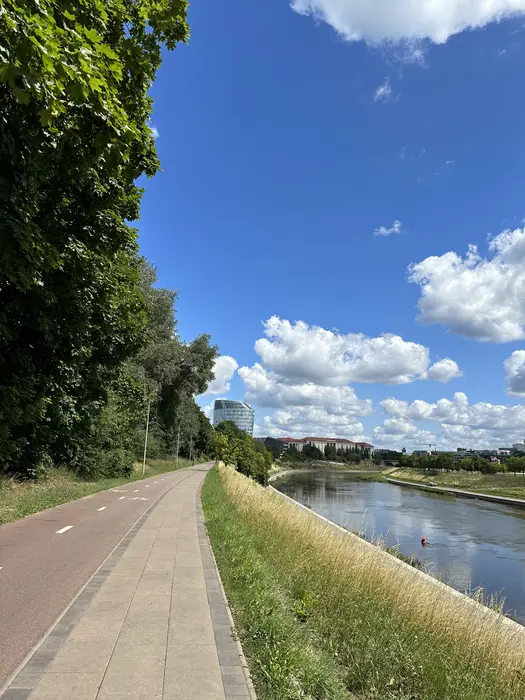
Vilnius with Teens
Vilnius for teenagers: viewpoints, street art, the Lukiškės prison, the TV Tower, food halls, bike rides and a Trakai day trip that keep older kids interested.
Read guide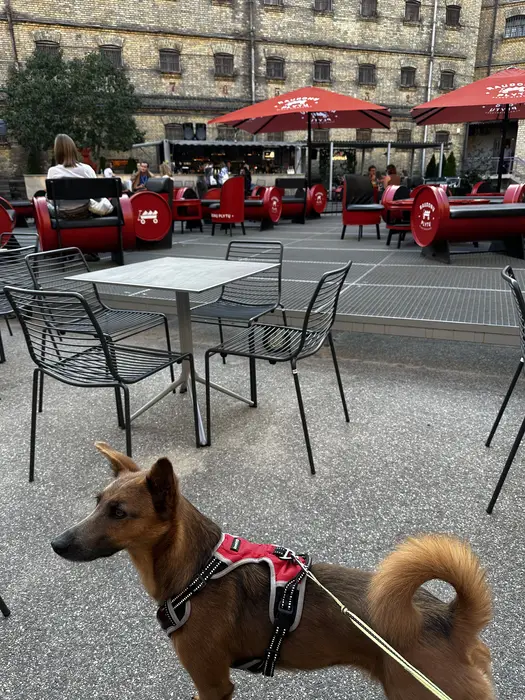
Rainy Day in Vilnius
What to do in Vilnius when it rains: museums, cafés, food halls, churches, galleries, spa hotels and cozy indoor routes for wet or cold days.
Read guide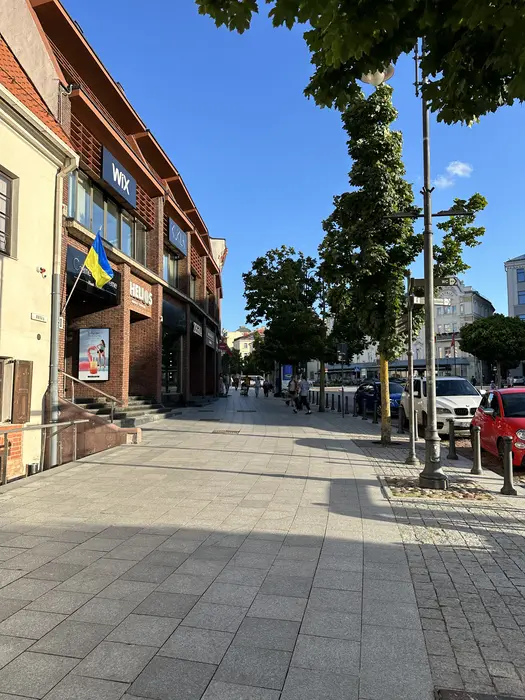
Workshops & Experiences in Vilnius
Hands-on workshops and immersive experiences in Vilnius — from ceramics, amber and cooking to wine tastings, illusion museums and balloon flights over the city.
Read guide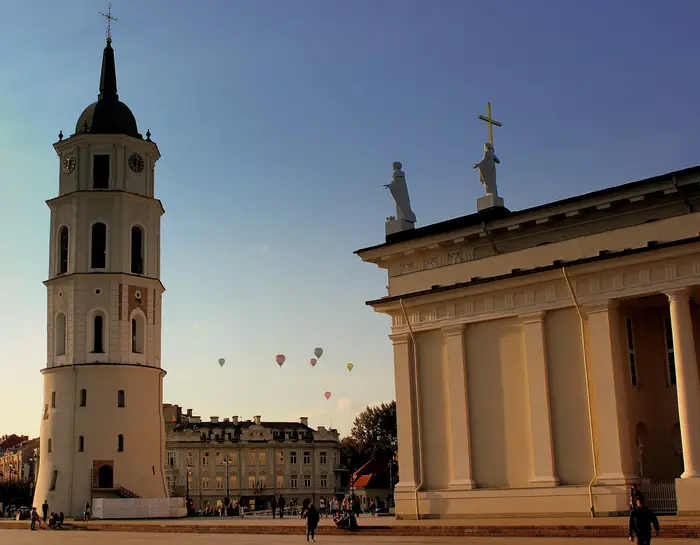
Hot-Air Ballooning over Vilnius
How to fly over Vilnius or Trakai by hot-air balloon: season, operators, prices, safety, weather rules and booking — one of the few capitals you can fly over.
Read guide
Saunas & Spas in Vilnius
The Baltic sauna ritual in Vilnius — traditional pirtis with birch whisks and cold plunges, modern bathhouse complexes, hotel spas for a quiet warm-up, and the spa-town option at Druskininkai — with how the ritual works and how to book.
Read guideMore
130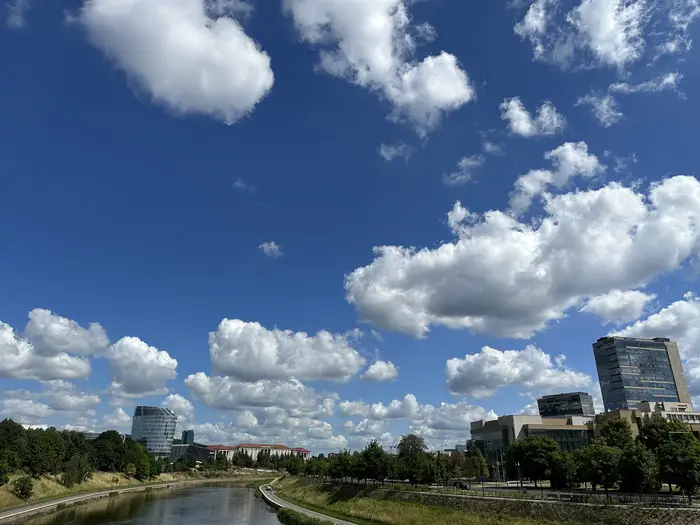
"Miracle" Tile (Stebuklas)
A small tile in Cathedral Square marking the start of the 1989 Baltic Way human chain — stand on it, make a wish and spin three times in this much-loved Vilnius tradition.
Read guide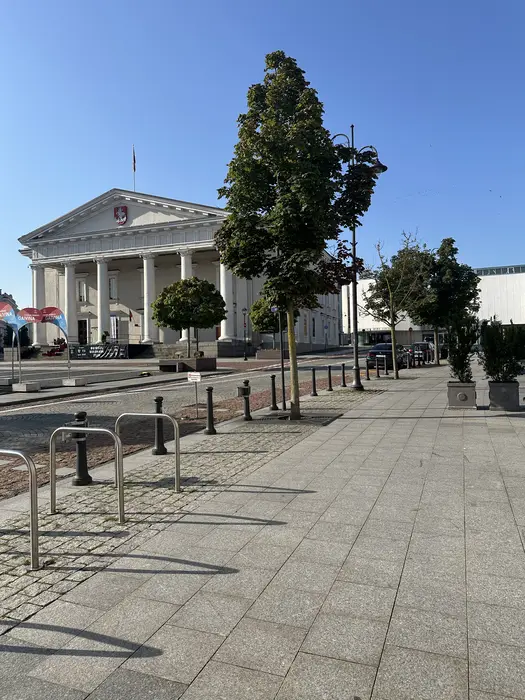
106 Gastro Bar
A wood-fired pizza and gastro bar in Vilnius's Žirmūnai district, loved by locals for its value, friendly service and a cosy courtyard open late.
Read guide
2 virėjai
An intimate chef-led culinary studio and restaurant in Vilnius from Agnė and Martynas — creative food at a single communal table, plus hands-on cooking courses.
Read guide
Adam Mickiewicz Museum (Adomo Mickevičiaus muziejus)
A small, atmospheric house-museum in Vilnius's Old Town devoted to the poet Adam Mickiewicz, part of the Vilnius University museum network.
Read guide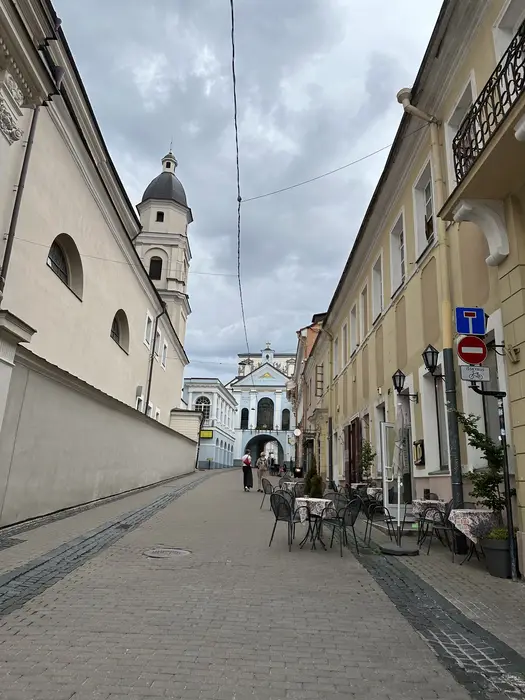
Aušros Vartų Street, Vilnius
A short, atmospheric walk up Aušros Vartų Street from the Gates of Dawn — past chapels, churches, courtyards and cafés — and how it connects the southern Old Town gateway to the heart of Vilnius.
Read guide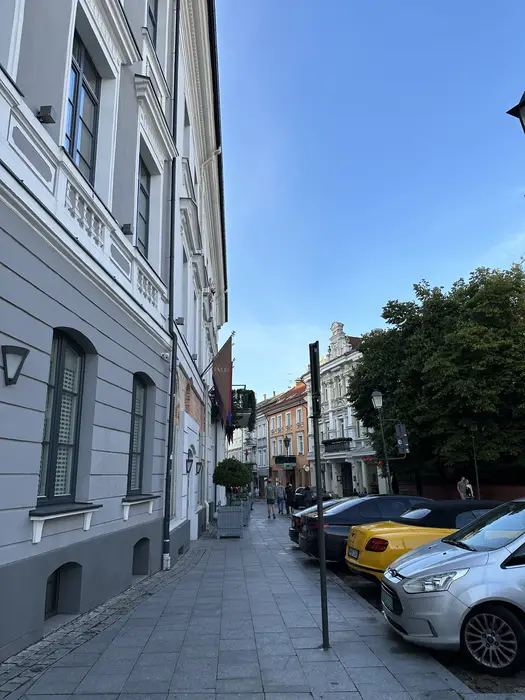
Bastion Hill — Vilnius
A quiet, beautifully kept park and historic rise on the southern edge of Vilnius Old Town, with panoramic views over the rooftops and Užupis — best at sunset.
Read guide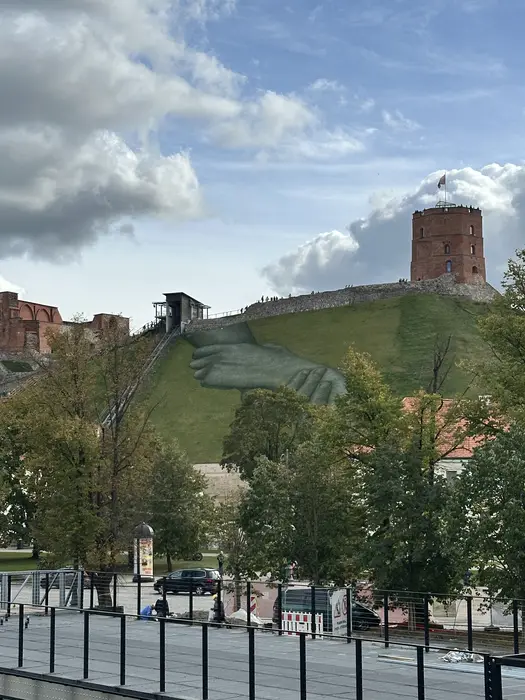
Bastion of the Vilnius Defensive Wall — Vilnius
A restored 16th–17th-century artillery bastion on the edge of Vilnius Old Town, now a hands-on National Museum of Lithuania branch with armour, cannons and one of the city's best wall-top views.
Read guide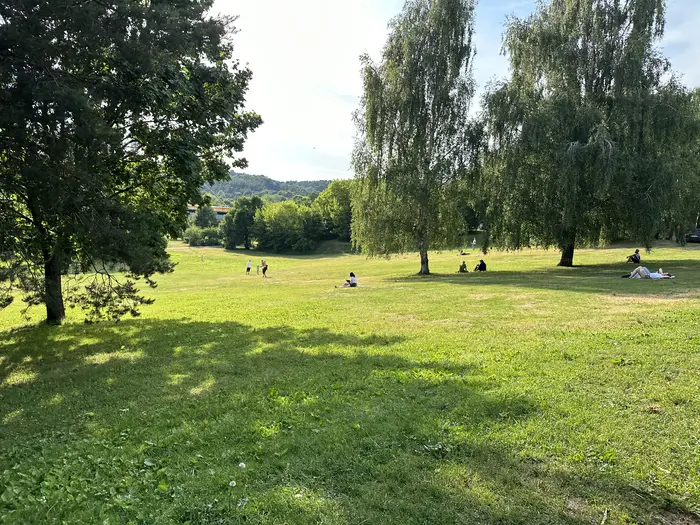
Bekešo Kalnas (Bekeš Hill) — Vilnius
A quiet, less-crowded hilltop viewpoint in Kalnai Park above Užupis, with one of the loveliest panoramas over Vilnius Old Town and the Bernardine valley — especially at sunset.
Read guide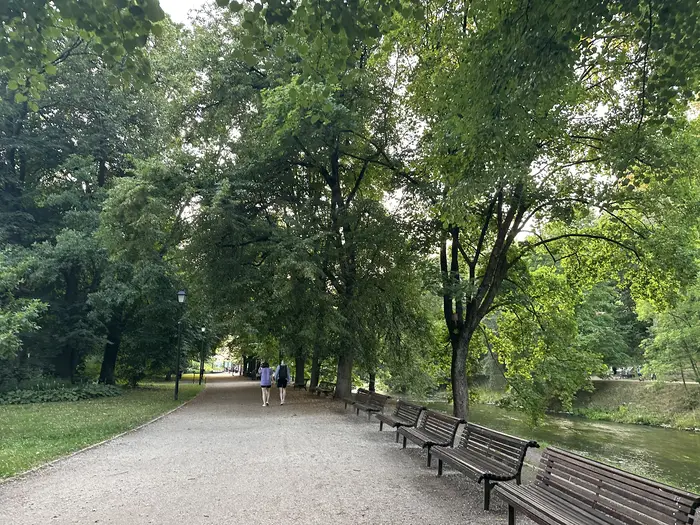
Bernardine Garden Musical Fountain — Vilnius
The illuminated musical fountain at the centre of Bernardine Garden in Vilnius Old Town — choreographed water-and-light shows that run seasonally from spring to autumn.
Read guide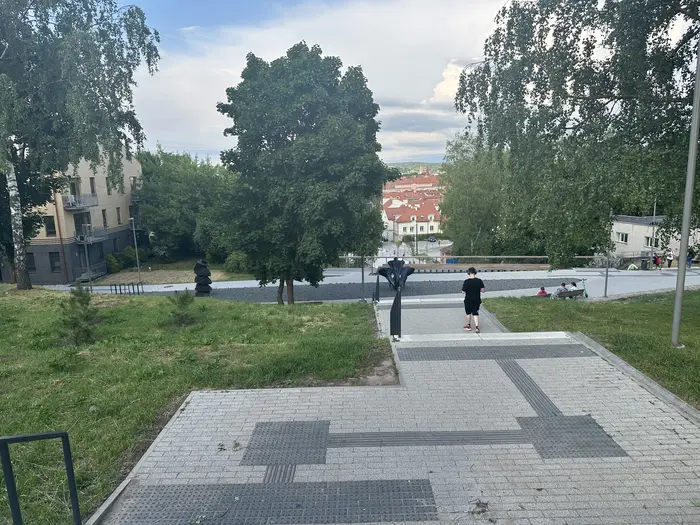
Bernardinų Parkas — Vilnius
An exceptionally clean, tranquil park in the heart of Vilnius Old Town, with fountains, flowerbeds, riverside paths and playgrounds — an easy green break after a morning of sightseeing.
Read guide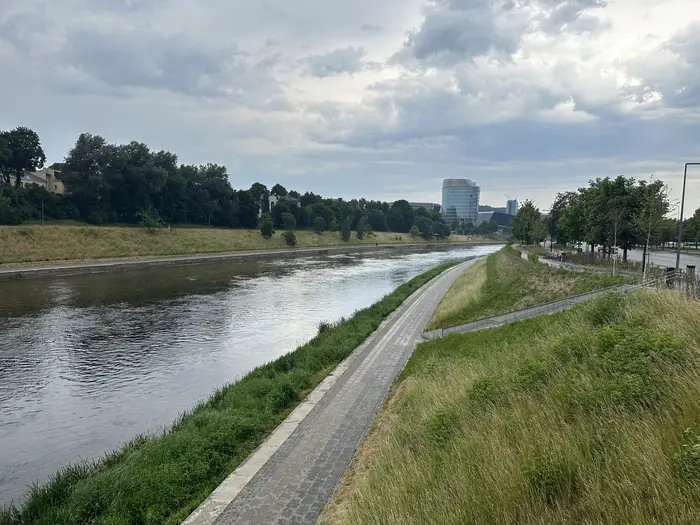
Best Vilnius Tours
The best tours in Vilnius: when to book walking, food, Jewish-heritage, Soviet-history, Trakai, hot-air-balloon and bike tours — and when to go it alone.
Read guideBruknė — baking studio & park bistro in Vilnius
Bruknė is a cosy baking studio and bistro in Neries senvagė park, known for seasonal desserts, custom cakes and a homemade feel — with a summer terrace and a winter garden by the fireplace.
Read guide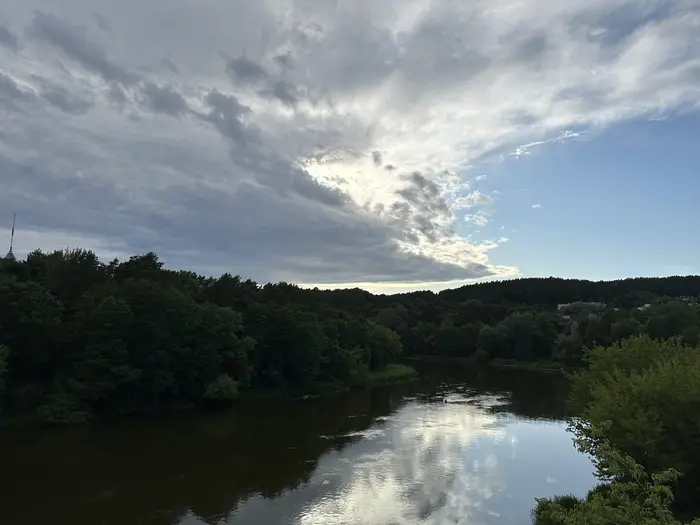
Centre for Civil Education (Valstybės pažinimo centras)
A free, interactive museum inside the Presidential Palace where tablets and augmented reality bring Lithuanian statehood and civics to life — engaging for adults and children alike.
Read guide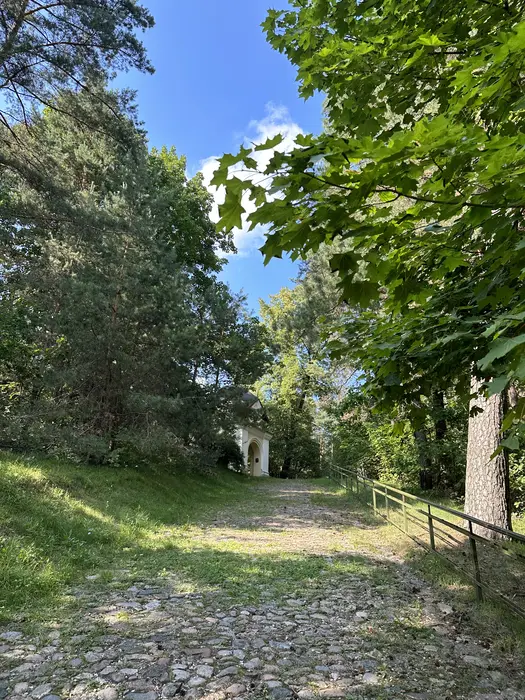
Chačapuri Bistro @ PC BIG — Georgian food in Vilnius
A beloved Georgian bistro at the PC BIG centre, praised for authentic, generously portioned khachapuri, khinkali and kharcho soup, plus famously friendly service.
Read guide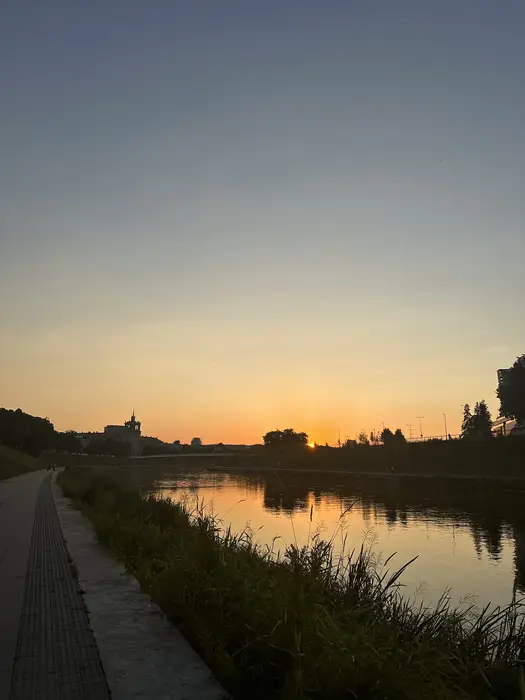
Chiune Sugihara Sakura Park — Vilnius cherry blossoms
A riverside park of 200 Japanese cherry trees by the Neris, honouring diplomat Chiune Sugihara — magical for a couple of weeks each spring when the sakura bloom.
Read guide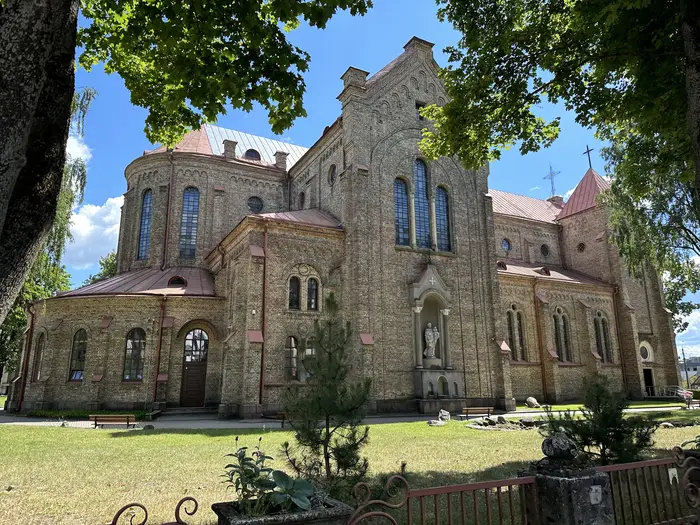
Church Heritage Museum (Bažnytinio paveldo muziejus)
Sacred art and treasures across three sites — the Cathedral Treasury, Bell Tower and Crypts — housed in the historic Church of St Michael the Archangel in Vilnius Old Town.
Read guide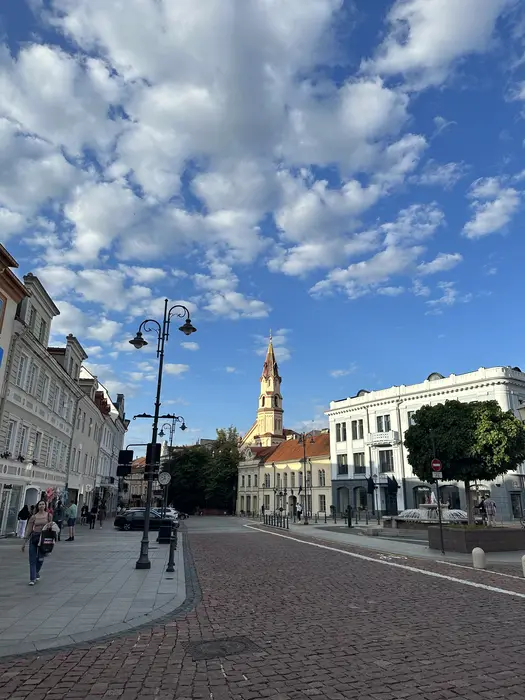
Church of All Saints
A peaceful Baroque-and-Rococo church on Rūdninkų Street, the Church of All Saints rewards visitors with a richly decorated interior, fine acoustics and a calm, off-the-tourist-trail atmosphere in Vilnius Old Town.
Read guide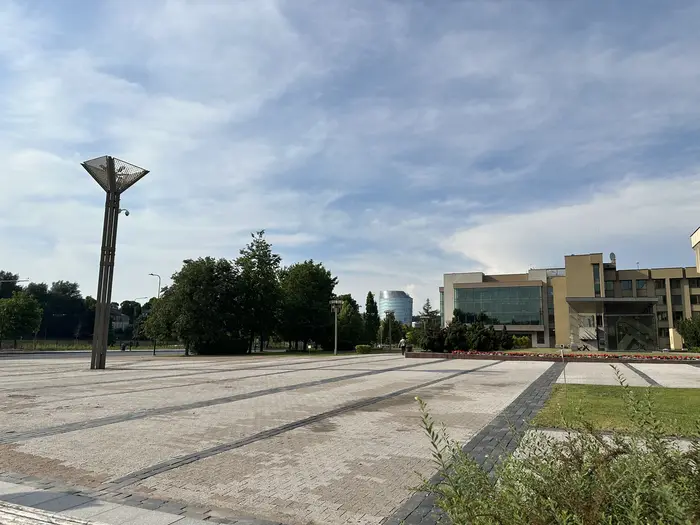
Church of Christ the Redeemer
A small, beautiful church in Antakalnis run by the Congregation of St John, the Church of Christ the Redeemer is a peaceful sanctuary with a welcoming, bilingual community and a popular setting for weddings and baptisms.
Read guide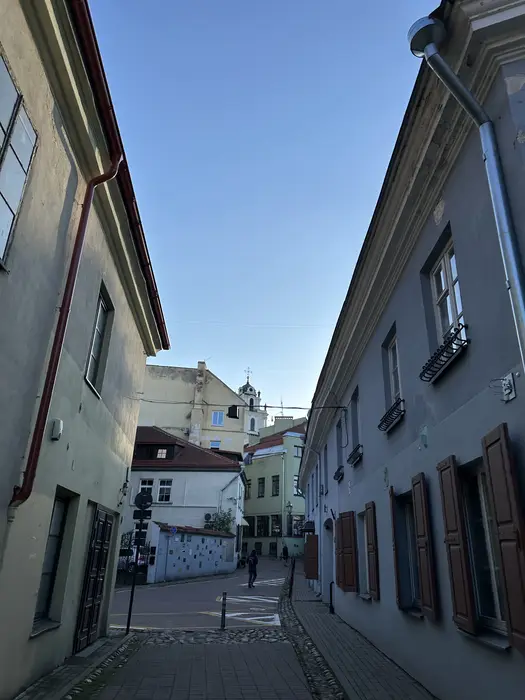
Church of St Casimir
The oldest Baroque church in Vilnius, the pink-façaded Church of St Casimir is crowned by a unique dome topped with the symbol of the Grand Duchy of Lithuania, with superb acoustics for free organ and classical concerts in the heart of the Old Town.
Read guide
Church of St Constantine and Michael (Romanov Church)
Known as the Romanov Church, the Orthodox Church of St Constantine and Michael was built in 1913 to mark 300 years of the Romanov dynasty, and its golden domes in the Rostov–Suzdal style are among the most striking sights on J. Basanavičiaus Street.
Read guide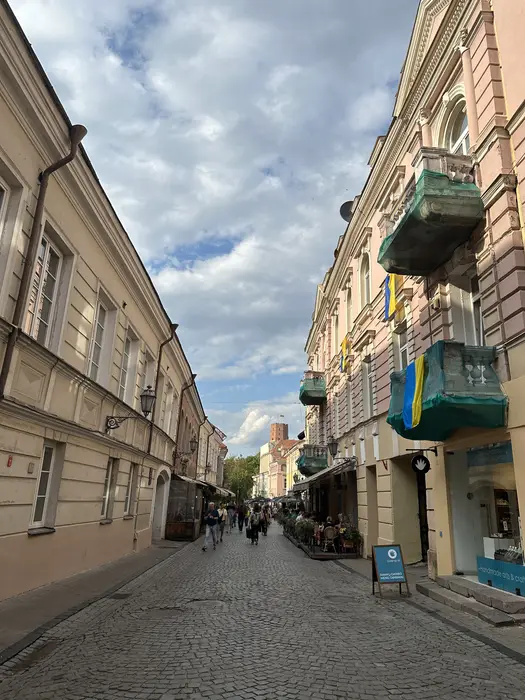
Church of St Francis of Assisi (Bernardine Church)
The Bernardine Church of St Francis of Assisi and St Bernard — a vast Gothic brick church that, with neighbouring St Anne's, forms one of Vilnius Old Town's most beloved landmark ensembles.
Read guide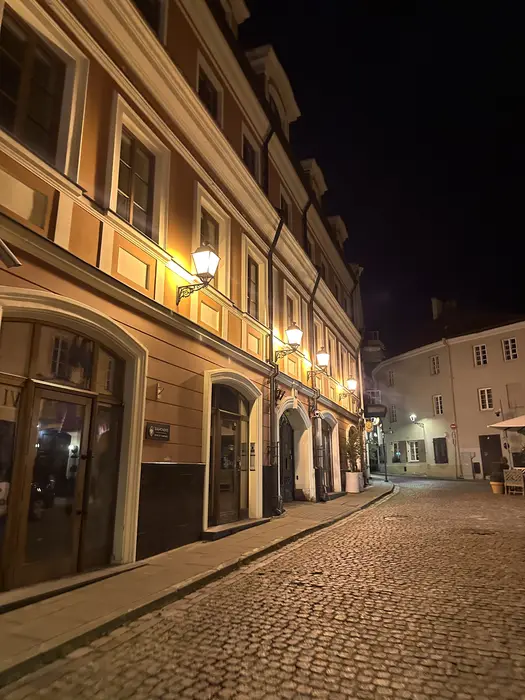
Church of St Ignatius of Loyola
A Baroque former Jesuit church on Šv. Ignoto Street that today serves as the cathedral of the Military Ordinariate of Lithuania — a warm, community-minded corner of the Old Town.
Read guide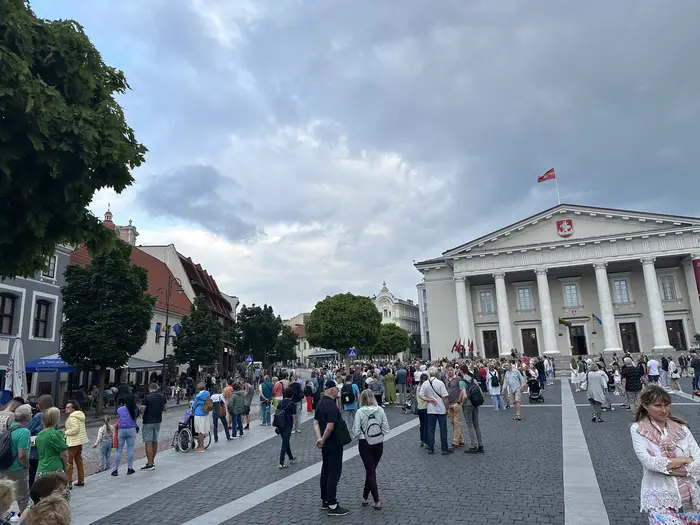
Church of St John the Baptist and St John the Apostle and Evangelist
A magnificent Baroque Jesuit church inside the Vilnius University ensemble, prized for its grand high altar, monumental organ, excellent concert acoustics and its adjoining bell tower — the tallest structure in the Old Town.
Read guideChurch of St Michael the Archangel (Church Heritage Museum)
Now home to the Church Heritage Museum's Treasury, the former Church of St Michael the Archangel blends Gothic, Renaissance and Baroque architecture with Lithuania's richest collection of sacred art, including the historic Vilnius Cathedral Treasury.
Read guide
Church of St Raphael the Archangel
A graceful late-Baroque church set beside the Neris just north of the Old Town, the Church of St Raphael the Archangel is admired for its riverside setting, Rococo-topped towers and quiet, welcoming parish atmosphere.
Read guideChurch of St Theresa
One of Vilnius's earliest Baroque churches, the Discalced Carmelite Church of St Theresa stands beside the Gate of Dawn and connects to its famous chapel by an internal passage.
Read guideChurch of the Assumption of the Blessed Virgin Mary
One of the oldest churches in Vilnius — a Franciscan church on Trakų Street blending Gothic and Baroque, known for its 'White Madonna', star-vaulted ceilings and fine acoustics.
Read guideDay Trips from Vilnius
Easy escapes beyond Vilnius — from Trakai and Kernavė to Kaunas and Europos Parkas — with transport notes, timing and how to choose the right full-day adventure.
Read guide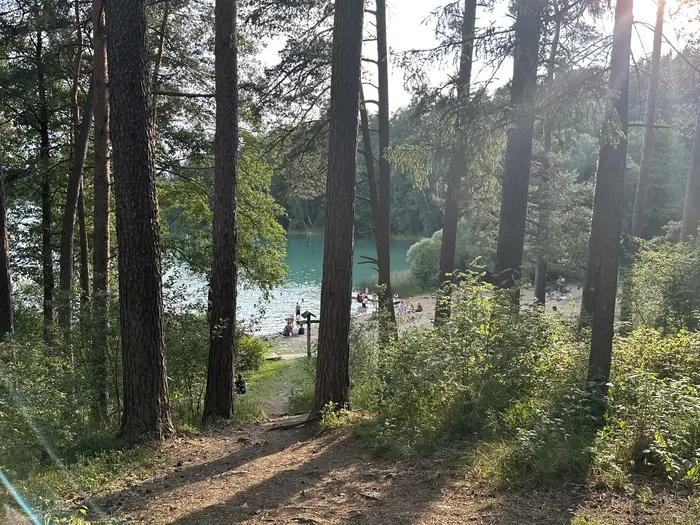
Dodo Pizza
A family-friendly pizzeria serving creative American-style pizzas, praised for fast dine-in service and a popular kids' play corner.
Read guide
Dominican Church of Apostles St Philip and St Jacob
A late-Baroque Dominican church near Lukiškės Square, home to the miraculous icon of Our Lady of Lukiškės and a 61-bell carillon — the largest in the Baltics.
Read guide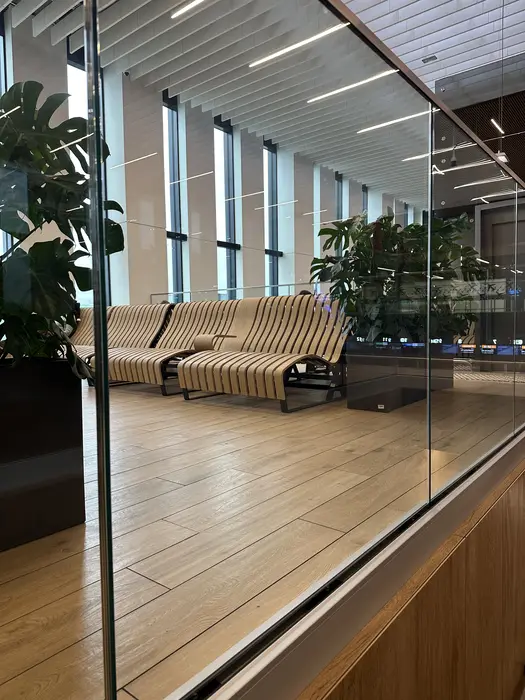
Dominican Church of the Holy Spirit
A modest Old Town facade hides one of Vilnius's most breathtaking late-Baroque and Rococo interiors — a true hidden gem and the heart of the city's Polish community.
Read guide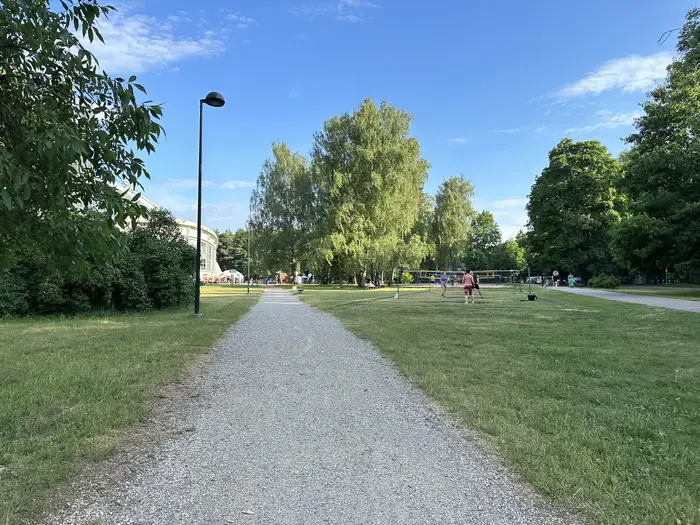
Energy and Technology Museum (Energetikos ir technikos muziejus)
Vilnius's first power plant, reborn as a hands-on science museum with the largest Tesla coils in the Baltics, interactive exhibits for all ages and rooftop city views.
Read guideFabrikėlis
An informal fine-dining restaurant in a Valakampiai pine forest just outside Vilnius, where chef Ovidijus Orenta turns local and foraged ingredients into a creative seasonal menu.
Read guide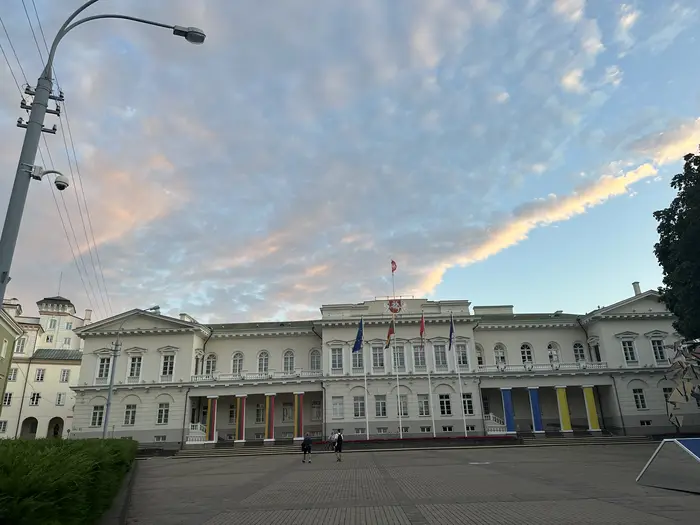
Fire Place
A tiny, cosy corner spot north of the river, beloved for shakshuka, fresh pita and egg dishes cooked in a real wood-fired oven — one of Vilnius's best breakfast and brunch stops.
Read guide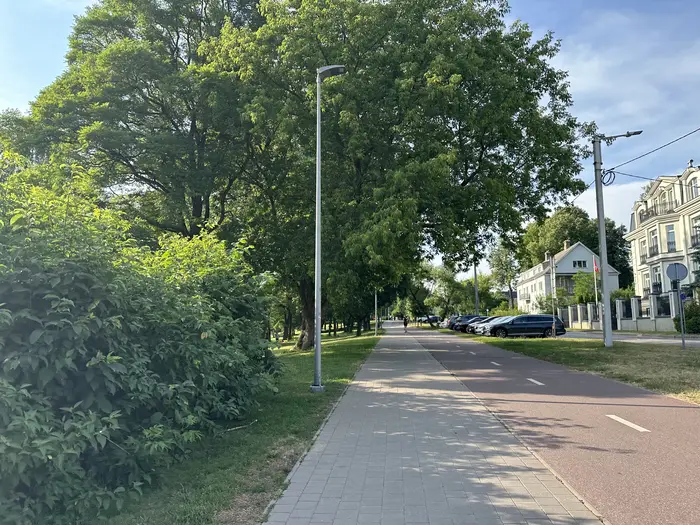
Franciscan Monastery
A deeply historic, maze-like Old Town monastery beside the Church of the Assumption — a peaceful, atmospheric complex that doubles as a cultural hub, currently under restoration.
Read guideGediminas Hill & the Funicular
How to reach the top of Gediminas Hill in Vilnius — by funicular, by the footpath, or via the Old Arsenal side — with accessibility, weather and ticket notes.
Read guideGentleShrimp
An intimate oyster bar near Castle Hill, GentleShrimp is a hidden-gem seafood spot where the passionate owner walks you through the freshest oysters in Vilnius, region by region.
Read guide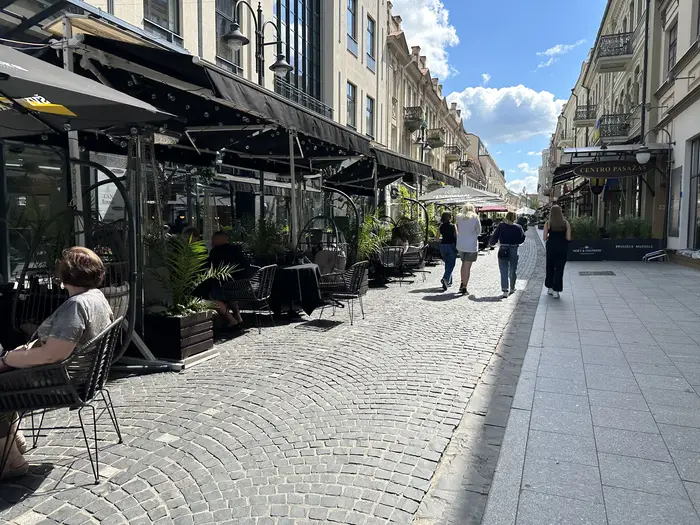
Georgian House
A cozy, rustic restaurant in Vilnius Old Town serving authentic Georgian cuisine — khachapuri, khinkali, shashlik and more — under native Kartvelian chef Sulkhanas Khomeriki.
Read guideGlass Quarter
A revived 600-year-old district in Vilnius Old Town, the Glass Quarter (Stiklių kvartalas) winds through narrow cobbled lanes lined with jewellers' workshops, galleries, boutiques and cozy cafés.
Read guide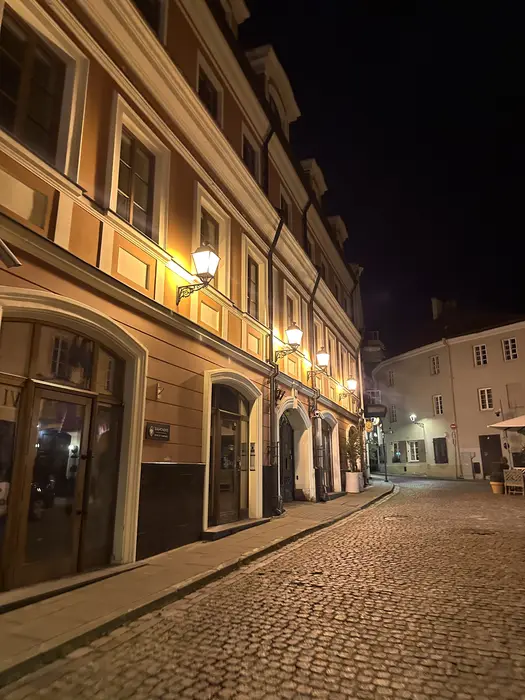
Grill London
A popular Lithuanian grill restaurant serving great-value burgers, steaks and ribs cooked in Josper charcoal ovens, set in a striking interior styled like a 19th-century London train station.
Read guide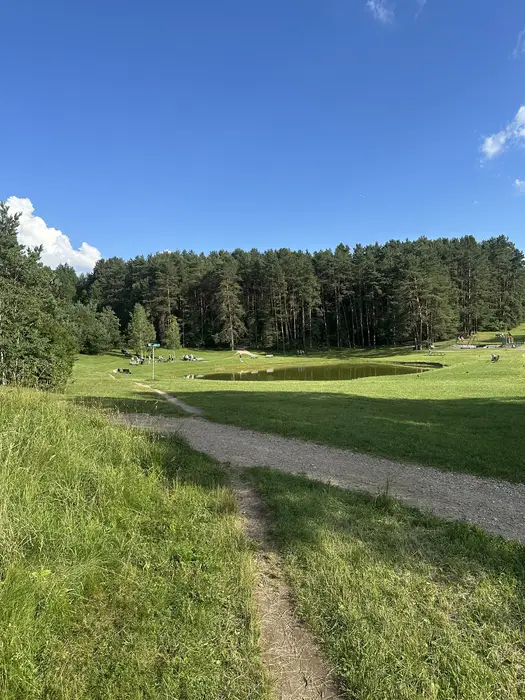
Gurmanai
Gurmanai is a warm, chef-led restaurant on Užupio gatvė where Dainius Špakauskas cooks globally-inspired plates and treats diners more like guests in his home than customers.
Read guide
Hilary Raduszkiewicz's Palace
A romantic neo-Gothic palace on the bank of the Neris that looks like a small castle, framed by Vilnius's modern glass towers and now home to the Lithuanian Architects' Union.
Read guide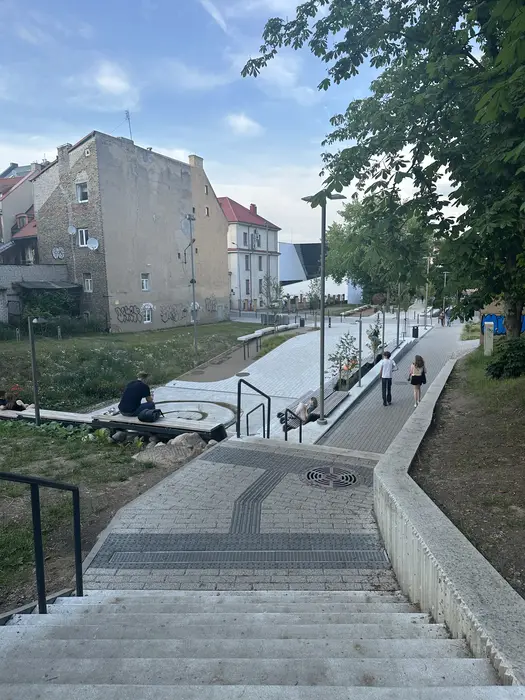
Holigans
Holigans is a cozy, fully plant-based restaurant in Vilnius known for organic lunches, a community vibe and a heavenly selection of vegan, gluten-free and sugar-free desserts.
Read guide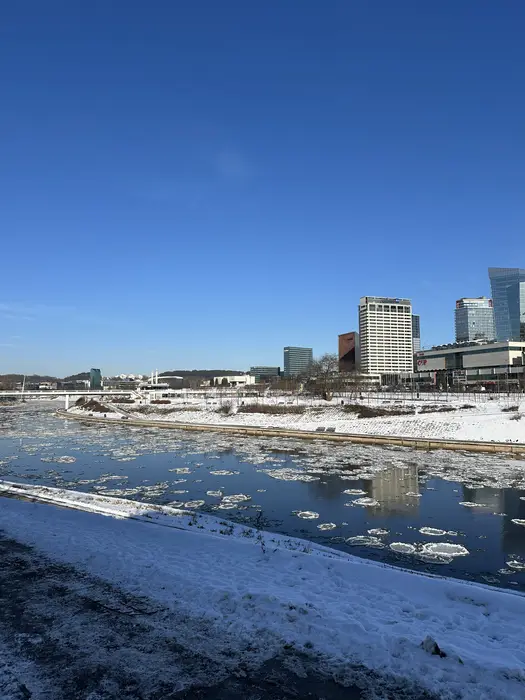
Holy Trinity Uniate Church
A serene, atmospheric Greek Catholic church and monastery near the Gates of Dawn, blending Gothic, Baroque and Byzantine styles and serving Vilnius's Ukrainian and Belarusian communities.
Read guide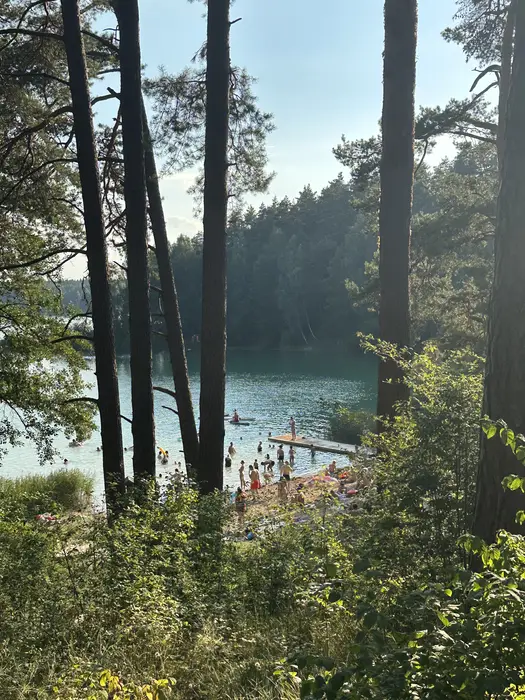
Hot Air Balloons Vilnius - Ballooning.LT
Ballooning.LT runs sunrise and sunset hot air balloon flights over Vilnius and Trakai, with experienced pilots, sweeping aerial views and a champagne ceremony to finish.
Read guideIndependence Square
A spacious civic square beside the Seimas on Gedimino prospektas, Independence Square is a powerful symbol of Lithuanian freedom and the site of the January 1991 barricades.
Read guideKarčma 1863
A cozy, family-run restaurant in the historic heart of Vilnius serving authentic Belarusian cuisine, themed around the 1863 Uprising and doubling as a cultural hub for the Belarusian diaspora.
Read guide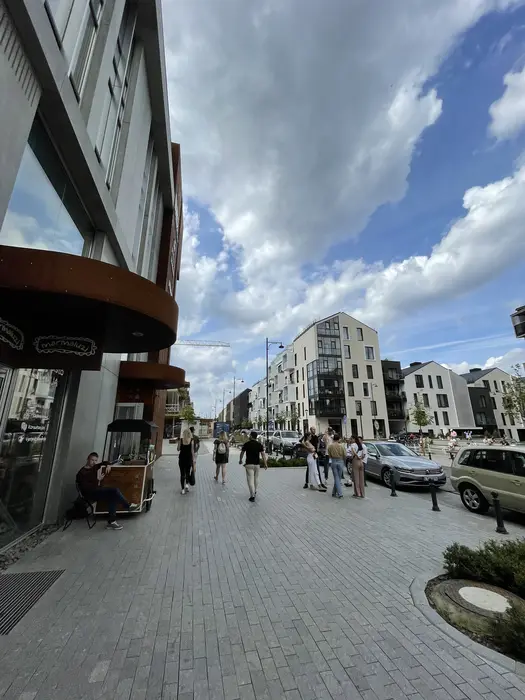
Kavos ERA
A bustling, family-run Vilnius café established in 2015, beloved for its all-day breakfast and brunch menu and a specialty coffee program built with local roaster Taste Map.
Read guide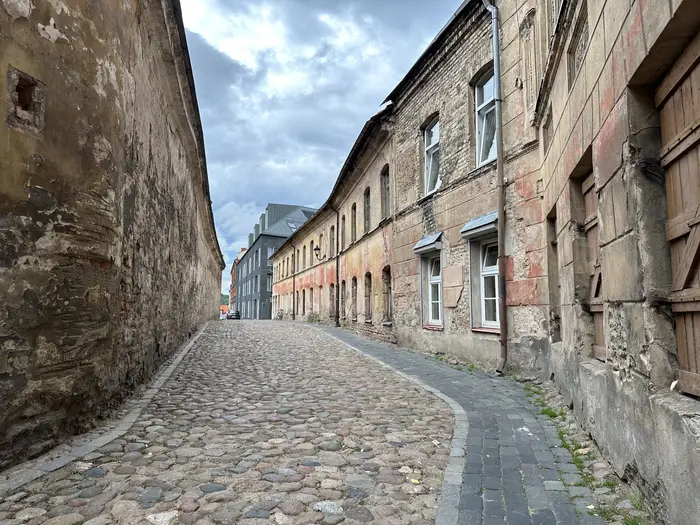
Kazys Varnelis House-Museum
A hidden-gem Old Town museum — the only art-dedicated branch of the National Museum of Lithuania — where Kazys Varnelis's optical art is set among an extraordinary collection of historical furniture, sculpture and rare books.
Read guide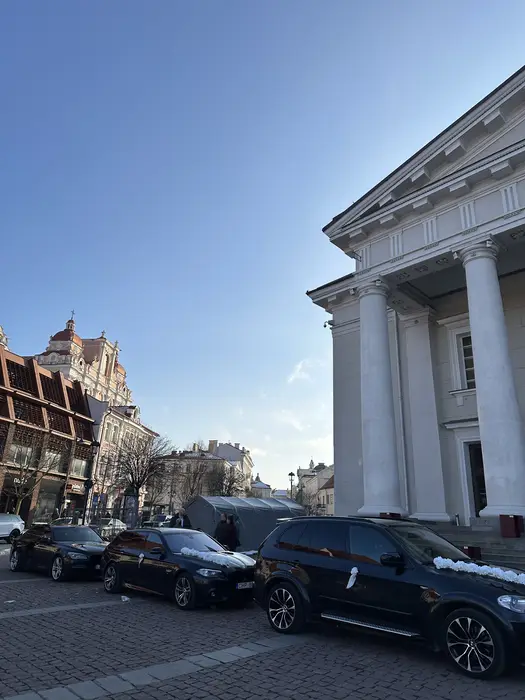
Kikilio lizdas
A family-focused café and playroom inside the PC Hyper Rimi shopping centre in Vilnius, with a large play area that makes it a favourite for children's birthday parties and family outings.
Read guide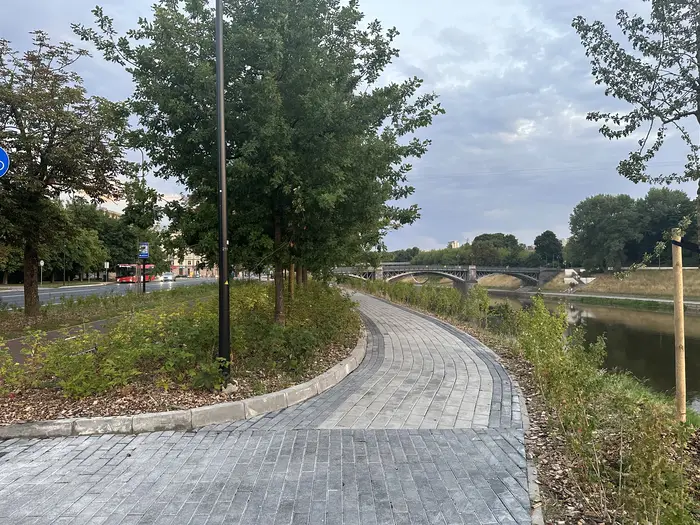
King Mindaugas Bridge
A modern pedestrian-and-traffic bridge over the Neris, linking Vilnius Old Town to the city centre — a favourite for panoramic photos of Gediminas Tower and the skyline, especially at sunset.
Read guideLa Madeleine Bakery
A beloved French bakery and café in Vilnius, La Madeleine is praised for some of the best croissants in the city, a cozy atmosphere, and hands-on baking workshops.
Read guideLengvo ryto užkandžiai
A much-loved Vilnius catering service delivering fresh, beautifully presented snacks and finger food for events, birthdays, children's parties and office gatherings.
Read guide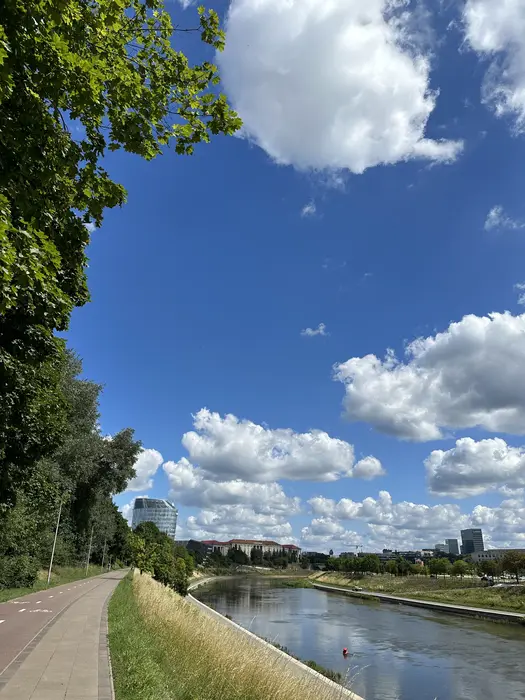
Lithuanian Railway Museum
A modern, hands-on railway museum beside Vilnius station, with model train layouts, a train-driving simulator and a free outdoor park of historic locomotives — a hit with families.
Read guide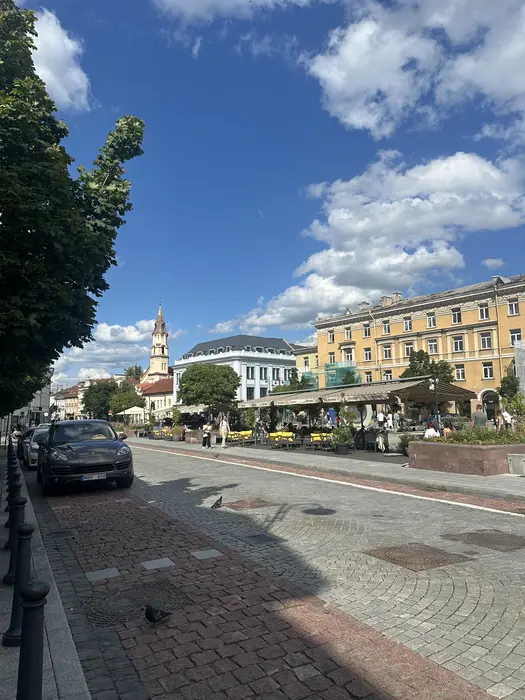
Liubartas Bridge
A river crossing over the Neris that doubles as a Vilnius landmark — known for panoramic views, an illuminated profile after dark, street-art Atlantes on its pillars and a lively space underneath.
Read guideLong Road
A cozy, family-friendly Vilnius restaurant known for consistently delicious, well-presented dishes, a popular daily business lunch, an outdoor area with a small playground and a private banquet room.
Read guideLRT January 13th Memorial
A quiet memorial at the Lithuanian Radio and Television building honouring the civilians killed during the Soviet aggression of 13 January 1991 — a powerful symbol of peaceful resistance and independence.
Read guideLvovo Gastro Pub
A cosy neighbourhood gastro pub just outside Vilnius's centre, loved for warm owner-driven service, generous homemade-style plates, value lunch specials and live music nights.
Read guideM. K. Čiurlionis House
An intimate Old Town memorial museum in the former home of Lithuanian artist-composer M. K. Čiurlionis — cosy, home-like, with frequent classical concerts and a VR film experience.
Read guideMargutis Easter Egg
A quirky 300 kg Easter egg sculpture on a granite column at the edge of Vilnius's Old Town — a charming photo stop and easy meeting point with roots in Užupis history.
Read guide
Markets & Fairs in Vilnius
Weekly farmers' stalls, flea finds and design pop-ups buzzing with local makers and seasonal goods — where to shop the markets and fairs of Vilnius and when they happen.
Read guide
Markučiai Manor Museum
A cosy 19th-century wooden manor — once the home of Pushkin's son — with authentically furnished rooms, the Pushkin family crest and an 18-hectare park with ponds and a chapel.
Read guideMarkučiai Park
A cherished urban oasis southeast of Vilnius's Old Town — quiet walks, duck-filled ponds and vivid autumn colour, with the Pushkin literary manor next door.
Read guideMiesto Laboratorija
A sustainable community hub in Antakalnis — neighbourhood café, educational gardens, event space and a children's playground, with a beloved weekend brunch and an eco-first ethos.
Read guide
Montis Magia
A specialist outdoor and mountaineering shop in Vilnius, praised for genuinely expert staff and a deep selection of high-quality climbing, hiking and expedition gear.
Read guide
Monument of Stanisław Moniuszko
A modest bust of composer Stanisław Moniuszko, the 'father of Polish national opera', in a peaceful family-friendly square beside St Catherine's Church in Vilnius Old Town.
Read guideMonument to Adam Mickiewicz
A monument to Romantic poet Adam Mickiewicz beside St Anne's Church in Vilnius Old Town — a symbol of shared Polish-Lithuanian heritage, ringed by reliefs from his great works.
Read guideMonument to Grand Duke Gediminas
An imposing monument to Grand Duke Gediminas, founder of Vilnius, in the heart of Cathedral Square — a striking photo subject and a natural city-centre meeting point.
Read guide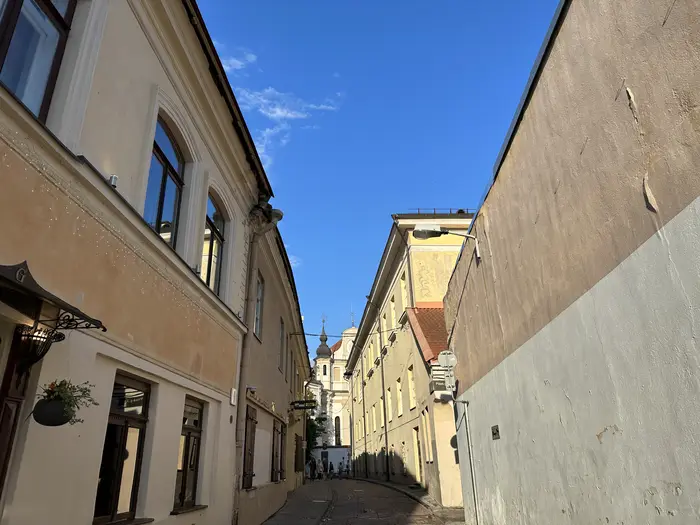
Monument to King Mindaugas
The monument to King Mindaugas — Lithuania's first and only crowned king and the founder of the Lithuanian state — stands in a pleasant park beside the National Museum, a short walk from Cathedral Square.
Read guide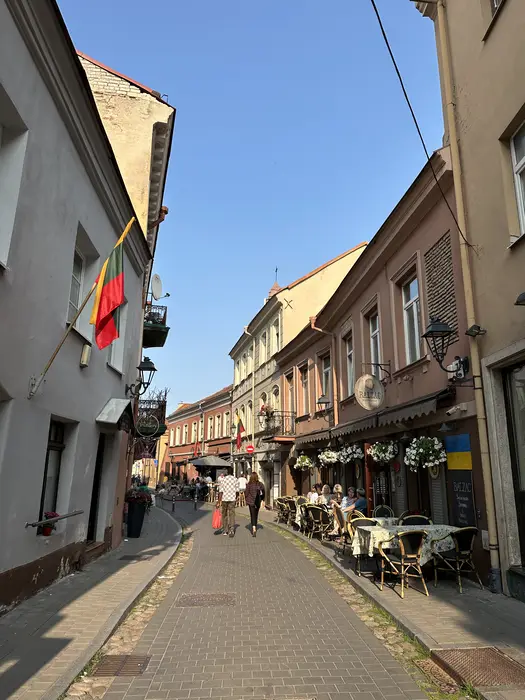
Monument to Zemach Shabad
A tender bronze sculpture in the former Jewish ghetto honouring Dr Zemach Shabad — the kindly Vilnius physician who inspired the children's character Doctor Aibolit.
Read guide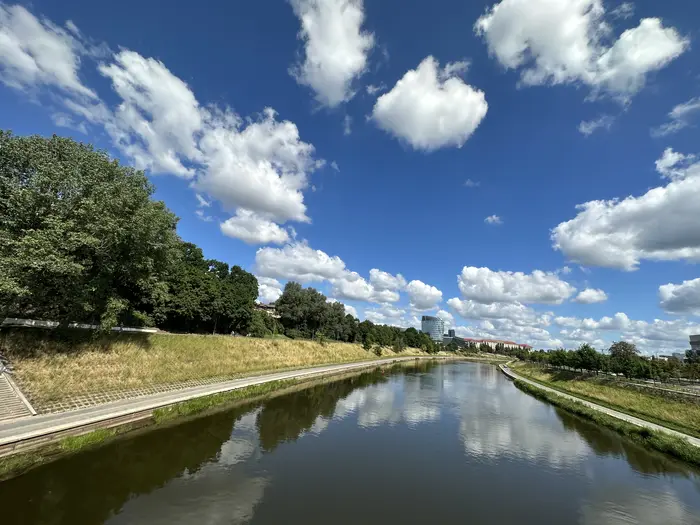
Museum of Applied Arts & Design
A locals' favourite for its ever-changing exhibitions of design, fashion history and major-name art, set inside the 16th-century Old Arsenal beside Vilnius Cathedral.
Read guide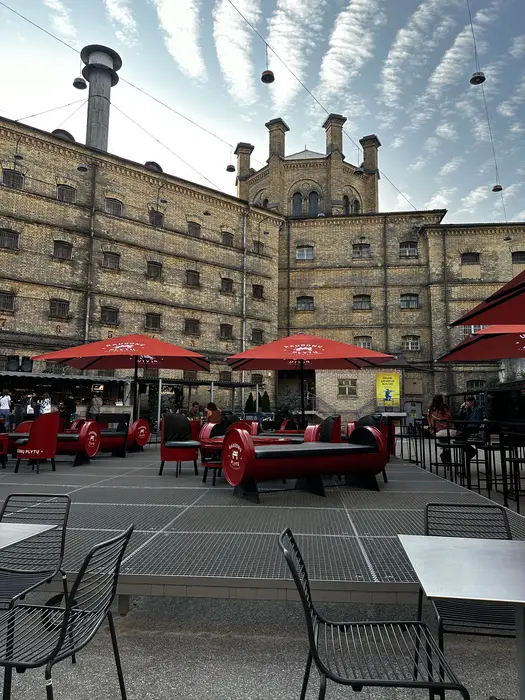
NARUTIS Restaurant
An intimate fine-dining room inside a 16th-century Old Town building, serving European and Lithuanian dishes under 18th-century frescoes on Pilies Street.
Read guide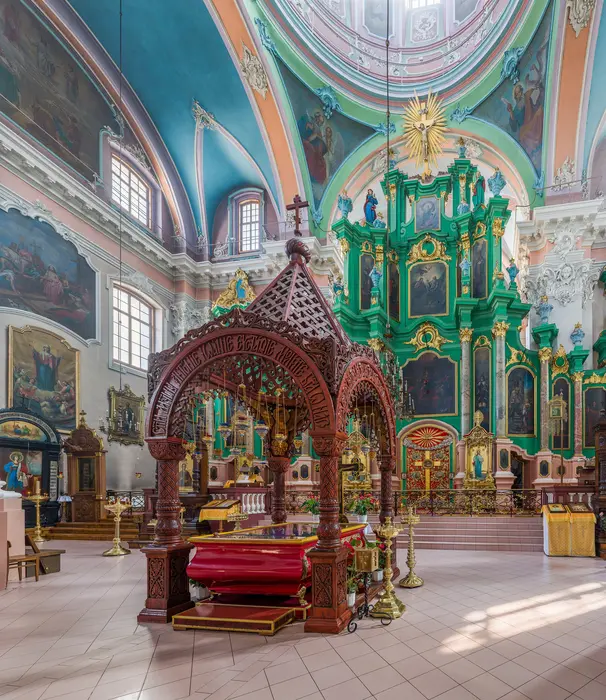
Orthodox Cathedral of the Theotokos
One of the oldest Orthodox churches in Vilnius, founded in 1346, with a serene atmosphere and a breathtaking gilded iconostasis, set near the Vilnia river below Užupis.
Read guide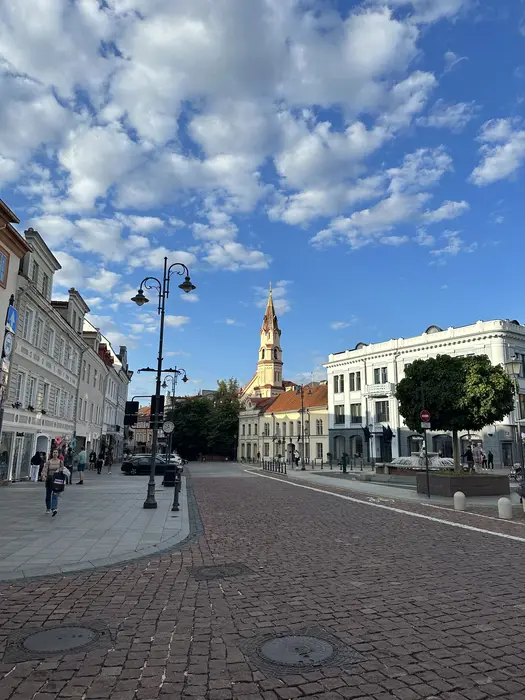
Orthodox Church of St Nicholas
One of the oldest Orthodox churches in Vilnius, on Didžioji Street in the Old Town — a cozy, serene sanctuary with Russian-Byzantine decoration, deep history and moving choral chants during services.
Read guideOrthodox Church of the Holy Spirit
The principal Orthodox church in Lithuania, hidden behind a gate just off Aušros Vartų in the Old Town, with a vivid green Vilnian Baroque iconostasis and the relics of the three Vilnius martyrs.
Read guide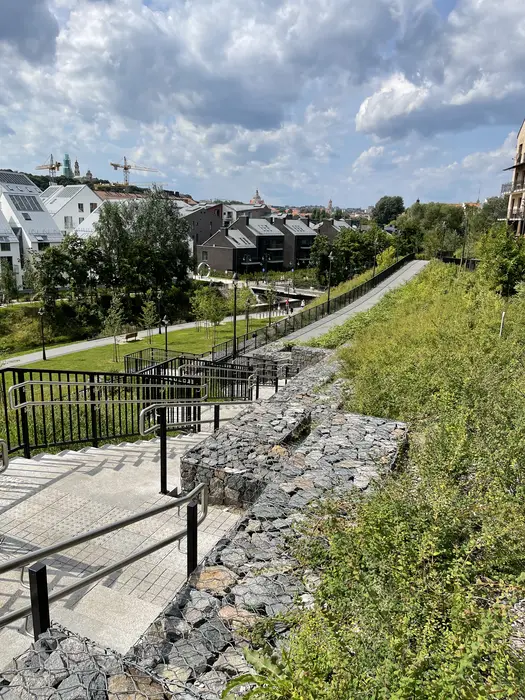
Ozas Park
A modern, well-kept green space in northern Vilnius with walking paths, duck ponds, a full disc golf course and basketball courts — a calm local spot for families, dog walkers and a lunch-break stroll.
Read guide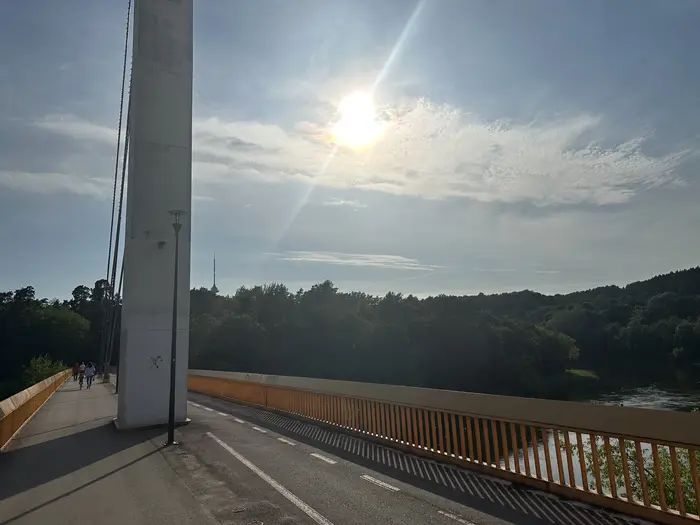
Panama Food Garden
A romantic Vilnius garden restaurant in Žvėrynas, famous for its candlelit greenhouse seating and a European, seafood-and-steak menu — a top choice for dates and special occasions. Book ahead.
Read guide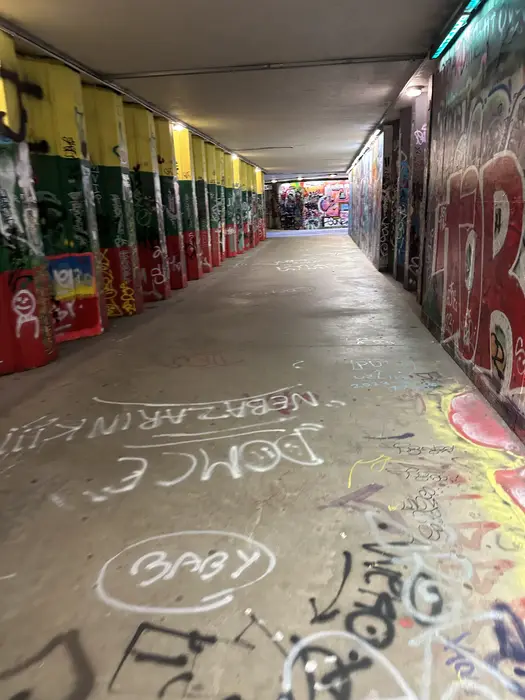
Pavlova
A mono-concept dessert café in Vilnius serving what many call the city's best pavlova — light, fresh meringues assembled to order, in many flavours and three sweetness levels, plus weekend afternoon tea and dessert-making workshops.
Read guidePinavija Café & Bakery
A long-running Old Town café and bakery with a charming, Parisian-style interior, cakes sold by weight, an acclaimed Napoleon and homemade kibinai, plus a popular brunch — family-friendly but busy at weekends.
Read guidePirmas Blynas
A social-enterprise pancake restaurant in a repurposed historic church in the Old Town, employing and empowering people with disabilities, famous for huge 36cm sweet and savoury crepes and exceptionally warm service.
Read guide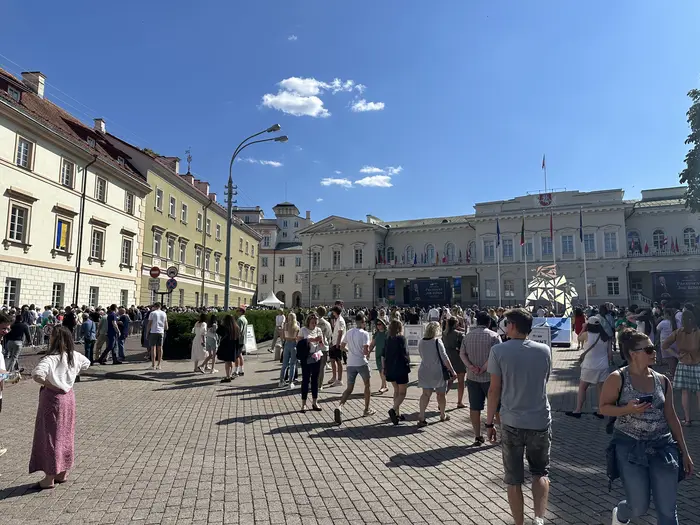
Presidential Palace (Office of the President)
Lithuania's elegant neoclassical Presidential Palace, with a free public courtyard and a Sunday-noon flag ceremony performed by guards in historic dress.
Read guide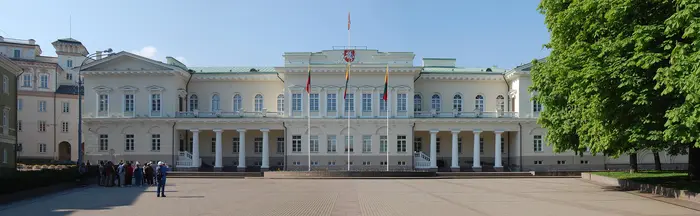
Presidential Palace Grounds
A tranquil, well-kept public space beside Lithuania's Presidential Palace in the Old Town, known for its classical architecture, courtyard fountain and the spectacular flag ceremony held in Daukantas Square on Sundays at noon.
Read guide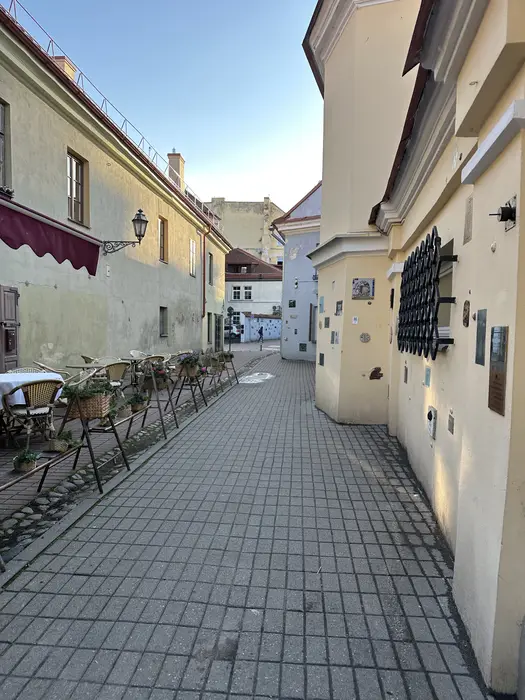
Prusakovų Užkandinė
A no-frills snack bar in Vilnius widely credited with the city's best čeburekai — massive, crispy and non-greasy — served with friendly service, complimentary tea and a kids' play corner, all at low prices.
Read guide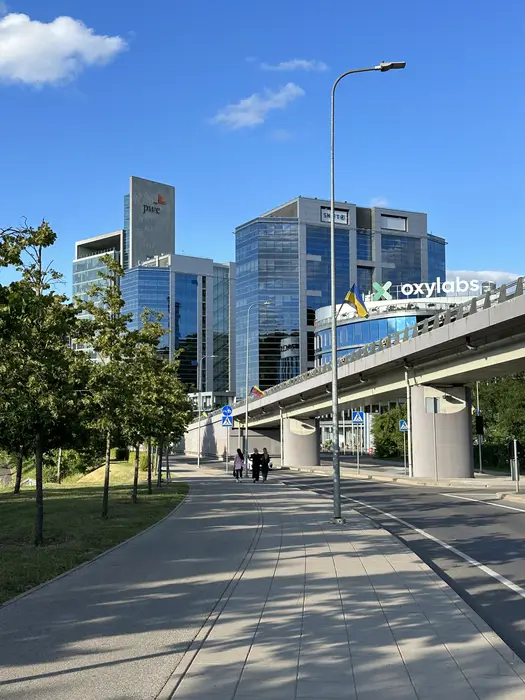
Rasos Cemetery: A Respectful Visitor's Guide
A respectful guide to Rasos Cemetery, Vilnius's oldest and most atmospheric burial ground — Polish-Lithuanian memory, the Piłsudski heart mausoleum, paths, etiquette and whether to take a guide.
Read guideReformatų (Reformators) Park
A recently renovated green space in central Vilnius blending modern, family-friendly playgrounds and free hammocks with the marked archaeological remains of a 16th-century Evangelical Reformed cemetery and church.
Read guide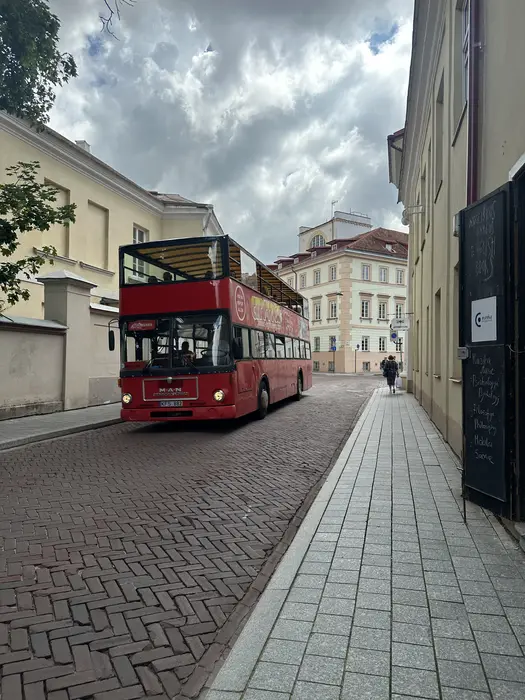
Restoranas Kristoforas
An elegant restaurant and bar inside the historic Vilnius Town Hall serving high-end 'essence of Vilnius flavours' cuisine, creative house cocktails and a wine list curated by the owners over seven years.
Read guideRiver Town
An acclaimed riverside restaurant in Vilnius praised for perfectly cooked steaks and seafood, passionate service and a terrace with views over the Neris and Gediminas Castle — pet-friendly, with free parking.
Read guideSaint Catherine's Church
A late-Baroque former convent church on Vilniaus gatvė, restored and reopened in 2006 as one of Vilnius's finest concert halls, prized for its acoustics and varied cultural programme rather than as a place of worship.
Read guide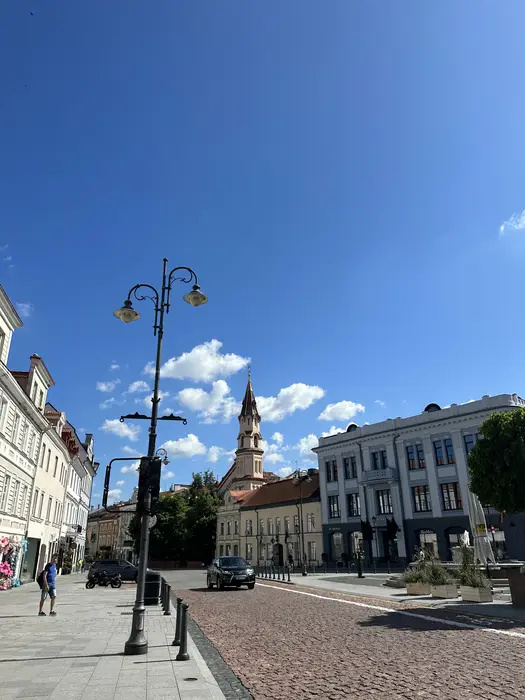
Saint Parasceve Orthodox Church
A small, serene Orthodox church on Didžioji gatvė in the Old Town — the oldest Orthodox church in Lithuania, famed as the place where Peter the Great is said to have stood godfather at the baptism of Abram Gannibal, the great-grandfather of poet Alexander Pushkin.
Read guide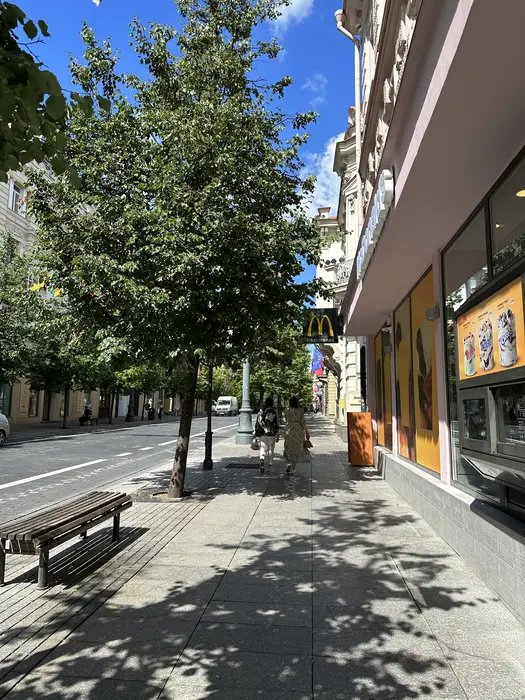
Sapieginė Trail
A hilly forest trail network in the Antakalnis district, a quick nature escape inside Vilnius prized by walkers and trail runners for its winding paths, varied terrain and hidden historical bunkers — just bring a map, as signage is sparse.
Read guide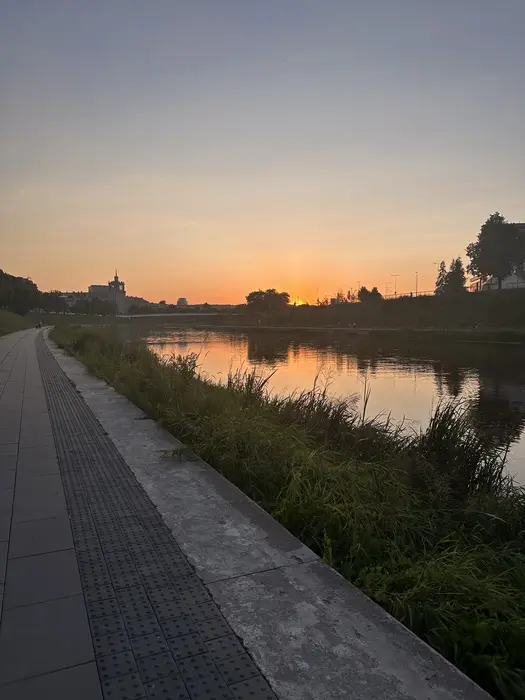
Signatories' House (The House of Signatories)
The Pilies gatvė townhouse where Lithuania's Act of Independence was signed on 16 February 1918, now a museum of the National Museum of Lithuania devoted to the era of the nation's rebirth — best experienced with a guide.
Read guideSimbiocity / Beta
A modern, multi-building business and conference campus about 10 minutes from central Vilnius, offering all-inclusive serviced offices and flexible event spaces — relevant to business visitors rather than sightseers.
Read guideSimonas Daukantas Square
A handsome, spacious Old Town square fronting the Presidential Palace and next to Vilnius University, known for its picturesque setting and the ceremonial flag-changing held every Sunday at noon with the Honour Guard.
Read guide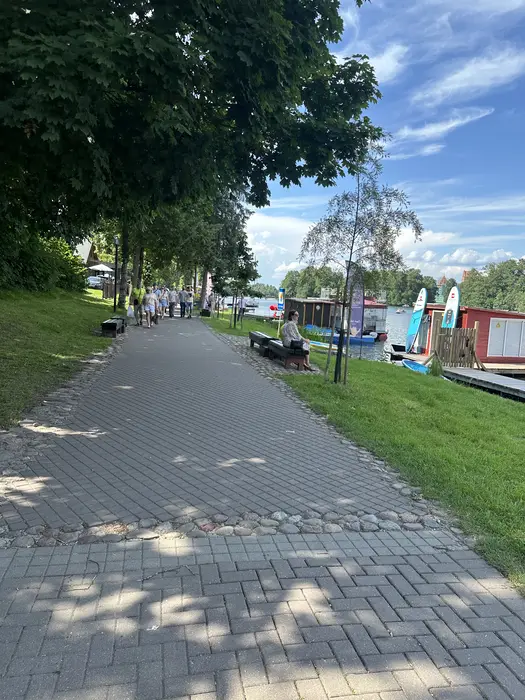
St Bartholomew the Apostle Church
A secluded, classical church in Užupis, founded in 1644 and now the spiritual home of Vilnius's Belarusian Catholic community, known for its peaceful courtyard terrace and panoramic views over the city.
Read guide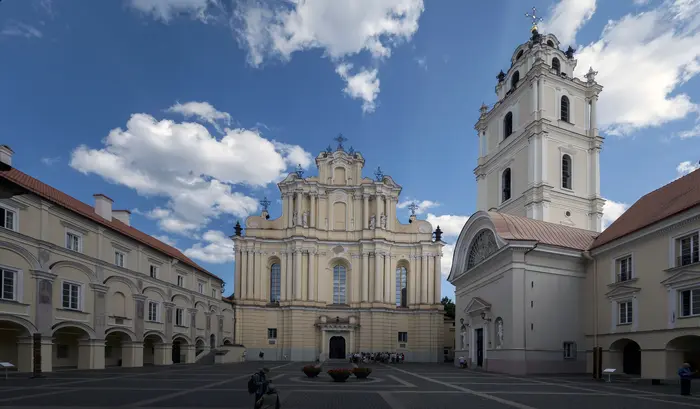
St Johns' Church Bell Tower
The tallest structure in Vilnius Old Town — the 68-metre bell tower of St Johns' Church, part of the Vilnius University Museum — with an elevator, a Foucault pendulum and what many call the best 360-degree panorama in the city.
Read guideSubačiaus Observation Deck
A free hilltop viewpoint on Subačiaus Street offering panoramic views over Vilnius Old Town, Užupis and the Paupys district — a favourite spot for sunsets, photographers and New Year's Eve fireworks.
Read guide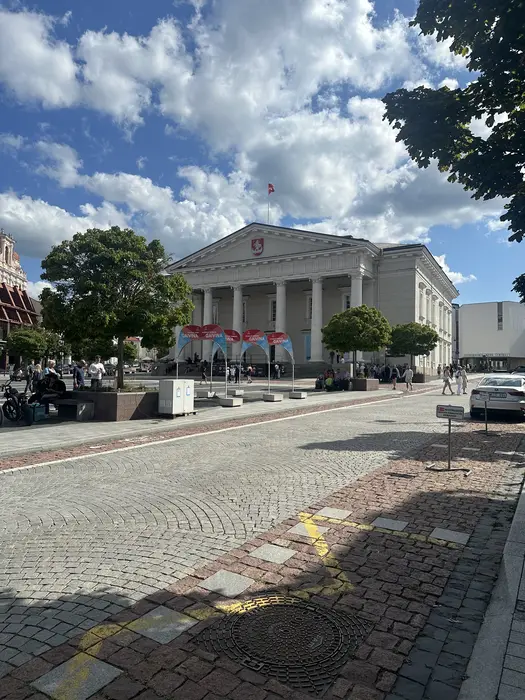
Table Hill
A flat-topped grassy hill near the Old Town and Užupis — a much-loved urban oasis for picnics, dog walking and relaxing, with seasonal community events and lovely light at sunrise and sunset.
Read guideTalutti Bakes and Shakes
A family-friendly American-style restaurant in Vilnius set in a stylish loft, known for generous burgers, ribs, pizza and shakes, exceptionally friendly service and a dedicated kids' play area.
Read guideTelegrafas
An elegant, Michelin Guide-listed restaurant inside the Grand Hotel Vilnius, overlooking Cathedral Square — known for a chef-driven kitchen and a much-loved weekend brunch.
Read guide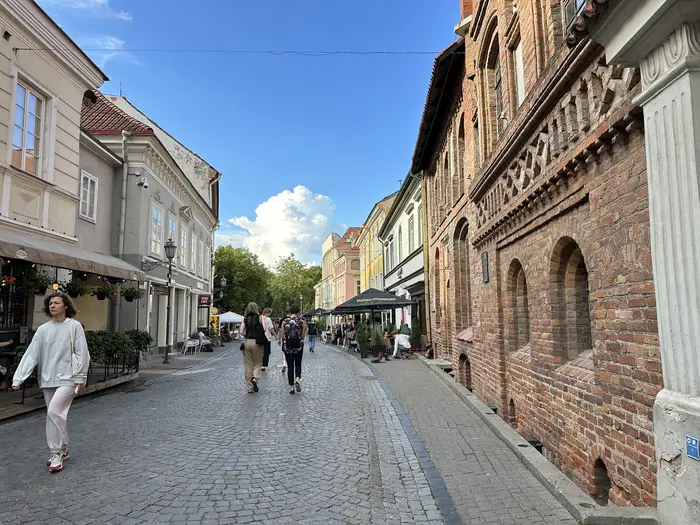
The Best Photo Spots in Vilnius
Where to take the best photos in Vilnius — hilltop panoramas, Old Town lanes, Baroque churches, Užupis art, street art, Christmas lights and the golden-hour timing that makes them sing.
Read guideThe Gallery
A stylish, modern restaurant in Vilnius's New City Center serving gourmet food with panoramic views and an outdoor terrace, popular for business lunches and special occasions.
Read guide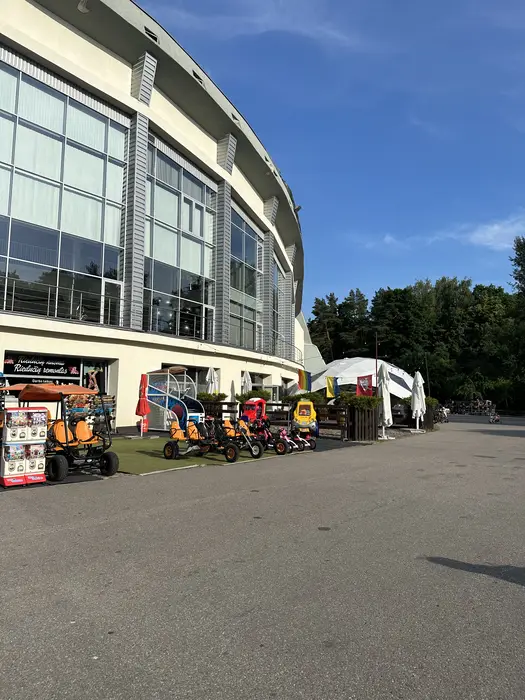
The Opera & Ballet Theatre Fountains
Modern cascading fountains in the plaza of the Lithuanian National Opera and Ballet Theatre in central Vilnius, a calm urban oasis that is especially enchanting at night thanks to its underwater lighting.
Read guide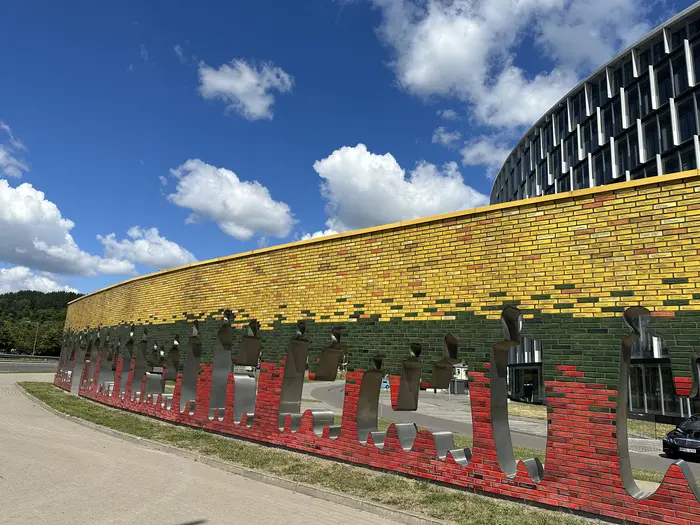
The Road of Freedom Memorial Wall
A striking public sculpture in Vilnius commemorating the 1989 Baltic Way human chain, built from thousands of colourful donor bricks in the colours of the Lithuanian flag, each engraved with a supporter's name.
Read guide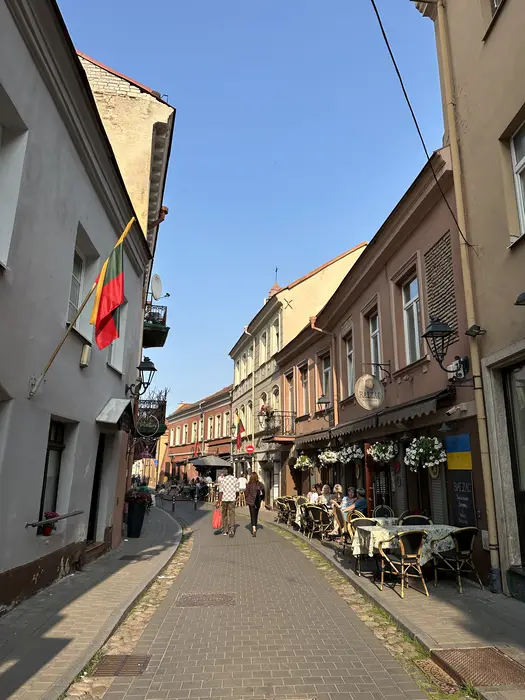
The Shrine of Divine Mercy
A serene Old Town shrine in Vilnius housing the original 1934 Image of Divine Mercy, painted under St Faustina's guidance, open around the clock for perpetual prayer and adoration.
Read guideThe Urban Garden
A popular vegetarian and vegan brunch spot on J. Basanavičiaus gatvė in central Vilnius, loved for healthy, generous plates, a cozy 'Bali vibe' interior and a children's play corner.
Read guide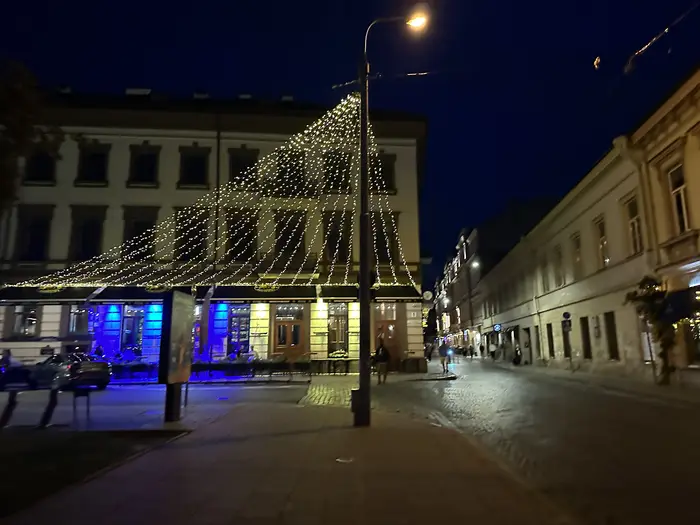
Tie Bridge
A quirky pedestrian bridge on the western edge of Vilnius covered in hundreds of donated neckties, linking the city to the walking and cycling trails of the Karoliniškės forest and lit up at night.
Read guide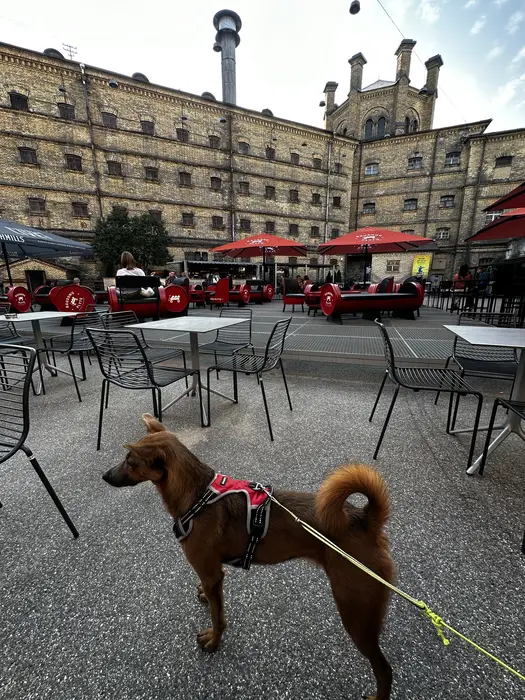
Toy Museum
A small, hands-on museum in Vilnius's Old Town where almost everything can be touched and played with, from Soviet-era arcade machines to reconstructions of toys based on Lithuanian archaeological finds.
Read guide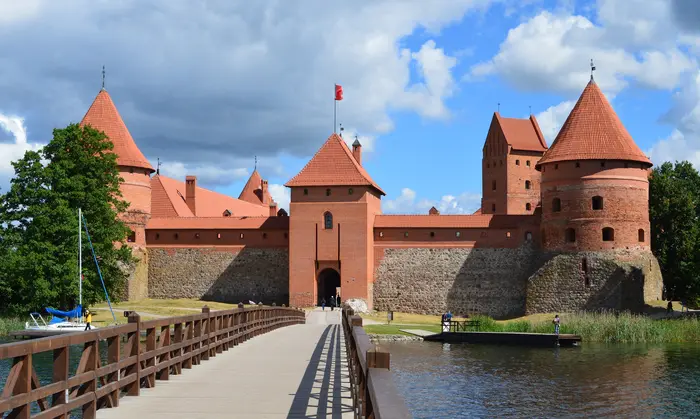
Trakai Day Trip
A complete Trakai day trip from Vilnius: how to get there, the island castle, Karaim kibinai, lake boating and a relaxed plan that doesn't feel rushed.
Read guide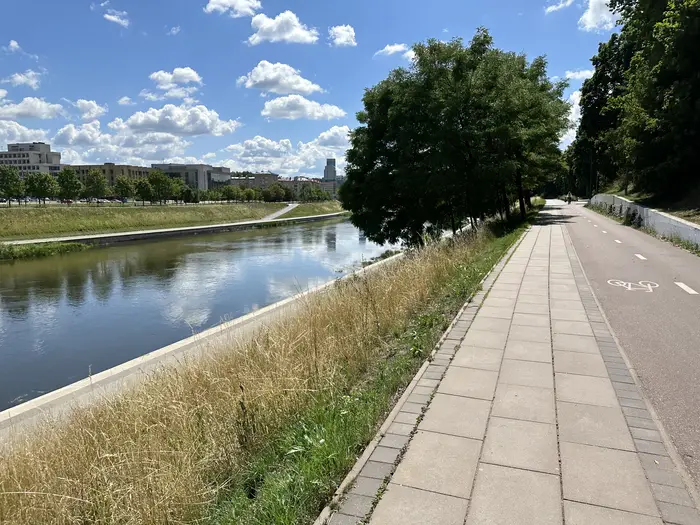
Tuskulėnai Manor
A tranquil riverside manor and peace park in Vilnius that doubles as a moving memorial to victims of Soviet executions of 1944–1947, with a classical palace, museum exhibitions and a striking Chapel-Columbarium.
Read guideUžupio Katinas
A small, beloved cat sculpture in Vilnius's bohemian Užupis district, prized for its quirky charm and an interactive plaque that invites you to 'touch my ear, have no fear.'
Read guideUžupis Bridge Swing
A quirky swing tucked beneath a bridge over the Vilnelė in Užupis — a playful, hidden photo spot that rewards anyone willing to wade in and get their feet wet.
Read guideVieta
A cosy, long-running vegan café and art space on Šv. Ignoto in the Old Town — homemade-style plant-based food, rotating exhibitions and a feels-like-a-friend's-living-room atmosphere.
Read guideVijokliai Beer Garden
A leafy, fairy-lit hidden beer garden near the train and bus stations — greenery, rooftop terraces, friendly staff and tasty comfort food, ordered at the bar.
Read guide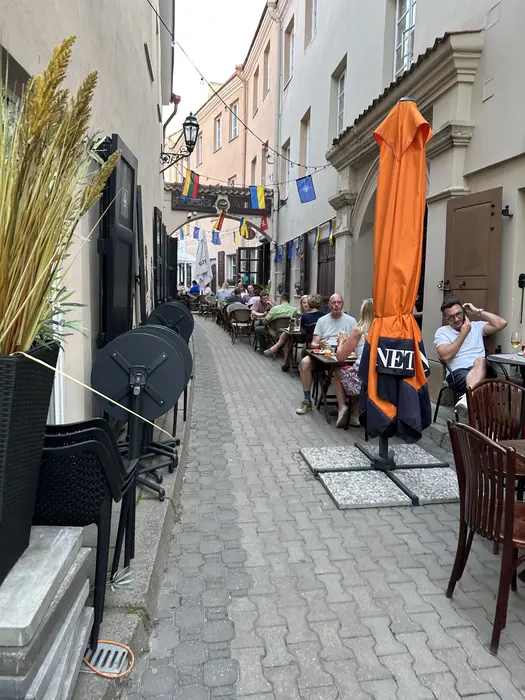
Vileišis Palace
A Neo-Baroque and Art Nouveau palace built for Petras Vileišis in 1904–06, cradle of the first Lithuanian art exhibition and today home to the Institute of Lithuanian Literature and Folklore.
Read guideVilnius Calvary Way of the Cross
A 17th-century pilgrimage route in Verkiai Regional Park, laid out to mirror Jerusalem's path of suffering — a Baroque church, chapels and gates among wooded hills and streams north of the city.
Read guideVilnius Cathedral Bell Tower
How to climb the Cathedral Bell Tower on Cathedral Square: tickets, the stair count, the old clock and bell mechanisms, the central Old Town view, and whether to choose it over Gediminas' Tower.
Read guideVilnius Christmas Tree
Vilnius's famous Cathedral Square Christmas tree — reinvented with a bold new design every year and regularly named among the most beautiful in Europe.
Read guide
Vilnius Museum of Illusions
The Vilnius Museum of Illusions is a hands-on, family-friendly attraction in the Old Town where optical tricks, an upside-down room and light-drawing exhibits blend physics, optics and art into a fun hour of photos.
Read guide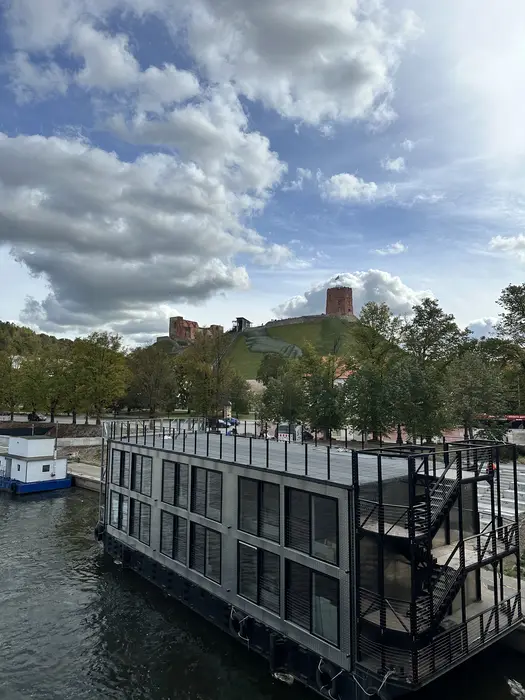
Vilnius St. Virgin Maria's Church
An atmospheric Old Town church where original baroque architecture meets stark Soviet-era modifications, now a community and cultural hub that also houses the social-enterprise pancake restaurant Pirmas blynas.
Read guideVilnius Travel Guide
A practical, opinionated travel guide to Vilnius — the UNESCO Old Town, Užupis, where to eat and drink, where to stay, and how to plan a great few days in the Lithuanian capital.
Read guide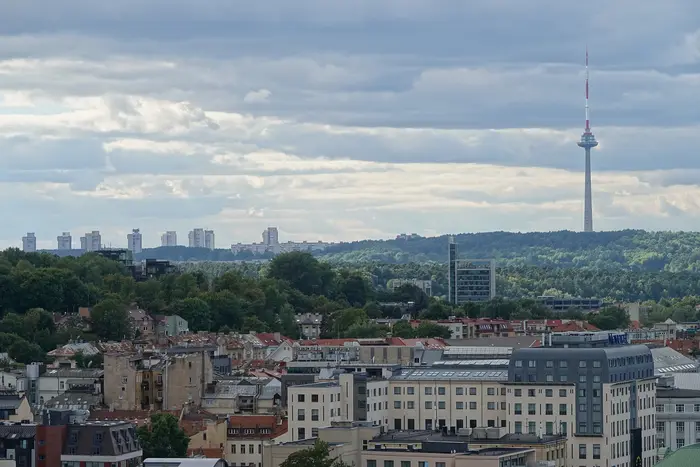
Vilnius TV Tower guide
Everything you need for the Vilnius TV Tower: the observation deck and its panorama, the café, the January 1991 freedom history, the glass-floor and edge experiences, tickets, transport, weather and whether the detour is worth it.
Read guideVilnius University Courtyards
A guide to the Vilnius University ensemble: thirteen interlocking courtyards, St John's Church and its bell tower, Petras Repšys's frescoes and the ornate Littera bookshop — nearly 450 years of architecture in one walled block of the Old Town.
Read guideVilnius University Library
Founded in 1570, Vilnius University Library is the oldest in Lithuania — a magnificent ensemble of frescoed historic halls, rare books, manuscripts and giant globes within the university's Old Town campus.
Read guideVilnius White Bridge
The White Bridge is a lively riverside hangout over the Neris, loved for panoramic city-skyline views, free sports facilities — skate park, basketball and volleyball courts — and a steady run of open-air events.
Read guideVincas Kudirka Square
A lively central plaza on Gedimino prospektas, anchored by the monument to Vincas Kudirka — a popular meeting point and people-watching spot in the heart of Vilnius.
Read guide
Visoriai Forest Park
A quiet, hilly woodland park on the northern edge of Vilnius, laced with walking trails — a low-key local favourite for relaxed strolls and dog walks.
Read guideVyno klubas
A specialist wine shop and tasting club in Vilnius, beloved for knowledgeable staff, a deep European wine selection, wine-and-cheese tastings and a sommelier school.
Read guide
Vytautas Kasiulis Art Museum
A serene, uncrowded museum dedicated to Lithuanian diaspora art, set in a historic neoclassical building near the Neris — a quiet, well-curated cultural gem.
Read guideWOLF'S Garage — Bar and Grill Rental
Vilnius's first bar that rents out grills — a bring-your-own-food, DIY barbecue spot in a green city-centre setting, with the staff handling prep, charcoal and cleanup.
Read guide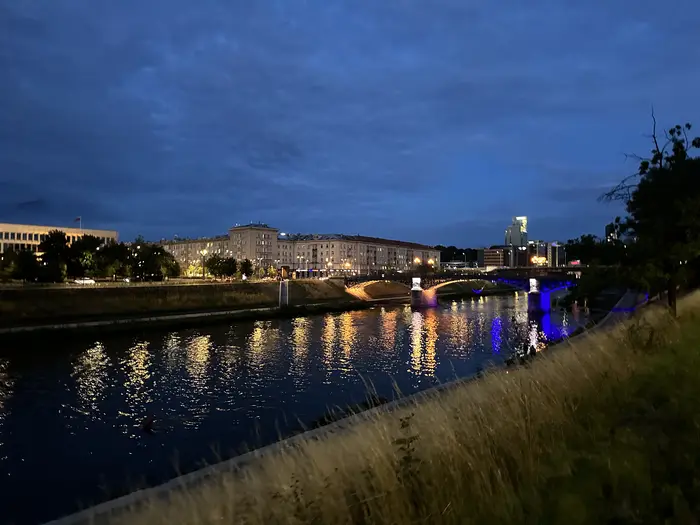
Žvėrynas Bridge
Žvėrynas Bridge in Vilnius — an early 20th-century river crossing with picturesque views, colourful night lighting and a riverside path to Vingis Park.
Read guide