
Vilnius Neighborhoods Guide
A guide to the neighborhoods of Vilnius — from the UNESCO Old Town and bohemian Užupis to the riverside New Town, Soviet-era microdistricts and leafy residential quarters — and how to pick the right base for your stay.
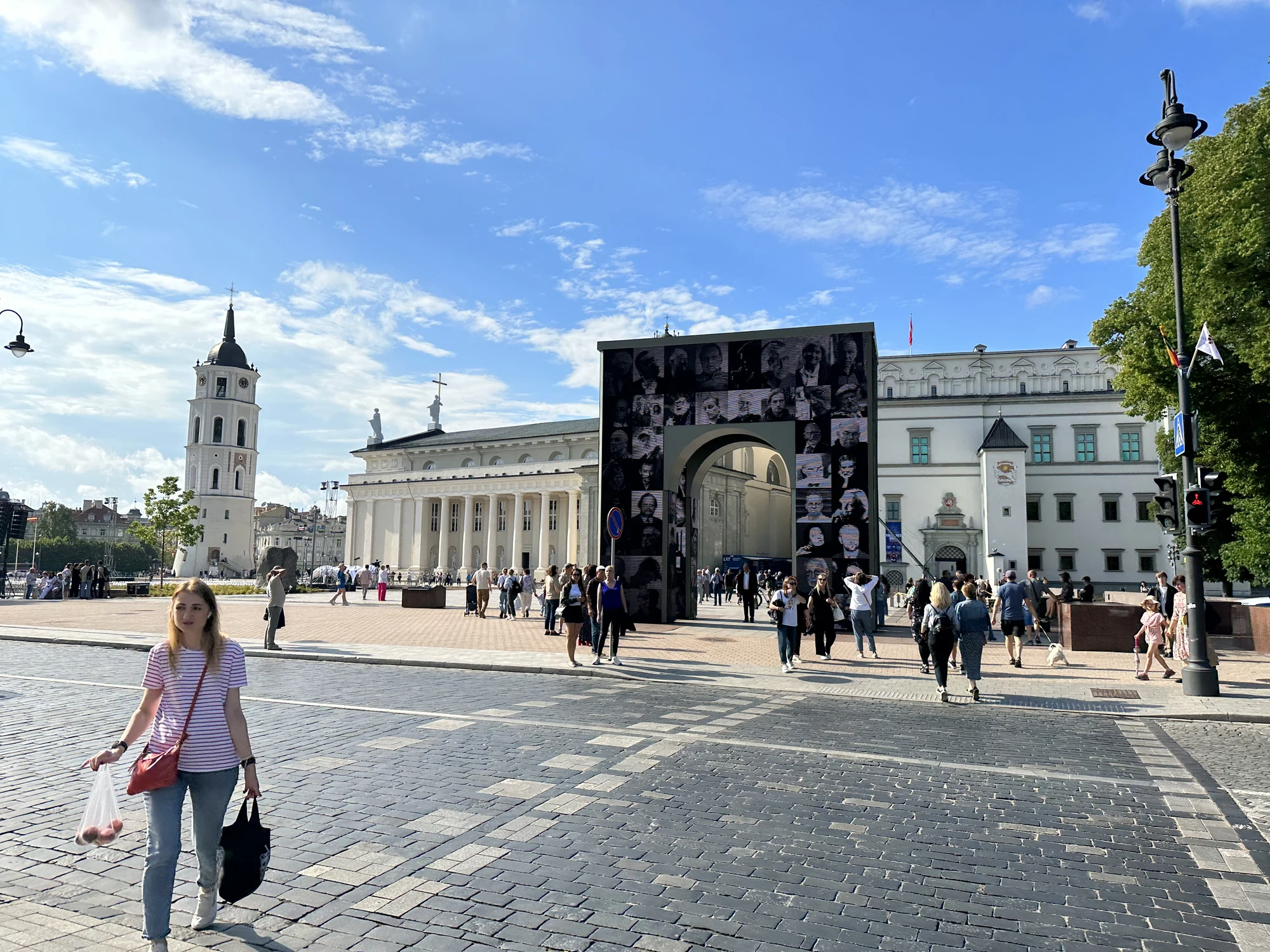
- ✓Vilnius is compact: the Old Town, Užupis, the New Town and the central core all sit within an easy walk of each other.
- ✓Senamiestis (Old Town) is the UNESCO-listed heart — most romantic, most walkable, most touristy.
- ✓Užupis, the self-declared bohemian "republic" across the Vilnia, is the artistic soul of the city.
- ✓Riverside Paupys, the creative New Town and the high-rise New City Center (Šnipiškės) show the modern face of Vilnius.
- ✓Soviet-era districts like Lazdynai and leafy quarters like Žvėrynas and Antakalnis reward anyone curious beyond the Old Town.
How Vilnius fits together
Vilnius is an unusually legible city. Its historic core sits in a bend of the Neris and Vilnia rivers, and almost everything a visitor wants is packed into a small, walkable centre — you can cross from one defining neighborhood to the next on foot in minutes. That makes choosing a base less fraught than in a bigger capital: stay anywhere central and you'll walk to most of it. The differences between neighborhoods are about character and atmosphere more than distance.
Broadly, the city reads in three layers. There's the historic Vilnius of the Old Town and Užupis, all Baroque spires, cobbles and bohemian charm. There's the modern, transforming Vilnius of the New Town, the riverside Paupys development and the glass towers of the New City Center across the river. And there's the residential, local Vilnius of the Soviet-era microdistricts and the leafy outer quarters, where you go to see how the city actually lives. This guide walks through each so you can match a neighborhood to the trip you want — and to where to stay.
It helps to picture the map. The Old Town sits at the centre, in the crook where the small Vilnia river meets the larger Neris. Užupis is immediately east, across the Vilnia. Gediminas Avenue and the City Center run west from Cathedral Square; continue and you reach Naujamiestis (the New Town) and, further out, the Station District. Cross the Neris north and you're in Šnipiškės — the New City Center, with its skyscrapers — and the residential districts of Žirmūnai and Antakalnis beyond. Cross the Neris west and you reach leafy Žvėrynas. Paupys tucks in between the Old Town and Užupis to the south. Almost all of the visitor-facing action happens in a radius you could walk across in half an hour.
Vilnius neighborhoods at a glance
If you only skim one section, make it this one. The list below sums up each neighborhood in a line so you can find the one that matches your trip, then jump into the fuller descriptions or the dedicated guides below. Think of it as a menu: pick the vibe, then read on.
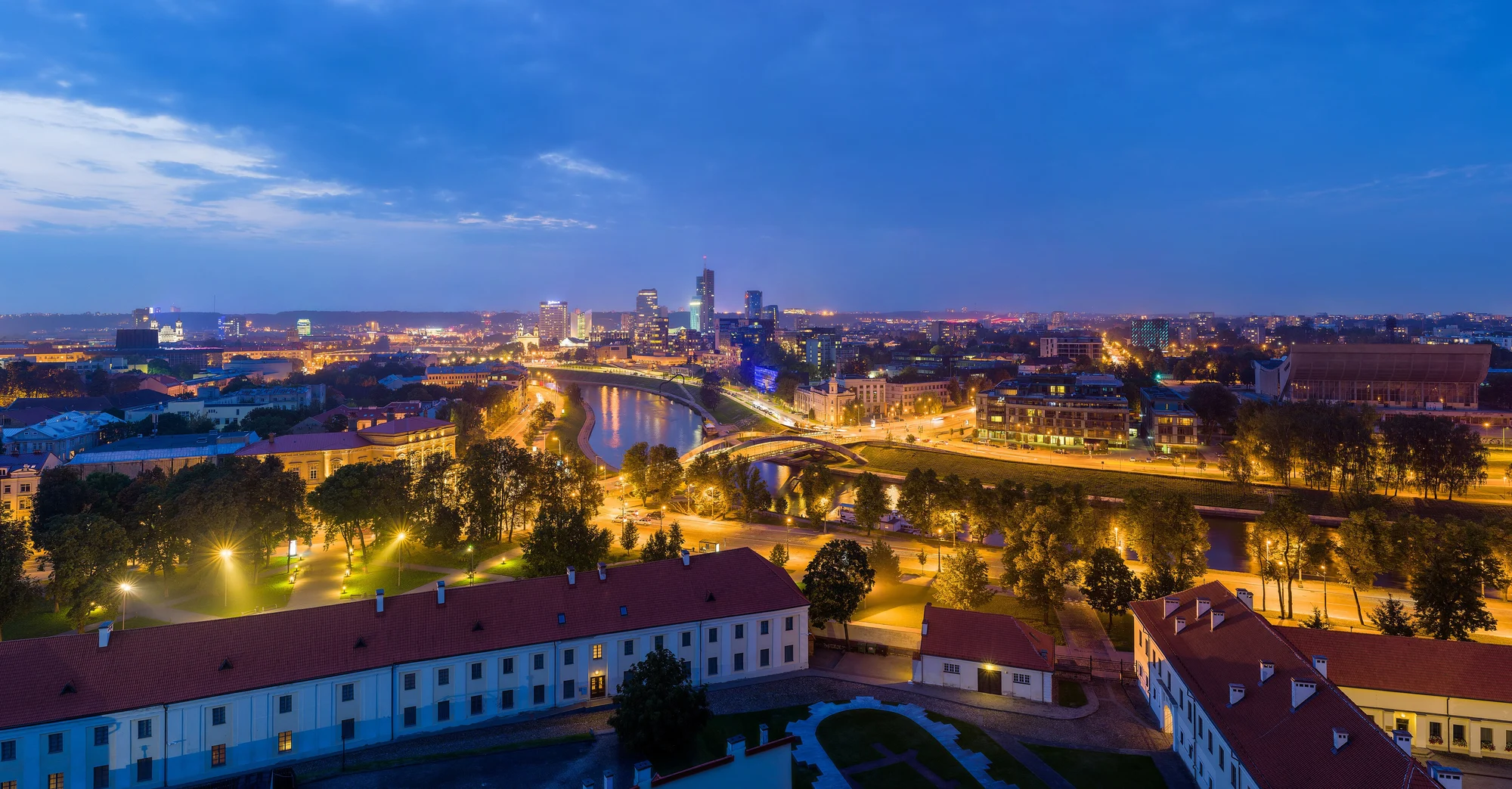
- Old Town (Senamiestis) — UNESCO Baroque core; most romantic and convenient, busiest and priciest.
- Užupis — bohemian artist 'republic' across the Vilnia; quirky, creative, walkable to the centre.
- City Center — polished government and embassy quarter along Gediminas Avenue; smart, central base.
- Naujamiestis (New Town) — creative district of reborn factories, cafés and nightlife.
- Paupys — sleek new riverside development with a star food hall; modern and design-led.
- Šnipiškės (New City Center) — skyscrapers beside wooden houses; the business district.
- Station District (Stoties rajonas) — edgy, fast-changing, industrial-creative.
- Žvėrynas — green, affluent, tranquil; wooden houses by Vingis Park.
- Antakalnis — leafy, historic, academic; manors along the Neris.
- Lazdynai — Lenin Prize-winning Soviet modernist district in pine forest.
- Žirmūnai — large Soviet-era microdistrict; authentic, local, riverside.
The polished central core along Gediminas Avenue.
Užupis GuideThe bohemian republic across the river.
Map pins
Map data © OpenStreetMap contributors · Tiles © OpenFreeMap
The historic heart: Old Town & Užupis
Senamiestis — the Old Town — is where nearly everyone starts. A UNESCO World Heritage site, it's a labyrinth of cobblestone streets, hidden courtyards and stunning Baroque architecture, and it's the vibrant heart of the city, where centuries of history meet a lively café culture and bustling tourist activity. Staying here means the most iconic sights, restaurants and events are on your doorstep; the trade-offs are higher prices, summer crowds and the gentle wear of being the most touristy quarter. For most first-time visitors, especially couples, it's still the obvious and most romantic choice.
Within the Old Town it's worth knowing the rough geography. The spine is Pilies and Didžioji streets, running from Cathedral Square down to the Gate of Dawn, with the university quarter and its courtyards to one side and a web of quieter lanes, hidden churches and courtyard cafés to the other. The northern end, around Cathedral Square and Gediminas Hill, is grand and open; the southern end, toward the Gate of Dawn, is denser and more atmospheric. Stay anywhere in here and you're never more than a few minutes from a Baroque church, a wine bar or a viewpoint — which is exactly why it's the default choice.
Cross the little Vilnia river and you reach Užupis, often compared to Montmartre — a self-declared "republic" with its own tongue-in-cheek constitution (mounted on a wall in dozens of languages), president and artistic soul. This bohemian enclave is packed with art galleries, quirky sculptures and cosy cafés, a haven for creatives and free spirits that values community and independence. It's a few minutes' walk from the Old Town yet feels like its own world, with a riverside swing, the bronze Angel of Užupis on its main square, and a scruffy-romantic charm that makes it a favourite with couples. Both quarters are best explored slowly, on foot, with no fixed plan — and both reward an evening as much as a daytime visit.
- Old Town (Senamiestis) — UNESCO core; historic, charming, romantic, touristy, bustling.
- Užupis — bohemian, artistic, quirky, independent, village-like; just across the Vilnia.
Modern & riverside Vilnius
West and across the river, Vilnius shows its contemporary face. Naujamiestis — the New Town — hugs the southern half of Gedimino prospektas and stretches toward the rail yards, mixing 19th-century apartment blocks with factories reborn as cafés, galleries and startup hubs; it's the city's creative engine in transition, where daily local life collides with experimental nightlife. Beside the Old Town, Paupys is Vilnius's newest and most talked-about neighborhood — a sleek, master-planned development on former industrial land, home to the trendy Paupio Turgus food hall, a boutique cinema and design-forward public spaces.
Across the Neris, Šnipiškės — the New City Center — is a neighborhood of striking contrasts, where glass skyscrapers housing international companies rise next to a village of old wooden houses; it's the city's primary business district and its most ambitious, modern energy, anchored by Konstitucijos Avenue and best surveyed from the river or the White Bridge. The Station District (Stoties rajonas), once a gritty area around the train and bus stations, is transforming fast into a burgeoning creative hub of converted factories, trendy bars, art spaces and street-food markets, drawing a young, alternative crowd — it's also the most convenient base if you're arriving or leaving by train or coach. These are the neighborhoods to choose if you want a Vilnius that feels like it's being reinvented in real time, and they make a fascinating contrast to the Baroque Old Town just across the water.
How modern Vilnius reads depends on what you're after. Naujamiestis is the one to base yourself in if you want cafés, nightlife and a lived-in-but-cool feel within walking distance of the centre. Paupys is the choice for sleek modern apartments and the city's best food hall. Šnipiškės suits business travellers and architecture watchers more than sightseers. The Station District rewards the curious and the budget-minded, with cheaper stays and a raw creative edge. None of these will feel like the postcard Vilnius — that's the Old Town's job — but together they show a small capital growing up fast and on its own terms.
- Naujamiestis (New Town) — creative, loft-living, café-lined, transitioning.
- Paupys — new, sleek, upscale, design-led; home to Paupio Turgus food hall.
- Šnipiškės (New City Center) — modern business district; skyscrapers beside wooden houses.
- Station District (Stoties rajonas) — edgy, up-and-coming, industrial, creative.
Local & residential quarters
Beyond the centre, Vilnius opens into the neighborhoods where the city actually lives — and they're more rewarding to wander than their workaday reputations suggest. The central core, City Center, covers the stately stretch of Gedimino prospektas between Cathedral Square and the Seimas, lined with ministries, embassies, five-star hotels and cultural flagships: the polished, official heart of the city. Žvėrynas, just across the bridge, is one of the greenest and most prestigious districts, full of charming historic wooden houses among embassies and modern apartments, with the vast Vingis Park on its doorstep. Leafy Antakalnis stretches along the Neris with historic manors, parkland and a strong academic presence.
Then there's the Soviet legacy, which in Vilnius is unusually worth seeing. Lazdynai is a living museum of Soviet modernist architecture — its terraced apartment blocks set among hills and pine forest won the Lenin Prize in 1974 for innovative urban design, and it's a pilgrimage for anyone interested in 20th-century planning. Žirmūnai, one of the city's first and largest Soviet-era microdistricts, offers a glimpse of authentic, untouristed city life along the right bank of the Neris, with functional apartment blocks, abundant green space and excellent transport links. None of these will be your base on a short first trip, but they're exactly where to head on a return visit, or on an afternoon when you want to see Vilnius beyond the postcard.
What ties the residential quarters together is that they're where you trade sights for atmosphere. There are fewer ticketed attractions out here and more of the ordinary texture of the city — neighbourhood bakeries, riverside paths, weekend markets, kids' playgrounds, the rhythm of people who live in Vilnius rather than visit it. For travellers on a second or third trip, or anyone who likes to feel a city from the inside, an afternoon wandering Žvėrynas's wooden streets or following the Neris through Antakalnis is often more memorable than another church.
- City Center — central, walkable, cosmopolitan, cultural, polished; the official core.
- Žvėrynas — green, affluent, tranquil; wooden houses and Vingis Park.
- Antakalnis — leafy, prestigious, historic, academic; along the Neris.
- Lazdynai — Lenin Prize-winning Soviet modernist district among pine forest.
- Žirmūnai — large Soviet-era microdistrict; authentic, local, green.
Getting between neighborhoods
The single most useful thing to know about Vilnius is that it's small. The historic neighborhoods — Old Town, Užupis, City Center, the near edge of the New Town and Paupys — form a contiguous, walkable core, and you'll cover most of them on foot without thinking about transport at all. Distances that look significant on a map turn out to be ten- or fifteen-minute strolls, much of it along the river or through cobbled lanes. For a first trip focused on the sights, you may barely use a bus.
When you do venture to the residential and outer districts, the public transport is genuinely good: an integrated network of buses and trolleybuses runs frequently, tickets are cheap, and you can pay contactlessly. Taxis and the Bolt ride-hailing app are inexpensive and quick, which makes late-night hops or a trip out to Lazdynai or Žirmūnai effortless. Cycling and e-scooters are popular in the warmer months and ideal for the riverside paths. In short, you can base yourself anywhere central and reach everything else in minutes — so choose your neighborhood for its character, not its commute.
- The historic core (Old Town, Užupis, City Center, near New Town, Paupys) is contiguous and walkable.
- Buses and trolleybuses are frequent and cheap, with contactless payment; great for outer districts.
- Taxis and Bolt are inexpensive for late nights or trips to Lazdynai, Žirmūnai and the edges.
- Bikes and e-scooters suit the riverside paths in warmer months.
Which neighborhood for your kind of trip
Because Vilnius is so walkable, the right neighborhood is less about logistics than about the trip you want to have. For a first visit built around the classic sights, the Old Town is the obvious pick — everything is on your doorstep and the atmosphere is unbeatable, even if it's the busiest and priciest option. Couples and romantics tend to split between the Old Town and Užupis, pairing the Baroque grandeur of one with the bohemian charm of the other; both are made for slow evenings, candlelit dinners and aimless wandering.
Other travellers map onto other districts. If you're here for food, coffee, design and nightlife, Naujamiestis and Paupys put you among the city's most interesting kitchens and bars. Business and conference visitors are usually best in the City Center or Šnipiškės, close to offices, embassies and the better hotels. Families often prefer the quieter green quarters — Žvėrynas, with Vingis Park, or leafy Antakalnis — for space and calm, with a short hop into the centre. Budget and creative travellers gravitate to the Station District for cheaper stays and a raw, up-and-coming energy. And architecture and history obsessives should make time for Lazdynai and the Soviet microdistricts that most visitors never see.
- First visit / classic sights: Old Town (Senamiestis).
- Couples & romance: Old Town and Užupis.
- Food, coffee, design & nightlife: Naujamiestis and Paupys.
- Business & conferences: City Center and Šnipiškès.
- Families & calm: Žvėrynas and Antakalnis (green, spacious, quick into town).
- Budget & creative edge: Station District (Stoties rajonas).
- Architecture & history buffs: Lazdynai and the Soviet microdistricts.
Beyond the headline districts
It's easy to spend a short trip entirely in the historic core and never feel short-changed — but Vilnius has a habit of rewarding the curious who push a little further. A handful of dedicated guides go deeper into the districts that don't make most postcards: the everyday-local Vilnius beyond the Old Town, the green-and-park side of the city, and individual quarters like Lukiškės around its landmark square and former prison, the grand boulevard of Gediminas Avenue, and the quiet, literary southeast around Markučiai. Each gives you a different angle on the city, and most are an easy walk or a short ride from the centre.
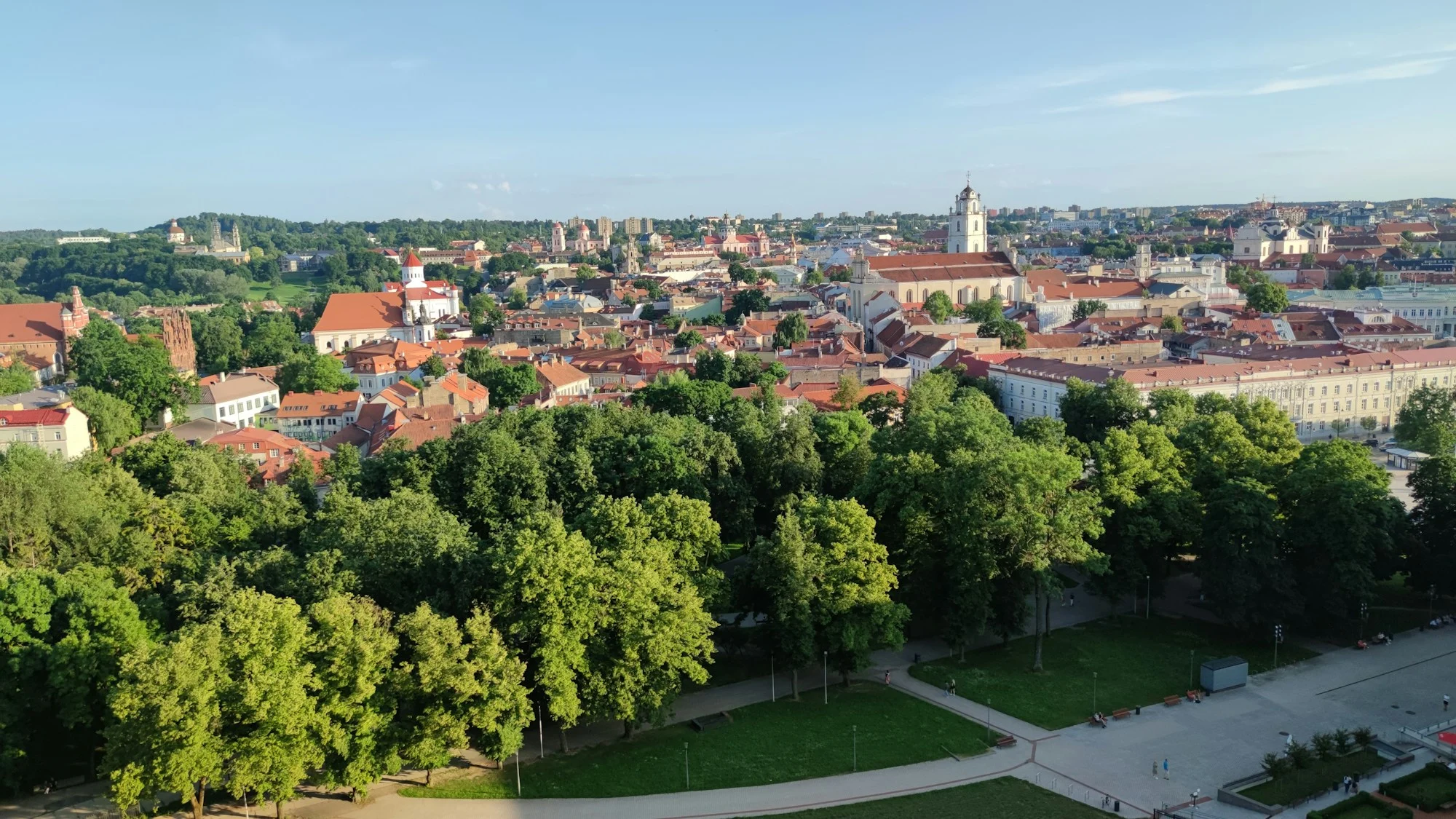
The point of a neighborhoods-first approach to Vilnius is that the city is too small to ration by sights and too layered to understand from the Old Town alone. Pick the quarter that matches your mood — historic, bohemian, modern, green or local — use it as a base or a day's wandering, and let the compactness do the rest. Wherever you land, you're minutes from somewhere completely different in character, which is the quiet luxury of a capital this size.
Choosing where to stay
For most visitors the decision comes down to a handful of trade-offs. The Old Town is the most atmospheric and the most convenient for sightseeing, at the cost of price and crowds. The City Center and the New Town give you a slightly calmer, more local-feeling base while staying within easy walking distance of the sights — often better value and well connected by bus and trolleybus. Užupis suits romantics and creatives who don't mind a short walk to the main attractions. Paupys and the New City Center appeal if you want modern apartments and a contemporary feel.
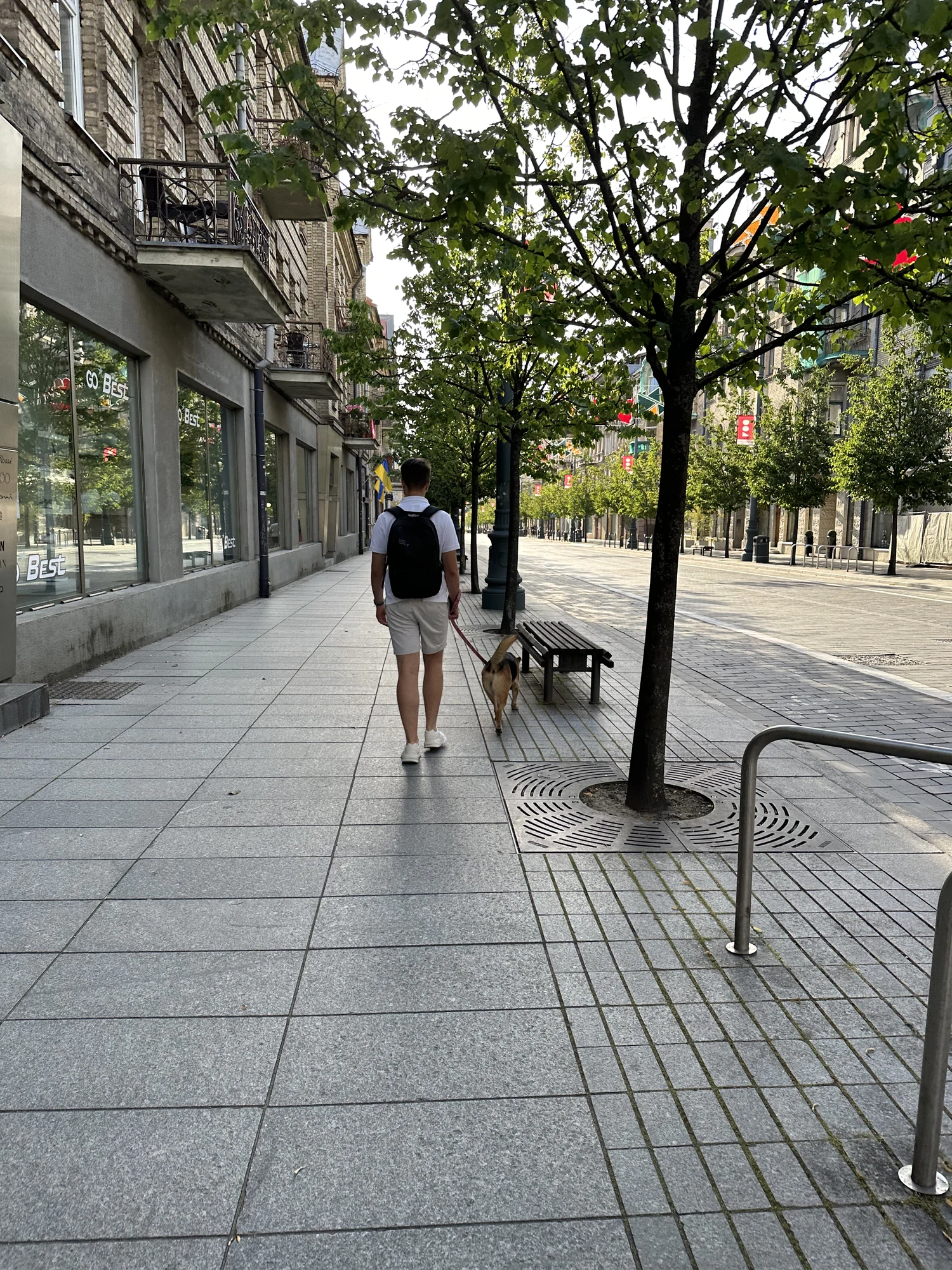
A note on seasons and budget. Vilnius is busiest and priciest from late spring through summer and around the big events — the Kaziukas Fair in March, Capital Days and the Christmas market season — when the Old Town in particular books up; reserve early or look just outside the historic core for better value. Shoulder months (April–May, September) are the sweet spot: pleasant weather, lower prices and fewer crowds. Across the board, accommodation in Vilnius is good value by Western-European standards, so even the Old Town and a five-star City Center hotel are more attainable here than in most EU capitals.
Because Vilnius is so compact and its public transport quick and cheap, you don't need to over-optimise: any central neighborhood puts you minutes from the Old Town. Match the neighborhood to the trip — romance and history, creative and modern, or quiet and local — and you'll be well placed. The dedicated where-to-stay guide breaks this down by budget and traveller type, with specific area-by-area recommendations; the individual neighborhood guides linked throughout this page go deeper on each district's character, sights and places to stay and eat.
Neighborhoods FAQ
A few questions come up again and again. Where should a first-timer stay? The Old Town, almost always — it's the most atmospheric and the most convenient, and Vilnius is cheap enough that the premium is modest. Is it safe to walk between neighborhoods at night? Yes; Vilnius is one of Europe's safer capitals and the central districts are well-lit and walkable, with cheap taxis and Bolt for longer hops. Do you need a car? No — a car is a liability in the centre, where everything is walkable and parking is limited; the bus and trolleybus network covers the rest.
How many neighborhoods can you realistically see? On a two- or three-day trip you'll comfortably cover the Old Town, Užupis, the City Center and a taste of the New Town or Paupys on foot; the residential and Soviet-era districts are best left for a longer or repeat visit. Which neighborhood is most underrated? Many would say Užupis for atmosphere or the Station District for its fast-changing creative energy, but the leafy quarters of Žvėrynas and Antakalnis quietly reward anyone who makes the short trip out. As always with specifics like hotel availability, prices or event dates, confirm the current details before you book — but the character of each neighborhood, which is what this guide is really about, holds true year-round.
- First-timers: stay in the Old Town for atmosphere and convenience.
- Safe to walk between central districts at night; taxis and Bolt are cheap for longer hops.
- No car needed — the centre is walkable and the bus/trolleybus network covers the rest.
- Two–three days covers the Old Town, Užupis, City Center and a taste of the New Town or Paupys.
- Save the residential and Soviet-era districts for a longer or repeat visit.
Everything in Neighborhoods
All guides
17
Antakalnis: Vilnius's Leafy Riverside District
A guide to Antakalnis, a vast, prestigious Vilnius district along the Neris: the Baroque masterpiece of St Peter and St Paul, the restored Sapieha Palace, Antakalnis Cemetery, university and clinic streets, parks and a tranquil residential pace.
Read guide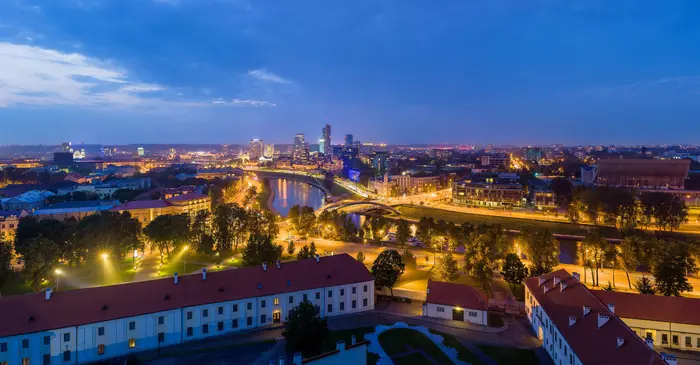
City Center (Gedimino prospektas) Guide
Vilnius's City Center: the stately stretch of Gedimino prospektas between Cathedral Square and the Seimas, where ministries, embassies and cultural flagships sit beside five-star hotels, design boutiques and dignified public squares.
Read guide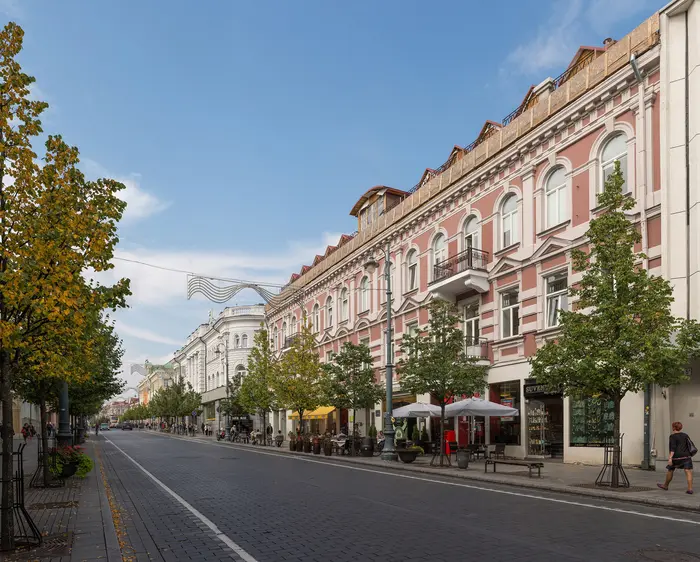
Gediminas Avenue: Vilnius's Main Boulevard
A guide to Gediminas Avenue, Vilnius's 1.8 km main boulevard: shops, cafés, museums, theatres, river crossings, parades and parking, and how to use the city's grand axis from Cathedral Square to the Parliament.
Read guide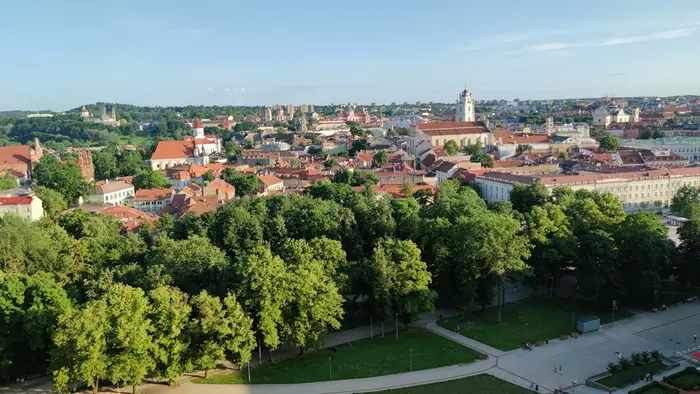
Green Vilnius: Parks & Nature
Vilnius's parks, river paths, hill walks and nature escapes: Bernardine Garden, Vingis Park, the manor parks, the Sapieginė forest trail, and the Verkiai, Pavilniai and Green Lakes nature just outside the city.
Read guide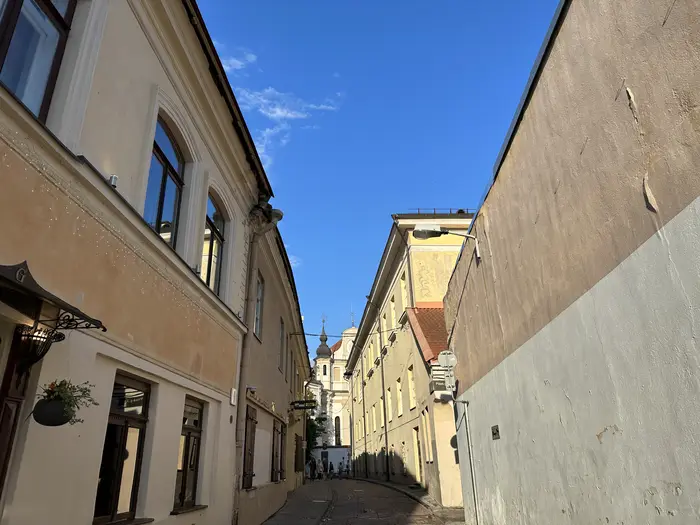
Lazdynai Neighborhood Guide
A guide to Lazdynai, Vilnius's Lenin Prize-winning Soviet-modernist district: terraced blocks set among pine forest and hills, award-winning urban design, and how to visit this living museum of post-war planning.
Read guide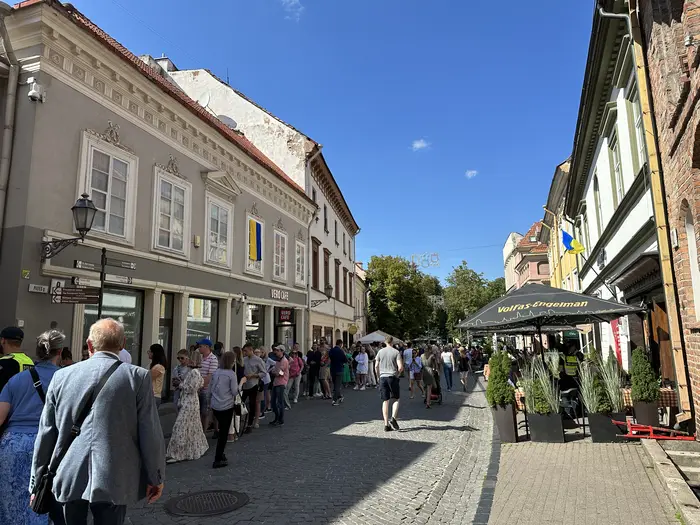
Local Vilnius: Beyond the Old Town
Where to find the real, lived-in Vilnius after the classic Old Town sights: the New Town's reborn factories, leafy Žvėrynas, Antakalnis, Paupys, riverside paths, markets and street art — and how to spend a second day like a local.
Read guide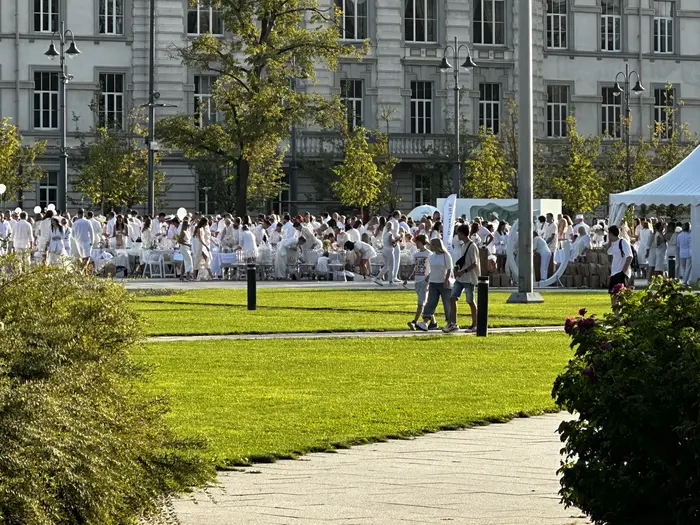
Lukiškės: Vilnius's Central Square & Prison District
A guide to Lukiškės, the central Vilnius district around the city's largest square: Lukiškės Square and its layered history, the former prison turned cultural space Lukiškės Prison 2.0, government and museum streets, restaurants, cocktail bars and central hotel trade-offs.
Read guide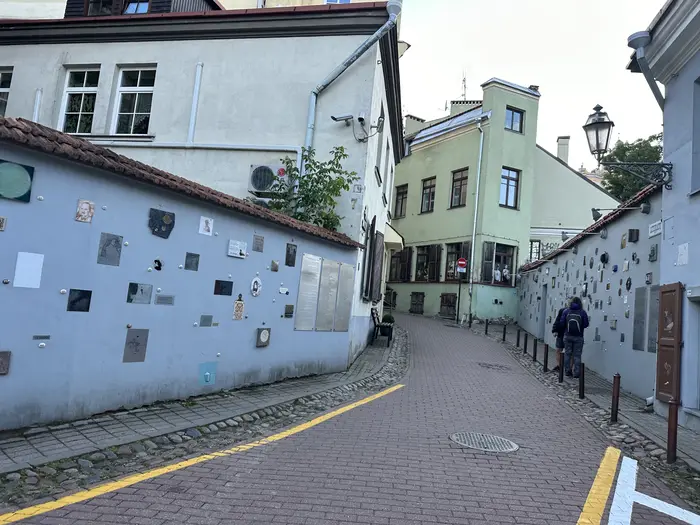
Markučiai: Vilnius's Quiet Literary Hill
A guide to Markučiai, a green, wooden-house corner of southeast Vilnius: the Pushkin literary museum and its manor park, hillside walks, a slower local pace and how to combine it with the city's nature spots.
Read guideNaujamiestis (New Town) Neighborhood Guide
A guide to Naujamiestis, Vilnius's creative engine in transition: converted factories, third-wave cafés and wine bars, the MO Museum, indie venues and a base between the station and the Old Town that leans local, not touristy.
Read guide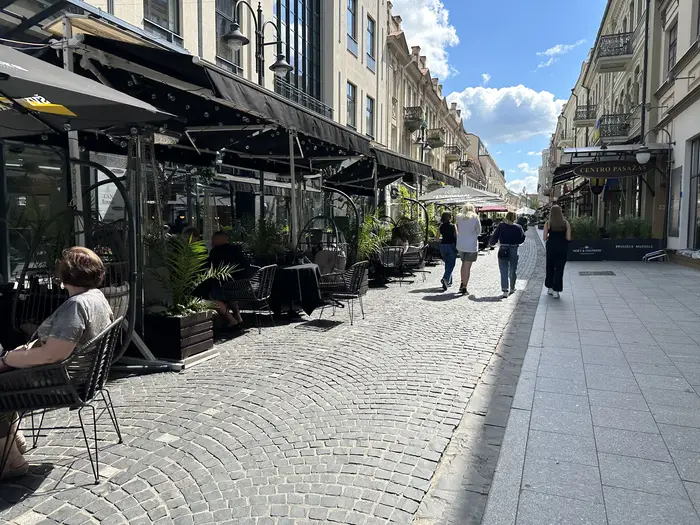
Old Town (Senamiestis): Neighborhood & Where to Stay Guide
The complete guide to staying in Vilnius's Old Town: the UNESCO-listed historic core, what it's like to be based here, the trade-offs of cobbles and crowds, and how to choose your corner of Senamiestis.
Read guide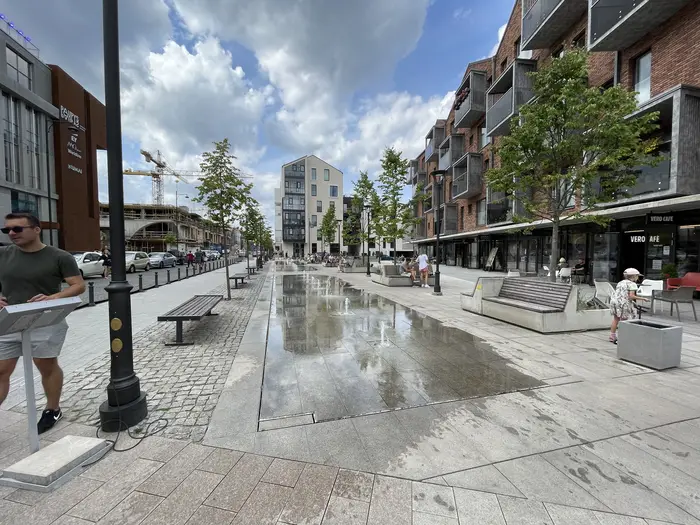
Paupys: Vilnius's New Riverside Quarter
A guide to Paupys, Vilnius's sleek, master-planned riverside neighborhood between the Old Town and Užupis: the Paupio Turgus food hall, design-led public spaces, riverfront paths and how it differs from its historic neighbors.
Read guideŠnipiškės: Vilnius's New City Center Guide
A guide to Šnipiškės, Vilnius's New City Center: glass towers on Konstitucijos Avenue rising beside a surviving wooden-house 'skansen', the White Bridge, the National Gallery of Art, shopping malls and how to cross to the Old Town.
Read guide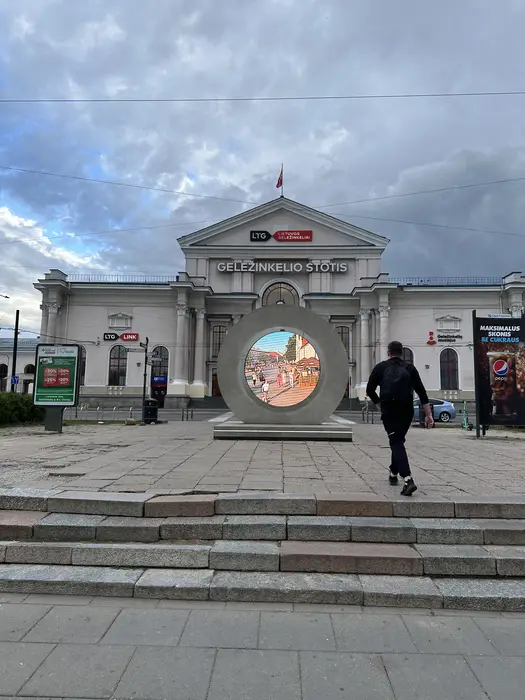
Stoties Rajonas: Vilnius Station District Guide
A guide to Stoties rajonas, Vilnius's edgy, fast-changing Station District: Hales Market, the train and bus stations, converted warehouses, street art, food halls and where it sits relative to the Old Town.
Read guide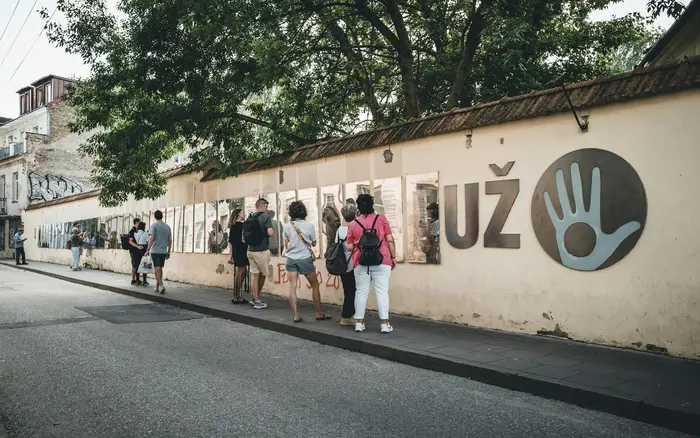
Užupis Neighborhood Guide
A guide to Užupis, Vilnius's self-declared bohemian 'republic' across the Vilnia: its tongue-in-cheek constitution, galleries and sculptures, café-and-wine-bar afternoons, and how to spend time in the city's artistic heart.
Read guide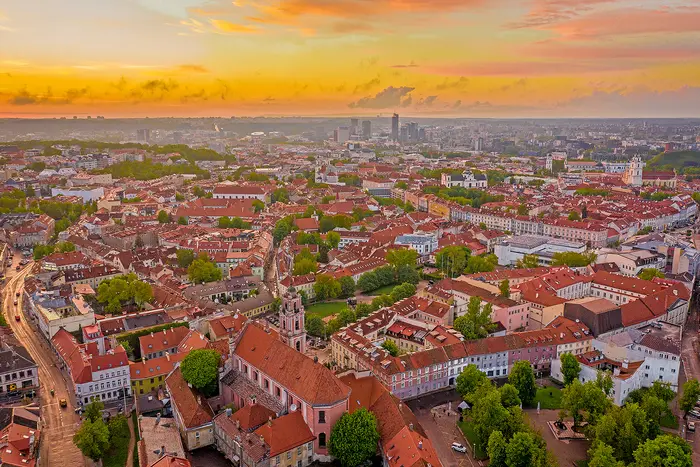
Vilnius Old Town — How to Navigate the Historic Core
A practical orientation to Vilnius's Old Town (Senamiestis), the UNESCO-listed historic core: the gates, the main streets (Pilies, Didžioji, Aušros Vartų), the squares, where to eat and how to find your way around. For the full neighbourhood and where-to-stay deep dive, see our canonical Senamiestis (Old Town) page.
Read guide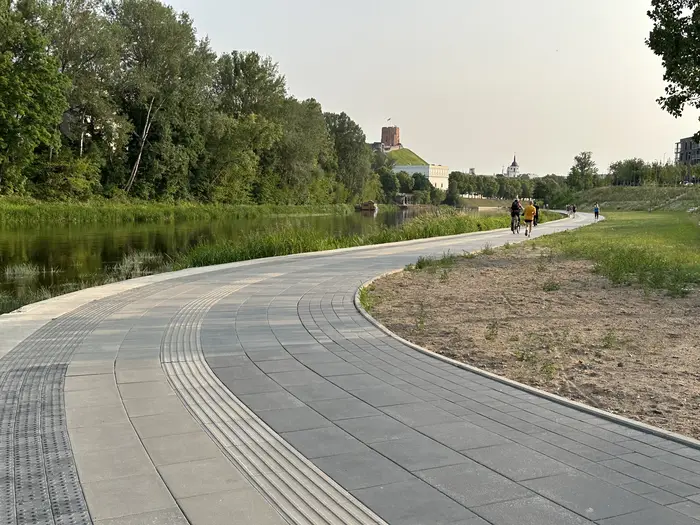
Žirmūnai Neighborhood Guide
A local's guide to Žirmūnai, one of Vilnius's first and largest Soviet-era microdistricts: riverside paths, model-district history, easy transport into the centre, and where it fits on a longer Vilnius trip.
Read guide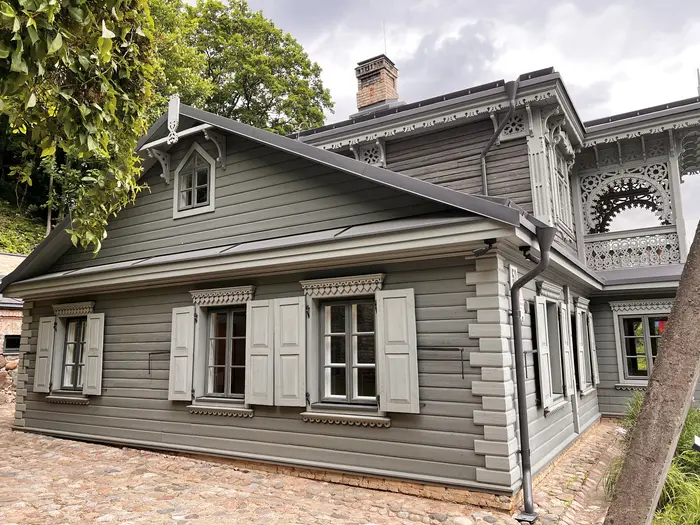
Žvėrynas: Vilnius's Green Wooden-Villa District
A guide to Žvėrynas, one of Vilnius's greenest and most prestigious districts: protected 19th-century wooden villas, embassies, the Neris riverbank, direct access to Vingis Park, and a calm residential pace minutes from the center.
Read guide