
City Center (Gedimino prospektas) Guide
Vilnius's City Center: the stately stretch of Gedimino prospektas between Cathedral Square and the Seimas, where ministries, embassies and cultural flagships sit beside five-star hotels, design boutiques and dignified public squares.
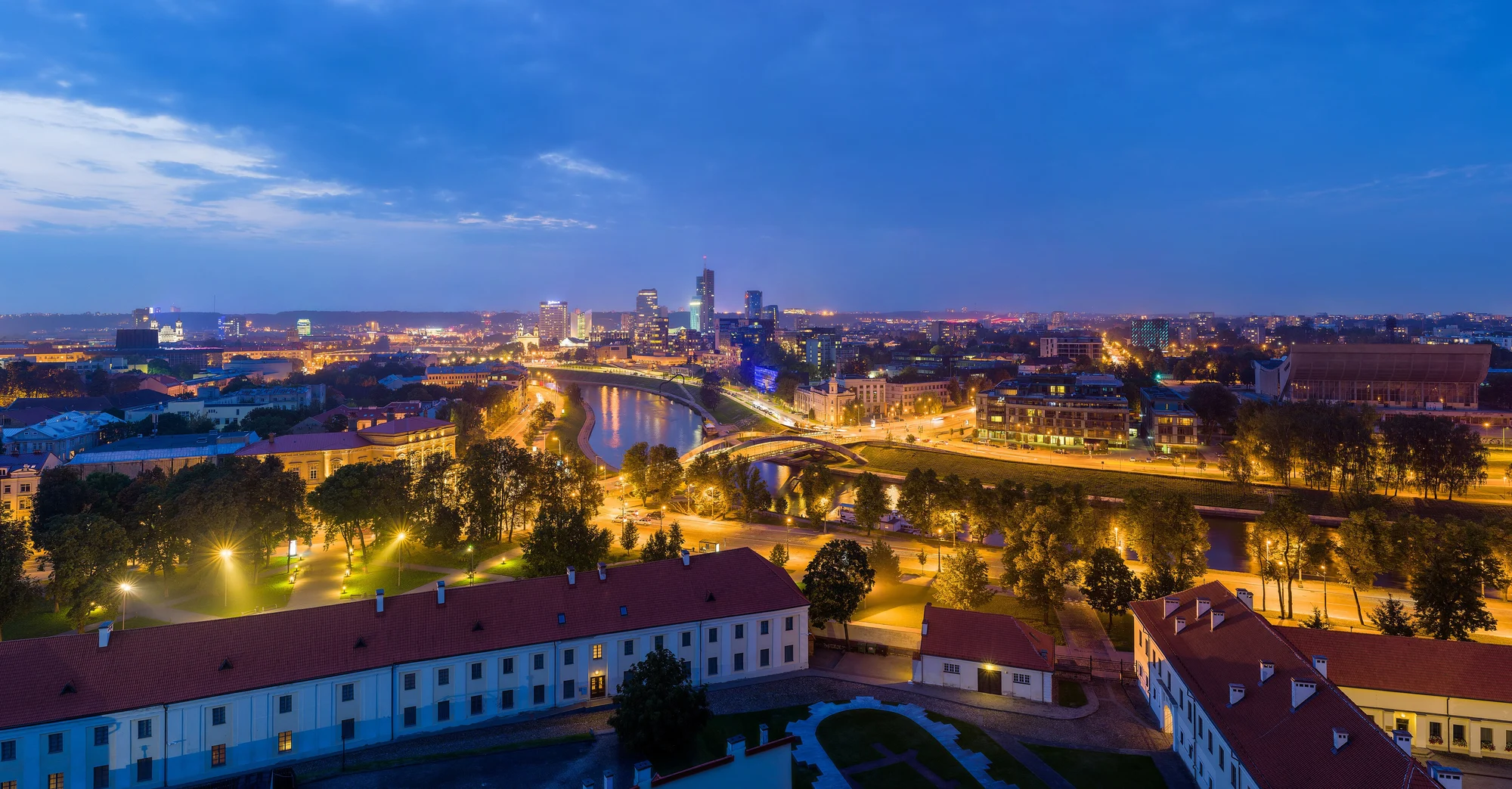
- ✓City Center is the polished, official heart of Vilnius — the spine of Gedimino prospektas from Cathedral Square to the Seimas.
- ✓It's the government and embassy quarter: ministries, the Presidential Palace, the National Museum of Lithuania and the parliament.
- ✓Five-star hotels, design boutiques and dignified squares make it a smart, walkable base for culture-minded travellers.
- ✓Cathedral Square and the National Museum host the city's headline ceremonies, exhibitions and state celebrations.
- ✓The White Bridge and Neris river terraces are minutes away for evening jogs, pop-up bars and summer events.
The official heart of Vilnius
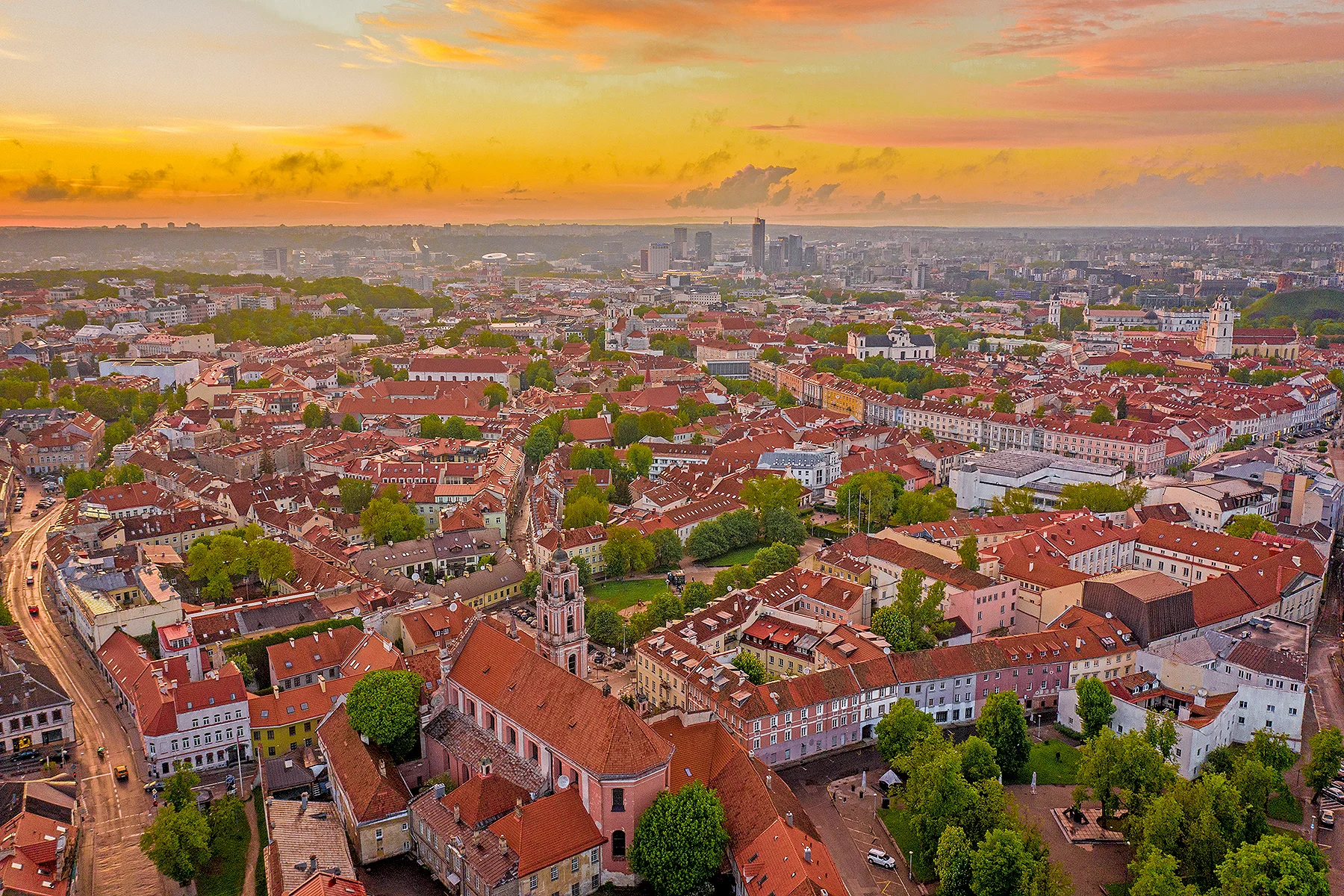
City Center covers the stately stretch of Gedimino prospektas between Cathedral Square and the Seimas, where Vilnius's ministries, embassies and cultural flagships sit beside glassy office towers. It's the polished, official heart of the city — lined with five-star hotels, design boutiques and dignified public squares, and noticeably grander and more buttoned-up than the cobbled Old Town it adjoins. This is the Vilnius of state ceremonies and quiet diplomacy, a neighborhood that does business in a suit.
Strictly speaking, "City Center" as a neighborhood is a slightly fuzzy label — it overlaps with the western edge of the Old Town at Cathedral Square and shades into Naujamiestis (the New Town) further along the avenue. What defines it is function and feel rather than hard borders: this is where the institutions of the Lithuanian state, the embassies, the headline museums and the smartest hotels cluster, giving the area a distinct civic gravity. If the Old Town is where Vilnius keeps its history and Užupis its bohemian heart, City Center is where it keeps its public, official self — the face the capital shows to visiting heads of state.
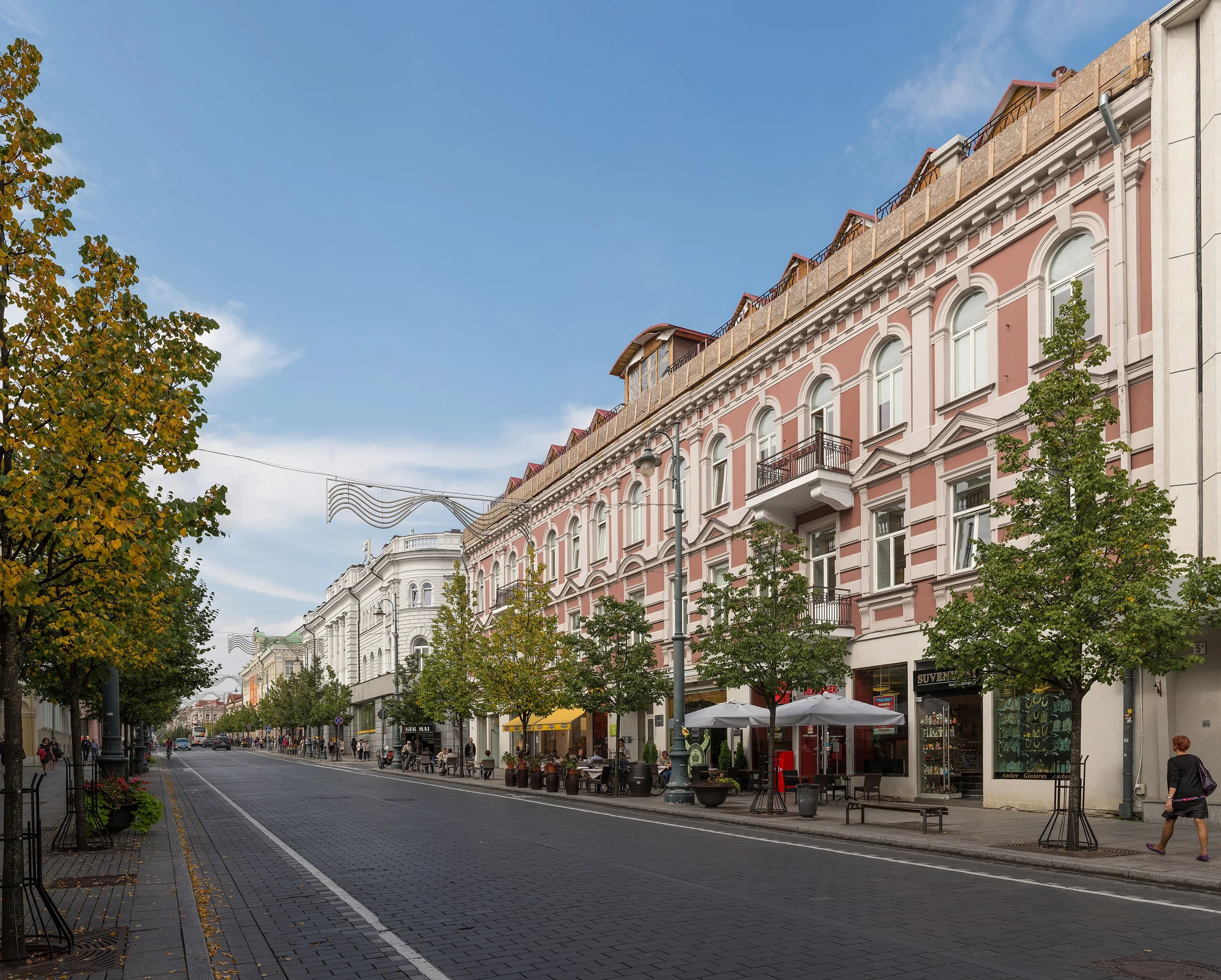
Gedimino prospektas — Gediminas Avenue — is the spine that holds it together: the city's main boulevard, running dead straight from the Cathedral toward the parliament, lined with shops, cafés, museums and institutions. Walk its length and you pass from the symbolic centre of the nation at Cathedral Square to the seat of its government at the Seimas in a single, leisurely stroll. The area is best understood as the formal counterpart to the Old Town's romance: where one charms, the other governs.
The avenue is also a barometer of the country's history. Laid out in the 19th century, it has been renamed with nearly every change of power — through Russian imperial, Polish, Nazi and Soviet eras — and walking it today, past restored facades, statues and the occasional Soviet-era relic repurposed for modern use, is a quiet lesson in Lithuania's turbulent 20th century. It was here that the human chain of the Baltic Way and the singing crowds of the independence movement gathered. For all its buttoned-up officialdom, City Center is where the nation's public life has played out, and still does.
What to see and do
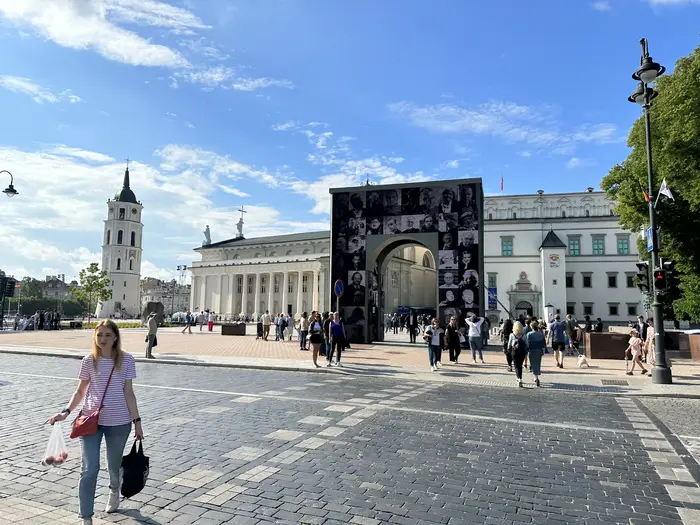
The cultural anchors here are heavyweight. Cathedral Square, at the eastern end, is the symbolic centre of Vilnius — the white neoclassical Cathedral and its free-standing bell tower, the starting point of state celebrations, and the spot where the famous "Stebuklas" (miracle) tile invites you to turn for luck. The National Museum of Lithuania, just behind it beneath Gediminas Hill, tells the long national story, while the Palace of the Grand Dukes and the climb up to Gediminas' Tower are a short walk away. Along the avenue you'll pass the Presidential Palace, government ministries and the parliament (Seimas) at the far end.
Day to day, the appeal is the avenue itself: broad pavements, design boutiques, bookshops, cafés and the steady civic rhythm of a working capital. It's a fine place to shop for something smarter than Old Town souvenirs, to break for coffee between sights, or to people-watch over lunch. The avenue is largely pedestrianised on weekends, when it becomes a relaxed promenade, and it threads past cultural heavyweights along the way — the National Drama Theatre with its striking 'black muses' sculpture above the entrance, the Vilnius Picture Gallery, and the Lukiškės Square at its far end, the city's largest, overlooked by the former KGB headquarters that now houses the Museum of Occupations and Freedom Fights.
Come evening, the neighborhood's quieter, but the nearby river draws people out: the modernist White Bridge (Baltasis tiltas) and the Neris terraces, a few minutes north, host summer pop-up bars, events and one of the city's best easy riverside walks. There's a cluster of good restaurants, cafés and a few cocktail and hotel bars along and just off the avenue, so you needn't trek back to the Old Town to eat well. For something more energetic after dark, the bars of Lukiškés and the New Town are a short walk west — but City Center's own evening mood is calm, grown-up and unhurried, which is exactly what many travellers want after a day on their feet.
- Cathedral Square — the Cathedral, bell tower, the "Stebuklas" miracle tile and state ceremonies.
- National Museum of Lithuania — the national story, beneath Gediminas Hill.
- Presidential Palace and the Seimas (parliament) anchor either end of the avenue.
- National Drama Theatre, Vilnius Picture Gallery and the Museum of Occupations & Freedom Fights nearby.
- Lukiškės Square — the city's largest, at the western end of the avenue.
- The White Bridge and Neris terraces — riverside walks, pop-up bars and summer events nearby.
The avenue's design boutiques and where else to shop in the city.
Things to Do in VilniusThe wider list of sights, many of them a short walk from here.
Map pins
Map data © OpenStreetMap contributors · Tiles © OpenFreeMap
Eating, drinking & shopping in the City Center
City Center eats well, in a slightly more polished register than the Old Town. The avenue and its side streets carry a strong line-up of cafés — from specialty-coffee spots to grand old-style coffee houses — that make it a natural place to pause between sights, and a clutch of restaurants spanning modern Lithuanian cooking, international kitchens and a few of the city's smarter dining rooms. Because this is a working district, the weekday lunch trade is brisk: office crowds fill the better cafés around midday, so a reservation or an off-peak hour pays off. Several hotel bars and a cocktail spot or two give the area a quiet, grown-up evening scene without the late-night noise.
For shopping, Gediminas Avenue is the city's smartest stretch: fashion and designer stores, well-stocked bookshops (several with English-language sections and beautiful Lithuanian photography and design titles), and homeware and craft shops that lean more contemporary than the souvenir stalls of the Old Town. It's the place to look for a present that isn't an amber magnet — a piece of Lithuanian design, a good book, a smarter linen item. Cathedral Square at the avenue's eastern end also hosts the city's flagship seasonal markets, most spectacularly the Christmas market with its famous tree.
If you want to combine browsing with sightseeing, the avenue is perfectly set up for it: start at Cathedral Square, drift west window-shopping and pausing for coffee, detour to whichever museum or square catches your eye, and finish near the river or Lukiškės Square. It's the kind of low-effort, high-reward stroll that suits a slower day, a rainy afternoon, or the gap between a morning of sights and an evening out — and because everything is on one straight boulevard, you can't really get lost.
- Cafés and coffee houses line the avenue — great for a pause between sights.
- Restaurants span modern Lithuanian, international and a few of the city's smarter rooms.
- Weekday lunch is busy with office crowds — book ahead or eat off-peak.
- Gediminas Avenue is the smart shopping stretch: fashion, bookshops, design and homeware.
- Cathedral Square hosts flagship seasonal markets, including the Christmas market.
Staying here & getting around
City Center makes a polished, walkable base, especially if you want to split your time between culture, smart shopping and riverside evenings. It's steps from government offices, embassies and major cultural venues, with the Old Town's sights an easy stroll east and the river just to the north; the five-star and design hotels along and around Gedimino prospektas put you in the thick of it. It suits travellers who like a calmer, grander setting than the busy Old Town while staying just as central. The hotels here skew toward the upper and business end of the market, which can mean better value on a weekend when the corporate trade thins out — worth checking if you'd like a smart room without an Old Town premium.
A few practicalities. Gedimino prospektas is the transit spine: buses and trolleybuses keep the area connected to the rest of the city in minutes, so a car is more hindrance than help — parking is limited, and you're better off relying on hotel garages or nearby paid lots if you do drive. Weekday mornings bring suited crowds, security checkpoints and the occasional motorcade as the ministries and embassies get to work, and side streets fill with office workers at lunch, so book a table ahead at popular cafés if you're eating around midday. Otherwise it's one of the most effortless parts of Vilnius to navigate on foot.
On orientation, the geography is about as simple as a city gets. Stand on Gedimino prospektas and the Old Town and Cathedral Square are at the eastern end; the parliament, Lukiškès Square and the river are at the western and northern ends. Walk east for sightseeing, west for the museum-and-square cluster and the livelier evening bars, north for the riverside. Vilnius Airport is a quick 15-to-20-minute taxi, Bolt or train ride away, and the central train and bus stations are a short hop south — making City Center an easy place to arrive into and set out from. For anything time-sensitive, such as exact museum hours or hotel parking arrangements, confirm the current details directly, since these can change with the season.
- Stay here for a polished, central base near government, embassies and cultural venues.
- Gedimino prospektas is the transit spine — buses and trolleybuses connect the city in minutes.
- Parking is limited; use hotel garages or paid lots, or skip the car entirely.
- Expect suited crowds, security and occasional motorcades on weekday mornings.
- Book popular cafés ahead at lunch, when office workers fill the side streets.
Who City Center suits — and who should look elsewhere
City Center is the right call for a particular kind of traveller. If you want a smart, central, walkable base with five-star and design hotels, easy access to government and cultural venues, and a calmer, grander setting than the busy Old Town — all while staying within a ten-minute stroll of the main sights — this is your neighborhood. It suits business and conference visitors, couples who like a polished setting, and anyone splitting their time between meetings, culture and riverside evenings. It's also genuinely convenient: the avenue is the city's transit spine, so you're well connected to the rest of Vilnius without needing a car.
It's less ideal if you're after a romantic, atmospheric Old Town experience with cobbles outside your door, or if you want to be in the thick of nightlife — City Center quietens in the evenings, and the later, livelier scene sits a short walk west in Lukiškès and the New Town. Budget travellers may find better value in the Station District or the New Town, and families seeking green space and quiet might prefer Žvėrynas or Antakalnis. But for a central, dignified, fuss-free base, it's hard to beat — and because Vilnius is so compact, choosing City Center never puts you far from anything you came to see. As with any specifics around hotels, hours and prices, confirm the current details when you book; the neighborhood's character, though, is a constant.
- Best for: business and conference visitors, culture-minded travellers, couples who like a polished base.
- Strengths: central, walkable, well-connected, smart hotels, minutes from the main sights.
- Trade-offs: quieter evenings and fewer cobbles than the Old Town; nightlife is a short walk west.
- Look elsewhere if you want Old Town romance (Senamiestis/Užupis), budget value (Station District) or green calm (Žvėrynas/Antakalnis).
Related guides
Vilnius Neighborhoods Guide
A guide to the neighborhoods of Vilnius — from the UNESCO Old Town and bohemian Užupis to the riverside New Town, Soviet-era microdistricts and leafy residential quarters — and how to pick the right base for your stay.
Read guide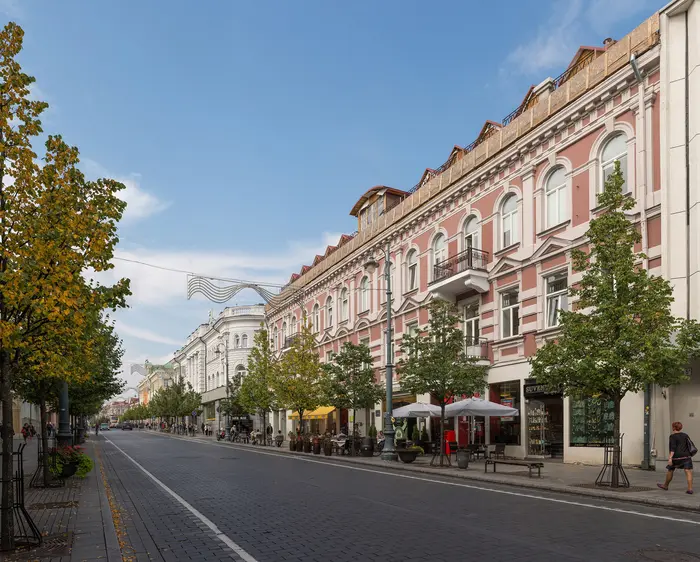
Gediminas Avenue: Vilnius's Main Boulevard
A guide to Gediminas Avenue, Vilnius's 1.8 km main boulevard: shops, cafés, museums, theatres, river crossings, parades and parking, and how to use the city's grand axis from Cathedral Square to the Parliament.
Read guide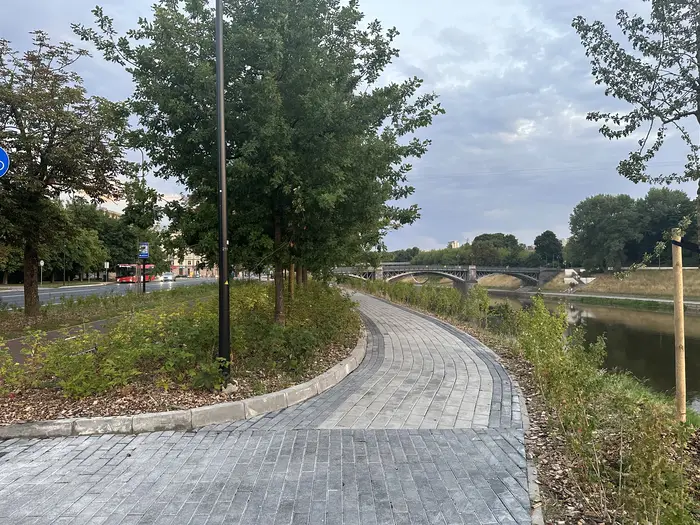
Best Area to Stay in Vilnius (First-Timer's Guide)
A decisive first-timer's guide to the best area to stay in Vilnius: Old Town for convenience, Cathedral/Gediminas Avenue for calm-central, Užupis and the riverside for romance, the New Town for nightlife, and the station district for value and rail.
Read guide