
Old Town (Senamiestis): Neighborhood & Where to Stay Guide
The complete guide to staying in Vilnius's Old Town: the UNESCO-listed historic core, what it's like to be based here, the trade-offs of cobbles and crowds, and how to choose your corner of Senamiestis.
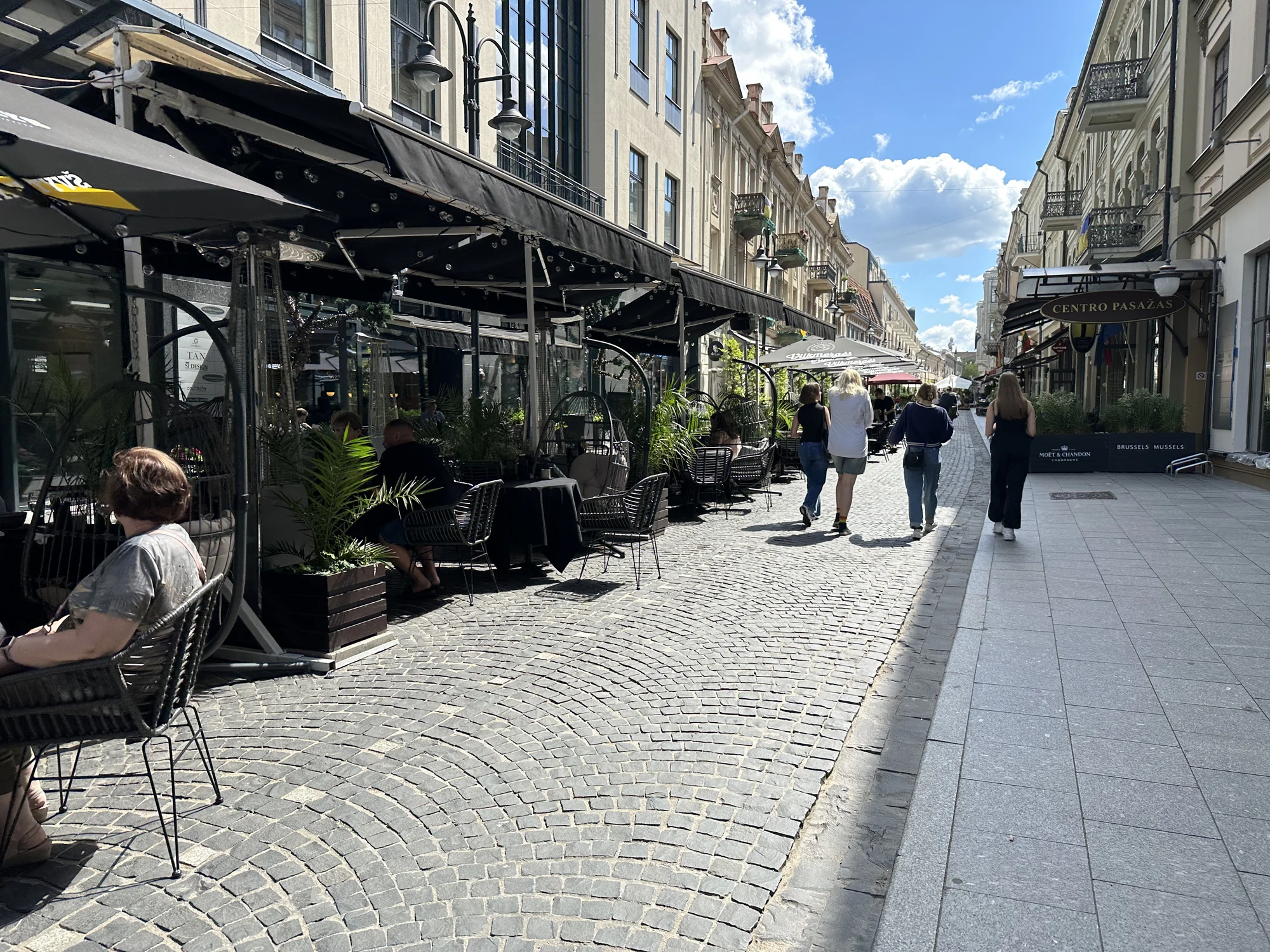
- ✓Vilnius's Old Town is a UNESCO World Heritage site — one of the largest surviving medieval old towns in Northern Europe.
- ✓Stay here and the city's most iconic sights, restaurants and events are quite literally on your doorstep.
- ✓It's extremely walkable: most key sights are within a 15-minute radius and the core is largely pedestrian-focused.
- ✓The spine runs from Cathedral Square down Pilies and Didžioji streets to the Gates of Dawn — almost everything sits a few minutes off it.
- ✓The trade-offs are summer crowds, scarce and pricey parking, and quirky historic apartments — but for first-timers it's the obvious base.
What it's like to stay in the Old Town
As a UNESCO World Heritage site, Vilnius's Old Town is a labyrinth of cobblestone streets, hidden courtyards, and stunning Baroque architecture. It's the vibrant heart of the city, where centuries of history meet a lively cafe culture and bustling tourist activity. Living or staying here means having the city's most iconic sights, restaurants, and events right at your doorstep.
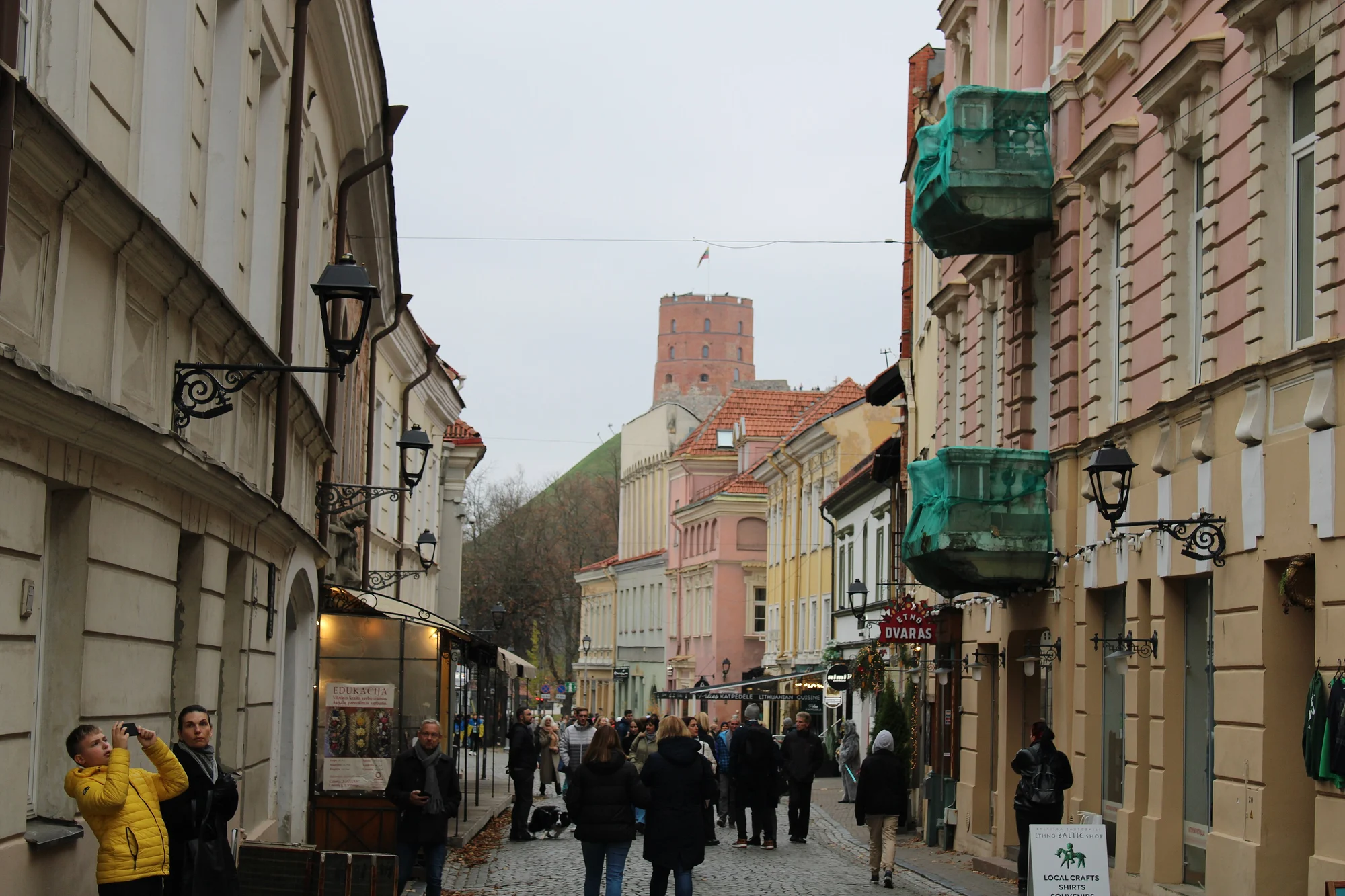
Senamiestis is one of the largest and best-preserved medieval old towns in Northern Europe, and basing yourself inside it changes the rhythm of a trip. You wake up to church bells, step out onto cobbles, and find that the Cathedral, Gediminas' Tower, the university courtyards and a dozen restaurants are all a few minutes' walk away. There's no transport to plan for the headline sights — you simply walk out of the door and into them. For a first visit, especially a short one, that convenience is hard to beat.
It's also the most atmospheric place to be after dark, when the day-trippers thin out and the lit spires and lantern-lit lanes belong to the people staying over. If you love the romance of historic European capitals and enjoy having endless dining and nightlife options on hand, the Old Town is made for you.
- Stay here if you're a first-time visitor who wants to be immersed in history and within walking distance of major attractions.
- Stay here if you love the romance of historic European capitals and enjoy endless dining and nightlife options.
- Most atmospheric at night, once the day-trip crowds have gone.
- No transport needed for the headline sights — they're a short walk apart.
The layout: how the Old Town is organised
Senamiestis is compact and remarkably legible once you understand its spine. The main axis runs from Cathedral Square at the northern end, down Pilies Street and on into Didžioji and Aušros Vartų streets, finishing at the Gates of Dawn in the south. Almost everything worth seeing — the university, the President's Palace, the Town Hall square, the great Baroque churches — sits within a few minutes of that line, which is why the district is so easy to cover on foot.
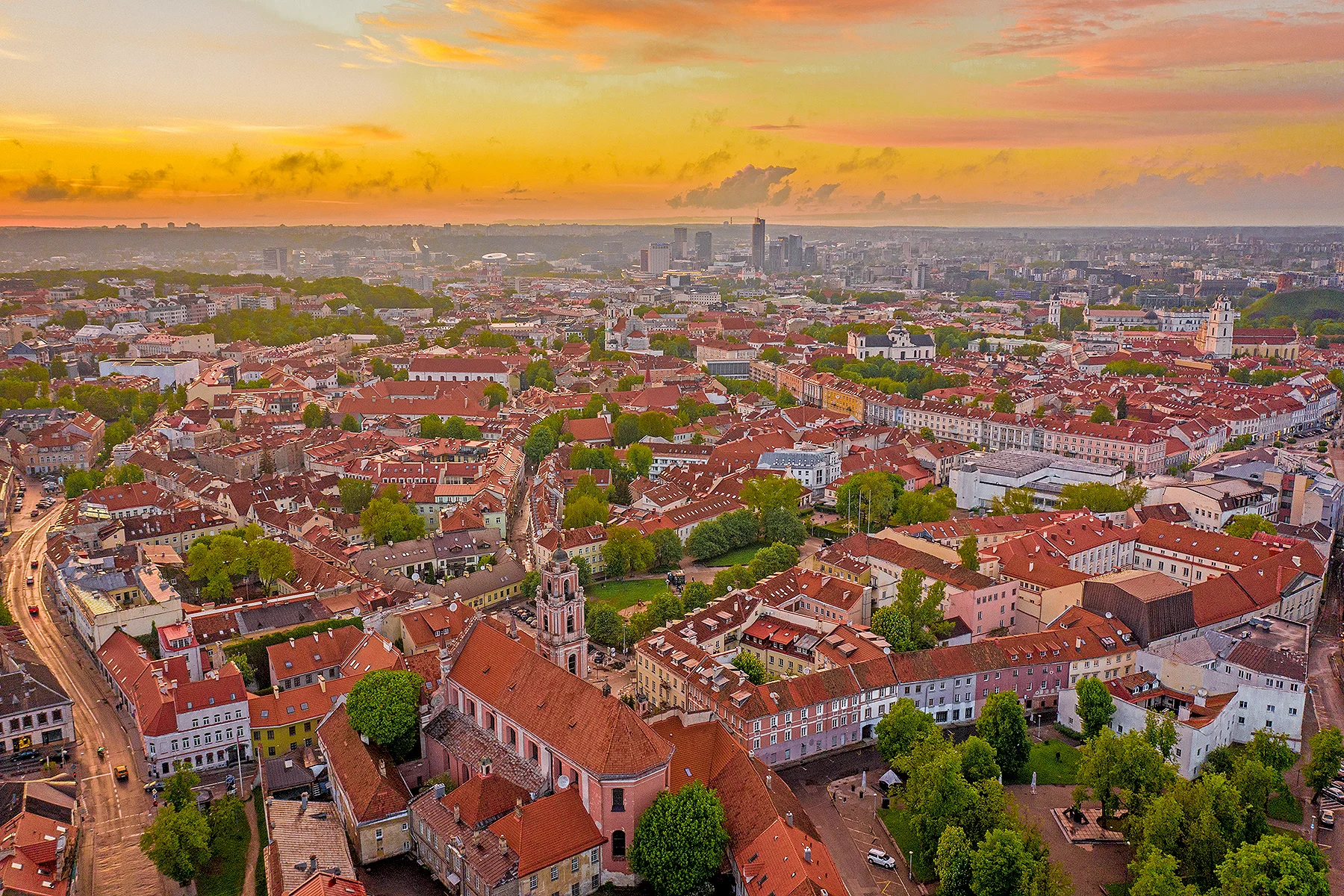
It's extremely walkable; most key sights are within a 15-minute radius. The core is largely pedestrian-focused, with buses serving the periphery rather than the inner lanes, and there's direct access to the train station from the Old Town's southern edge — useful if you're arriving by rail or heading off on a day trip to Trakai. Landmarks to orient by include Vilnius Cathedral and Cathedral Square, Gediminas' Tower on the hill above it, Pilies Street as the buzzy main artery, Vilnius University with its layered courtyards, and the Gates of Dawn with its revered chapel.
Within this small footprint there are distinct moods. The Pilies–Didžioji corridor is the busy, café-lined showpiece; one street back, the side lanes and courtyards turn quiet and residential almost immediately. Knowing that lets you choose your corner: central and lively, or a couple of minutes off the spine and calm.
- Spine: Cathedral Square → Pilies → Didžioji → Aušros Vartų → Gates of Dawn.
- Key landmarks: Vilnius Cathedral, Gediminas' Tower, Pilies Street, Vilnius University, Gates of Dawn.
- Well served by buses on the periphery; the core is largely pedestrian.
- Direct access to the train station from its southern edge.
Walk the Cathedral-to-Gate-of-Dawn axis in full, landmark by landmark.
Best Things to Do in VilniusThe city's headline experiences, most of them inside or beside the Old Town.
Map pins
Map data © OpenStreetMap contributors · Tiles © OpenFreeMap
The trade-offs — crowds, cobbles, parking and quirky flats
Basing yourself in the most popular part of the city comes with honest downsides, and it's worth weighing them before you book. The biggest is crowds: expect them, especially during summer weekends, when Pilies Street and Cathedral Square fill with day-trippers and tour groups. The fix is simple — explore the smaller side streets away from Pilies and you'll have whole lanes and courtyards to yourself within a minute's walk.
Then there's the historic fabric itself. Many buildings are protected, which can mean unique but sometimes quirky apartment layouts — beautiful old rooms with the occasional awkward staircase, low door or thick wall where a modern flat would have an open plan. Parking is a genuine challenge: on-street parking is scarce and expensive, and the cobbles and narrow lanes make driving in the core a chore, so this is a neighbourhood best explored on foot. If you're hiring a car for day trips, choose accommodation with its own parking and plan to leave the car parked while you're in town.
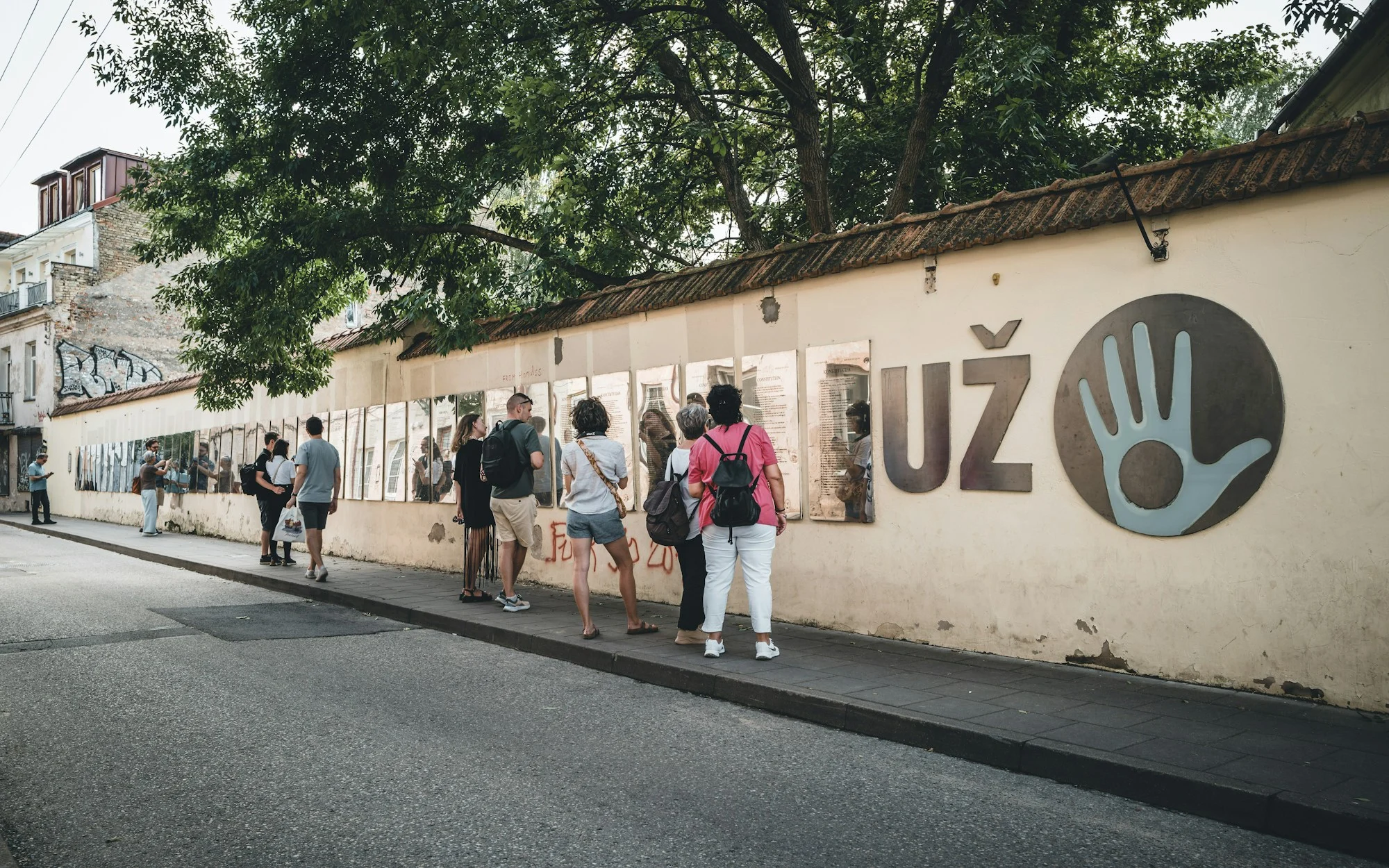
None of these is a dealbreaker — they're simply the price of the location. For most first-time visitors, being able to step out of the door into the heart of the city far outweighs the cobbles and the crowds. If you'd prefer somewhere quieter but still close, the bohemian republic of Užupis is a few minutes across the river, and the creative streets of Naujamiestis sit just beyond the Old Town's western edge.
- Crowds peak on summer weekends — duck into the side streets for calm.
- Protected historic buildings can mean characterful but quirky apartment layouts.
- On-street parking is scarce and expensive; the core is best explored on foot.
- Want quieter-but-close? Užupis is over the river; Naujamiestis is just west.
Who should stay here — and who shouldn't
The Old Town is the right call for most first-time visitors, couples after a romantic city break, and anyone on a short trip who wants to maximise time among the sights. If your priority is atmosphere, walkability and being in the thick of it — with restaurants, churches, viewpoints and nightlife all on foot — this is your neighbourhood, and it's worth paying a little more to be inside the walls.
It's a less obvious fit if you're travelling on a tight budget, want quiet nights and lots of space, or are staying for a week or more and would rather live among locals. In those cases, a residential district with fast transport — Žirmūnai by the river, say, or the calmer streets just outside the core — gives you more room for your money while keeping the centre a short ride away. Light sleepers should also note that the liveliest streets can be noisy at weekends; ask for a courtyard-facing room.
Whatever you decide, the Old Town will be where you spend your days regardless of where you sleep — so the real question is simply how much of a premium the doorstep convenience is worth to you. For a first, short, sightseeing-led trip, it usually is.
- Best for: first-timers, couples, short trips, atmosphere-seekers who want everything on foot.
- Reconsider if: you're on a tight budget, want quiet and space, or are staying a week or more.
- Light sleepers: choose a courtyard-facing room away from the busiest streets.
- Wherever you sleep, you'll spend your days here anyway — weigh the doorstep premium.
Centuries of history in the stones
Part of what you're paying for when you stay in Senamiestis is depth of time. This is one of the largest and best-preserved medieval old towns in Northern Europe, and it earned UNESCO World Heritage status for that remarkable continuity: layer upon layer of building from Gothic and Renaissance through to the great flowering of Baroque that gives Vilnius its skyline of spires and domes. You don't have to be a history enthusiast to feel it — it's in the worn cobbles, the off-kilter lanes that follow medieval property lines, and the way a plain doorway opens onto a hidden Renaissance courtyard.
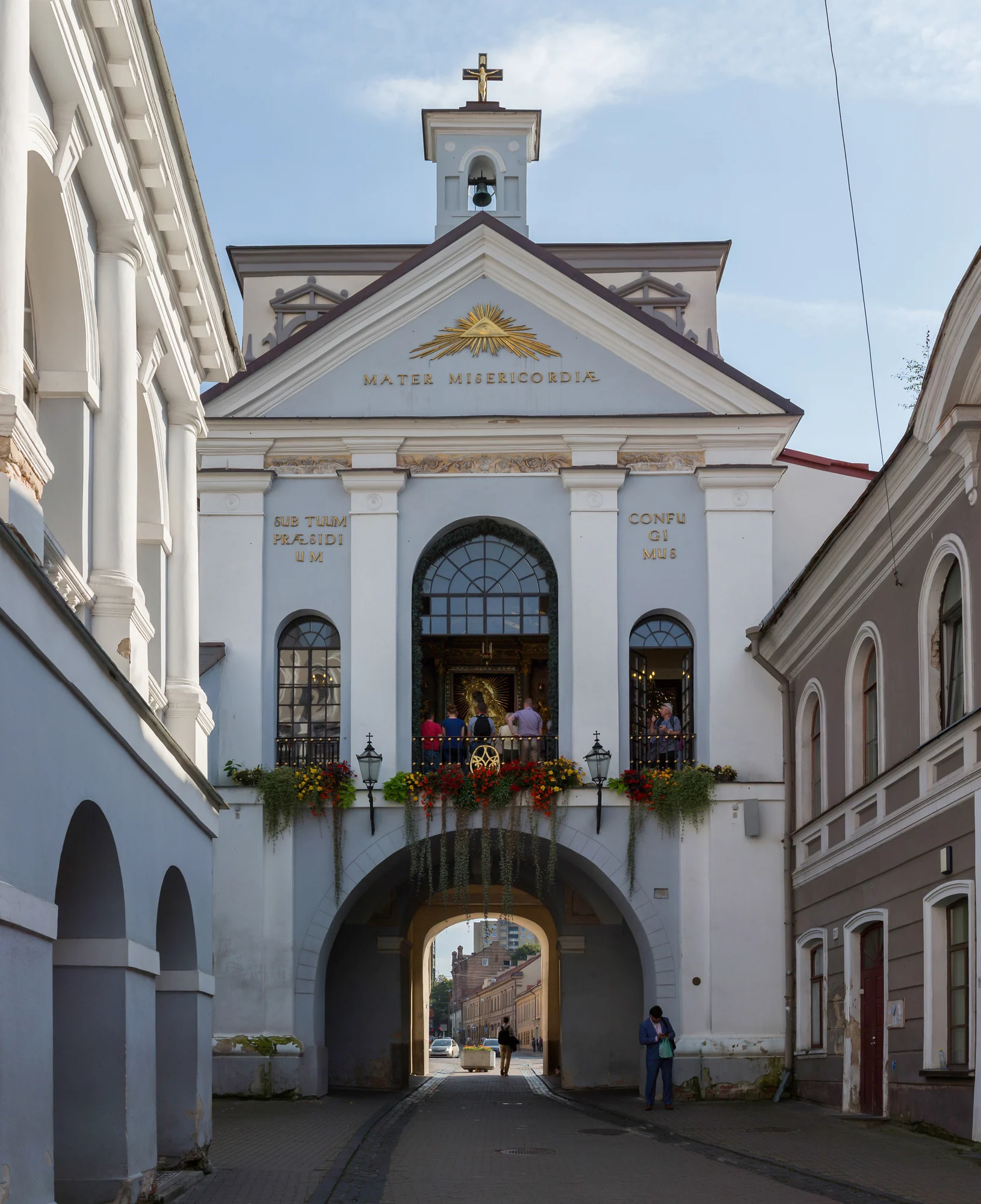
The Old Town grew up as the seat of the Grand Duchy of Lithuania and a famously multicultural crossroads, home over the centuries to Lithuanian, Polish, Jewish, Belarusian, Russian and other communities whose churches, synagogue sites and trading houses still pattern the streets. The result is an unusually layered townscape: Catholic Baroque churches a few steps from Orthodox onion domes, a former university quarter, the traces of the once-vast Jewish quarter, and grand civic buildings, all packed into a small, walkable area.
Living inside that for a few nights is a particular pleasure. You start to notice the same square at different hours, learn which courtyards cut through to which street, and watch the light move across the same facades morning and evening. It's the difference between visiting a historic centre and briefly inhabiting one — the strongest argument for booking a room within the walls rather than commuting in.
- One of the largest, best-preserved medieval old towns in Northern Europe.
- Layered Gothic, Renaissance and (above all) Baroque architecture earned its UNESCO listing.
- A historic multicultural crossroads — Catholic, Orthodox and Jewish heritage side by side.
- Staying over lets you watch the same streets and squares change through the day.
Eating, drinking and everyday life within the walls
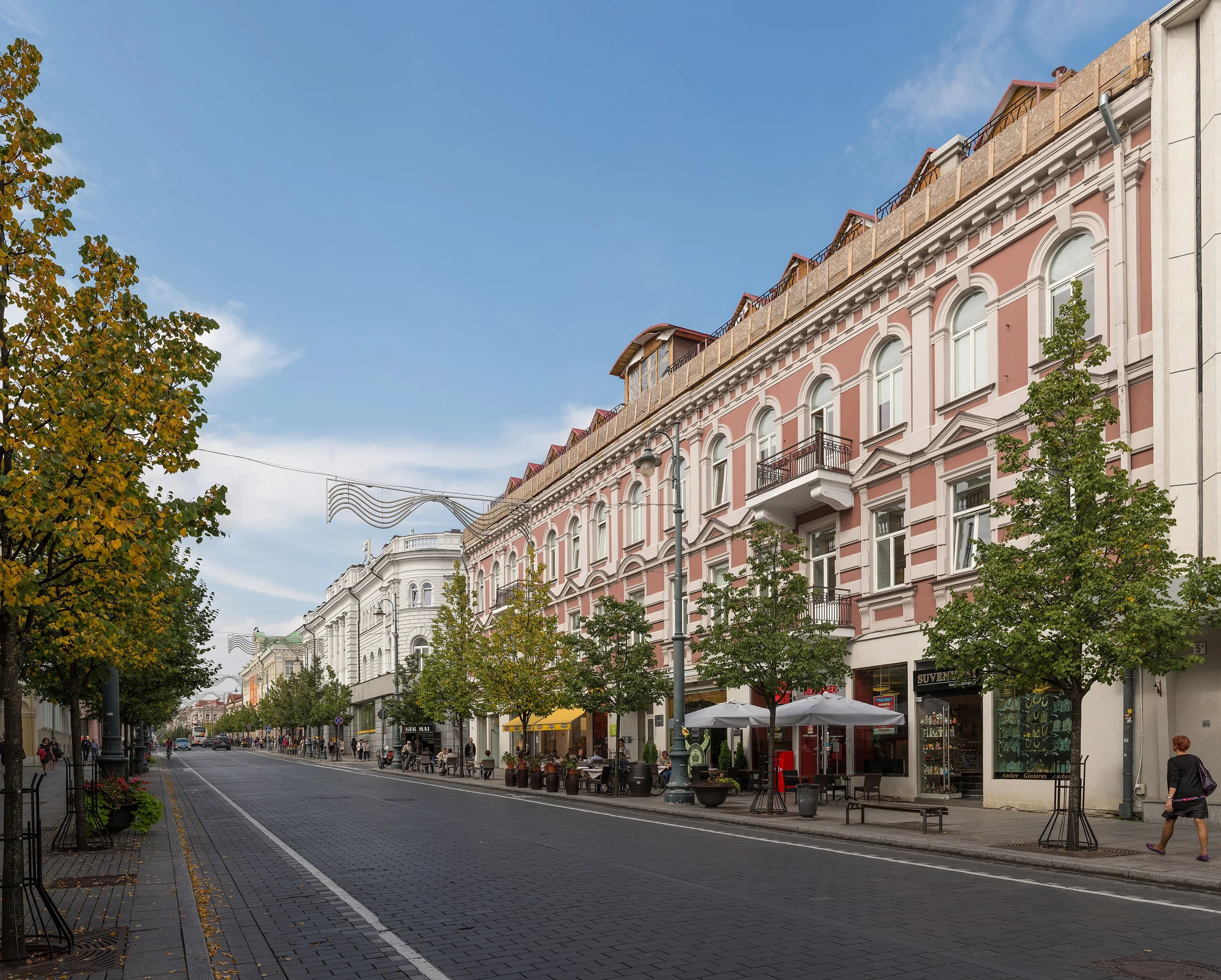
One of the real perks of basing yourself in Senamiestis is that food and drink are quite literally on your doorstep. The Old Town holds the densest concentration of restaurants, cafés, bakeries and bars in the city, from traditional Lithuanian taverns serving cepelinai and cold beetroot soup to contemporary bistros, specialty-coffee spots and wine bars tucked into vaulted cellars and courtyards. For breakfast pastries, a long lunch or a late dinner, you're rarely more than a couple of minutes from a good option.
The trade-off is the familiar one of any historic centre: the most prominent, terrace-fronted places on the busiest streets cater heavily to visitors and price accordingly. Walk one or two lanes back from Pilies and the value improves and the crowds thin — the courtyards and side streets are where locals and savvy travellers actually eat. Self-caterers staying in an apartment will find small grocers and bakeries within the walls, though for a full supermarket shop you'll usually step just outside the core.
Beyond eating, everyday conveniences cluster here too: pharmacies, exchange offices, small shops and the tourist information point, plus the churches, museums and squares that double as the city's public living rooms. It all reinforces the central appeal of the neighbourhood — that almost everything you might want on a short trip, practical or pleasurable, is reachable on foot from your front door.
- The city's densest spread of restaurants, cafés, bakeries and bars.
- Best value one or two lanes back from Pilies, away from the busiest terraces.
- Small grocers and bakeries within the walls; full supermarkets just outside.
- Pharmacies, exchange, shops and tourist info all within walking distance.
Getting around the Old Town and beyond
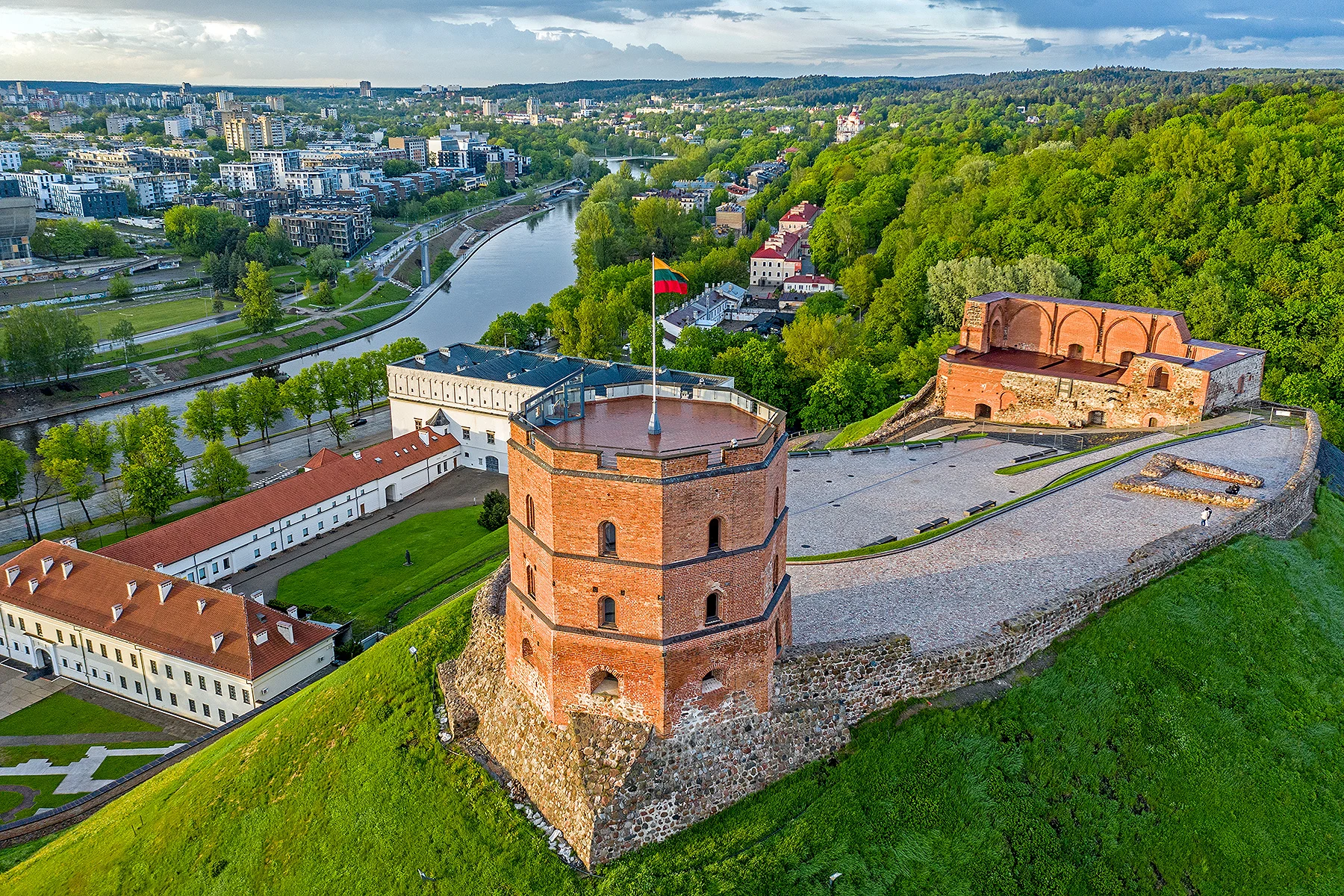
Inside Senamiestis, your own two feet are the only transport you need — the core is largely pedestrian-focused and most key sights are within a 15-minute radius. The lanes are cobbled and occasionally steep (the climb up to Gediminas' Tower being the obvious example), so comfortable, grippy shoes matter more than they might in a flatter city, especially in wet or icy weather. There's no metro in Vilnius, but the Old Town barely needs one; the periphery is well served by buses, and the train and bus stations sit just off the southern edge for onward travel and day trips.
When you do want to range further — out to a residential district, across to Naujamiestis, or off to Trakai for the day — the city's buses and trolleybuses are cheap and reliable, and taxis and ride-hailing apps are inexpensive by Western European standards. From the Old Town you can be at the airport, the station, or a riverside neighbourhood in well under half an hour. Check current fares and timetables on the city's route planner before you travel, as both change.
A practical sequence for a first day helps: walk the spine from Cathedral Square down Pilies and Didžioji to the Gates of Dawn to get your bearings, detouring into open churches and university courtyards as you go; climb something — Gediminas' Tower, or the bell towers — for the lay of the land; then let the side streets pull you off route. Once you've grasped how compact it all is, you'll navigate the rest of your stay almost without thinking, which is the quiet luxury of being based in the heart of the Old Town.
- Explore the core entirely on foot — most sights are within a 15-minute walk.
- Cobbles and gentle climbs reward comfortable, grippy shoes, especially in winter.
- No metro, but buses, trolleybuses and cheap taxis cover everywhere beyond the walls.
- Train and bus stations sit just off the southern edge for onward travel.
Squares, courtyards and the Old Town at different hours
One of the under-sold pleasures of staying inside Senamiestis is the way the same handful of squares and courtyards change their character through the day. Cathedral Square is a brisk crossroads of locals and visitors by morning, a sun-trap of strollers by afternoon, and a floodlit stage by night, with Gediminas' Tower glowing on the hill above it. The Town Hall square shifts from market-and-coffee bustle to a quieter, lamplit calm after dinner. Learning these rhythms — knowing when a spot is busiest and when it empties out — is a small luxury only an overnight base affords.
Then there are the courtyards, the Old Town's secret rooms. Behind the street facades, doorways open onto a whole hidden layer of cloisters, arcades and tucked-away gardens — the layered courtyards of Vilnius University being the most famous, but far from the only ones. Half the joy of the neighbourhood is pushing on an open gate to see where it leads, and staying here means you can do it at quiet times, with the courtyards to yourself, rather than fighting through midday crowds.
Aim to be out for at least one golden hour and one proper night-time wander. As the light goes warm, the Baroque spires and red roofs glow; after dark, the lit churches and lantern-lined lanes belong to the few who are staying over. These are the moments that justify the premium of an Old Town room — the city handed back to you, briefly, as a resident rather than a day-tripper.
- The main squares change mood hour by hour — busiest by day, magical after dark.
- Hidden courtyards behind the facades reward pushing on an open gate.
- Stay over to enjoy the university courtyards and lanes at their quietest.
- Catch at least one golden hour and one night-time wander among the lit spires.
Related guides
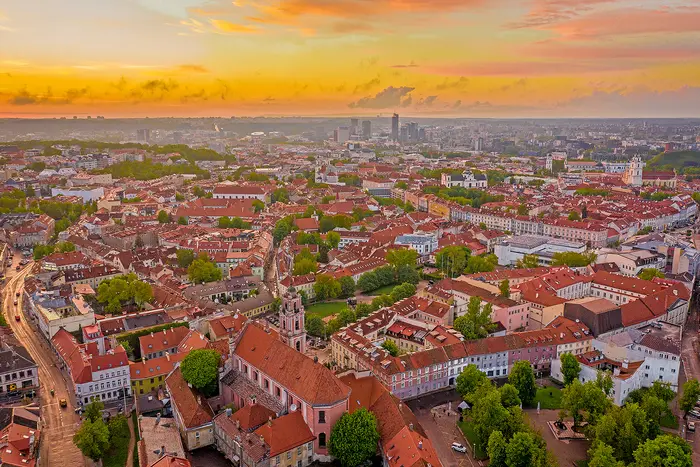
Vilnius Old Town
A guide to Vilnius Old Town: the UNESCO-listed heart of the city, its gates, churches, courtyards, squares, cafés, Jewish history and best photo stops.
Read guide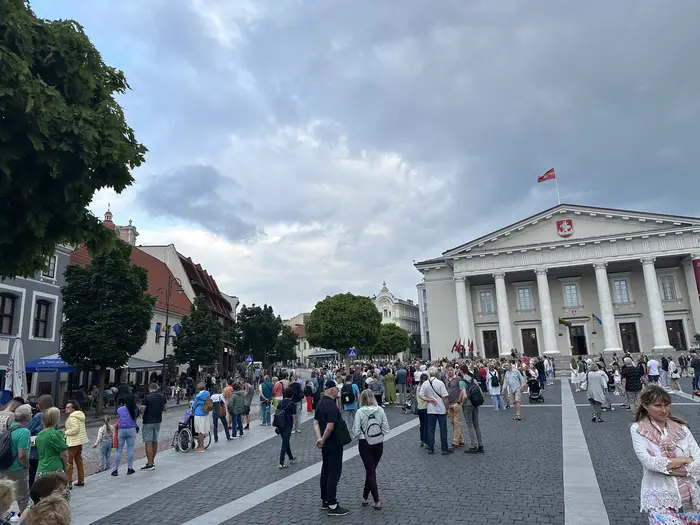
Best Old Town Hotels in Vilnius
Stay inside Vilnius Old Town with clear trade-offs on charm, noise, cobbles, taxis, restaurants and winter walking — and how to pick the right street.
Read guide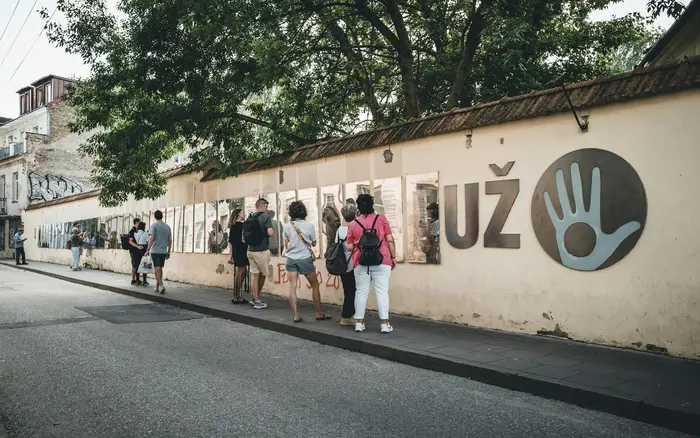
Užupis Neighborhood Guide
A guide to Užupis, Vilnius's self-declared bohemian 'republic' across the Vilnia: its tongue-in-cheek constitution, galleries and sculptures, café-and-wine-bar afternoons, and how to spend time in the city's artistic heart.
Read guide