
Vilnius Public Transport Guide
How Vilnius public transport works: JUDU buses and trolleybuses, time-based tickets, contactless bank-card payment, the Trafi and JUDU apps, airport routes and the mistakes visitors make.

- ✓Vilnius runs an integrated bus and trolleybus network under the JUDU brand — no metro or trams, but you rarely need them in the walkable centre.
- ✓Tickets are time-based, not per-journey: one fare covers transfers within its window.
- ✓Tap a contactless bank card or phone on the validator, or buy tickets in the Trafi or JUDU app — no physical card needed for a short visit.
- ✓A single 60-minute ride is inexpensive; 1-day and 3-day tickets exist if you'll ride often.
- ✓Always validate as you board — an unvalidated ticket counts as no ticket if checked.
How the network works
Vilnius's public transport is a single integrated system of buses and trolleybuses, run under the JUDU brand (operated by Susisiekimo paslaugos). There's no metro and no trams — the electric trolleybuses are the closest thing to a 'rail' feel — but for visitors that barely matters, because the historic core is so compact that you'll walk most of the time. Where the network earns its keep is reaching the airport, the bus and train stations, outlying neighbourhoods, the TV Tower, and the trailheads for nature trips.
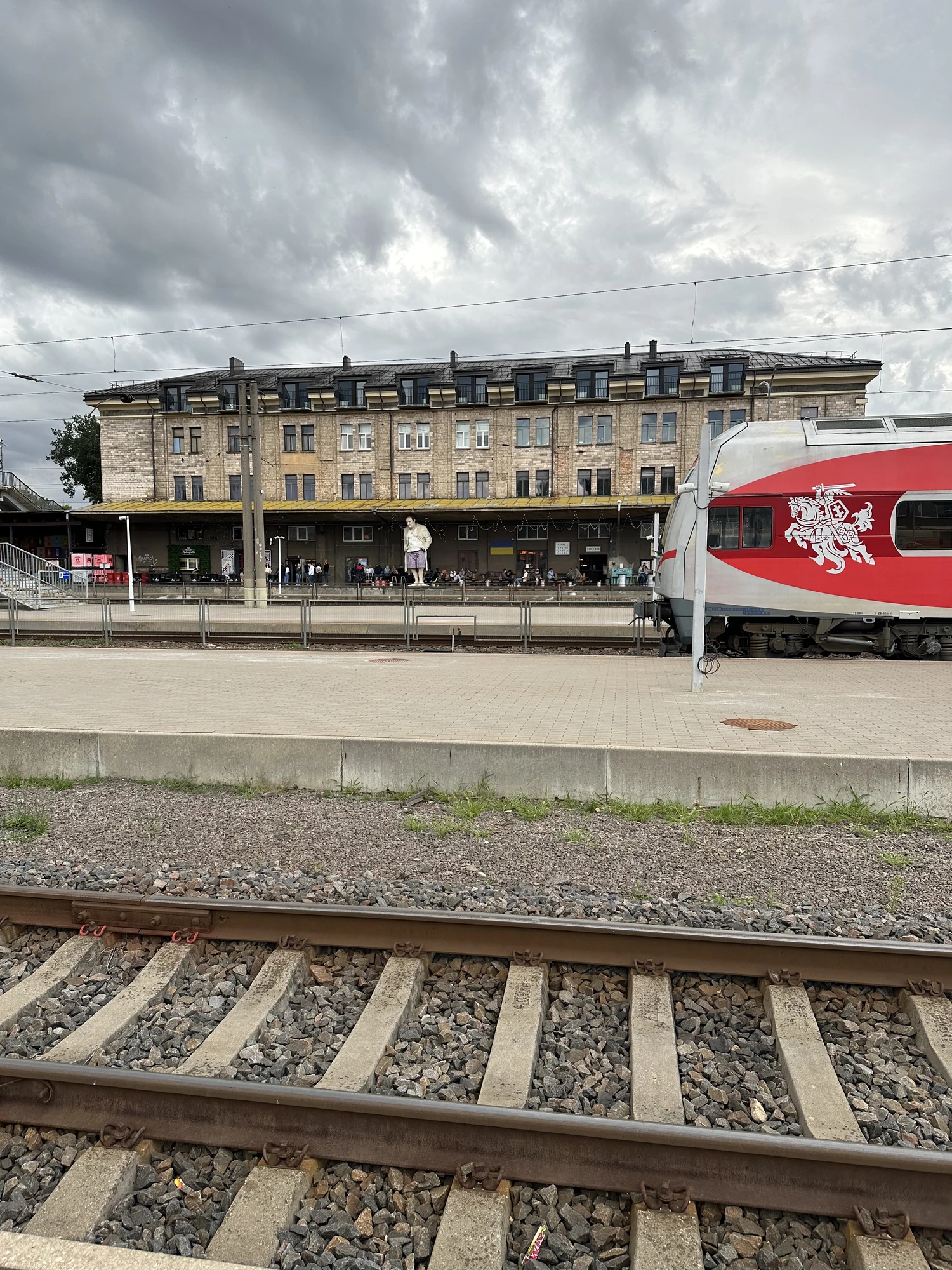
Routes are dense and frequent across the central corridors, run from early morning to around midnight, and are supplemented by a handful of night buses on key routes. Google Maps and the local Trafi app both show live routing and times, so you can plan any hop on the spot rather than memorising lines.
The trolleybuses are worth a mention in their own right: Vilnius has run an extensive electric trolleybus network for decades, and gliding quietly through the city on one is a small, characterful part of the local experience. For a visitor, though, the practical point is that buses and trolleybuses share the same tickets, the same validators and the same network logic — you don't need to think about which type you're boarding. Just check the route number and direction, tap or validate, and ride.
- Buses + electric trolleybuses; no metro or trams.
- Frequent on central routes; runs roughly early morning to midnight.
- Night buses cover key corridors in the small hours.
- Plan with Google Maps or the Trafi app for live times.
Tickets and fares
Vilnius uses time-based tickets rather than charging per journey, which is the key thing to understand. When you validate, your ticket is good for a set window — typically 30 or 60 minutes — during which you can change buses or trolleybuses as many times as you need without paying again. That makes a single fare go further than first-timers expect, especially if your trip involves a transfer.
Single tickets are cheap: a 30-minute ride and a 60-minute ride are both modestly priced, and if you'll be riding a lot, 1-day and 3-day tickets offer better value than buying singles. Buying through the Trafi or JUDU app, or tapping a contactless bank card, is generally cheaper and simpler than buying a paper ticket from the driver, which carries a small premium. Check the official JUDU fares page for the current exact prices before you travel, as fares are periodically updated.
- Tickets are time-based: transfers within the window are free.
- Single 30-min and 60-min tickets are inexpensive.
- 1-day and 3-day tickets are worth it if you'll ride often.
- Buying from the driver costs more than app or contactless — see JUDU for exact prices.
Keeping transport and the rest of your trip cheap.
Vilnius Travel TipsMoney, tickets and getting-around basics in one place.
Map pins
Map data © OpenStreetMap contributors · Tiles © OpenFreeMap
Paying: contactless, apps and cards
The simplest way to pay as a visitor is to tap a contactless bank card or your phone on the ticket validator as you board — the system charges you for a time-based ticket automatically, with no app or local card required. This is ideal for occasional rides during a short stay. Alternatively, the Trafi and JUDU mobile apps let you buy and activate tickets on your phone, which is handy if you want a day ticket or to plan routes in the same place you pay.
If you're staying longer or riding daily, the reloadable Vilniečio kortelė (Vilnius city card) is the locals' option and unlocks the cheapest fares, but it's usually overkill for a few days of sightseeing. For most visitors, contactless tap-to-pay or the app covers everything you'll need.
- Easiest: tap a contactless bank card or phone on the validator.
- Apps: Trafi and JUDU sell and activate tickets, and plan routes.
- Vilniečio kortelė (city card) suits longer stays, not short trips.
Common mistakes to avoid
The mistake that catches visitors out is forgetting to validate. Whether you've bought a paper ticket, an app ticket or you're tapping a card, you must validate or tap on the on-board reader as you board — an unvalidated ticket is treated as no ticket at all if an inspector checks, and fines apply. Tapping a contactless card validates automatically, which is part of why it's the foolproof choice.
The other false move is overusing transport at all. Vilnius's Old Town is genuinely small, and many first-timers buy day passes they barely touch because everything central is a pleasant walk. Save the network for the airport, the stations, the TV Tower, outlying districts and day-trip trailheads, and walk the centre — you'll see more of the city that way, and spend less.
- Always validate/tap as you board, every time — no exceptions.
- Contactless tap validates automatically; it's the safest method.
- Don't over-buy passes — the central Old Town is best on foot.
- Use transport mainly for the airport, stations and outer sights.
Which routes visitors actually use
For all its size, the network only matters to most visitors in a handful of situations, and it helps to know them in advance. The airport connection is the big one: buses serve Vilnius Airport directly, and the dedicated airport train links it to the central station in minutes — your most useful 'transport moment' of the whole trip. Beyond that, you'll likely use a bus or trolleybus to reach the train and coach stations for day trips, to get out to the TV Tower for its panoramic views, and occasionally to reach a hotel, restaurant or park beyond comfortable walking distance from the Old Town.
Everything central — the Old Town, Cathedral Square, Užupis, the main museums and viewpoints — is walkable, so don't feel you need to master the map. The smart approach is to let a routing app handle the specifics: type your destination into Google Maps or Trafi, follow the suggested bus or trolleybus, tap your card on board, and you're done. Treating the network as an occasional tool rather than a daily habit keeps things simple and cheap, and is exactly how most short-stay visitors get around.
- Airport: direct buses plus the dedicated airport train to the central station.
- Day trips: a short ride to the train and coach stations.
- TV Tower and outer sights: a bus or trolleybus saves a long walk.
- Central sights are all walkable — use transport selectively.
Quick answers to common questions
A few things travellers ask before they arrive. Do you need cash for transport? No — contactless card or phone tap covers it, and the apps take cards too. Is there a metro? No, the system is buses and trolleybuses only. How late does it run? Roughly until midnight on most routes, with night buses on key corridors after that. Can one ticket cover a transfer? Yes — tickets are time-based, so changes within the window are free. Is it safe? Yes; Vilnius transport is safe and clean, with the usual minor awareness for your belongings on busier services.
And the question behind all the others: will you actually need it much? For most short visits, honestly, not very — the airport link and the odd hop to a station or the TV Tower is the typical extent of it. That's good news: it means you can keep your transport setup minimal, lean on a contactless tap when needed, and spend the rest of your time exploring a city that's built to be walked. If your plans do involve heavier daily use or outlying neighbourhoods, the day and multi-day tickets and the route apps have you fully covered.
- No cash needed; no metro; runs to ~midnight with night buses after.
- Time-based tickets make transfers within the window free.
- Transport is safe and clean — normal care with belongings applies.
- Most short-stay visitors use it only lightly.
Related guides

Vilnius Airport to City Center
How to get from Vilnius Airport (VNO) into the city and Old Town: the €0.70 airport train, airport buses, taxis and Bolt, with prices, times and which option suits you.
Read guide
Vilnius Practical Travel Tips
Everything practical for a smooth Vilnius trip: getting in from the airport, buses and trolleybuses, money and tipping, safety, weather, the best time to visit, and day-trip logistics.
Read guide
Vilnius on a Budget: A Low-Cost Itinerary
A lower-cost Vilnius itinerary built on free sights, cheap public transport, market and bakery meals and one or two well-chosen tickets — proof that one of Europe's prettiest capitals is also one of its best value.
Read guide