
Hill of Crosses from Vilnius: How to Visit Kryžių Kalnas
How to visit the Hill of Crosses from Vilnius: why it is a long day, train, car and tour options via Šiauliai, what to expect at the site, and the overnight and Baltic-route alternatives.
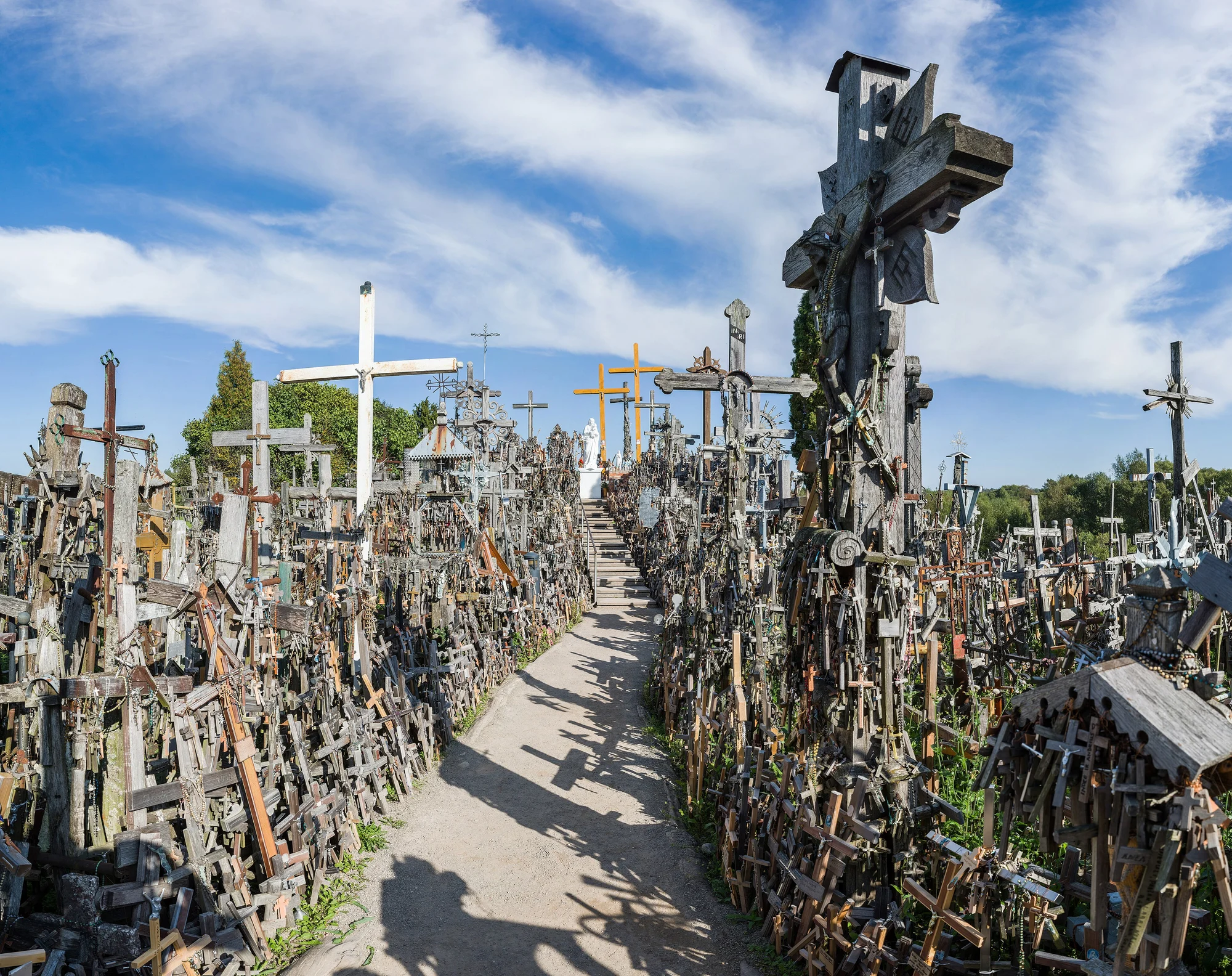
- ✓The Hill of Crosses (Kryžių kalnas) is Lithuania's most powerful pilgrimage site — a low hill covered in tens of thousands of crosses, near Šiauliai in the north.
- ✓It is a long way from Vilnius: roughly 210–220 km and about 12 km north of Šiauliai, so this is a committed full-day trip, not a quick outing.
- ✓Without a car the realistic route is a morning train to Šiauliai, then a local bus and a walk, returning to Vilnius in the evening.
- ✓Many travellers find it easier as a guided tour, as an overnight in Šiauliai, or as a stop on a Vilnius–Riga or Baltic-capitals route.
- ✓The site itself is free, open at all times and deeply atmospheric — but the value is in the place, not the logistics, so plan the journey carefully.
What the Hill of Crosses is — and why it moves people
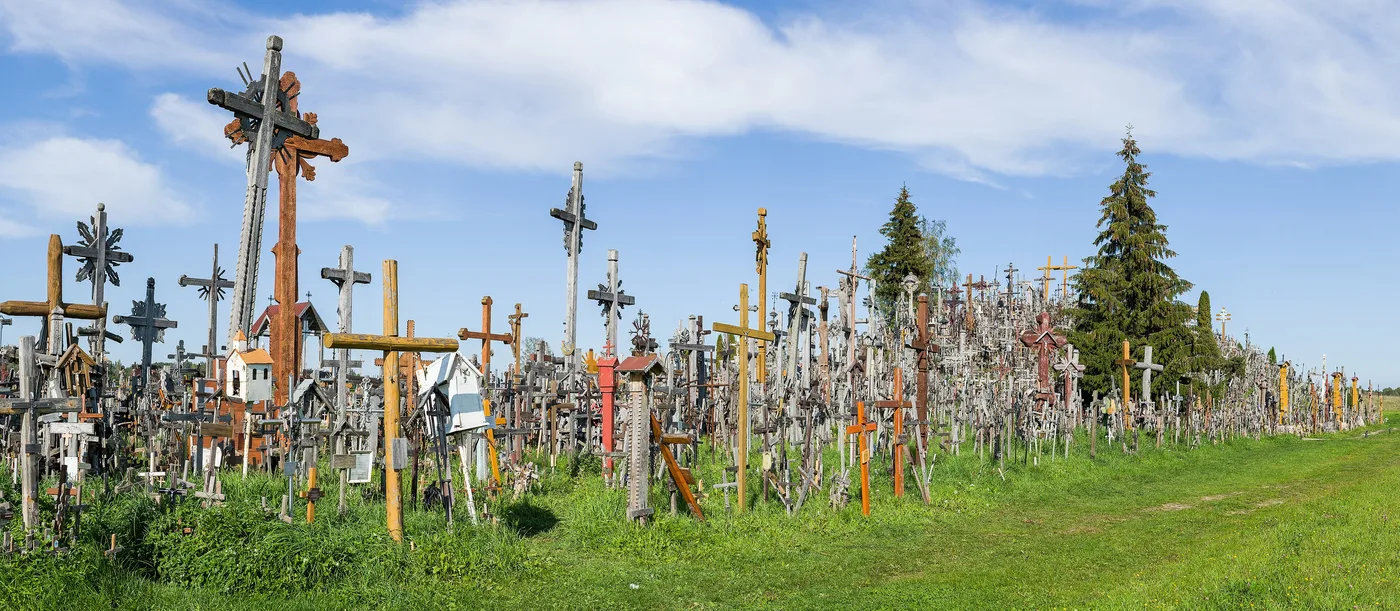
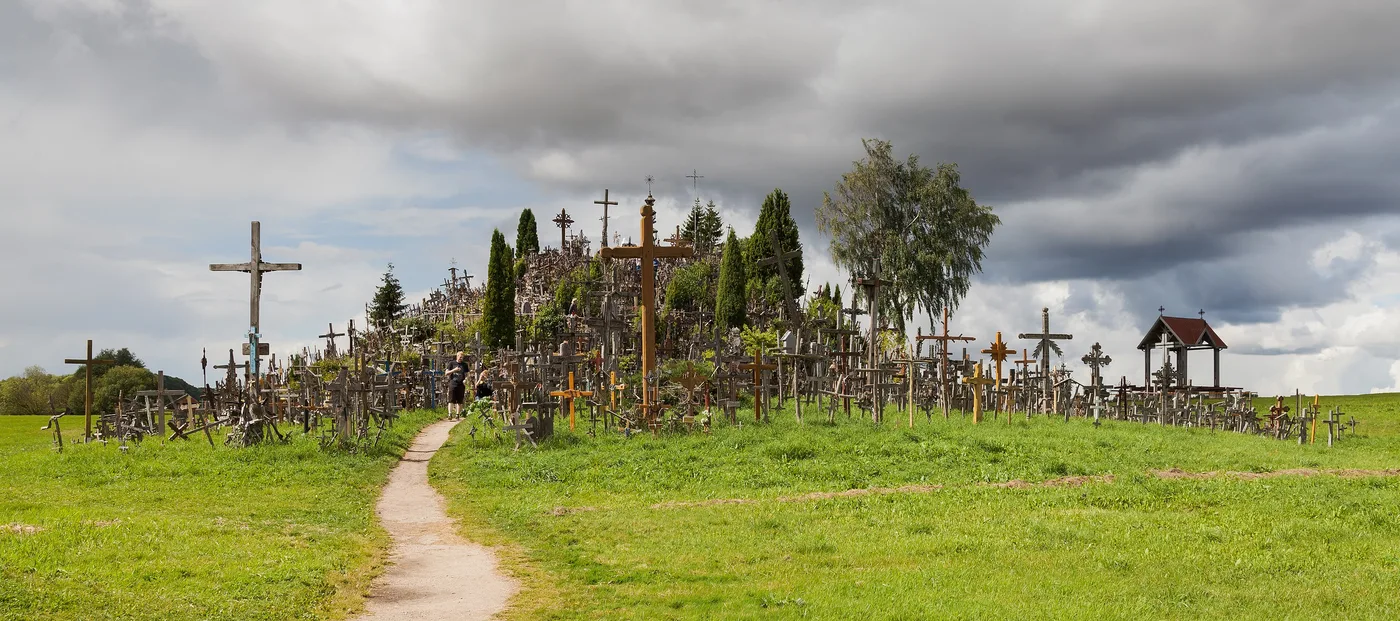
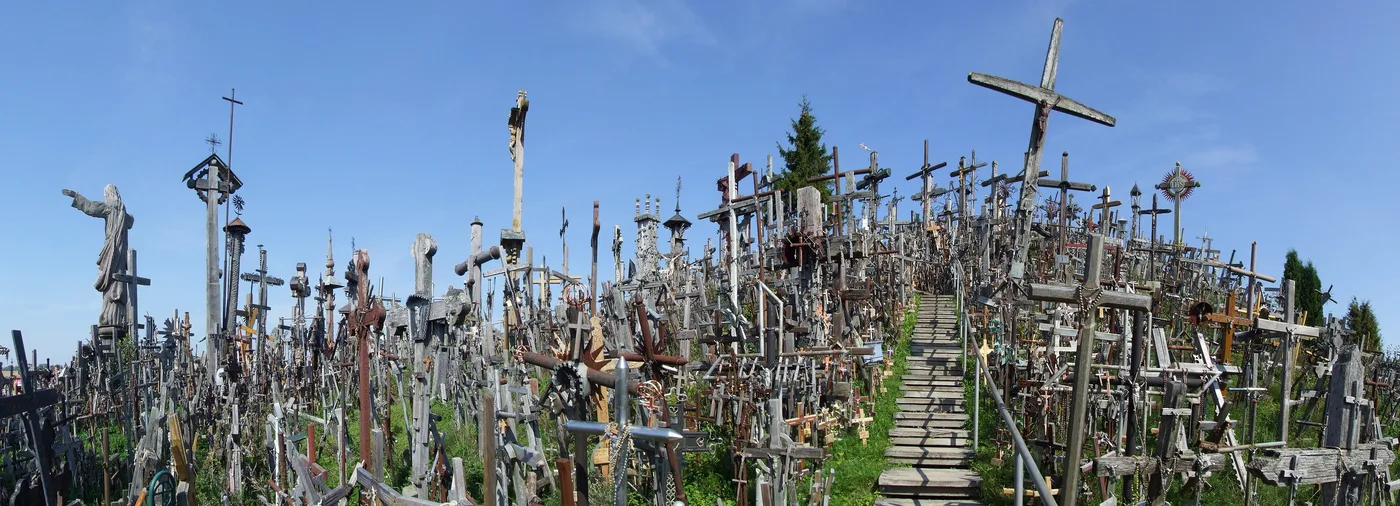
The Hill of Crosses is one of those places that photographs cannot quite prepare you for. On a small mound rising from flat farmland near Šiauliai stand tens of thousands of crosses — towering carved oak crucifixes, tiny rosaries, metal and wooden crosses left by pilgrims over generations — packed so densely that the hill seems to bristle. The wind moves through them and the smaller crosses chime softly. It is a site of folk faith and national identity rolled into one, and it is genuinely moving regardless of your beliefs.
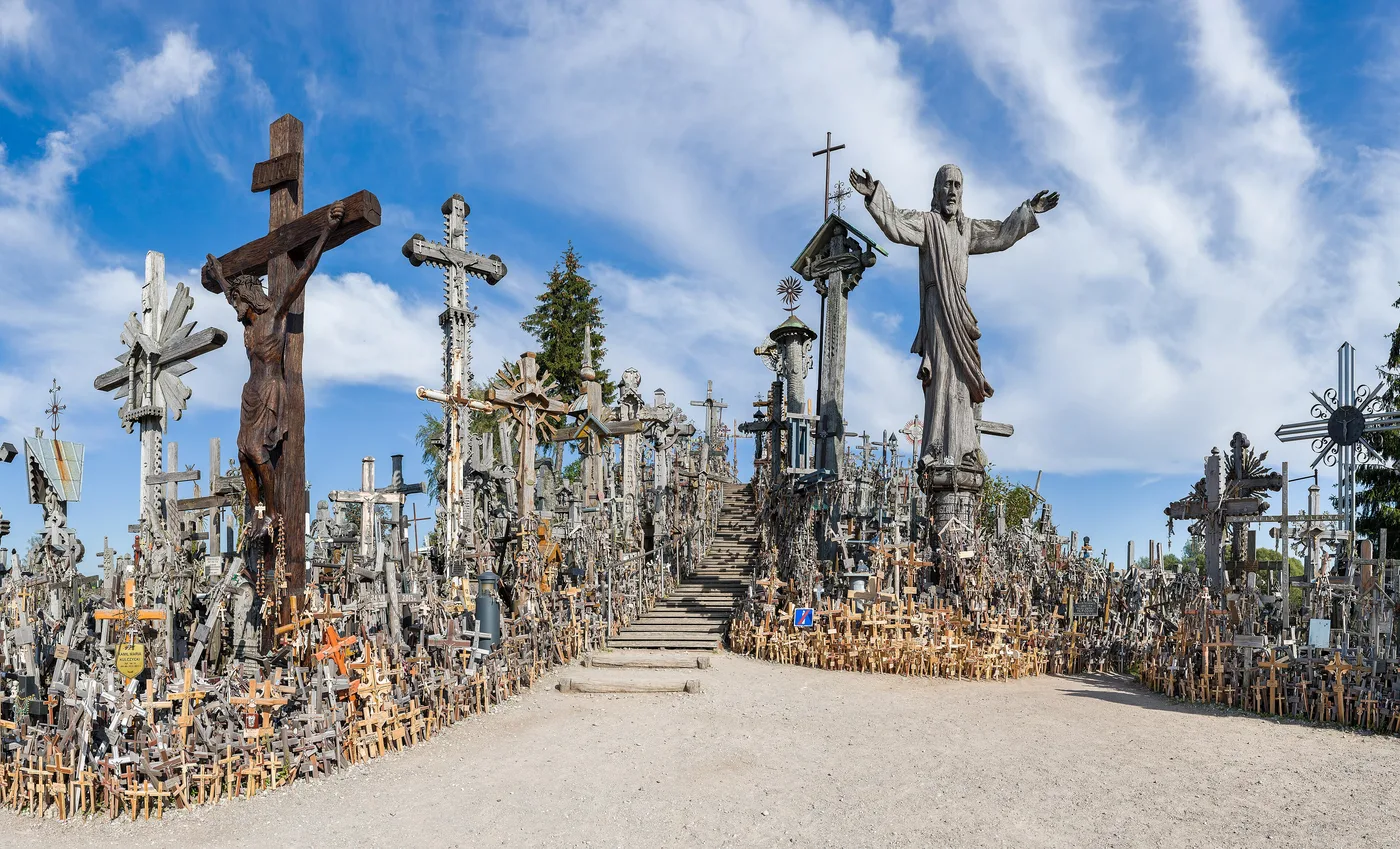
The crosses began appearing in the 19th century, and the hill became a symbol of Lithuanian endurance under foreign rule. During the Soviet era the authorities bulldozed it more than once; each time, locals quietly rebuilt it overnight, which turned the place into a quiet act of resistance as much as devotion. Pope John Paul II visited in 1993, cementing its status as a major Catholic pilgrimage site. Today anyone can add their own cross.
The result is a landscape unlike anywhere else — part shrine, part folk-art collection, part memorial. It is the value of the trip: not a museum to tick off, but a place to stand quietly in and absorb. That is worth remembering when you weigh the long journey, because the experience is about atmosphere, not activity.
On arrival you walk from a small car park and visitor area along a path to the hill, which you can climb on a narrow set of steps and paths threading between the crosses. There is a modest visitor centre and a stall or two selling crosses and refreshments, but the site is deliberately unspoilt — no grand museum, no big entrance hall, just the hill and the sky. Most people spend twenty minutes to an hour here: time to climb, walk among the crosses, perhaps leave one of their own, and take it in. It is exposed, so it can be windy and cold, which only adds to the atmosphere. Dress for the weather and bring nothing you would not want to carry up a small hill.
- Tens of thousands of crosses on a small hill near Šiauliai — a pilgrimage and national symbol.
- Repeatedly bulldozed in the Soviet era and rebuilt each time; visited by Pope John Paul II in 1993.
- Free, always open and atmospheric — the reward is the place itself, not facilities.
The honest truth: it's a long day from Vilnius
There is no getting around the distance. The Hill of Crosses sits roughly 210–220 kilometres from Vilnius and about 12 kilometres north of Šiauliai, the nearest city. That puts it far beyond the gentle half-day radius of Trakai or the regional parks, and it means a visit from Vilnius and back is a committed full-day undertaking — easily ten to twelve hours door to door by public transport, much of it spent travelling.
That is not a reason to skip it, but it is a reason to plan with eyes open. The site itself takes well under an hour to experience; the day is mostly about getting there and back. So the real question is not 'should I see the Hill of Crosses' — you should, if you can — but 'what is the least painful way to fit it in.' For some that is a long self-guided rail day; for others it is a tour, an overnight, or folding it into a journey to Latvia.
To put the distance in perspective: the Hill of Crosses is roughly twice as far from Vilnius as Kaunas and many times further than Trakai or the regional parks, which sit on the city's doorstep. It belongs in a different category of trip altogether — a proper excursion, not a casual outing. Travellers who treat it like a quick add-on tend to come away frazzled; those who give it the time and planning it needs tend to rate it among the highlights of their whole Lithuanian trip. Which camp you end up in is almost entirely down to how you handle the logistics, which is what the rest of this guide is about.
Set your expectations accordingly. Bring a book or podcasts for the transit, start early, and treat the travelling as part of the deal. The hill itself will not disappoint.
- Roughly 210–220 km from Vilnius; about 12 km north of Šiauliai.
- A full-day commitment — often 10–12 hours door to door by public transport.
- The site takes under an hour; plan the journey, not the visit.
Map pins
Map data © OpenStreetMap contributors · Tiles © OpenFreeMap
Getting there: train, car and tours
By train is the most comfortable independent option. Take an early morning service from Vilnius to Šiauliai — the ride is roughly two and a quarter to two and a half hours — and from Šiauliai continue to the hill itself, which is the fiddly part. From the city you take a local bus heading toward Joniškis, get off at the Domantai stop, and walk the remaining couple of kilometres to the site along a signed lane. Reverse the whole thing to get back to Vilnius the same evening. It is entirely doable but tightly timed, so check the current rail and local-bus schedules carefully and have a plan for the connection at Šiauliai.
By car the trip is far simpler: a direct drive of around two and a half hours each way on good roads, with a car park near the site. Driving removes the connection headache and lets you set your own pace, and it makes combining the hill with other northern stops realistic. Intercity buses from Vilnius to Šiauliai also run, though they tend to be slower than the train.
For many visitors the easiest answer is a guided day tour. These handle the door-to-door transport in one go, usually with commentary and sometimes a second stop, removing every logistical worry at the cost of flexibility. If the idea of juggling a train, a local bus and a walk on a tight clock is off-putting, a tour is money well spent.
- By train: early Vilnius–Šiauliai service (~2h15–2h30), then a local bus toward Joniškis to the Domantai stop and a ~2 km walk.
- By car: ~2h30 each way on good roads, with parking at the site — the simplest independent option.
- By bus: intercity coaches to Šiauliai run but are generally slower than the train.
- By tour: a guided day trip removes all the connection stress; least flexible but easiest.
Šiauliai, overnights and the Baltic-route alternative
If the round trip in a day feels punishing, there are gentler ways to see the hill. The simplest is to overnight in Šiauliai. Lithuania's fourth city is no Vilnius, but it has a cathedral, a few quirky museums (including ones devoted to bicycles and to cats) and enough to fill an evening and a relaxed morning, and basing there lets you visit the hill without the marathon transit in a single day.
The smartest option for many is to stop at the Hill of Crosses on the way somewhere else rather than as an out-and-back. The site lies broadly between Vilnius and Riga, so it slots neatly into a journey north to Latvia or a wider Baltic-capitals itinerary. With a car or on the right tour, you can take it in as you travel rather than doubling back, which is by far the most efficient way to do it.
However you approach it, the lesson is the same: the Hill of Crosses is absolutely worth seeing, but it rewards being built into your route rather than bolted on as a same-day return from Vilnius.
If you do decide to base in Šiauliai for a night, there is a small bonus: you can visit the hill at a quiet time of day, perhaps early morning or late afternoon when the tour coaches have gone, when the place is at its most affecting. Standing among tens of thousands of crosses with the wind in them and almost no one else around is the kind of experience that justifies the whole long journey north — and it is far easier to arrange from a Šiauliai bed than from a same-day dash out of Vilnius. Weigh the extra night against the alternative of spending most of a single day on trains and buses; for many travellers, it is the better trade.
- Overnight in Šiauliai (cathedral, bicycle and cat museums) to avoid the all-in-one-day slog.
- Best of all, visit en route to Riga or as part of a Baltic-capitals trip rather than out-and-back.
- With a car or the right tour, the hill is a natural stop on the road north.
Etiquette, timing and what to bring
Remember that the Hill of Crosses is an active pilgrimage and place of devotion, not just a photo stop. Many visitors are there in a spirit of faith or remembrance, so keep your voice down, be unobtrusive with cameras around people who are praying, and treat the crosses with respect. You are welcome to bring and leave a cross of your own — many people do, and they are sold at the site — which is a quietly moving way to take part rather than just observe.
Timing matters for a place this far away. Aim to arrive in the morning or early afternoon so you are not racing the last train or bus back, and build in plenty of buffer for the Šiauliai connection if you are travelling independently. Weekends, especially Sundays, can be busier with pilgrims and the occasional service; a weekday visit is quieter. The site is open and free at all hours, but the practical window is daylight, and the surrounding visitor facilities keep shorter hours.
The hill is fully exposed to the elements, on a low rise above open farmland, so the weather makes a real difference. Wind whips across it, rain has nowhere to shelter, and in winter it can be bitterly cold. Dress in layers, bring a waterproof and sturdy shoes, and do not count on much in the way of cafés or shops nearby — pack water and a snack, particularly if you are doing the long round trip in a single day.
- It is an active pilgrimage site — be quiet and respectful; you may bring and leave your own cross.
- Arrive earlier in the day to allow buffer for the Šiauliai connection and the return journey.
- Weekdays are quieter than Sundays; the site itself is free and always open.
- Fully exposed — dress for wind and rain, and carry water and a snack.
Hill of Crosses: common questions
The practical questions, answered quickly.
- How far is it? Roughly 210–220 km from Vilnius, about 12 km north of Šiauliai.
- Can I do it in a day from Vilnius? Yes, but it is a long 10–12 hour day by public transport.
- Easiest way? A guided tour, or driving; the train-plus-local-bus route works but is tightly timed.
- Is there an entry fee? No — the site is free and open at all hours.
- How long at the site? Usually under an hour; it is about atmosphere, not size.
- Better as part of a route? Yes — it pairs well with a trip toward Riga or a Baltic-capitals itinerary.
Related guides
Day Trips from Vilnius
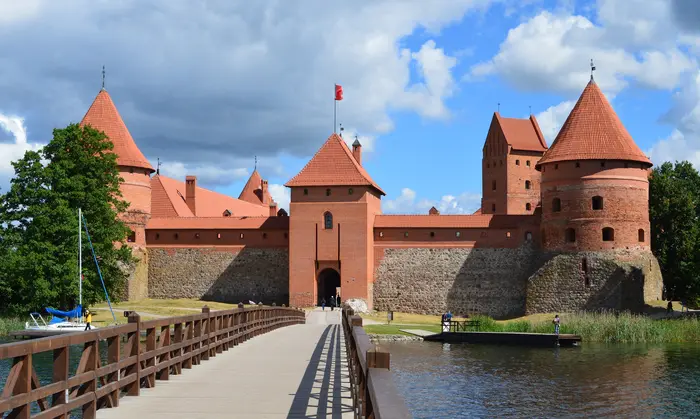
The best day trips from Vilnius compared: island-castle Trakai, ancient Kernavė, second-city Kaunas, the Paneriai memorial, Europos Parkas, the Green Lakes, Rumšiškės and the Hill of Crosses — with honest notes on transport, timing and what's worth a car or a tour.
Read guide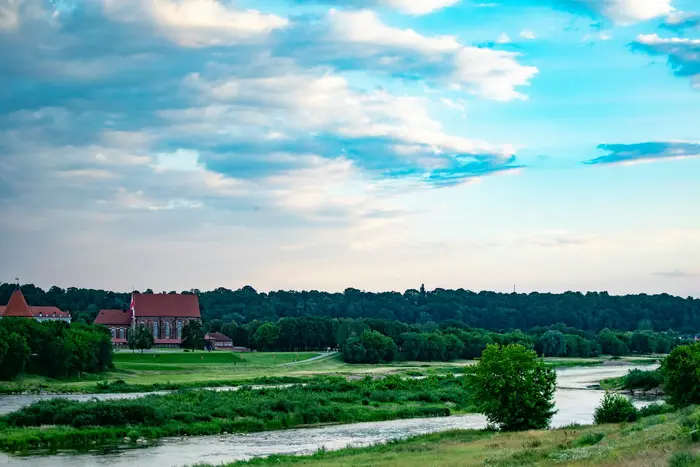
Kaunas Day Trip from Vilnius
A practical guide to a Kaunas day trip from Vilnius: train timing, the Old Town, UNESCO interwar modernism, museums, food, and whether Kaunas deserves an overnight.
Read guide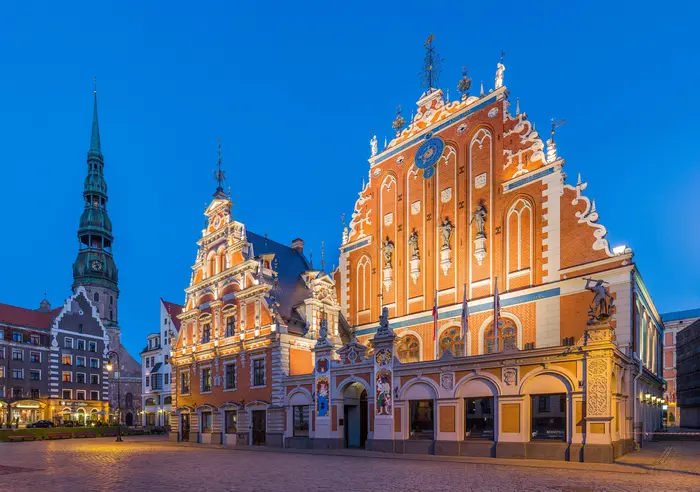
Baltic Capitals Itinerary from Vilnius
How Vilnius fits a Baltic capitals route with Kaunas, Riga and Tallinn — realistic train, bus and flight timing, how long to spend in each, and why this trio of cities makes one of Europe's best-value rail-and-bus trips.
Read guide