
Antakalnis: Vilnius's Leafy Riverside District
A guide to Antakalnis, a vast, prestigious Vilnius district along the Neris: the Baroque masterpiece of St Peter and St Paul, the restored Sapieha Palace, Antakalnis Cemetery, university and clinic streets, parks and a tranquil residential pace.
- ✓Antakalnis is a vast, prestigious district stretching along the Neris, known for leafy streets, historic manors and a tranquil atmosphere.
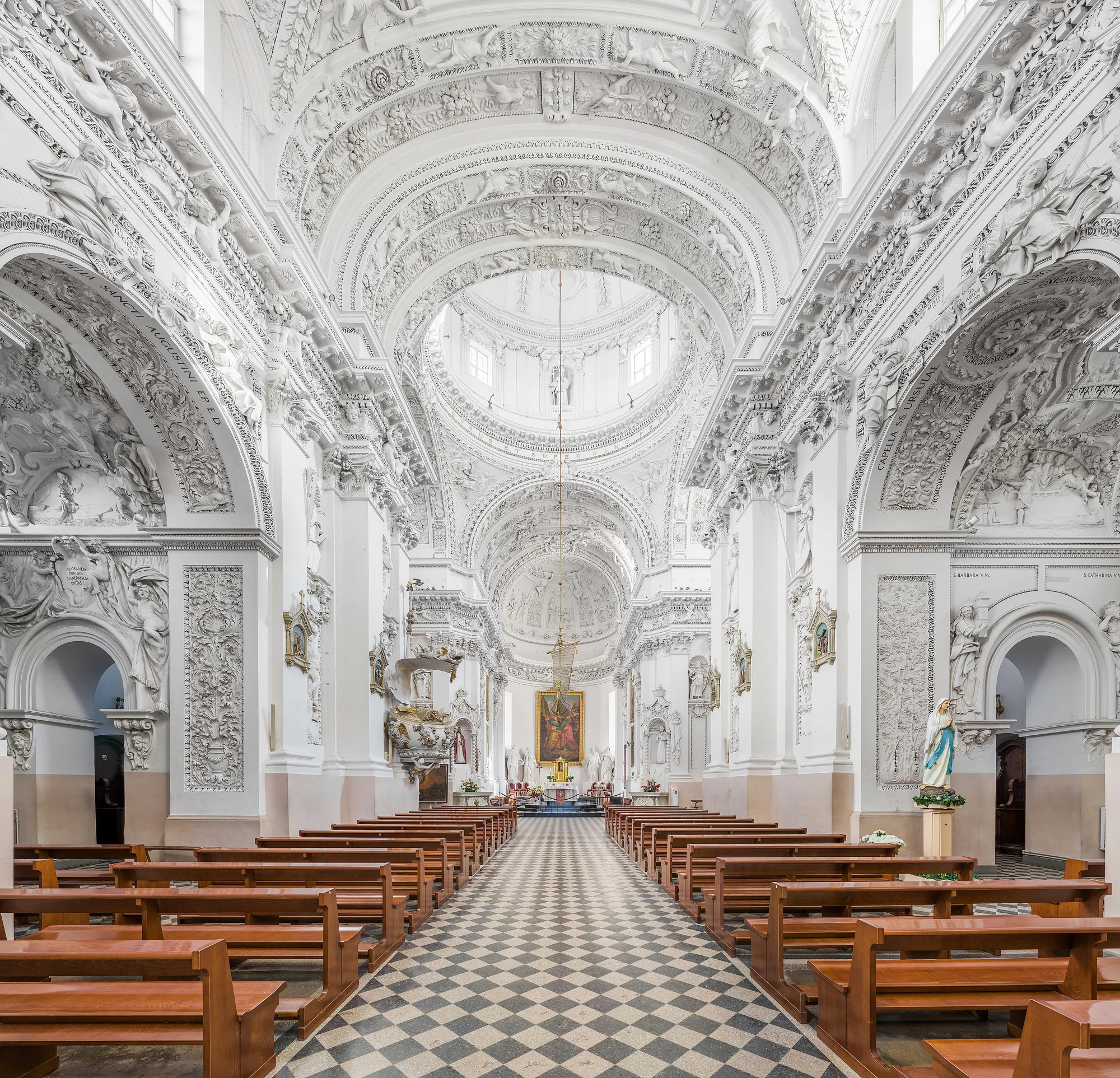
- ✓Its showpiece is the Church of St Peter and St Paul, a masterpiece of Baroque sculpture with thousands of white stucco figures.
- ✓The recently restored Sapieha Palace and its surrounding park recall the area's aristocratic past.
- ✓There's a strong academic and medical presence, with parts of Vilnius University and major clinics in the district.
- ✓The main artery, Antakalnio Street, is served by numerous trolleybus routes with a direct line to the center.
A grand, green district along the river
Stretching along the Neris northeast of the center, Antakalnis is a vast and prestigious district known for its leafy streets, historic manors and tranquil atmosphere. It offers a peaceful residential life with a touch of old-world grandeur — tree-lined avenues, parkland and riverside walks, all on a much larger scale than the compact Old Town. Where the historic core is dense and walkable end to end, Antakalnis spreads out along the river and up the wooded slopes above it, so your experience varies a great deal depending on whether you're near its lower, central end or further out toward the residential heights.
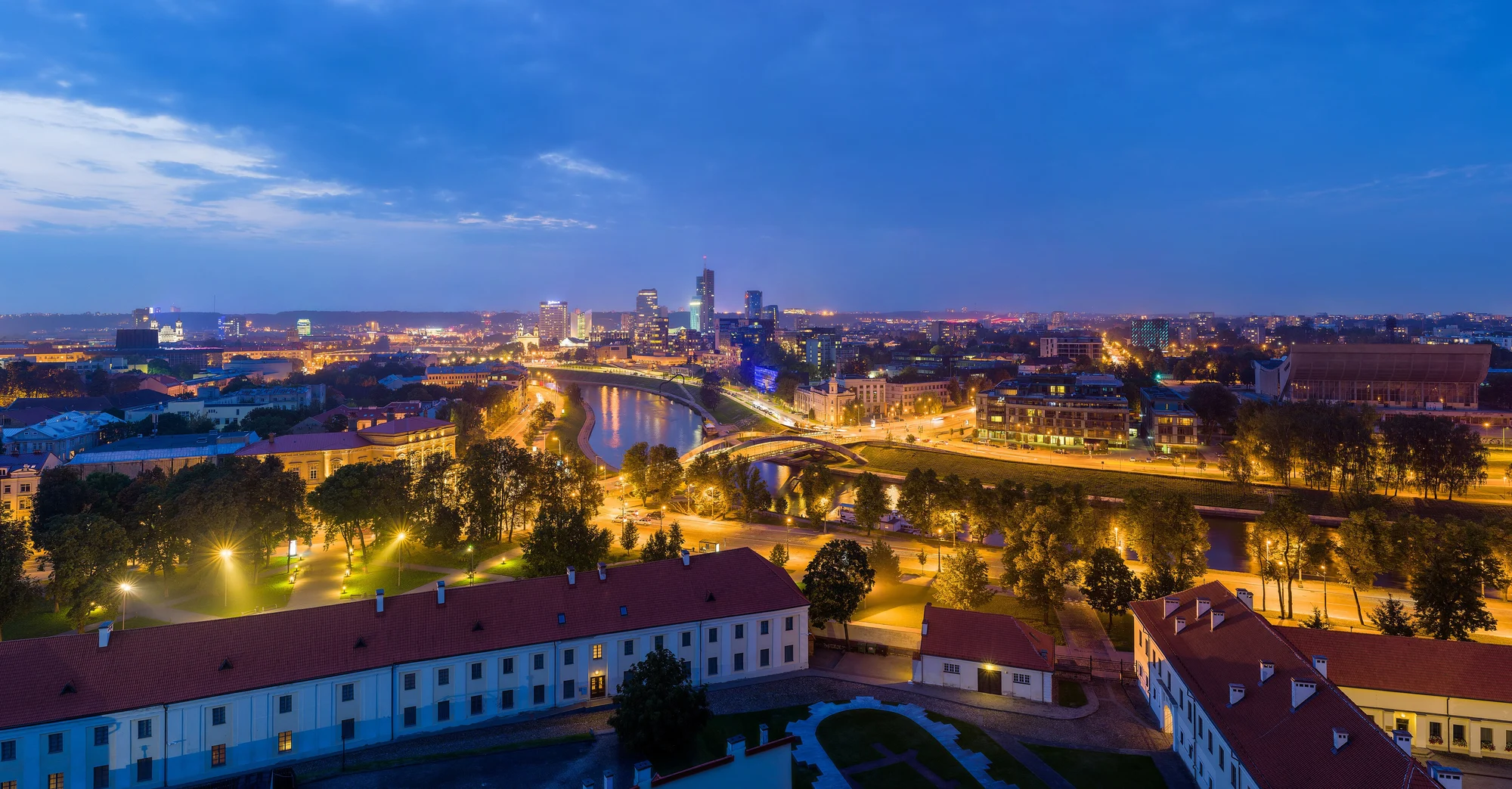
The neighborhood has a strong academic and intellectual presence. Parts of Vilnius University sit here, along with numerous clinics, hospitals and medical institutions, giving Antakalnis a settled, professional character — students, academics and medical staff rather than a tourist crowd. That mix lends the district a quiet, established feel year-round, and a reputation as one of the city's most desirable places to live.
For visitors, the appeal is twofold: a handful of major historic landmarks clustered at the district's lower edge near the river, and the simple pleasure of green, grand, low-key streets that feel a world away from the Old Town's bustle while still being a short trolleybus ride from it. Most people come for the church and palace, then stay for the calm.
How Antakalnis got its grand, green character
The name Antakalnis means roughly 'on the hill' or 'upon the slope', and the geography explains the district's whole character. Set on the rising, wooded ground where the Neris bends northeast of the centre, it was for centuries the place where Vilnius's wealthy and powerful built their out-of-town retreats — far enough from the cramped, walled Old Town to enjoy air, river and forest, close enough to keep one foot in the capital. That history of palaces, manors and monastic estates is why the area still reads as spacious and dignified rather than tightly urban.
The clearest legacy of that era is the cluster of grand commissions at the lower end of the district: the Pac family's Church of St Peter and St Paul and the Sapieha family's palace and park, both raised by magnate dynasties in the late 1600s when Antakalnis was the fashionable place for the aristocracy to make a statement in stone. Around them grew a Baroque ensemble of churches and monastic buildings, several of which survive in the leafy streets near the river.
Over the following centuries the manorial estates gave way to institutions — the medical campus, university faculties and, in the Soviet period, residential development up the slopes — but the district never lost its green, low-rise, established feel. That continuity is the point: Antakalnis is one of the few parts of Vilnius where you can read the city's aristocratic past directly in the landscape, then watch it shade into the calm, professional residential neighbourhood it is today.
- The name means 'on the slope' — wooded, rising ground in a bend of the Neris.
- Historically where Vilnius's magnates built out-of-town palaces and estates.
- The Pac and Sapieha families left its two showpiece Baroque commissions.
- Estates gave way to university and medical campuses, but the green feel endured.
How Antakalnis's history compares with the city's other districts.
Old Town (Senamiestis)The dense historic core that Antakalnis's palaces were built to escape.
Map pins
Map data © OpenStreetMap contributors · Tiles © OpenFreeMap
St Peter and St Paul: a Baroque masterpiece
The reason most visitors come to Antakalnis is the Church of St Peter and St Paul (Šv. apaštalų Petro ir Povilo bažnyčia), one of the greatest works of Lithuanian Baroque and a genuine must-see. From the outside it's a relatively plain white church with twin towers; step inside and it explodes into thousands of white stucco figures — saints, soldiers, plants, mythological creatures and everyday scenes — covering the walls and vaults in extraordinary, dizzying detail. It is unlike any other interior in Vilnius and rewards slow, careful looking; visitors routinely spend far longer inside than they expect, simply tracing the sculpture.
The church was consecrated in 1701, with its remarkable decoration carried out by Italian masters and completed in the years that followed, commissioned by the powerful Pac family. It sits at the lower edge of Antakalnis where the district meets the river and the route back to the Old Town, so it's easy to reach by trolleybus or on a riverside walk. Entry to admire the interior is straightforward, and there's usually a calm, reverent atmosphere inside.
Even visitors who feel they've seen enough churches in Vilnius tend to make an exception here. The sheer density of the sculpture is the point — it's as much an art experience as a religious one, and it's the single best reason to make the short trip out to Antakalnis.
- Interior covered in thousands of white stucco sculptures — the city's most exuberant Baroque interior.
- Consecrated in 1701; a short trip from the Old Town along the river.
- A worthwhile visit even for those tired of churches.
Sapieha Palace, parks and Antakalnis Cemetery
Antakalnis carries its aristocratic past in stone. The recently restored Sapieha Palace and its surrounding park are a testament to the area's grand history: a late-17th-century Baroque palace built for the powerful Sapieha family, now restored and adapted as a cultural venue that hosts exhibitions and events as a department of the city's contemporary art scene. The park around it makes an easy, attractive stop, and the nearby ensemble — including the historic Trinitarian monastery and church — repays a short, quiet wander.
The district's other significant site is Antakalnis Cemetery, one of the most important burial grounds in Lithuania. Among its many notable graves, it holds those of the victims of the January 1991 events — civilians killed defending independence — who are honored as national heroes; the cemetery is a place of quiet remembrance and should be visited with that in mind rather than as a casual sight. It's a moving, dignified place, and an important one for understanding modern Lithuania.
Together with the riverside parks and beautiful paths for cycling and walking, these give Antakalnis a slow, reflective rhythm — history, greenery and grandeur rather than nightlife. It's a district for thoughtful half-days rather than busy itineraries, and it pairs naturally with the city's other heritage and memorial sites.
- The restored Sapieha Palace now hosts exhibitions and cultural events in its Baroque setting.
- Antakalnis Cemetery is a place of national remembrance — visit respectfully.
- Riverside parks and paths make for pleasant cycling and walking.
Riverside walks and green escapes
Beyond its landmarks, Antakalnis is one of the best districts in Vilnius for simply being outdoors. The Neris embankment offers long, flat paths for walking, running and cycling, and the wooded hills above the main street give the neighborhood its leafy reputation and a sense of countryside within the city. On a fine day, a riverside walk from the centre out to St Peter and St Paul and back is one of the most pleasant easy routes in Vilnius, mixing water, trees and grand architecture.
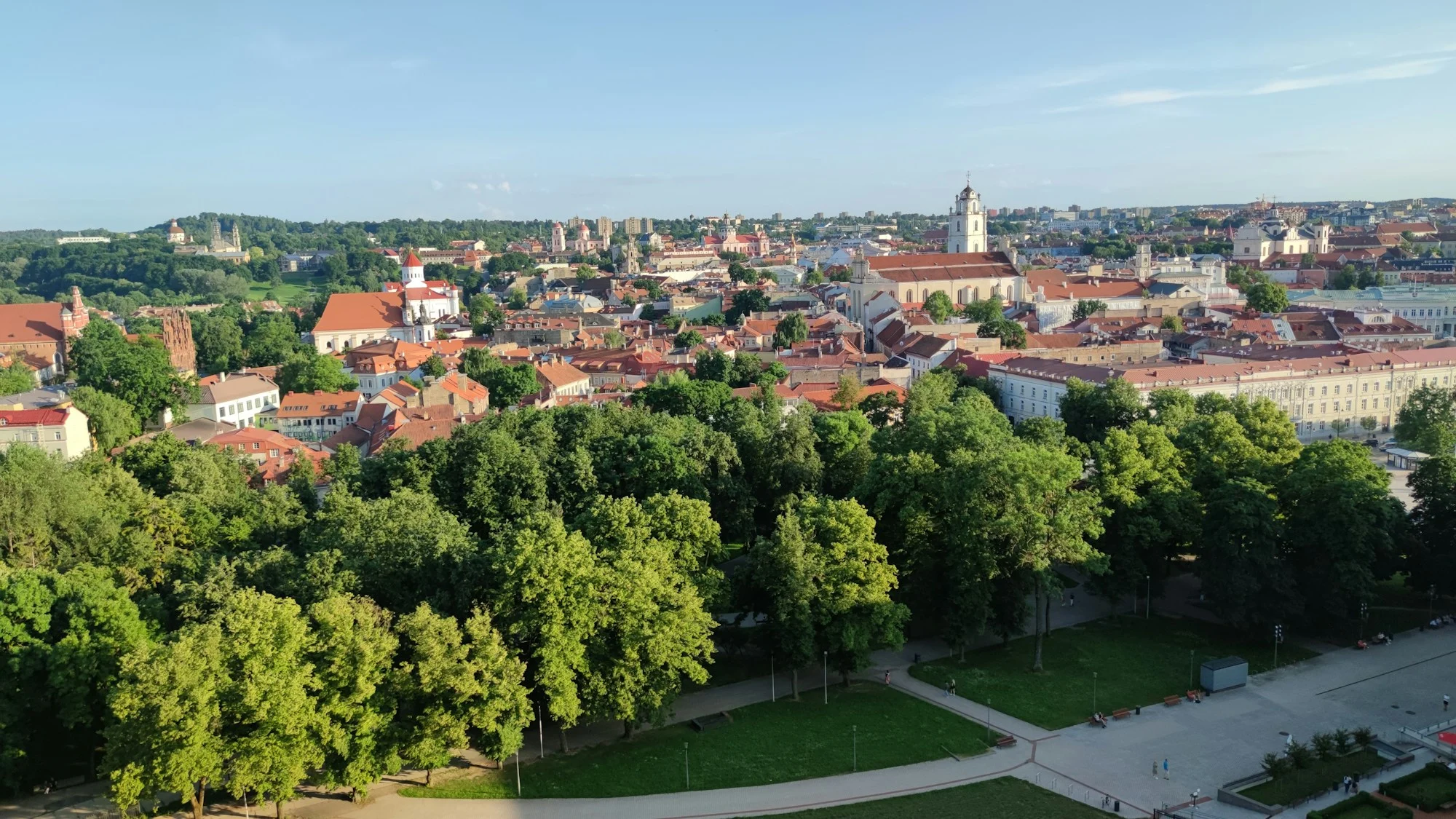
The district's scale means there's always more green to find — pocket parks, the palace grounds, quiet wooded slopes — and it connects toward the wider network of parks and trails on the city's eastern edge. For travelers who like to balance sightseeing with movement and fresh air, Antakalnis is an ideal antidote to a few intense days in the Old Town.
It's also a rewarding district in autumn, when the trees turn and the riverside and cemetery take on a particularly atmospheric quality. Bring comfortable shoes, allow time, and treat the walking itself as the attraction rather than just the means of getting between sights.
Where to eat and drink in Antakalnis
Antakalnis is residential rather than a dining destination, and that shapes how you eat here. Don't come expecting a strip of buzzy restaurants; instead, expect neighbourhood places that serve the locals, students and clinic staff who fill the streets on weekdays — unpretentious cafés, bakeries, a few solid lunch spots and the kind of quiet bar where you'll mostly hear Lithuanian. That low-key, lived-in feel is exactly the appeal: a coffee or lunch in Antakalnis is a glimpse of ordinary Vilnius rather than a tourist set-piece.
The practical move for visitors is to time food around the lower, riverside end where the sights cluster. Have a coffee or a casual lunch near the church and palace before or after your walk, then save a serious dinner for back in the centre, a short trolleybus ride away. Because the district is large and spread out, eating options thin quickly as you head up into the residential heights, so plan to graze near the river rather than hunt uphill.
If a memorable meal is the priority, pair your Antakalnis half-day with the centre's kitchens: our best-restaurants guide covers where to book downtown, and the cafés guide flags the relaxed spots worth a detour for a break. Think of Antakalnis as the walk-and-sights half of the day and the Old Town or New Town as the dinner half — they're minutes apart, and the contrast is part of the pleasure.
- Residential and low-key — neighbourhood cafés and lunch spots, not a restaurant strip.
- Eat near the riverside lower end, where the sights and most options cluster.
- Options thin as you climb into the residential heights — graze near the river.
- Save a serious dinner for the centre, a short trolleybus ride away.
Getting around and who it suits
The main artery, Antakalnio Street, is served by numerous trolleybus routes that provide a direct line to the city center, so reaching the district's landmarks is easy even though the neighborhood is large. Because of that size, some parts are less walkable to central amenities than the compact Old Town, so it helps to plan around the trolleybus or to focus on the riverside, lower end near St Peter and St Paul where the main sights cluster.
Antakalnis suits travelers seeking a quiet, green and established residential area with a distinguished history, and it's a practical base for anyone working or studying at the university or medical centers in the district. For most visitors it's a half-day excursion — the church, the palace, a riverside walk — rather than a place to stay, though longer-stay travelers and those visiting for academic or medical reasons value its calm and its space.
Pair it with a Neris-side walk back toward the center and you get one of the most pleasant low-key routes in Vilnius, all leafy streets, grand architecture and water. It's the kind of district that doesn't shout for attention but quietly becomes a favorite — proof that some of the best of Vilnius lies just beyond the obvious.
Good to know, and a local's tip
The simplest way to visit Antakalnis is to focus on its lower, riverside end, where the main sights cluster. The Church of St Peter and St Paul, the route along the Neris and the connection back to the centre are all here, and you can reach them quickly by trolleybus along Antakalnio Street or on a riverside walk. Save the deeper, residential heights of the district for a longer stay or a specific reason — they're pleasant but spread out, and less rewarding for a short visit.
Build your time around the church, which is the headline attraction; allow longer inside than you'd expect, because the stucco interior repays slow looking. From there, the Sapieha Palace and park, and the option of a riverside walk, round out an easy half-day. If you plan to include Antakalnis Cemetery, treat it as a place of remembrance and visit quietly and respectfully — it holds graves of national significance, including the victims of January 1991.
A few practical notes: opening hours for the church, palace and any exhibitions can vary, so it's worth checking current times before a special trip, and dressing modestly is appropriate for the church. Comfortable shoes help, as the district is made for walking. Local's tip: rather than taking the trolleybus both ways, ride out to the church and walk back to the centre along the Neris embankment — it's the loveliest stretch of the visit, the architecture and water do the work, and you arrive back near Cathedral Square having seen the district at its best. Approached this way — sights at the lower end, a riverside stroll home, and a respectful pause at the cemetery — Antakalnis is one of the most graceful half-days beyond the Old Town.
- Focus on the riverside lower end, where the main sights cluster.
- Allow extra time inside St Peter and St Paul; check current opening hours before special trips.
- Visit Antakalnis Cemetery quietly — it's a place of national remembrance.
- Tip: trolleybus out, walk back along the Neris embankment — the district at its best.
Related guides
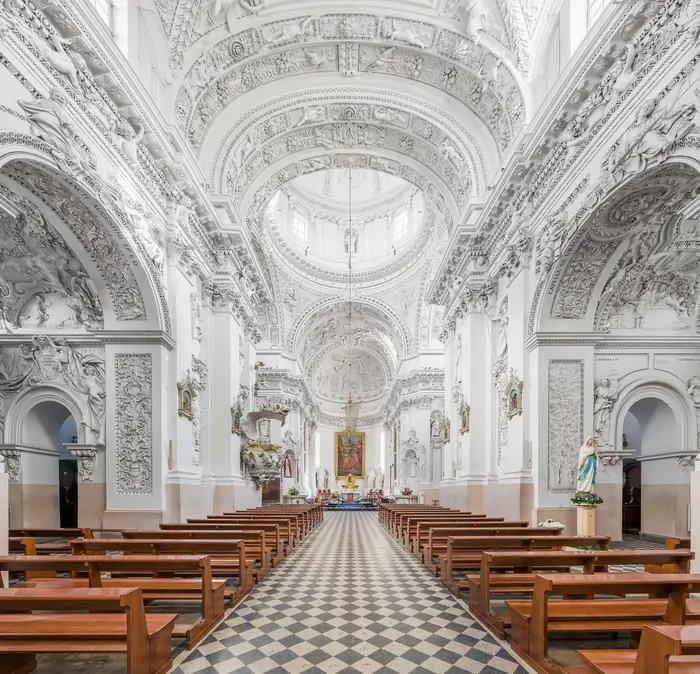
Church of Sts Peter and Paul
A Baroque masterpiece in Antakalnis whose plain exterior hides an all-white interior covered in more than 2,000 intricate stucco sculptures. Free to enter.
Read guide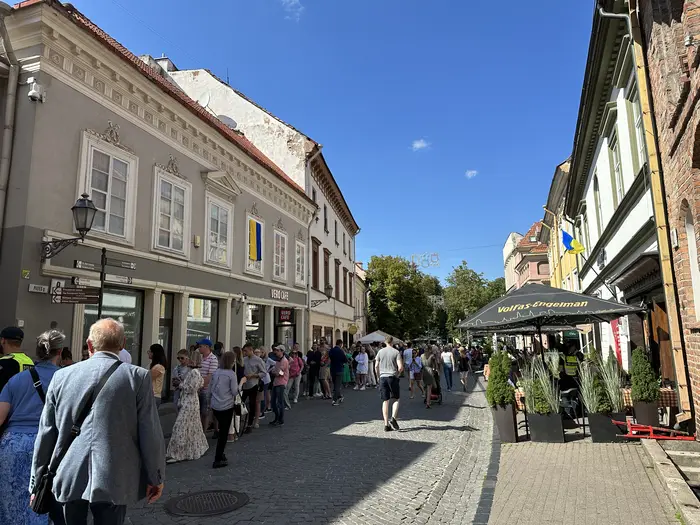
Local Vilnius: Beyond the Old Town
Where to find the real, lived-in Vilnius after the classic Old Town sights: the New Town's reborn factories, leafy Žvėrynas, Antakalnis, Paupys, riverside paths, markets and street art — and how to spend a second day like a local.
Read guide
Rasos Cemetery: A Respectful Visitor's Guide
A respectful guide to Rasos Cemetery, Vilnius's oldest and most atmospheric burial ground — Polish-Lithuanian memory, the Piłsudski heart mausoleum, paths, etiquette and whether to take a guide.
Read guide