
Vilnius for First-Timers
A first-time visitor's guide to Vilnius: how long to stay, where to base yourself, what to book, the mistakes to avoid, and how this compact Baroque capital differs from Europe's bigger cities.
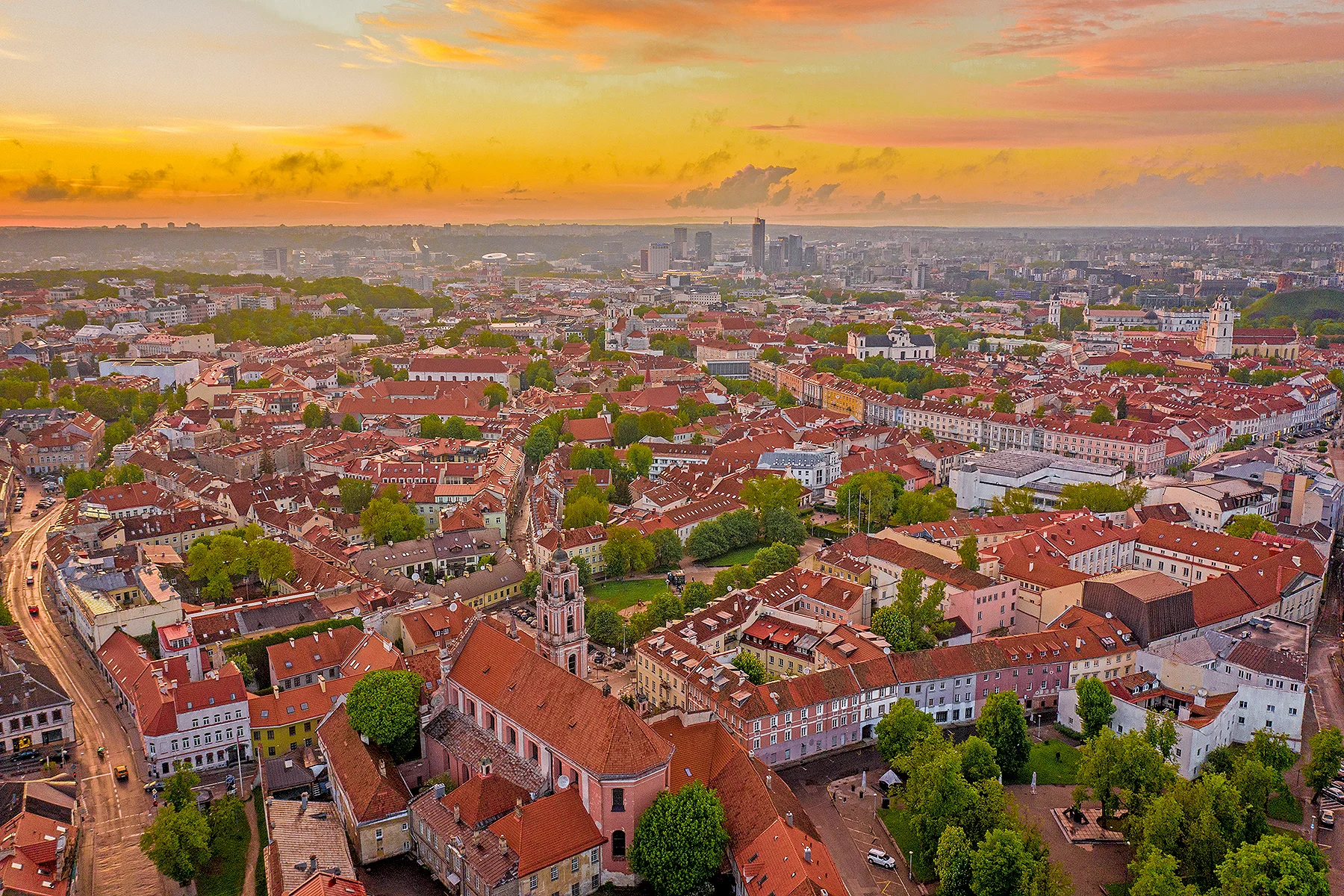
- ✓Vilnius is small, cheap and walkable — two or three days covers the essentials without rushing.
- ✓Base yourself in or beside the Old Town; almost everything worth seeing radiates from it.
- ✓Most highlights are free — churches, hills, courtyards and riverside walks — so you book very little in advance.
- ✓It's a slow-travel city: wander first, schedule second, and leave room for a Trakai day trip.
- ✓Pay by contactless almost everywhere, but carry a little cash for markets and small cafés.
What Vilnius is (and isn't)
If you're arriving with the rhythm of a bigger European capital in mind, recalibrate. Vilnius is compact, quiet and unhurried, with one of the largest Baroque Old Towns in Europe folded into a centre you can cross on foot in twenty minutes. There's no single must-see monument that anchors a day around it and no sprawling metro to master. The pleasure here is cumulative: churches, courtyards, hilltop views, a bohemian republic across the river, and long, easy walks that knit it all together.
That changes how you plan. Vilnius rewards wandering far more than a packed checklist, and it's at its best when you give yourself a slow first morning with no fixed route — duck into open church doors, follow staircases into university courtyards, and let the side streets pull you off course before you start scheduling anything. It's also notably good value by Western European standards, which takes the pressure off: meals, coffee, transport and museums all cost less than you're probably used to.
Compared with Prague, Krakow or Tallinn, Vilnius feels less polished and less crowded, which most first-timers come to count as the appeal. It's a working capital with a lived-in Old Town rather than a stage set, and that authenticity is exactly what tends to win people over.
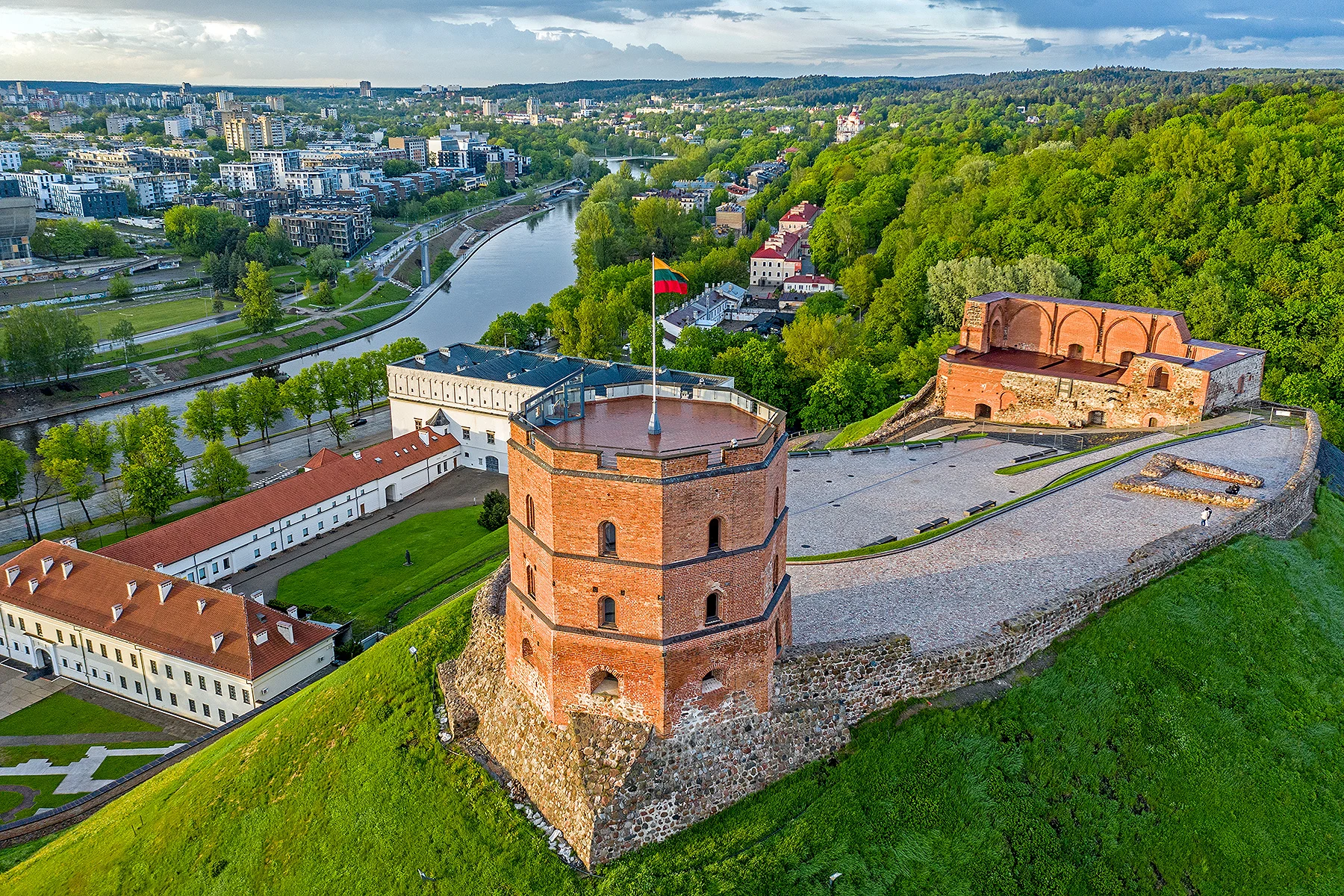
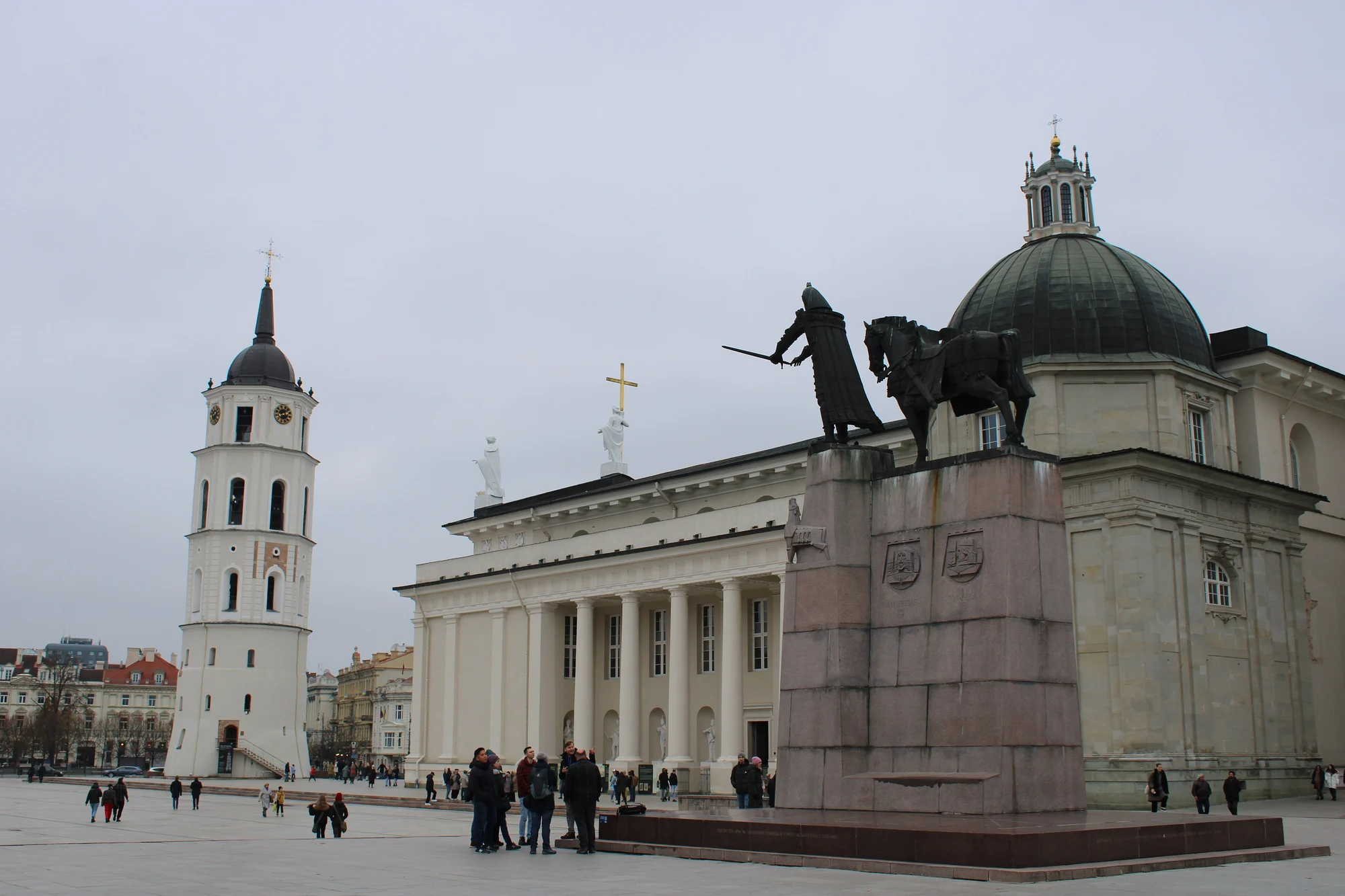
Geographically it helps to picture the city as a set of layers fanning out from one spine. Cathedral Square sits at the top; from there Pilies and Didžioji streets run south through the heart of the Old Town to the Gate of Dawn, and almost everything worth seeing clusters within a few minutes of that line. Gediminas Hill rises just behind the cathedral, Užupis lies a short bridge-crossing to the east across the little Vilnia river, and the train and bus stations sit a walkable distance to the south. Hold that mental map and you'll rarely feel lost, even without checking your phone.
It's also a city of contrasts that reward a curious first-timer. Baroque churches sit beside Soviet-era reminders and a thriving contemporary scene; a sober museum in a former KGB building is minutes from a self-declared artists' republic with its own tongue-in-cheek constitution. Vilnius doesn't hand you its story on a single grand boulevard — you assemble it yourself by wandering, and that's precisely what makes a first visit feel like a discovery rather than a tick-list.
- A compact, walkable Baroque capital — not a big-metro, big-monument city.
- Slow travel suits it: wander first, schedule second.
- Excellent value, and less crowded and polished than better-known Central European capitals.
How long to stay, and where to base yourself
Two full days covers the essentials: the Old Town, Cathedral Square, a climb up Gediminas Hill or Three Crosses for the view, a wander through Užupis, and a couple of the best churches and museums. A third day lets you slow right down and add a day trip — Trakai's lakeside castle is the classic, an easy half-day by bus or train. Anything more than three or four days and you're settling in rather than sightseeing, which Vilnius happily rewards if you have the time.
A useful way to think about it: day one for the headline Old Town circuit and a viewpoint at golden hour, day two for the churches, a museum or two and an unhurried afternoon in Užupis, and a third day, if you have it, for a day trip or simply to revisit the corners you liked best. Treat that as a loose frame rather than a fixed schedule — the point is to guarantee the essentials while leaving plenty of slack for the wandering that makes the city.
Where you sleep matters more than how much you spend. Base yourself inside the Old Town (Senamiestis) or right on its edge, and the whole city becomes a walk: you can return to your room mid-afternoon, head out again at night without thinking about transport, and reach the train and bus stations on foot. The streets just north and west of the Old Town, and the regenerated areas across the river, also put you within easy reach. Save the outer residential districts for longer or budget-driven stays.
Vilnius Airport is one of the easiest in Europe to leave — barely 6 km from the centre — so don't over-engineer your arrival. A cheap airport train, frequent buses and inexpensive Bolt rides all get you into town in fifteen to twenty minutes; skip pricey pre-booked transfers for a normal arrival.
If you can, choose your dates with the season in mind, because it changes the trip more than the neighbourhood does. Summer brings warmth and almost endless daylight but the biggest crowds and highest prices; the shoulder months of spring and autumn offer thinner crowds, lower hotel rates and atmospheric light; and winter is cold and dark but genuinely magical around the December Christmas markets. None of these are wrong — just pack and pace your days for whichever you pick, and book accommodation earlier for the summer and Christmas-market peaks.
- Two days for the essentials; three to add a day trip; longer to slow down.
- Base in or beside the Old Town so the whole trip is walkable.
- Trakai is the easy classic day trip — half a day by bus or train.
- Arrival is simple and cheap; the airport is ~6 km out.
A tight, well-paced route if you only have 24 hours.
Where to Stay in VilniusChoosing the right neighbourhood and base for your trip.
Map pins
Map data © OpenStreetMap contributors · Tiles © OpenFreeMap
What to book — and what not to
Vilnius asks for very little advance planning, which is part of its charm. The vast majority of its best moments are free and need no ticket: entering the churches, climbing the hills, reading the Užupis constitution, wandering Cathedral Square, walking the riverside paths. You can build a wonderful two-day trip without buying a single thing in advance beyond your bed.
What's worth pre-booking is short: accommodation in your preferred area (the good central places fill up, especially around Christmas-market season and summer), and any specific timed experience you have your heart set on — a particular restaurant on a weekend night, a hot-air balloon flight, or a guided food tour. Major museums rarely need advance tickets. If you plan to pack in several paid attractions and use public transport heavily, it's worth checking whether a Vilnius Pass adds up for your particular days before you buy; for a relaxed two- or three-day trip with a few sights, it often won't, but it can pay off on a busy, attraction-heavy schedule.
Skip the things first-timers over-buy: expensive private airport transfers (the train, bus and Bolt are far cheaper), and a car (Vilnius is walkable and parking the Old Town is a hassle — only consider one for multi-stop driving day trips).
- Pre-book: accommodation in your chosen area, plus any specific must-do experience.
- Don't bother: a private airport transfer, or a rental car for a city-only trip.
- Most sights are free; major museums rarely need advance tickets.
- Check whether a Vilnius Pass adds up for your specific days before buying.
First-timer mistakes to avoid
The most common mistake is over-scheduling. Visitors used to bigger cities try to march through a long list and miss the point — Vilnius is small and best enjoyed at a stroll, so plan half as much as you think you need and leave gaps for coffee, a courtyard you stumble into, or a second climb at sunset. The second mistake is staying too far out to save a little money; in a city this walkable, a central base pays for itself in time and ease.

A few practical slips trip people up. Cobblestones are everywhere in the Old Town, so bring shoes that can handle uneven ground — heels and the centre do not mix. In churches, dress modestly and keep your voice down, especially during services. Tipping is modest and not obligatory; rounding up or roughly 10% in a restaurant is plenty. And don't ignore the weather: this is a continental climate with real seasons, so check the forecast and pack accordingly — icy winters, warm long-daylight summers, and rain possible any time of year.
Finally, don't treat Užupis or the hills as optional extras. The view from Three Crosses, the angel and constitution of Užupis, and a slow wander with no agenda are the things people remember — not a frantic museum count. Let the city be what it is.
Two smaller missteps round out the list. First, assuming everything stays open late: many museums and some kitchens close earlier than you might expect, and shoulder-season and winter hours shrink further, so check times for anything you've set your heart on rather than turning up on spec. Second, planning a day trip without checking return transport — Trakai, Kaunas and the rest are easy, but buses and trains thin out in the evening, so note your last sensible connection back before you set off. Neither is a disaster in such a forgiving city, but both are easily dodged with a glance at the timetable.
- Don't over-schedule — plan less and leave room to wander.
- Wear sturdy, flat-friendly shoes for the cobblestones.
- Dress modestly and stay quiet in churches; tipping is modest (~10% or round up).
- Check the season and pack for it — winters are icy, summers warm with long days.
Money, language and everyday logistics
Lithuania uses the euro, and Vilnius is almost entirely card-friendly — contactless works for nearly everything, including buses and trolleybuses, where you can simply tap a bank card. Still, carry a little cash for outdoor markets, a few small cafés, and the odd public toilet. Lithuanian is the official language, but English is widely spoken in the tourism, hospitality and younger crowd, so you'll have no trouble getting by; learning ačiū (thank you) and labas (hello) is a friendly touch.
For staying connected, EU visitors can usually use their home mobile plan in Lithuania at no extra cost thanks to roaming rules; travellers from outside the EU should sort an eSIM before arrival or buy a local SIM, which keeps maps and ride-hailing working from the moment you land. Tap water is safe to drink. And because the centre is so compact, you'll spend far less than expected on transport — most days you simply walk.
A few more everyday pointers smooth out a first trip. Pharmacies (vaistinė) are plentiful and well-stocked for minor needs, and the EU's emergency number 112 works for any urgent help. Shops and supermarkets are easy to find for snacks and water, and most cafés and restaurants take cards without fuss. If you're driving in for a day trip rather than flying, remember the Old Town is largely pedestrianised and parking is restricted, so leave the car outside the centre. None of this needs memorising — but knowing the basics means nothing on a first visit catches you off guard.
Above all, give yourself permission to slow down. The travellers who love Vilnius most are the ones who treated it as a place to be in rather than a list to complete — who climbed a hill twice because the light was better the second time, found a courtyard café and stayed an hour, and let an afternoon in Užupis drift. Plan the essentials, book your bed, and leave the rest loose. The city does the rest.
- Currency is the euro; contactless works almost everywhere, including buses.
- Carry a little cash for markets, small cafés and toilets.
- English is widely spoken; a couple of Lithuanian words go a long way.
- EU visitors roam free; others should sort an eSIM or local SIM. Tap water is safe.
Related guides
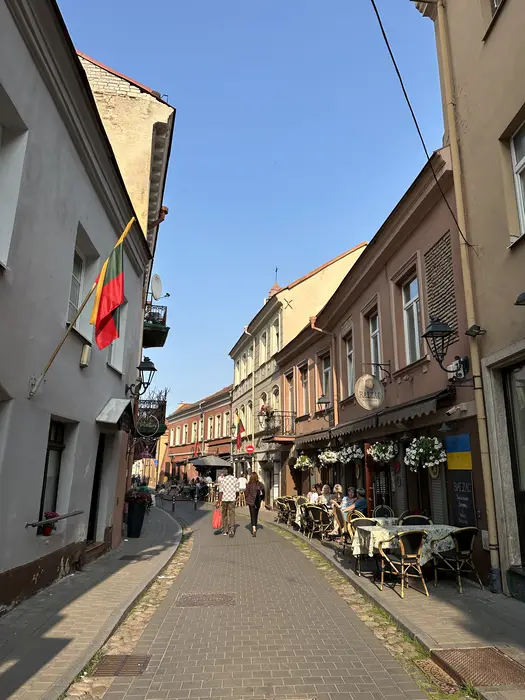
One Day in Vilnius: The Perfect Itinerary
A focused one-day Vilnius route — the Old Town, Gediminas Tower, Cathedral Square, Užupis, a proper Lithuanian lunch and sunset from Three Crosses. Walkable, well-ordered, no backtracking.
Read guide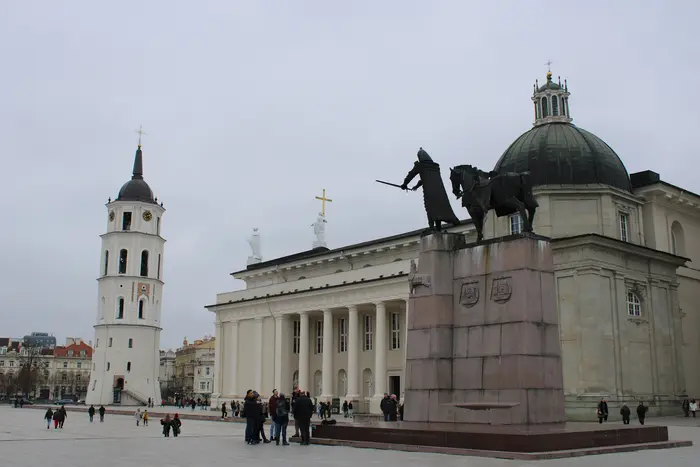
Where to Stay in Vilnius
How to choose where to stay in Vilnius: an area-by-area guide for first-timers, couples, families, nightlife, rail travellers and budgets — from the Old Town and Užupis to the station district, plus what kind of place to book.
Read guide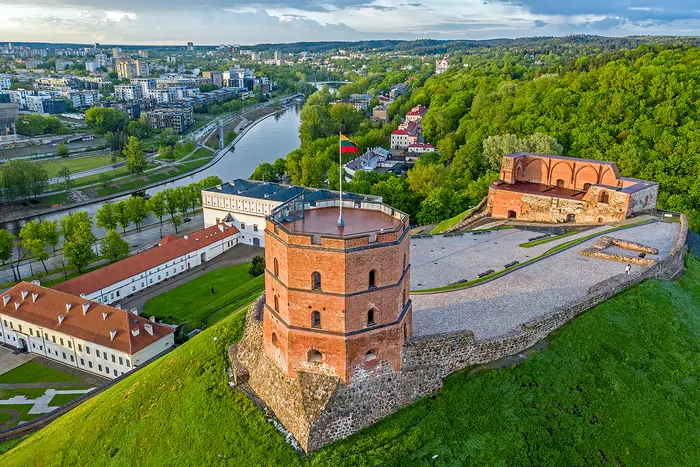
Best Things to Do in Vilnius
A first-trip shortlist of the best things to do in Vilnius — from Gediminas' Tower and the UNESCO Old Town to Užupis, the MO Museum, food halls and Trakai.
Read guide