
Best Things to Do in Vilnius
A first-trip shortlist of the best things to do in Vilnius — from Gediminas' Tower and the UNESCO Old Town to Užupis, the MO Museum, food halls and Trakai.
- ✓A curated first-visit shortlist — the sights and experiences worth your limited time, not an exhaustive list.
- ✓Climb Gediminas' Tower for the orientation view that makes sense of the whole city.
- ✓Get lost in the UNESCO Old Town, cross the bridge into bohemian Užupis, and see contemporary Lithuania at the MO Museum.
- ✓Eat your way through Hales Market and the city's food halls, then take the easy day trip to Trakai's island castle.
- ✓Most of the best things in Vilnius are free, walkable and uncrowded compared with bigger European capitals.
Vilnius in a nutshell
Vilnius packs an enormous amount into a small, walkable centre. You can climb a castle hill, wander one of Europe's biggest medieval old towns, cross into a self-declared bohemian 'republic', see world-class contemporary art and eat brilliantly — all in a day or two, mostly on foot and mostly without crowds. That compactness is the city's secret weapon: the highlights are close together, so a first trip never feels rushed, and you spend your time experiencing places rather than commuting between them. Few capitals let you pack this much variety into so little walking.
This is a shortlist, not an encyclopaedia. We've picked the things that genuinely define a first visit — the views, the Old Town, the neighbourhoods, the museums, the food and the one essential day trip — and left the long tail of churches, parks and minor sights to the section pages. Do these well and you'll have understood Vilnius; everything else is a bonus. They're loosely ordered the way a sensible first day or two unfolds, from the orientation view down into the streets, out to the neighbourhoods, and finally beyond the city to Trakai.
A note on cost and crowds: a remarkable share of what's best here is free, from the Old Town's churches and squares to the city's hilltop viewpoints and the wander through Užupis. Vilnius also stays refreshingly uncrowded compared with the big-name European capitals, which means you can do the headline sights without queueing for hours. It's an affordable city too — meals, coffee, transport and museum tickets all cost noticeably less than in Western Europe, so a first trip stretches further than you might expect. And because everything clusters so tightly, you can mix sightseeing, eating and simply wandering throughout the day rather than saving them for separate outings.
How long do you need? Two full days comfortably covers this list at a relaxed pace; one busy day hits the essentials; three days lets you slow right down, add a few section-page extras and never feel hurried. However long you have, build in time simply to sit and watch the city — that, as much as any single sight, is what people fall for here. Vilnius is also one of the easiest European capitals to reach on a short break, with a compact airport close to the centre and the whole experience walkable once you arrive, so even a long weekend goes a surprisingly long way.
- Compact and walkable — most highlights are within the Old Town or a short walk of it.
- Much of the best of Vilnius is free.
- Quieter than bigger capitals; you rarely fight crowds.
1. Climb Gediminas' Tower for the view
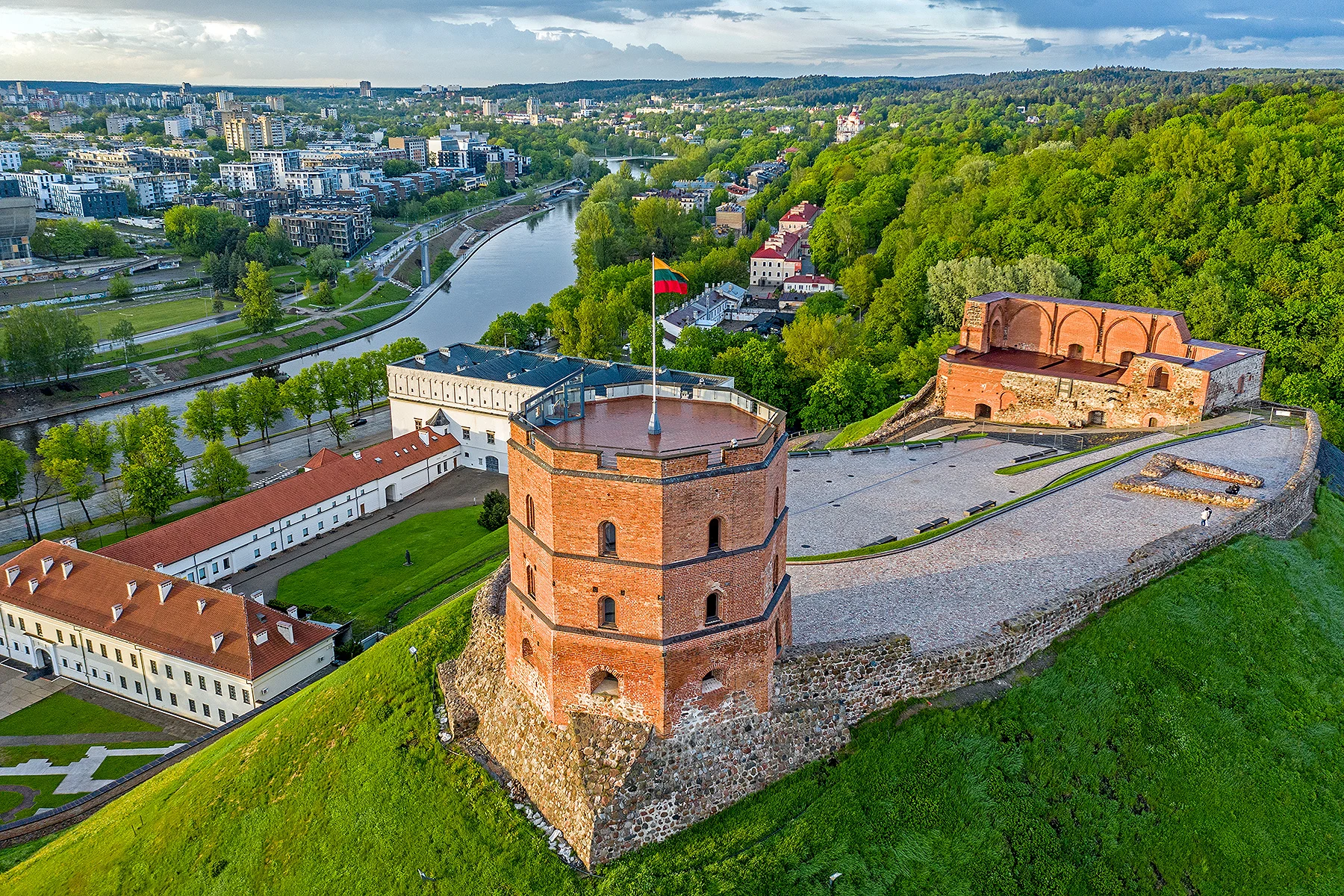
Start high. The red-brick Gediminas' Tower on Castle Hill is the symbol of Vilnius and the city's easiest great view — the spot to get your bearings before you dive into the streets below. This is the founding site of the city, tied to Grand Duke Gediminas' legendary dream of an iron wolf howling on the hill, which a pagan priest read as a sign to build a great city here. From the terrace the whole Old Town unfolds: the Cathedral belfry at your feet, a bristle of Baroque spires, the green dome of St. Casimir, the white tower of St. Johns, and the Neris curling off to the north. Come at golden hour and the red roofs glow.
The hill is steep and the historic path is uneven cobblestone, so if you'd rather save your legs there's a little funicular that lifts you to the top in under a minute from behind the Palace of the Grand Dukes. Inside the tower a small museum covers the city's fortifications and the 1989 Baltic Way — the human chain that linked Vilnius, Riga and Tallinn in a peaceful protest against Soviet rule. The terrace at the top is free, so you can enjoy the view without buying a ticket. Pair it with Cathedral Square at the foot of the hill — they're a single, natural stop, and most people start a first day here precisely because the panorama makes sense of everything you're about to walk through.
- The city's best orientation view; go at golden hour.
- Take the funicular up if the steep, slippery cobbled path doesn't appeal.
- Combine with Cathedral Square at the bottom of the hill.
Full guide to the tower, the climb and the view.
Gediminas Hill funicularHow to ride up if you'd rather not climb.
Map pins
Map data © OpenStreetMap contributors · Tiles © OpenFreeMap
2. Lose yourself in the UNESCO Old Town
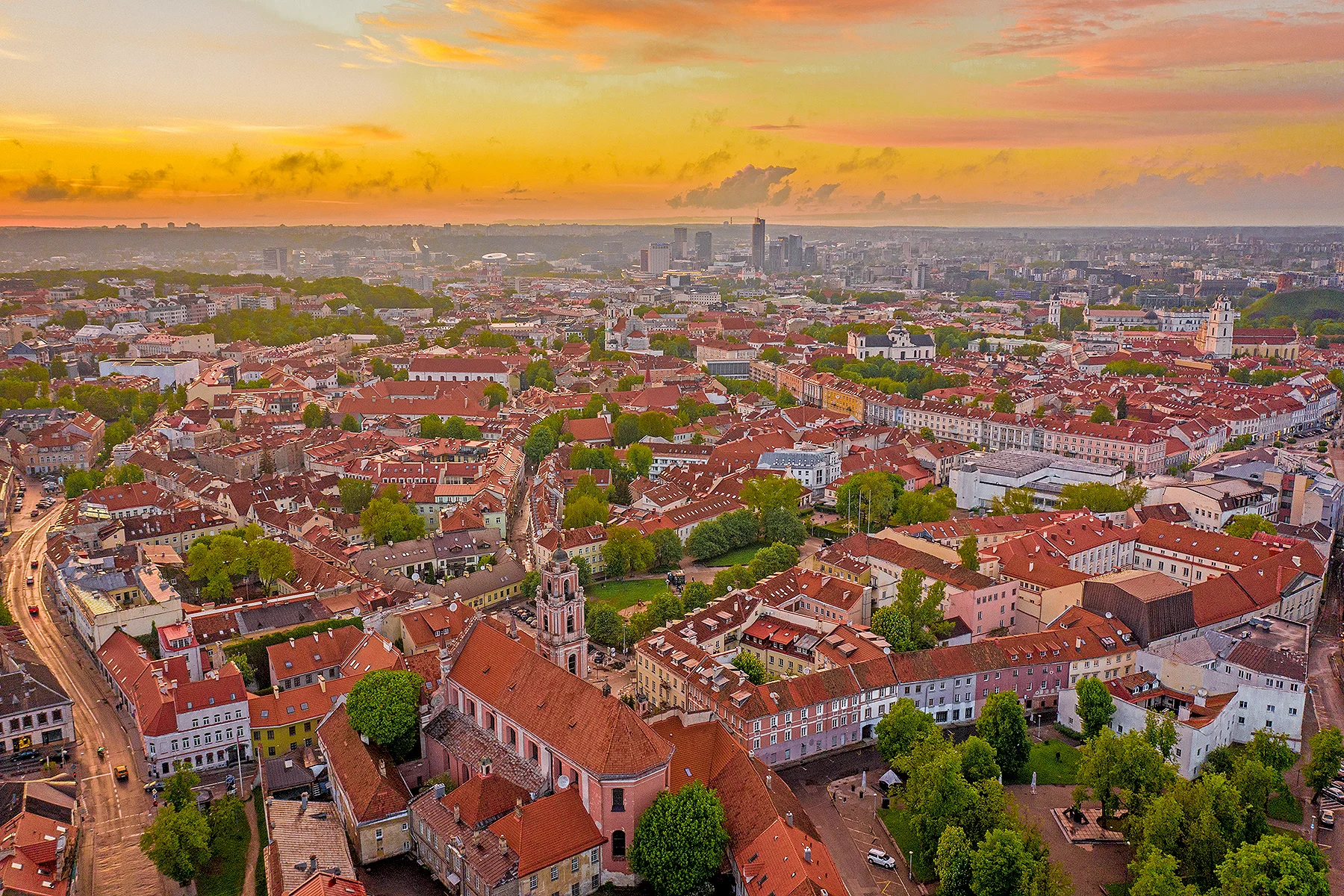
The Old Town is the main event. UNESCO-listed since 1994 and, at around 360 hectares, one of the largest surviving medieval centres in Europe, it's a layered tangle of Gothic, Renaissance, Baroque and Classical buildings, more than two dozen churches, hidden courtyards and café-lined lanes. Walk the spine from Cathedral Square down Pilies Street to the Gates of Dawn and you'll pass most of the headline sights; step off it into the side streets and you'll find the quieter, more rewarding half — convent gardens, student bars in cellars, and the marks of the city's Jewish and Soviet histories. Vilnius grew up over seven centuries without being flattened and rebuilt, which is exactly why it feels so layered and so real.
The pleasure here is as much atmosphere as architecture. Within a few minutes you can stand in the spiritual heart of Lithuania on Cathedral Square, climb a Baroque bell tower, push open a gate into a frescoed university courtyard, and end up at a café in a quiet lane. It never feels like a museum-piece; people live, study and work in these streets, which keeps the Old Town alive rather than embalmed.
Don't miss the Gothic Church of St. Anne — the red-brick jewel Napoleon supposedly wanted to carry to Paris — the vast thirteen-courtyard Vilnius University complex, the Town Hall square, and the astonishing white stucco interior of St. Peter and St. Paul with its two thousand sculpted figures. Seek out the hidden courtyards, find the 'miracle' tile on Cathedral Square, and detour to Literatų Street's wall of literary art. For a first trip, our self-guided walk strings these together in a sensible order — but the Old Town rewards aimless wandering just as much as any route, and getting pleasantly lost is half the point.
- UNESCO World Heritage core; walkable end to end.
- Highlights: St. Anne's, the university courtyards, the Gates of Dawn.
- Free to wander; most churches are free to enter.
3. Cross into Užupis, the bohemian republic
Just across a small bridge from the Old Town, the neighbourhood of Užupis declared itself an independent 'republic' on April Fools' Day 1997, complete with its own tongue-in-cheek constitution, a flag, a president, an anthem and an honorary army that parades once a year. In practice it's the city's artistic quarter — a knot of galleries, studios, cafés and riverside bars threaded along the little Vilnia river, with the bronze Angel of Užupis trumpeting from a column over its central square. Once a run-down, slightly rough district, it reinvented itself as a haven for artists and free spirits, and it has kept that creative, faintly anarchic charm.
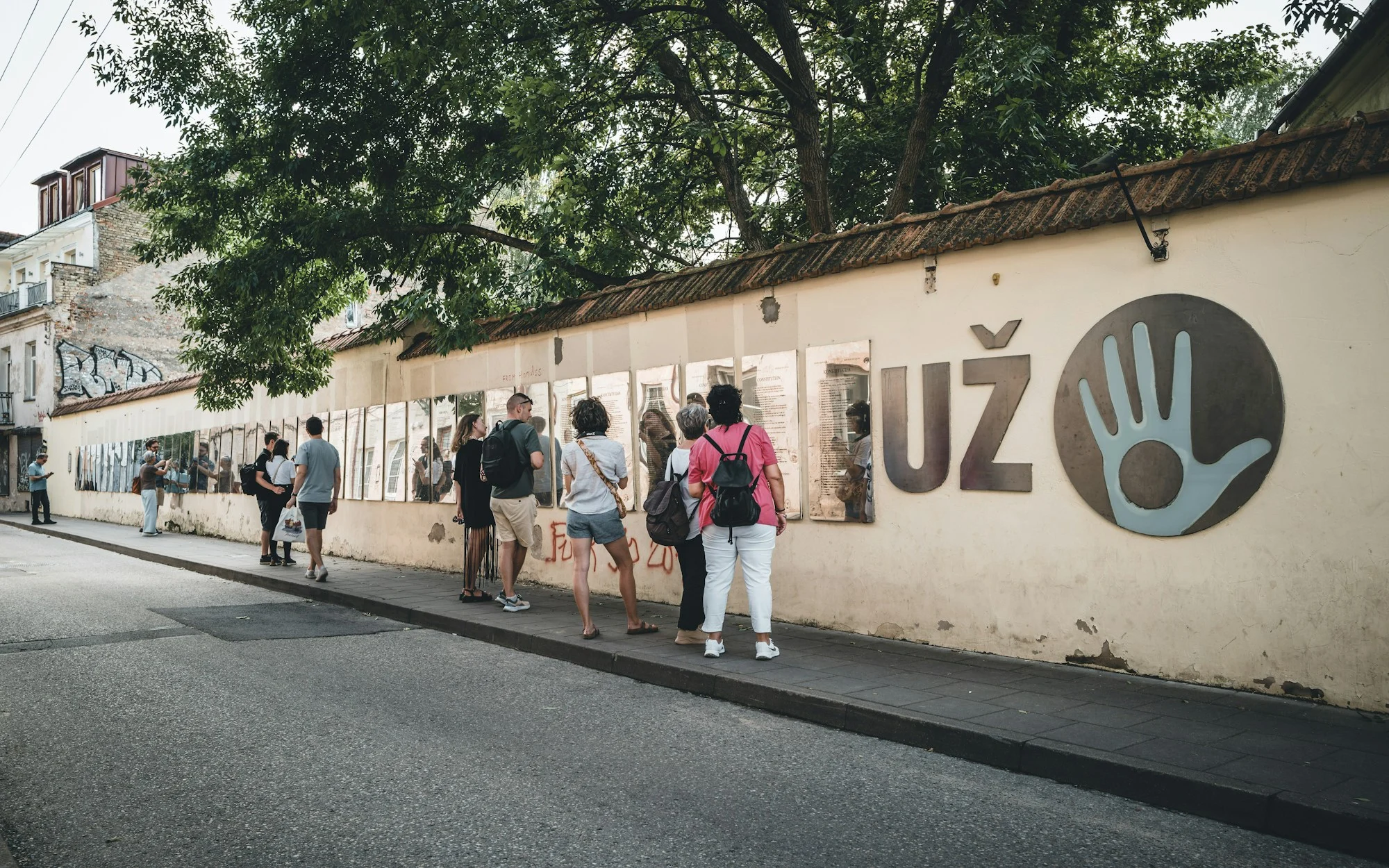
Read the famous constitution, posted on mirrored plaques in dozens of languages along Paupio Street — its clauses range from the touching ('Everyone has the right to be happy', 'Everyone has the right to love') to the deadpan ('A dog has the right to be a dog', 'A cat is not obliged to love its owner, but must help in difficult times'). Then settle into a riverside café, dangle your feet over the Vilnia, browse the galleries and open studios, and look for the swing and the small artworks hidden along the banks. It's a short, easy detour from the Old Town that gives you a completely different, scruffier and more playful side of Vilnius — and a natural place to end an afternoon.
- A self-declared artists' 'republic' since 1997, just over the river.
- Read the constitution on the multilingual plaques on Paupio Street.
- Galleries, riverside cafés and the Angel of Užupis.
4. See contemporary Lithuania at the MO Museum
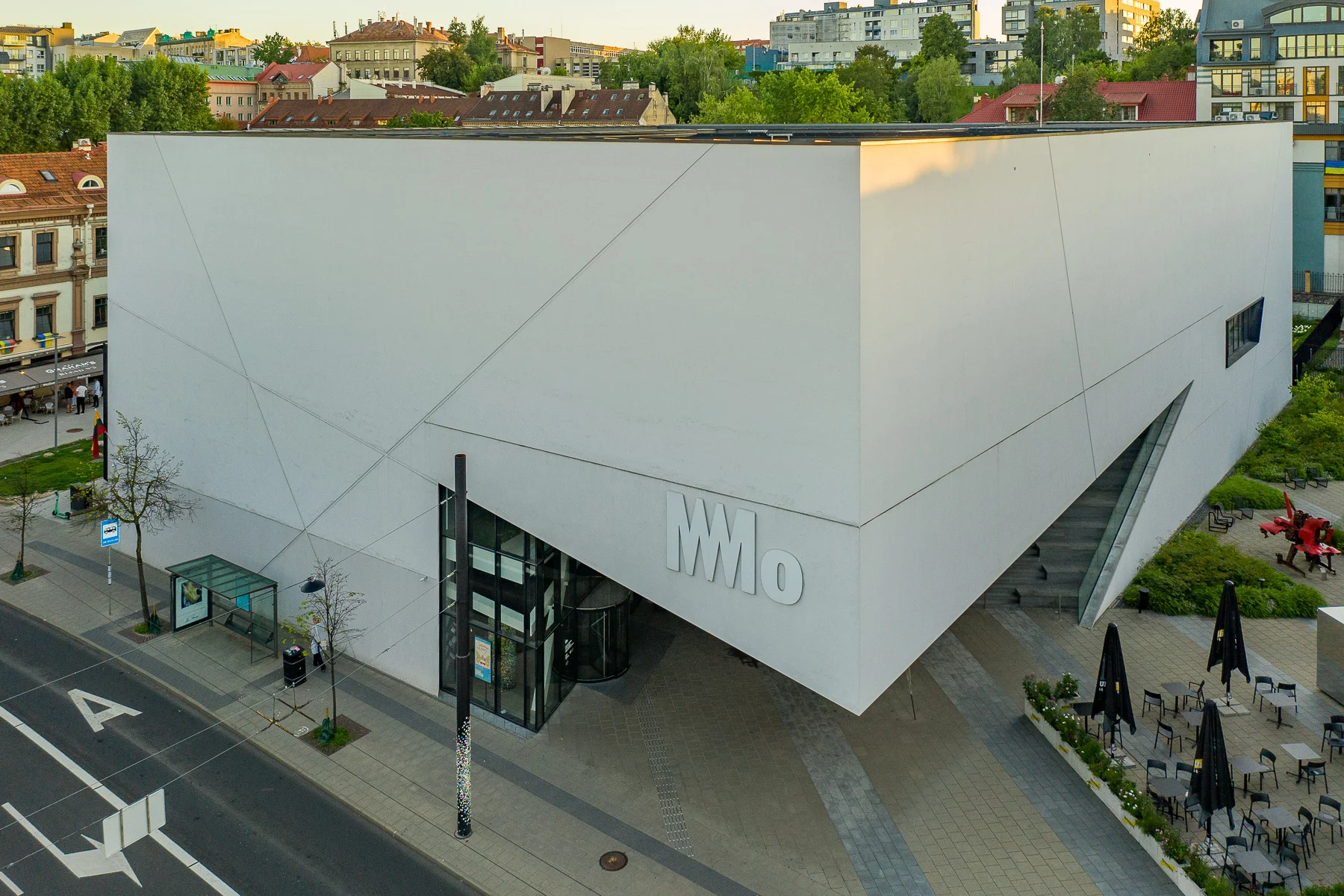
For a break from churches and castles, the MO Museum is the city's standout modern attraction — a private museum of Lithuanian art from the 1950s to today, founded by scientists and philanthropists Danguolė and Viktoras Butkus and housed in a striking white building designed by Daniel Libeskind on the edge of the Old Town. Its rotating exhibitions, drawn from a collection of several thousand works, are consistently well curated, generously labelled in English and genuinely accessible to non-specialists, and the building itself — with its public 'urban gate', staircase and rooftop terrace — is part of the appeal.
It's the best place to understand what modern Lithuania has been thinking about: the Soviet decades, the rupture and exhilaration of independence, and the country's contemporary identity, all told through painting, photography, graphic art and installation. There's a good café and shop too. Allow an hour or two, and check current exhibitions and opening times before you go, as shows rotate and the museum closes one day a week. If you have an appetite for more art afterwards, the National Gallery of Art across the river continues the story.
- Lithuania's leading modern-art museum, in a Libeskind-designed building.
- Rotating, well-curated shows of art from the 1950s to now.
- Check current exhibitions and hours before visiting.
5. Eat at the markets and food halls
Vilnius eats very well, and the most fun way in is through its markets and food halls. Hales Market (Halės turgus), the historic covered market near the Gates of Dawn, dates to 1906 and mixes traditional stalls — rye bread, cheese, honey, smoked fish, pickles and forest mushrooms — with a new generation of food vendors serving everything from dumplings to ramen, so it's the easy place to graze your way through Lithuanian staples and watch the city shop. Across the river, the Paupys Market food hall in Užupis is the modern equivalent: a buzzy, design-led hall of independent kitchens that's especially good in the evening.
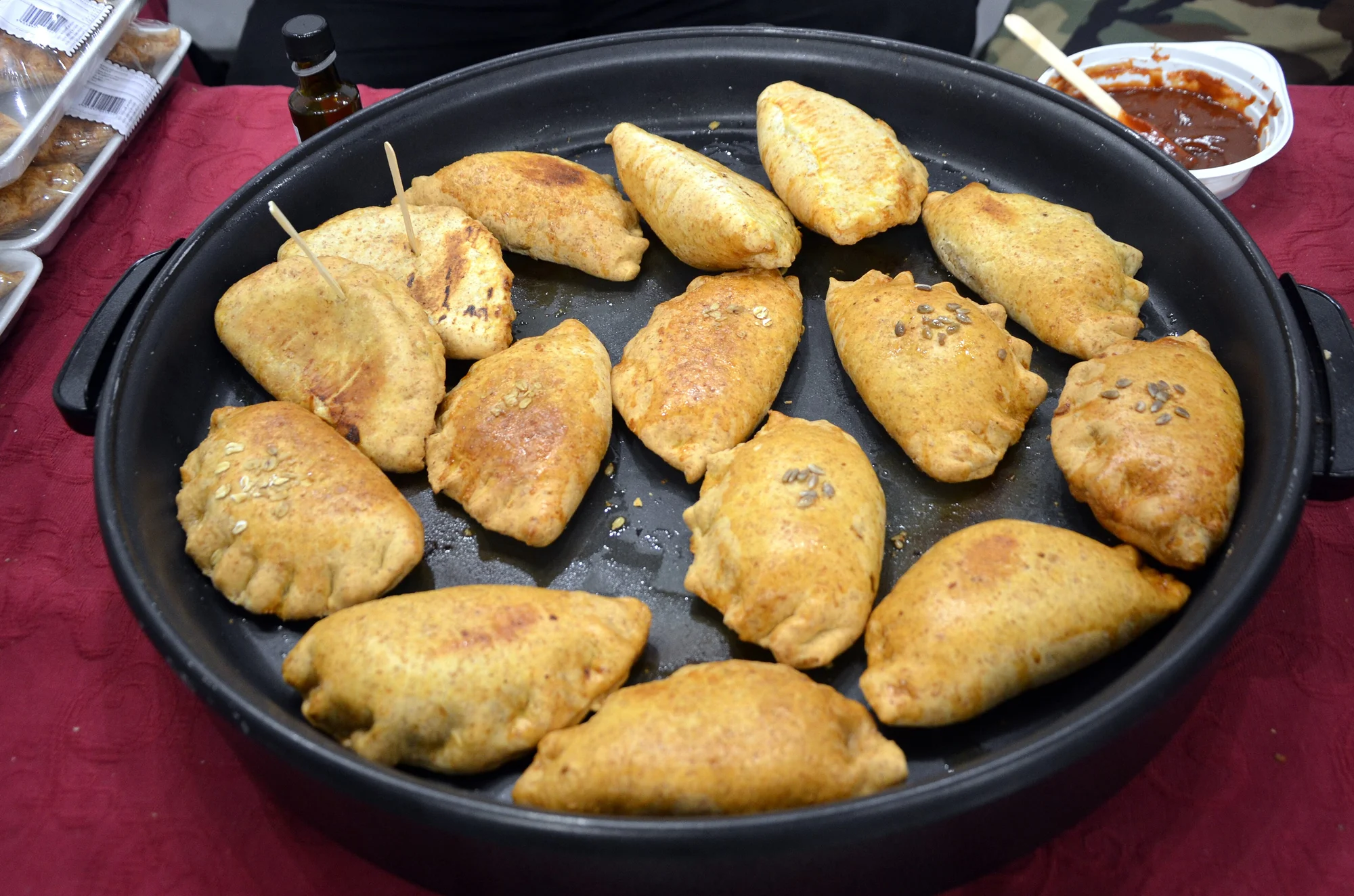
Beyond the halls, build a meal around the national dishes: cepelinai (zeppelin-shaped potato dumplings stuffed with meat), cold pink beetroot soup (šaltibarščiai) served with hot potatoes in summer, dark rye bread, smoked pork and the Karaim kibinai you'll meet again on a Trakai day trip. Don't miss the local sweet treats either — šakotis, the spit-baked 'tree cake', and the pink-glazed žagarėliai. Wash it all down with craft beer, which Lithuania does surprisingly well, or a shot of the herbal liqueur. It's hearty, affordable and genuinely distinctive — and a real reason to come hungry.
- Graze at Hales Market near the Gates of Dawn.
- Try the modern food hall at Paupys in Užupis.
- Must-eats: cepelinai, šaltibarščiai (summer), kibinai, rye bread, craft beer.
6. Take the day trip to Trakai
If you have a spare half-day, go to Trakai. The red-brick island castle on Lake Galvė — reached by a long wooden footbridge, with around twenty small islands scattered across the lake around it — is the most photographed sight in Lithuania, and it's barely 30 minutes from Vilnius by train. The Gothic fortress, seat of the medieval Grand Duchy, houses a history museum, and the lakeside town is lined with the painted wooden houses of the Karaim, a Turkic community settled here for six centuries. Pair the castle with kibinai from a Karaim eatery and, in summer, a rowboat or pedalo on the lake for the classic view of the towers from the water. It's the one excursion that earns its place on even a short trip.
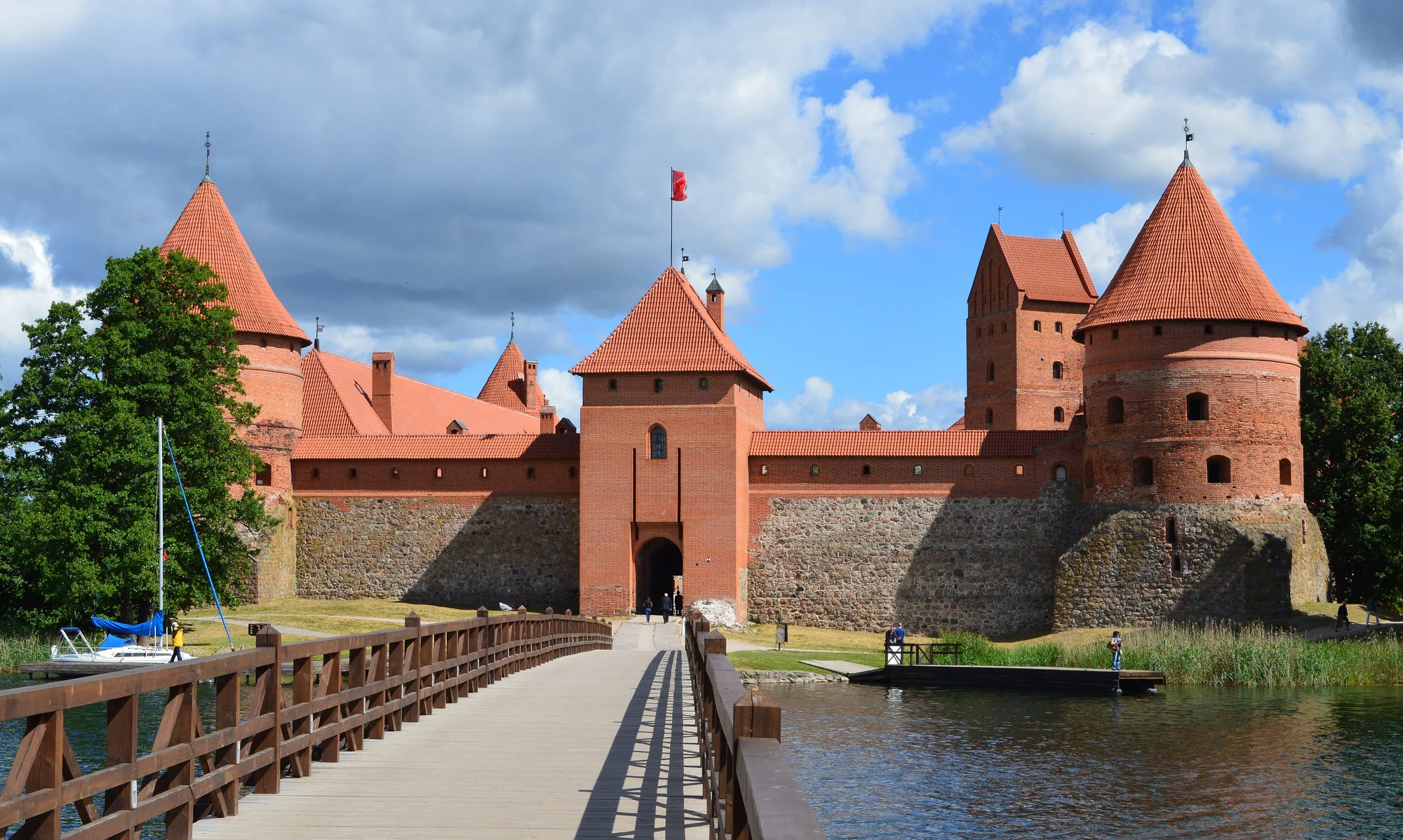
Trakai works year-round and suits everyone from families to couples. Beat the lunchtime ticket queues at the castle (they peak around 11:00–13:00), build your day around an unhurried lunch by the lake, and you'll be back in the city by evening with the best photos of your trip. Confirm current opening hours and ticket prices for the castle museum before you go, as they change with the season.
- ~30 minutes by train; the island castle is Lithuania's signature sight.
- Eat kibinai and, in summer, rent a boat on Lake Galvė.
- Works as a half-day; easy and well connected.
More to fit in if you have time
Once you've done the big six, Vilnius keeps giving. Climb the Hill of Three Crosses across the valley from Gediminas for a second great viewpoint, especially at sunset, when the white monument catches the last light. Walk the green Bernardine Gardens and Sereikiškės Park along the river, with the Gothic Church of St. Anne beside them. Visit the sobering Museum of Occupations and Freedom Fights in the former KGB headquarters to understand the Soviet decades, including the preserved cells in the basement. Hunt down the city's growing street art scene and the Literatų Street art wall, and step into the reconstructed Palace of the Grand Dukes for the medieval court.
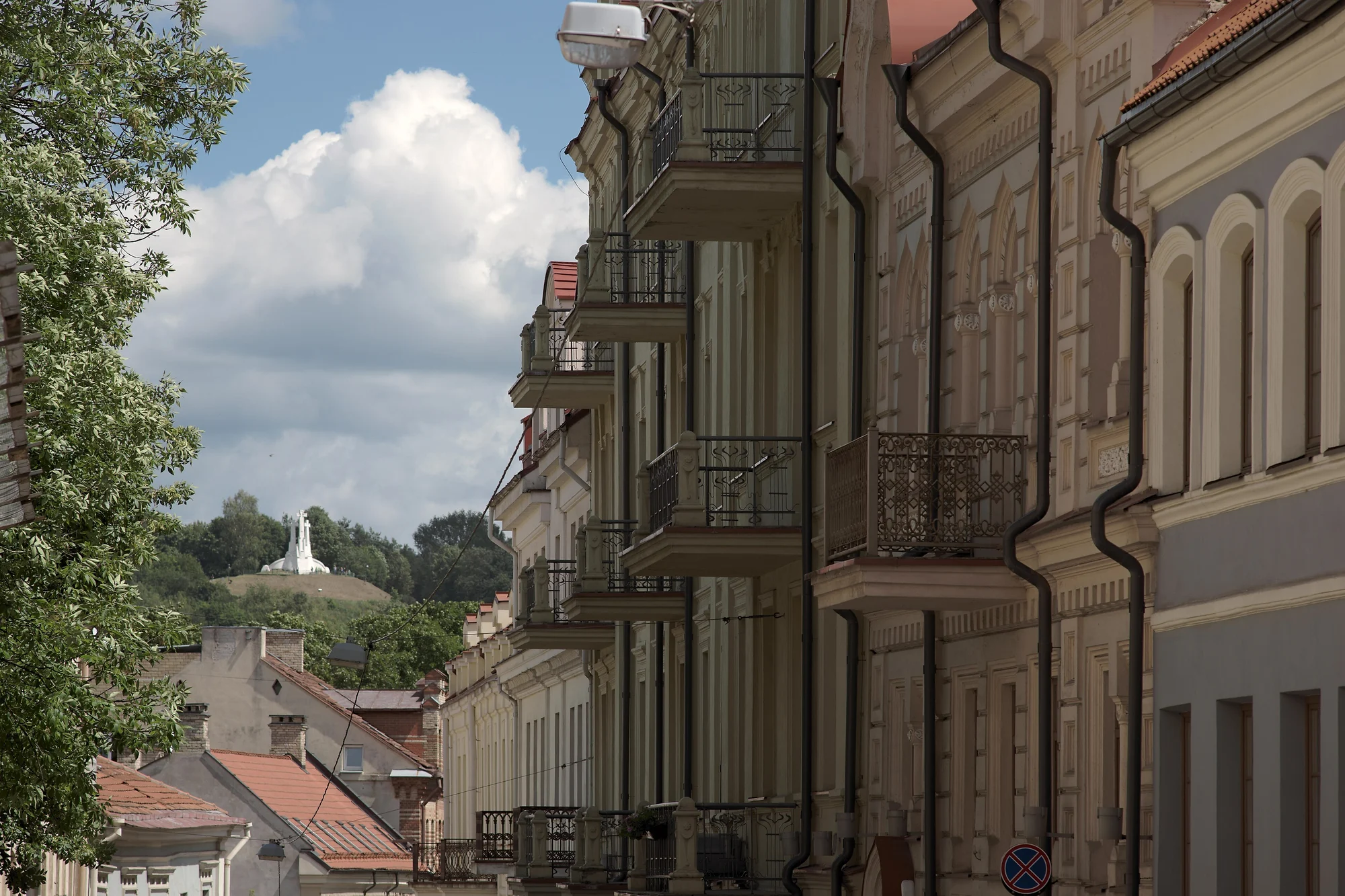
For a different perspective, ride a hot-air balloon over the city — Vilnius is one of the very few European capitals that permits balloon flights over the centre, and drifting above the Old Town at dusk is unforgettable — or go up the Vilnius TV Tower for the widest panorama of all. Cyclists can follow the riverside paths; in winter there's the Christmas market and ice rinks; in summer, festivals and open-air bars fill the courtyards. And simply allow time to sit: in a courtyard café, on a riverside bench in Užupis, on the Cathedral Square steps watching the city go by. Vilnius rewards slowing down far more than it rewards a packed checklist — the best memories here are often the unplanned ones.
- Second viewpoint: the Hill of Three Crosses at sunset.
- Soviet history: the Museum of Occupations and Freedom Fights (former KGB HQ).
- Green time: Bernardine Gardens and the riverside parks.
- Special splurge: a hot-air balloon over the city, or the TV Tower panorama.
How to fit it together
On a first trip, the natural rhythm is to spend your first day in the Old Town — start high on Gediminas Hill for orientation, walk the spine from Cathedral Square to the Gates of Dawn, then cross into Užupis as the afternoon softens and stay for an early dinner by the river. That single day covers three of the big six and most of the city's soul.
Give your second day to contrast: the MO Museum or the Museum of Occupations in the morning, a long graze through Hales Market or the Paupys food hall at lunch, and a viewpoint at sunset — the Hill of Three Crosses if you want to walk it off. If you have a third day, that's the one to send out to Trakai, returning to the city for your last evening. Slot any of the 'more to fit in' extras into the gaps as the mood takes you.
Almost all of this is walkable, which is the joy of Vilnius. The Old Town, Užupis and the museums sit within a compact, flat-ish core; only the TV Tower, the airport and Trakai really call for transport, and the city's buses, trolleybuses and cheap taxis cover those easily. There's no need for a car, and a transport app or contactless card handles the occasional ride.
- Day 1: Old Town spine + Gediminas Hill + Užupis.
- Day 2: a museum, a food hall, a sunset viewpoint.
- Day 3 (or a spare half-day): Trakai.
- Get around: on foot for the core; buses, trolleybuses and taxis for the rest.
Best things to do in Vilnius: quick answers
The questions first-timers ask most, distilled. Treat these as a planning shortcut rather than the last word — hours and prices for specific sights shift seasonally, so confirm those on the day.
And the single best piece of advice: Vilnius rewards depth over breadth. Pick a handful of these, do them slowly, leave time to sit in a courtyard café, and you'll enjoy the city far more than if you sprint through a checklist.
- What's the number-one thing to do? Climb Gediminas' Tower for the view, then explore the UNESCO Old Town below it.
- How many days do I need? Two is comfortable; three lets you slow down and add Trakai.
- Is Vilnius expensive? No — it's noticeably cheaper than Western European capitals.
- Is it good for a first trip / families / couples? Yes to all — it's compact, safe, walkable and uncrowded.
- What should I eat? Cepelinai, šaltibarščiai in summer, kibinai, rye bread and craft beer.
- What's the one day trip? Trakai, ~30 minutes by train, for the island castle and lakeside lunch.
- When should I visit? Late spring to early autumn for the best weather; December for the Christmas market; any time works.
When to come, and a few honest tips
Vilnius is a four-season city, and the best time to visit depends on what you want. Late spring through early autumn (May to September) gives the warmest weather, the longest days and the fullest calendar of festivals and open-air life — peak season, but still uncrowded by Western European standards. April and October are quieter and cheaper, with softer light and golden parks, and many regulars consider them the sweet spot. December turns Cathedral Square into one of Europe's prettiest Christmas markets, and a snowy Old Town under lights is genuinely magical, if cold.
A few honest tips to make a first trip smoother. Wear shoes you can handle cobblestones in — the historic paving is uneven and slippery when wet. Carry a little cash for small markets and stalls, though cards are accepted almost everywhere. Most churches and viewpoints are free, so don't feel you must pay your way around the city. Tap water is safe to drink. And don't try to pack too much in: Vilnius is small and walkable precisely so you can slow down, and the travellers who enjoy it most are the ones who leave room to wander, sit and linger.
Finally, treat this list as a starting point, not a finishing line. Do the big six well, add a couple of the extras that speak to you, and follow your own curiosity down the side streets in between. That's how Vilnius rewards you — not with a box ticked, but with a city that quietly gets under your skin.
- Best weather and buzz: May–September; quieter and cheaper in April and October.
- Magical in December for the Christmas market on Cathedral Square.
- Wear sturdy shoes for cobbles; carry a little cash; tap water is safe.
- Most churches and viewpoints are free — you needn't pay your way around.
- Don't over-schedule: the city is best savoured slowly.
Related guides
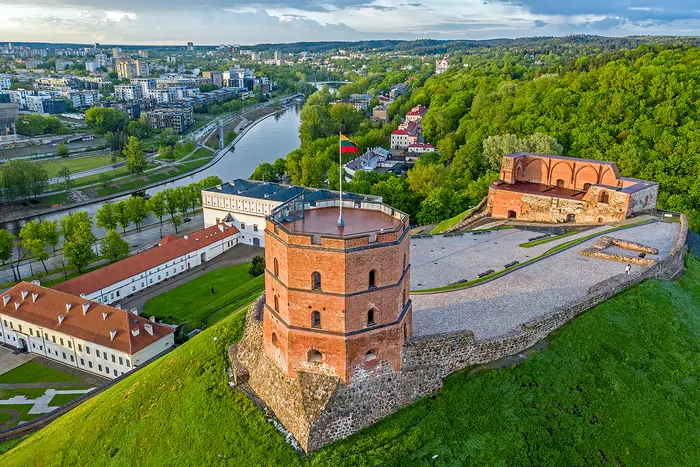
Gediminas Castle Tower
The red-brick tower on Castle Hill is the symbol of Vilnius and the easiest panoramic view in the city — reached by a steep cobbled path or a one-minute funicular, with a small history museum at the top.
Read guide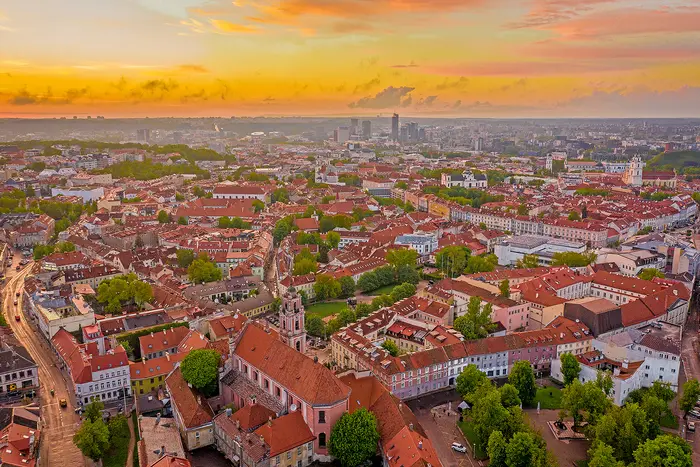
Vilnius Old Town
A guide to Vilnius Old Town: the UNESCO-listed heart of the city, its gates, churches, courtyards, squares, cafés, Jewish history and best photo stops.
Read guide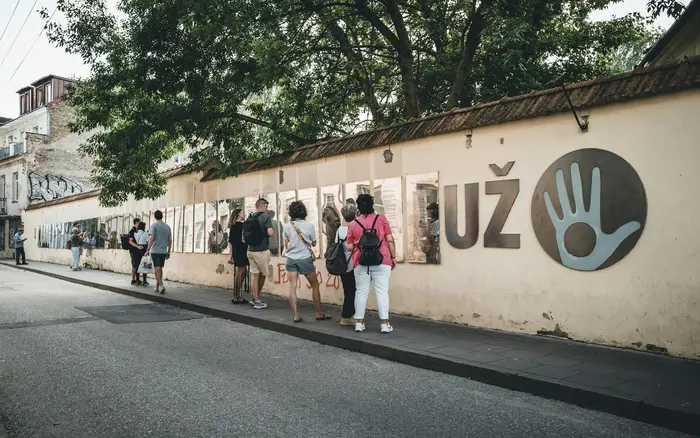
Užupis guide
Explore the self-declared republic: constitution, the Angel, river bridges, galleries, cafés and April 1 spirit.
Read guide