
Budget Eats in Vilnius: Cheap, Filling & Local
How to eat well in Vilnius without spending much — markets, food halls, bakeries, cheap Lithuanian taverns, lunch deals and student-area food — with realistic prices and money-saving tips.
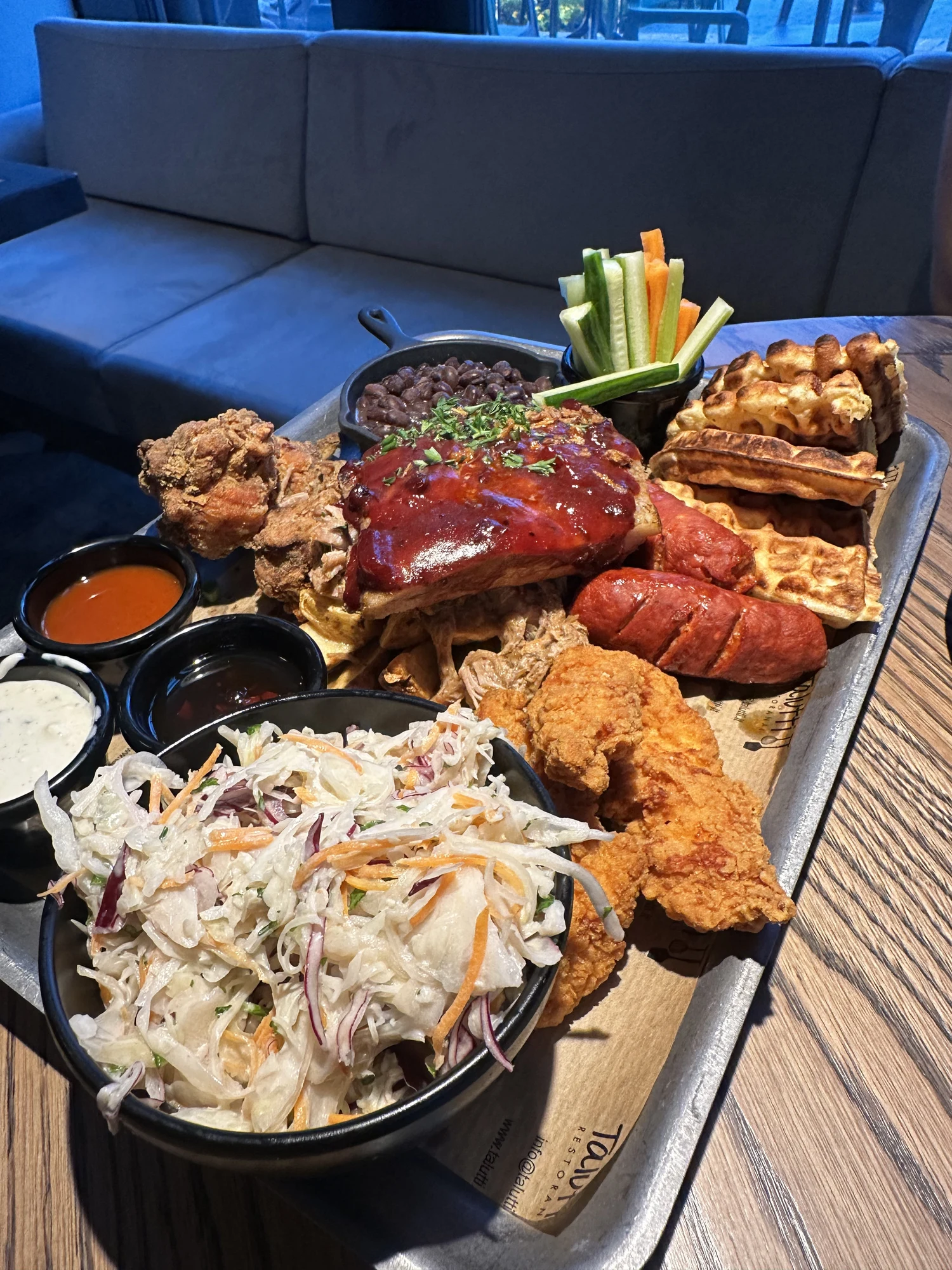
- ✓Vilnius is one of Europe's best-value capitals for food — a hearty Lithuanian meal can cost only a few euros.
- ✓Taverns serving cepelinai and dumplings are the cheapest filling sit-down meals in the city.
- ✓Markets and food halls are unbeatable for variety on a budget, especially for groups.
- ✓Bakeries and weekday lunch deals (pietūs) stretch your money furthest.
- ✓Tap water is safe to drink, and most places take cards — though small market stalls may prefer cash.
You don't need to spend much to eat well here
Vilnius is a gift for travellers watching their budget. Lithuanian cooking is hearty, generous and rooted in cheap, filling staples — potatoes, rye, curd cheese, beetroot, pork — which means a satisfying meal rarely costs much. Add a strong market and food-hall culture, an everywhere-you-look bakery habit, and weekday lunch deals aimed at local workers, and it's entirely possible to eat very well for a fraction of what you'd pay in Western Europe.
The trick is knowing where locals actually eat, rather than the handful of pricier tourist tables on the main Old Town drag. This guide runs through the cheapest, most satisfying ways to eat across the city — traditional taverns, markets, bakeries, lunch specials and student-area food — with realistic expectations on cost and a few tactics to make your money go even further.
It helps to recalibrate your sense of price before you arrive. Lithuania uses the euro, and while costs have risen in recent years, eating out in Vilnius remains dramatically cheaper than in Western European capitals. A filling tavern meal, a market lunch or a bakery breakfast can each be had for the price of a single coffee-and-pastry in Paris or London. That means 'budget' here doesn't mean scrimping or surviving on supermarket sandwiches — it means eating genuinely well, often better and more locally than the travellers paying double on the tourist strip. The aim of this guide is to help you do exactly that: eat brilliantly, cheaply, and like a local.
Lithuanian taverns: cepelinai and dumplings on the cheap
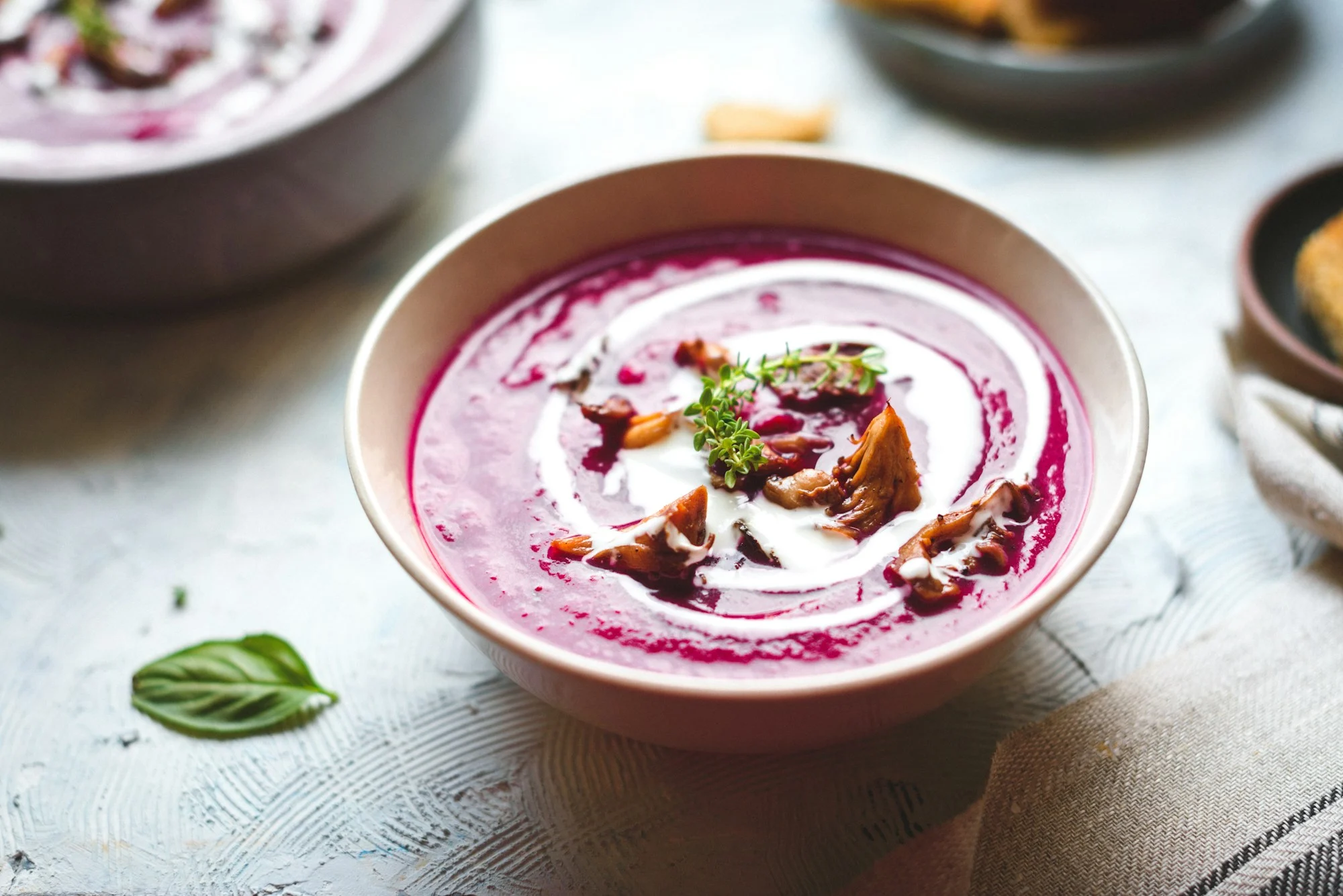
The single best budget move in Vilnius is a meal at a traditional Lithuanian tavern. Rustic spots like Šnekutis serve hearty local dishes — cepelinai (the famous potato dumplings stuffed with meat), cold beetroot soup, potato pancakes, cured cheese — at prices that feel almost nostalgic, with local beer to match. A bowl of soup runs a few euros, a plate of cepelinai is typically in the single digits, and you can leave full and happy for around €10–12 a head. Always check the current menu, as prices drift over time. Šnekutis in particular has a cult following among locals for its cheap home-brewed and regional beers as much as its food, and it captures the unpretentious, beer-and-dumplings spirit of old Vilnius better than almost anywhere — a tavern, not a tourist trap.
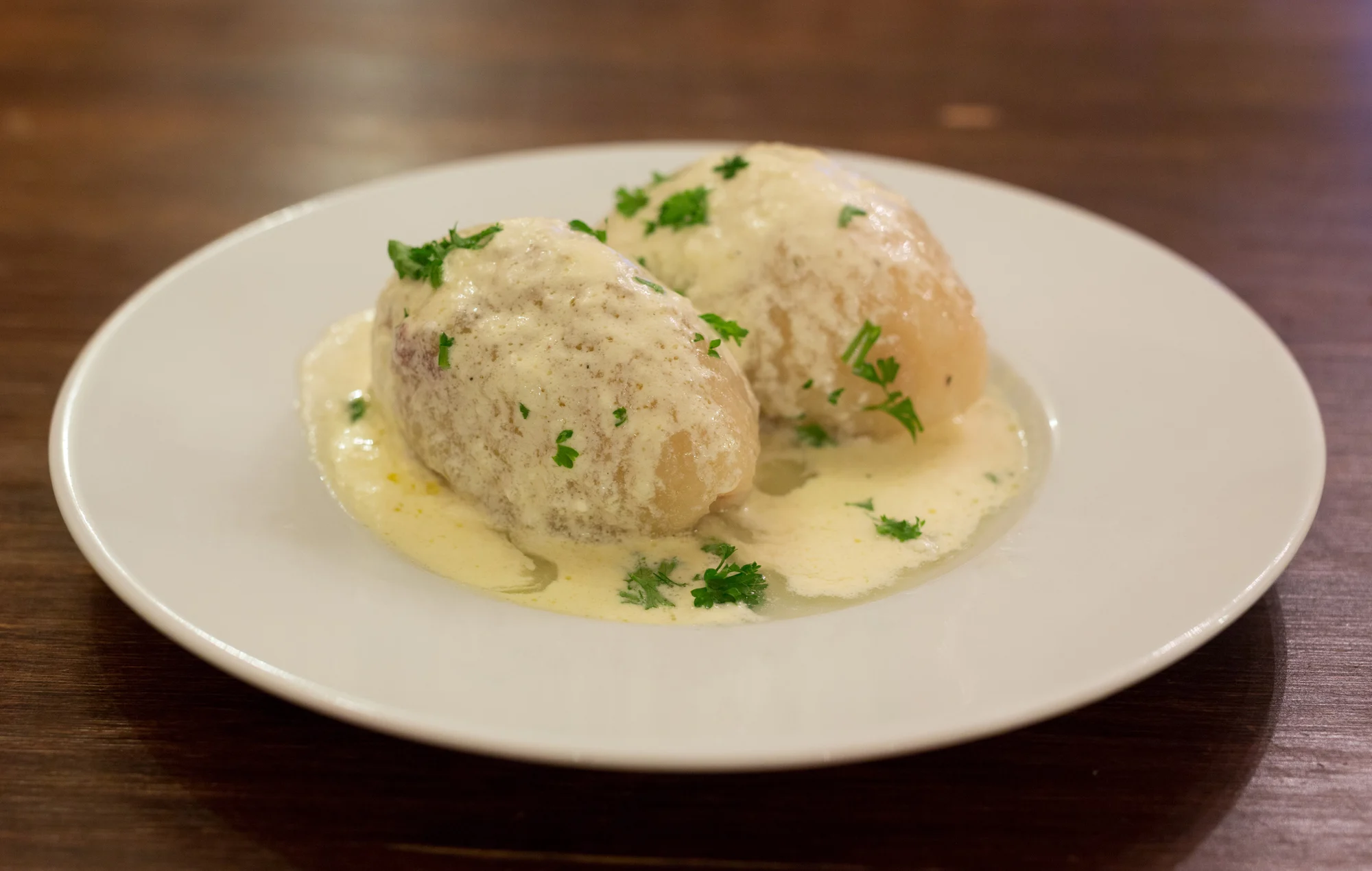
Old Town tavern-style restaurants such as Etno Dvaras put the same comfort food in a more polished setting while staying very affordable — their cepelinai, served with sour cream and crisp bacon, is a classic introduction to the cuisine. These places are filling by design: one or two dishes between mains is plenty, and the bread and starters are generous. For the full rundown of what to order, see our traditional food guide.
A few ordering tips keep the bill down without leaving you hungry. Soups in Lithuania are substantial — a bowl of cold beetroot šaltibarščiai (served, classically, with a side of hot boiled potatoes) or a creamy mushroom soup in a hollowed-out rye bread loaf can be a meal in itself for a handful of euros. Cepelinai are deceptively heavy: two dumplings defeat most people, so a single portion shared with a soup often feeds two. Local draught beer or kvass is far cheaper than imported drinks, and the house lager is usually very good. Skip the bottled water — the tap water is excellent — and you'll be surprised how little a proper tavern dinner ends up costing.
Beyond cepelinai, look out for kibinai (savoury baked pastries filled with meat or vegetables, a Karaim speciality from nearby Trakai), koldūnai (smaller dumplings), and blynai (pancakes, sweet or savoury). Many of these started life as peasant or workers' food, which is exactly why they're cheap, filling and deeply satisfying. Eating them is not a compromise forced by budget — it's some of the most characterful food the city offers, and it happens to cost very little.
- Cepelinai: stuffed potato dumplings — the definitive cheap, filling Lithuanian dish.
- Cold beetroot soup (šaltibarščiai): a bright pink summer staple, only a few euros.
- Expect to eat well for roughly €10–12 a head at a traditional tavern; verify current prices.
What to order and where to find the classic dishes.
Cepelinai in VilniusWhere to try Lithuania's potato dumplings, and how big a portion really is.
Map pins
Map data © OpenStreetMap contributors · Tiles © OpenFreeMap
Markets, food halls and bakeries
Markets and food halls are the budget traveller's best friend. Halės Market, the oldest in the city, lets you assemble a picnic of cheese, smoked meat, rye bread and fruit for very little, or graze across its food stalls and smokehouse for a cheap, varied lunch. The modern food halls like Paupys spread the cost across many stalls, which is ideal for groups who want everyone to eat differently without anyone overspending. Traditional produce markets such as Kalvarijų are cheaper still if you're self-catering.

Then there's the bakery habit. Vilnius bakeries and small cafés sell pastries, savoury buns, doughnuts (spurgos) and slabs of cake for pocket change, making them a perfect cheap breakfast or afternoon refuel. Grab-and-go counters around the Old Town and the station do filled rolls, kibinai (savoury pastries) and dumplings for a euro or two. None of it is fancy, but it's tasty, fast and very kind to your wallet.
If your accommodation has even a kettle and a fridge, self-catering a couple of meals stretches a budget enormously. A market or supdermarket run for rye bread, local cheese, cold cuts, kefir, tomatoes and fruit turns into several cheap breakfasts and picnics, and Vilnius is full of lovely spots to eat them — Bastion Hill, the Bernardine Gardens, the riverside paths or any of the Old Town's hidden courtyards. A picnic of good local produce eaten in a beautiful setting is not a downgrade from a restaurant; for many travellers it's a highlight, and it costs almost nothing.
It's worth saying that the markets and food halls deserve a visit on their own merits, not just as a cost-saving measure. They're among the liveliest, most local places to eat in the city, and the variety means even a tight budget never feels monotonous. For the full picture of where they are and what to order at each, our dedicated food-halls guide goes vendor by vendor.
- Build a picnic at Halės or Kalvarijų markets for a few euros.
- Food halls let groups eat varied meals cheaply — order across stalls.
- Bakeries and grab-and-go counters are the cheapest breakfasts and snacks in town.
Lunch deals, student food and money-saving tips
The savviest way to eat at a nicer restaurant for less is the weekday lunch special — pietūs in Lithuanian. Many places, including some upmarket kitchens, offer a fixed, well-priced lunch menu on weekdays, so you can sample a smarter restaurant at a fraction of dinner prices. Look for 'pietūs' or 'business lunch' signs around midday. University areas and the Station District are reliably cheap zones, full of canteens, kebab and dumpling counters and casual cafés catering to students and commuters.
Don't overlook the old-school Soviet-style canteens (valgykla) that still dot the city, where you slide a tray along a counter and point at hearty home-style dishes priced by the plate. They're unglamorous, often cash-friendly, and about as cheap as a sit-down hot meal gets — a slice of everyday Lithuania that many visitors never find. The student districts around the universities are the best hunting ground for these and for the cheapest kebab, pizza-by-the-slice and dumpling counters, all kept honest by a clientele with no money to waste.
A few tactics stretch things further. Tap water in Vilnius is safe to drink, so ask for it rather than buying bottled. Cards are accepted almost everywhere, but carry a little cash for small market stalls. House beer and local lager are far cheaper than imported drinks. And eating your big meal at lunch, then keeping dinner light with market or bakery food, is both how locals do it and an easy way to halve your food budget without going hungry.
To make this concrete, here's how a deliberately cheap day of eating might look without ever feeling deprived. Breakfast: a pastry or savoury bun and a coffee from a neighbourhood bakery. Lunch — your main meal — a weekday 'pietūs' special at a decent restaurant, or a plate of cepelinai and a soup shared at a tavern. Afternoon: a doughnut or a slab of cake to refuel mid-sightseeing. Dinner: a graze through Halės Market's stalls, or a market-bought picnic of cheese, bread and fruit eaten on a hilltop at sunset. Done this way, a full day's eating in Vilnius can come in well under what a single mid-range restaurant dinner would cost in most of Western Europe — and you'll have eaten more variety, and more locally, than the average visitor.
The broader principle is simple: eat where the rhythms of local life are, not where the tourist footfall is. Step one street back from the busiest Old Town lanes, follow the lunchtime crowds of office workers and students, and watch the prices fall and the authenticity rise. Vilnius makes this easy because the cheap, good and local options are everywhere — you rarely have to go far or plan hard to eat brilliantly for very little.
A handful of habits will keep your costs down across a whole trip. Carry a refillable water bottle and use the tap. Make lunch your main restaurant meal, when the pietūs deals land, and keep dinners light and market-based. Treat the food halls and bakeries as defaults rather than the sit-down restaurants on the tourist drag. Buy drinks — beer, kvass, coffee — at local prices rather than at hotel bars. And don't be shy about the canteens, taverns and market stalls where locals actually eat; the language barrier is small, the welcome is warm, and the savings are real.
None of this should feel like a sacrifice, and that's the point worth ending on. In a lot of cities, eating cheaply means eating worse. In Vilnius it often means eating better — more local, more seasonal, more characterful — than the visitors spending twice as much. A budget here isn't a constraint to grumble about; it's a route to the city's most honest and enjoyable food. Lean into it, and you'll eat some of the most memorable meals of your trip for the price of a coffee back home.
If you're planning a deliberately frugal trip overall, the food savings compound nicely with the rest. Vilnius is a city where many of the best things — the Old Town, the churches, the hilltop views, the riverside walks, the courtyards of Užupis — cost nothing at all, so a low food budget leaves plenty of room for the occasional treat without breaking the bank. Eat cheaply most of the time, splurge once on a Bib Gourmand lunch or a market feast, and you'll have experienced the full range of how the city eats while spending remarkably little. For more on stretching a trip, see our budget itinerary and money guides. Done thoughtfully, a few days of eating well in Vilnius can cost less than a single fancy dinner would back home — and taste a great deal more memorable for it.
- Hunt for weekday 'pietūs' / business-lunch menus — smart restaurants for less.
- University areas and the Station District are dependable cheap-eat zones.
- Drink tap water, choose local beer, and make lunch your main meal to save most.
Related guides

Vilnius on a Budget: A Low-Cost Itinerary
A lower-cost Vilnius itinerary built on free sights, cheap public transport, market and bakery meals and one or two well-chosen tickets — proof that one of Europe's prettiest capitals is also one of its best value.
Read guide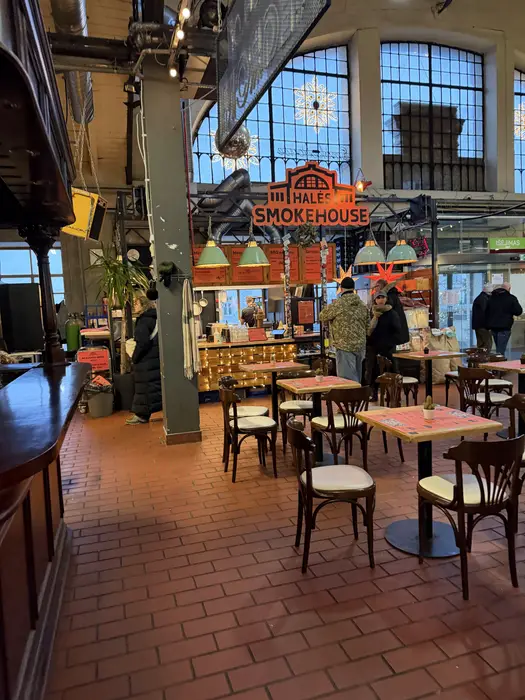
Halės Market: A Guide to Vilnius's Oldest Market Hall
How to visit Halės Market, the oldest covered market in Vilnius — produce, cheese and meat counters, street-food stalls, cafés and bars, plus when to go and what to eat near the station.
Read guide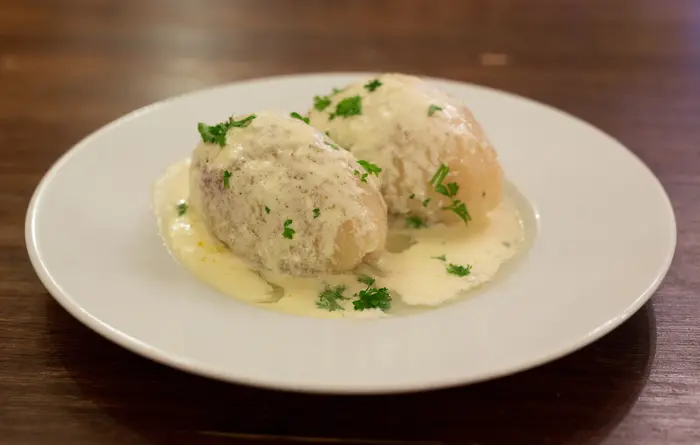
Traditional Lithuanian Food in Vilnius
What to eat in Vilnius, from cepelinai and šaltibarščiai to kibinai, dark rye bread, smoked fish, honey cake and beer snacks — and the best places to try each.
Read guide