
Šaltibarščiai in Vilnius: The Cold Pink Soup
Where and when to try Lithuania's vivid cold pink beetroot soup in Vilnius — summer timing, what it tastes like, how it's served, and the Pink Soup Fest context.

- ✓Šaltibarščiai is a chilled magenta-pink soup of beetroot, kefir and buttermilk, served with cucumber, dill, egg — and a side of hot boiled potatoes.
- ✓It's a summer dish above all: most common and at its best from roughly May through August.
- ✓Vilnius celebrates it with an annual Pink Soup Fest, held in late May (29–31 May in 2026).
- ✓Light, tangy and refreshing, it's the easiest Lithuanian classic for newcomers to love.
- ✓You'll find it on nearly every traditional menu in season, plus canteens and markets — no need to seek out a special venue.
What šaltibarščiai is, and how it's served
<!-- IMAGE SLOT: vivid magenta-pink šaltibarščiai cold beetroot soup in a bowl with dill and egg, side plate of hot boiled potatoes, bright summer light -->
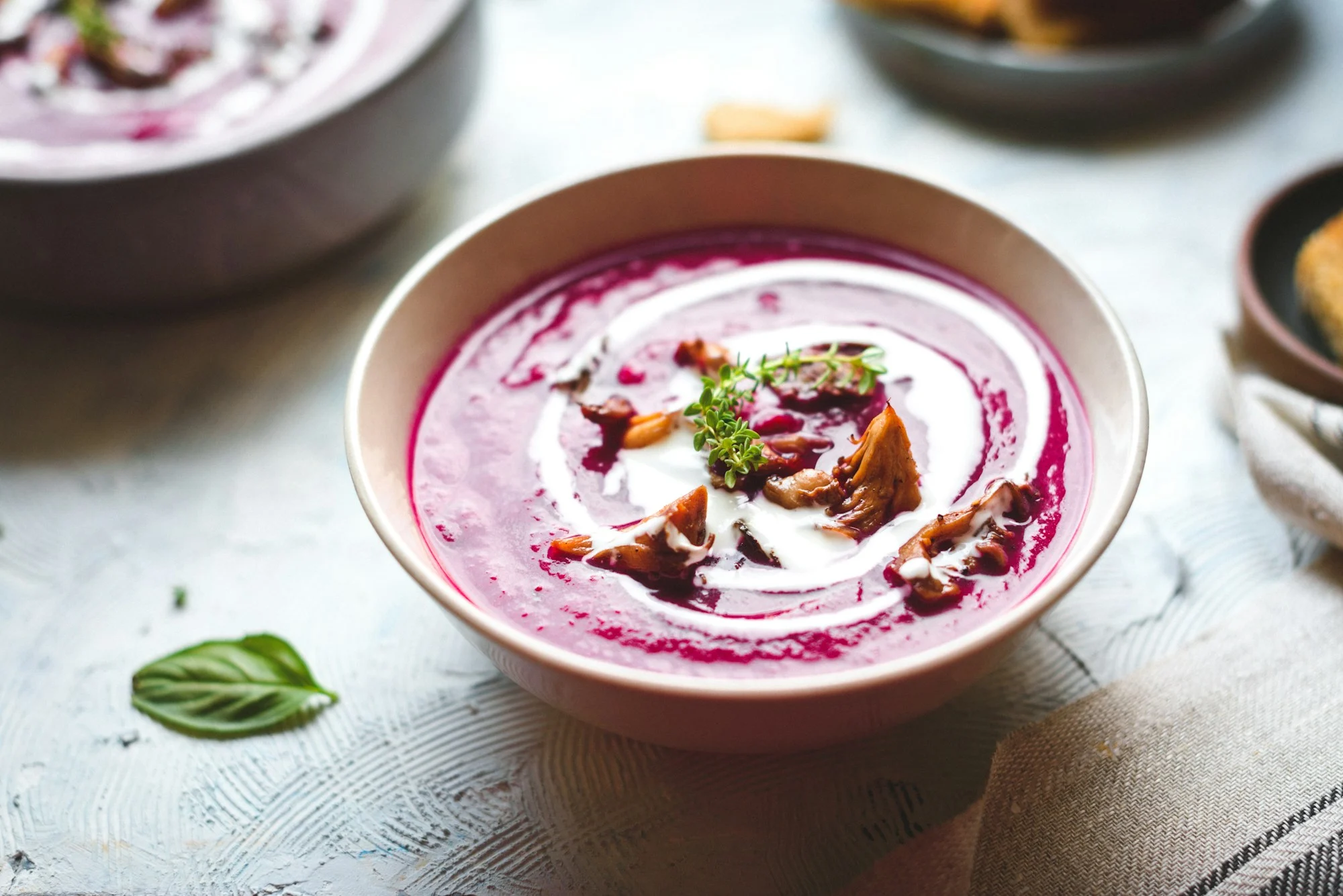
Šaltibarščiai (roughly 'shal-tee-bar-shchey') is Lithuania's famous cold beetroot soup, and it's hard to miss: an almost unreal magenta-pink, thanks to grated or chopped beetroot blended with kefir and buttermilk. Into that go diced cucumber, chopped fresh dill, spring onion and halved hard-boiled eggs, all served thoroughly chilled. The defining detail is the side plate of hot boiled potatoes — often dusted with dill — that comes with it. You eat the cold, tangy soup and the warm potatoes together, and the temperature contrast is the whole experience.
The taste is light, sour and refreshing rather than rich — closer to a savoury drinking yoghurt than to a heavy stew. That makes it the perfect antidote to a warm Vilnius afternoon and, for many visitors, the most immediately likeable Lithuanian dish. It's also naturally vegetarian (it contains no meat), filling enough for a light lunch, and almost always inexpensive. If you try one Lithuanian soup, make it this one.
The colour is what stops everyone in their tracks. Šaltibarščiai is so vividly, almost cartoonishly pink that it has become a social-media star and an unofficial symbol of the country — you'll see it on postcards, fridge magnets and city marketing. That neon hue comes entirely from the beetroot reacting with the dairy; there's nothing artificial about it. Recipes vary a little from kitchen to kitchen — some use pickled beetroot, some fresh, some add radish or extra herbs — but the core of pink, cold, tangy and topped with egg and dill is constant wherever you order it.
When to try it: summer is the season
Šaltibarščiai is, by tradition, a hot-weather dish — a cold soup makes most sense when you actually want cooling down. In practice that means it comes into its own from late spring through summer: expect to see it on most menus from around May to August, when it's freshest, most ubiquitous and at its best. Some restaurants now serve it year-round to satisfy demand, so you may well find a bowl in winter too, but summer is when locals eat it constantly and when you should make a point of ordering it.
There's no special venue to seek out. Almost every traditional restaurant, folk tavern and weekday canteen serves šaltibarščiai in season, and you'll often find it at market stalls and food halls as well. Because it's so widely available and so cheap, it's the ideal thing to order as a starter or a light lunch while you work through the heavier classics like cepelinai over the rest of your trip.
A warm version exists too. When the weather turns cold, many places switch to karštas barščiai — a hot beetroot soup that's a different dish entirely, closer to a Ukrainian or Polish borscht, served warm and often with meat. So if you visit in winter and see 'barščiai' on the menu, check whether it's the cold pink summer version or the hot one; both are good, but they're not interchangeable. For the famous neon-pink experience, summer is unambiguously the time.
Pairing-wise, šaltibarščiai works beautifully as the opening act of a Lithuanian meal: a cold, light, refreshing start before something heavier like cepelinai or a plate of fried rye and beer snacks. For a couple, ordering one bowl of pink soup to share and then splitting a portion of dumplings is a near-perfect, very local summer lunch — cheap, filling and unmistakably Lithuanian.
- Best season: roughly May–August; widely available, occasionally year-round.
- Where: any traditional restaurant, folk tavern, canteen, food hall or market in season.
- Cold vs hot: the famous pink version is the cold summer one; winter brings a hot beetroot soup instead.
- How to order it: great as a light lunch or a starter before something heavier.
Pink Soup Fest: the city turns pink
Vilnius loves šaltibarščiai enough to throw it a festival. The annual Vilnius Pink Soup Fest is a free, family-friendly celebration of the dish, complete with a pink parade — dancers, marching bands and waiters racing through the streets balancing bowls of soup — a best-costume competition for the most inventive pink outfit, and plenty of soup to taste. It's a joyful, slightly absurd celebration of a national obsession, and a great reason to visit at the start of summer.
The festival takes place in late May; in 2026 it runs across three days, 29–31 May, marking its fourth edition with an expanded programme. Dates shift slightly year to year, so check the official Go Vilnius listing before planning a trip around it. If your visit lines up, it's the single best time and place to eat the soup surrounded by locals doing the same — and to see just how seriously (and playfully) Vilnius takes its pink soup.
The festival grew out of a simple, slightly tongue-in-cheek bit of city marketing — the idea that a national dish this distinctive and this photogenic deserved its own celebration — and it has become a genuine fixture of the early-summer calendar, drawing both locals and visitors. Beyond the parade and the costumes, expect soup-tasting stalls, family activities, music and a generally festive, sunny mood across the central squares. It's free to attend, easy to drop into, and a charming reason to time a late-May trip if cold pink soup sounds like your kind of thing.
Good to know before you order
A few small things help you enjoy šaltibarščiai like a local. It's nearly always served with that side of hot boiled potatoes — eat them together rather than separately, because the hot-and-cold contrast is the whole idea. Don't be put off by the colour or the cold temperature; it's far more refreshing and far less sweet than it looks. And because it's tangy and light, it works as a starter, a light lunch or a hot-day pick-me-up rather than a heavy main course.
It's an easy dish for most diets: vegetarian by default, gluten-free in its basic form (the potatoes and bread on the side are the things to watch), and inexpensive everywhere. Children often like it for the colour alone. If you're unsure how much you'll enjoy a whole bowl, order it as a starter the first time — you'll quickly know whether you want it again, and most people do.
Finally, if you fall for it, šaltibarščiai is genuinely easy to recreate at home: beetroot, kefir, cucumber, dill, egg and boiled potatoes, no cooking required beyond the eggs and potatoes. Many visitors leave Vilnius having added it to their summer repertoire — a small, pink souvenir of a Lithuanian trip.
Related guides
Traditional Lithuanian Food in Vilnius
What to eat in Vilnius, from cepelinai and šaltibarščiai to kibinai, dark rye bread, smoked fish, honey cake and beer snacks — and the best places to try each.
Read guide
Best Restaurants in Vilnius
A practical shortlist of the best restaurants in Vilnius — by neighbourhood, by budget, and by occasion. Lithuanian classics, modern Baltic cooking, date-night rooms, tasting menus, and where to find genuine value.
Read guide
Vilnius in May
Pink Soup Fest, Museum Night, Street Music Day, parks, balloon season and stronger day-trip weather in Vilnius in May.
Read guide