
Vilnius University Courtyards
A guide to the Vilnius University ensemble: thirteen interlocking courtyards, St John's Church and its bell tower, Petras Repšys's frescoes and the ornate Littera bookshop — nearly 450 years of architecture in one walled block of the Old Town.
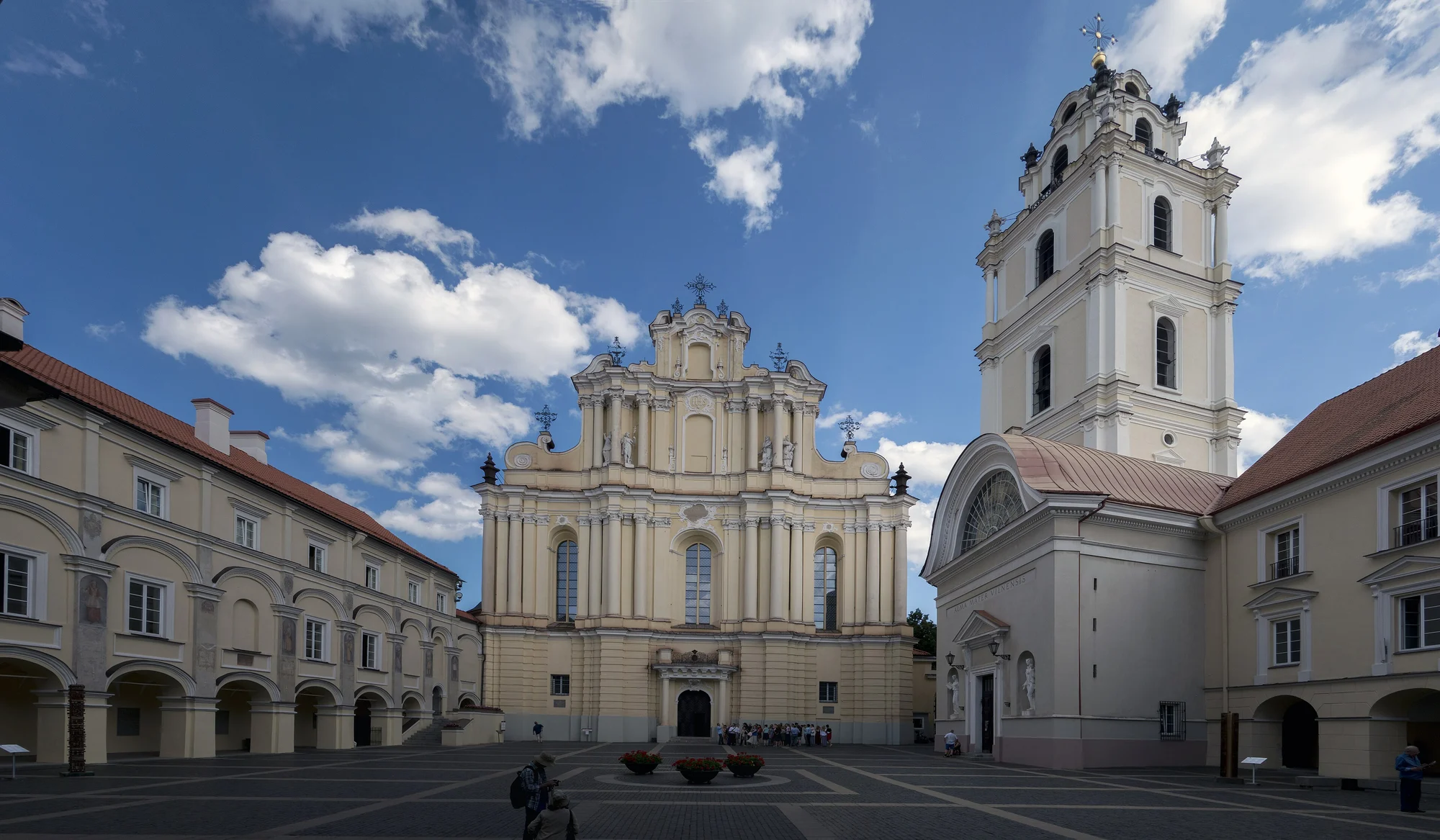
- ✓Vilnius University, founded in 1579, is one of the oldest universities in Central and Eastern Europe — and its old campus is a maze of thirteen courtyards.
- ✓A single inexpensive ticket gets you into the courtyards, St John's Church and the celebrated 'Seasons' fresco by Petras Repšys.
- ✓The Grand (Great) Courtyard is the showpiece, ringed by arcades; St John's Church and its bell tower anchor the ensemble.
- ✓The bell tower is the tallest in the Old Town and a separate, ticketed climb with a stunning view down over Pilies Street.
- ✓Don't miss the Littera bookshop, with its frescoed ceiling — one of the prettiest shops in the city.
A university you can walk into
Vilnius University (Vilniaus universitetas) was founded in 1579, which makes it one of the oldest universities in this part of Europe and the oldest in the Baltic states. Its old campus isn't a single building but a whole walled block of the Old Town that grew organically over four and a half centuries — a labyrinth of interlocking courtyards, arcades, galleries and halls layered in Gothic, Renaissance, Baroque and Classical styles. Around thirteen courtyards of different shapes and sizes connect through archways, and wandering between them is one of the quiet pleasures of the Old Town.
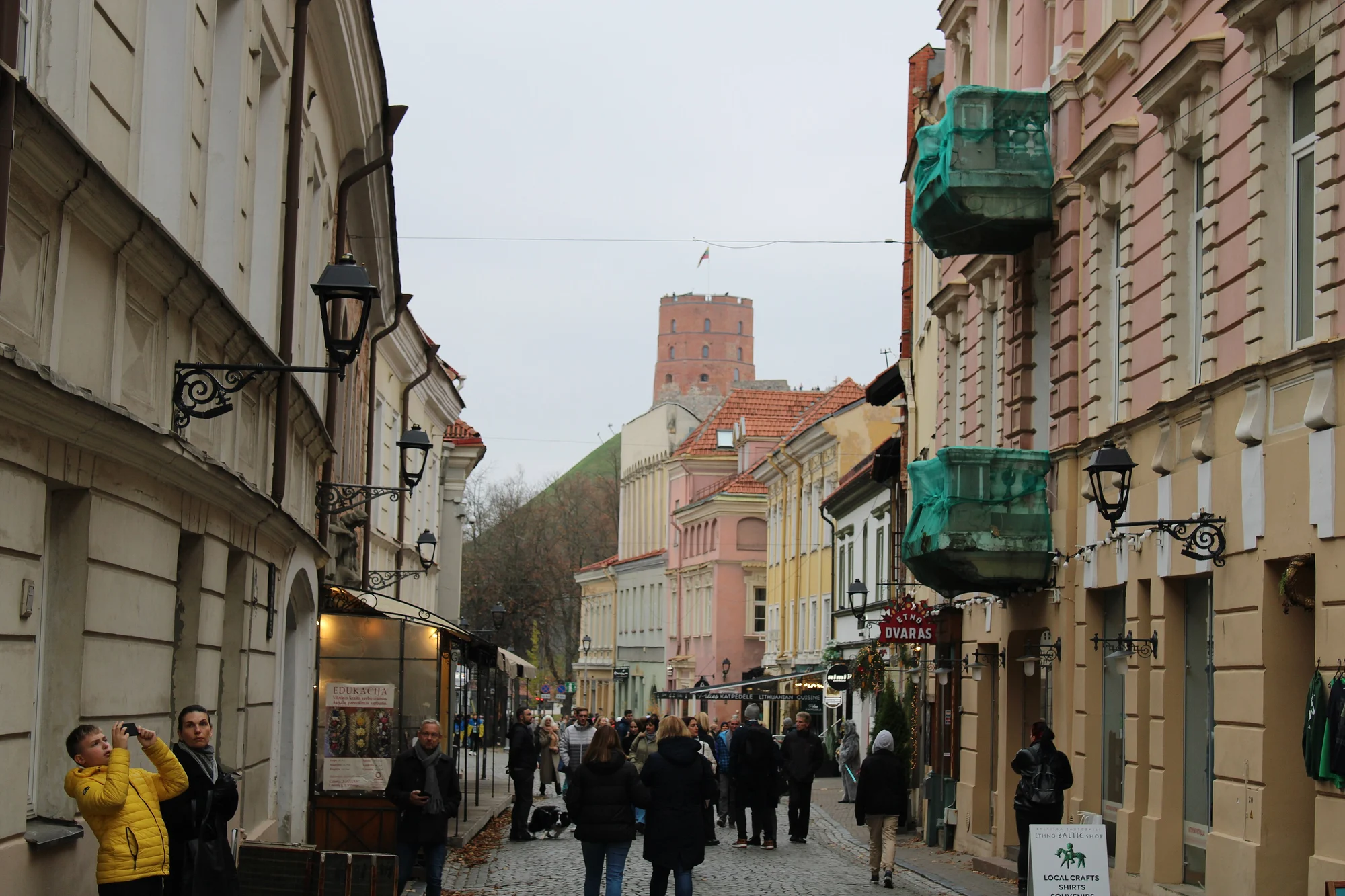
Crucially, this is a working university you're allowed to explore. The ensemble sits right beside Pilies Street, and for a small admission fee you can walk the courtyards as a visitor, stepping out of the tourist bustle into a calm, scholarly world of stone arcades and student life. It rewards an unhurried hour: half the appeal is simply finding your way from one courtyard to the next and looking up.
What to see inside the ensemble
The heart of the campus is the Grand Courtyard (also called the Great Courtyard), a stately arcaded square that serves as the university's pantheon, commemorating its founders, patrons and great scholars. Off it stands the Church of St John the Baptist and St John the Apostle — St John's Church — whose soaring Baroque interior and clustered altars are a highlight in their own right, and whose adjoining bell tower rises higher than anything else in the Old Town.
Two artistic treasures are essential. The first is the fresco cycle 'The Seasons' (Metų laikai) by Petras Repšys, in the Centre of Lithuanian Studies — a dense, mythic depiction of the Lithuanian year and folk tradition that's included with your courtyards ticket. The second is the Littera bookshop, tucked in one of the courtyards, where the vaulted ceiling is covered in playful frescoes; it's open to anyone and is one of the loveliest small interiors in the city. Pause too at the painted facades, sundials and Latin inscriptions scattered through the courtyards.
- Grand (Great) Courtyard — the arcaded showpiece and university pantheon.
- St John's Church — Baroque interior and clustered altars, opening off the campus.
- 'The Seasons' fresco by Petras Repšys — included with the courtyards ticket.
- Littera bookshop — a frescoed-ceiling shop, free to step into.
- Sundials, painted facades and Latin inscriptions throughout the thirteen courtyards.
Map pins
Map data © OpenStreetMap contributors · Tiles © OpenFreeMap
The bell tower and the view
St John's Bell Tower (Šv. Jonų bažnyčios varpinė) is the tallest structure in the Old Town and the single best reason to budget extra time and a second ticket here. The climb — part stairs, part lift on the upper stages — ends at an open gallery that looks straight down onto Pilies Street, the university courtyards and the spread of red roofs and Baroque spires beyond. It's the closest thing to a drone shot you can get on foot in Vilnius, and a strong contender for the best view in the Old Town.
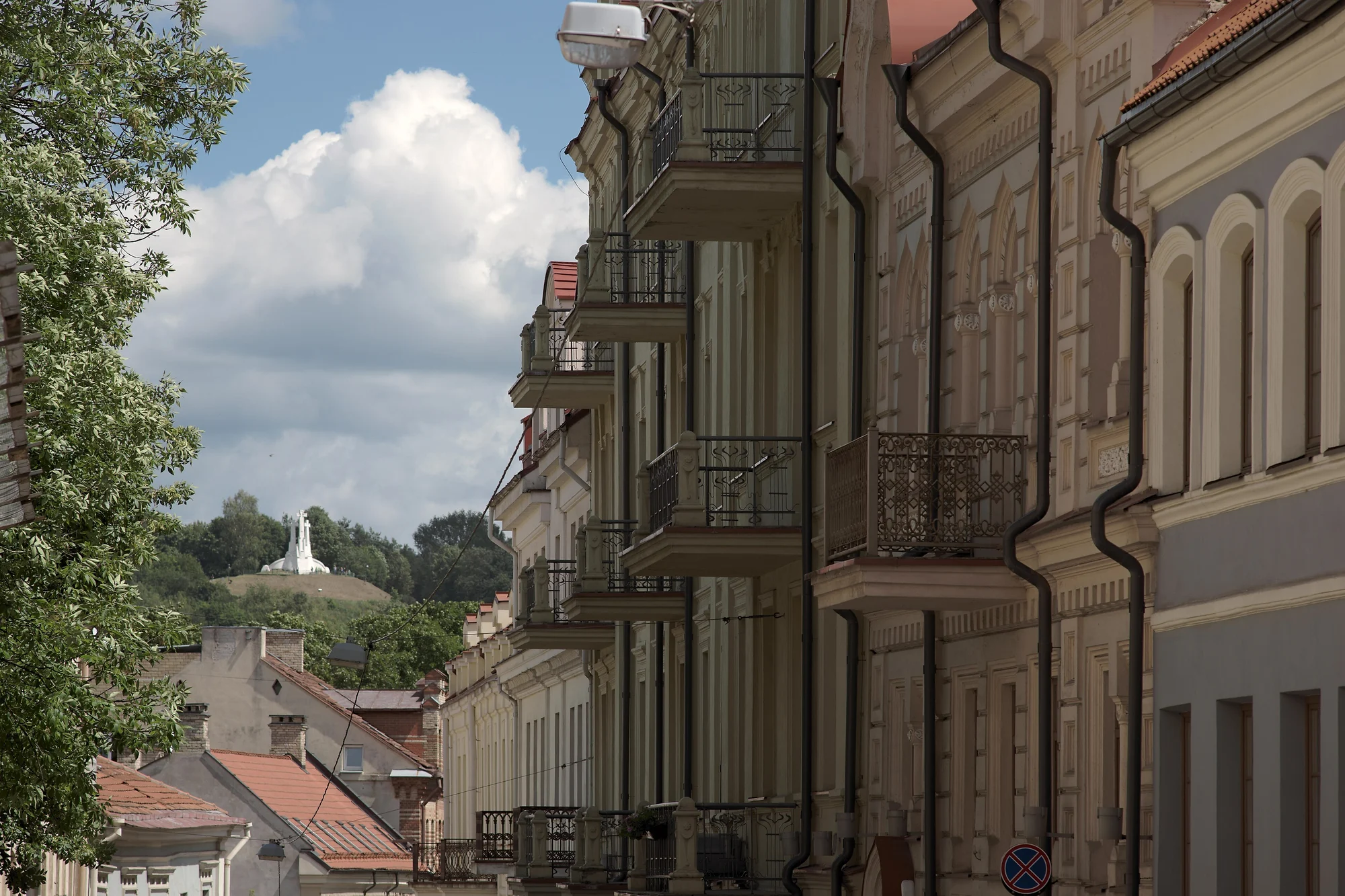
Note that the bell tower is ticketed separately from the courtyards and entered from its own door, with its own opening hours that vary by season — so check times before you climb. If you're weighing it against the city's other lookouts, our best-views guide compares St John's, the Cathedral Bell Tower, the hilltops and the TV Tower side by side.
Visiting practicalities
Visiting is simple and cheap. A modest admission fee (with a reduced rate for students and children) buys access to the courtyards, St John's Church and the Repšys fresco, and the campus is open daily through the day, with tickets sold until shortly before closing — confirm current hours and prices on the university museum's site, as both shift seasonally. Guided tours run if you want the history and the fresco symbolism explained, and groups are asked to register in advance.
Practically, the courtyards pair perfectly with a Pilies Street stroll — they're one step off it — and with St John's Bell Tower for the view. Allow an hour for a relaxed self-guided visit, longer if you climb the tower and linger in St John's. Photographers should come when the light rakes across the arcades; the Grand Courtyard is at its best mid-morning. Combine it all with the cathedral end of the Old Town for a full half-day in the historic core.
- One inexpensive ticket covers the courtyards, St John's Church and the Repšys fresco.
- Open daily; tickets sold until shortly before closing — verify seasonal hours and prices.
- Bell tower is a separate ticket and entrance with its own hours.
- Guided tours available; groups should register ahead.
- Allow about an hour self-guided, more with the tower and church.
Nearly 450 years of history
Vilnius University was established in 1579, when the Jesuits transformed an earlier college into a full university under a charter from the Grand Duke and King Stephen Báthory. For its first two centuries it was a Jesuit institution and one of the leading centres of learning in the whole of the Polish-Lithuanian Commonwealth, drawing scholars from across the region. That long, continuous life is why the campus reads as an anthology of architectural styles — each generation added, rebuilt or redecorated, and almost nothing was ever swept away.
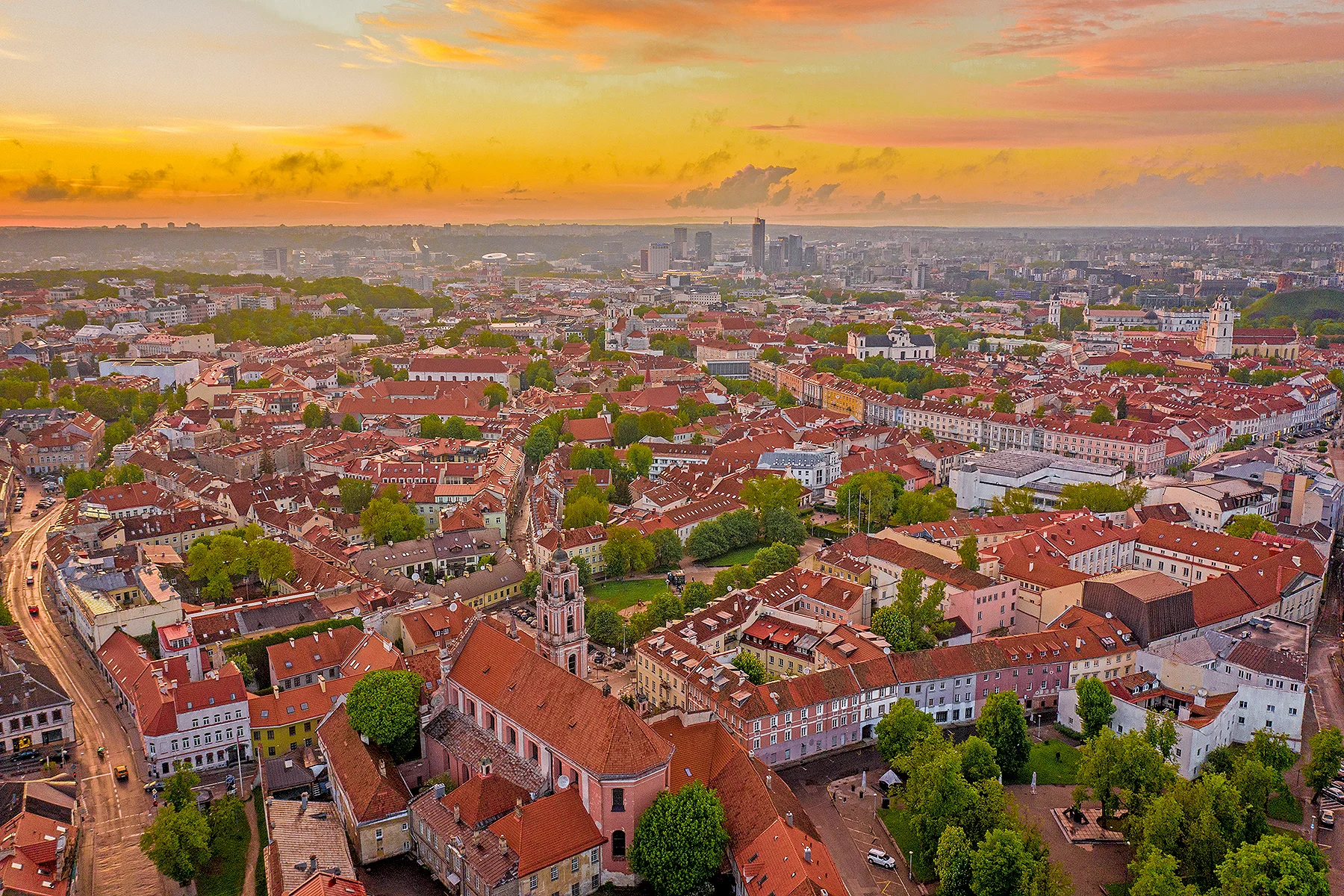
The university's fortunes tracked the country's. It was closed by the Russian authorities in 1832 after the November Uprising and did not reopen as a Lithuanian university until the twentieth century; through the Soviet decades it carried on, and since independence it has flourished again as the country's flagship institution. Walking the courtyards, you're moving through a place that has educated Lithuania's writers, scientists and statesmen for the better part of 450 years — a rare survivor that has kept teaching through every upheaval the city has seen.
All of that history is legible in the fabric: Renaissance arcades around the Grand Courtyard, the Baroque drama of St John's, the painted scholarly emblems, the sundials and dedicatory inscriptions. It's a campus that wears its centuries openly, which is what makes a slow wander so rewarding.
How to explore the courtyards
There's no single 'correct' route, and that's the charm — the joy is getting mildly lost among the thirteen courtyards and their connecting archways. A good loose plan is to enter from the main gate off Universiteto Street, start in the Grand Courtyard to get your bearings, step into St John's Church, then thread through the smaller courtyards in turn, watching for the painted facades, sundials and the Repšys 'Seasons' fresco in the Centre of Lithuanian Studies. Pop into the Littera bookshop along the way to see its frescoed ceiling.
Keep in mind this is a working university with students, lectures and faculty offices, so some buildings and inner courtyards are off-limits or only open on guided tours — stick to the visitor route, keep noise down during term, and don't wander into departments. A guided tour is the best way to unlock the parts you can't reach alone and to have the symbolism of the frescoes and the pantheon explained; tours run on a schedule and groups should book ahead.
Allow at least an hour for a relaxed self-guided visit, and more if you add the bell-tower climb and a proper look inside St John's. Photographers should aim for mid-morning, when sunlight angles cleanly into the Grand Courtyard's arcades; the courtyards are also blissfully calm compared with the crowds just outside on Pilies Street, making this one of the Old Town's best escapes from the foot traffic.
If you can, time your visit for term-time on a weekday, when the campus is alive with students crossing between lectures and the place feels like the working university it is rather than a museum set. Whatever the season, the courtyards are partly open-air, so a dry day makes the wander more pleasant — though St John's Church and the bell tower give you sheltered options if the weather turns. Few sights in Vilnius pack so much history, art and architecture into one quiet, low-cost hour.
- Enter from the main gate; start in the Grand Courtyard, then wander the thirteen courtyards.
- It's a working university — keep to the visitor route and stay quiet during term.
- Guided tours unlock restricted areas and explain the frescoes; book ahead.
- Allow an hour minimum; more with the bell tower and St John's.
- Mid-morning light is best in the Grand Courtyard; a calm escape from Pilies Street.
Related guides
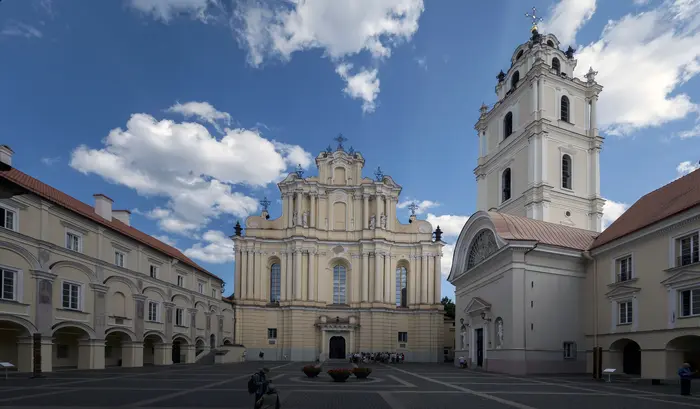
St Johns' Church Bell Tower
The tallest structure in Vilnius Old Town — the 68-metre bell tower of St Johns' Church, part of the Vilnius University Museum — with an elevator, a Foucault pendulum and what many call the best 360-degree panorama in the city.
Read guideVilnius University Library
Founded in 1570, Vilnius University Library is the oldest in Lithuania — a magnificent ensemble of frescoed historic halls, rare books, manuscripts and giant globes within the university's Old Town campus.
Read guide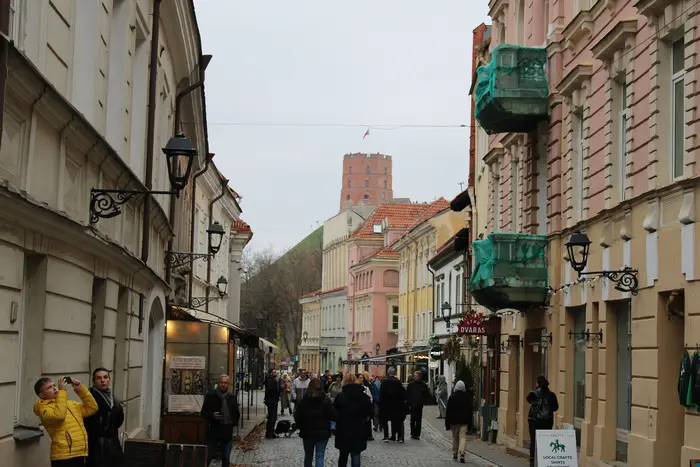
Pilies Street, Vilnius
How to enjoy Pilies Street — Vilnius's oldest and liveliest Old Town artery — without the tourist-trap fatigue: the cafés and courtyards worth your time, the amber and craft stalls, the university edges and the best photo angles.
Read guide