
Pilies Street, Vilnius
How to enjoy Pilies Street — Vilnius's oldest and liveliest Old Town artery — without the tourist-trap fatigue: the cafés and courtyards worth your time, the amber and craft stalls, the university edges and the best photo angles.
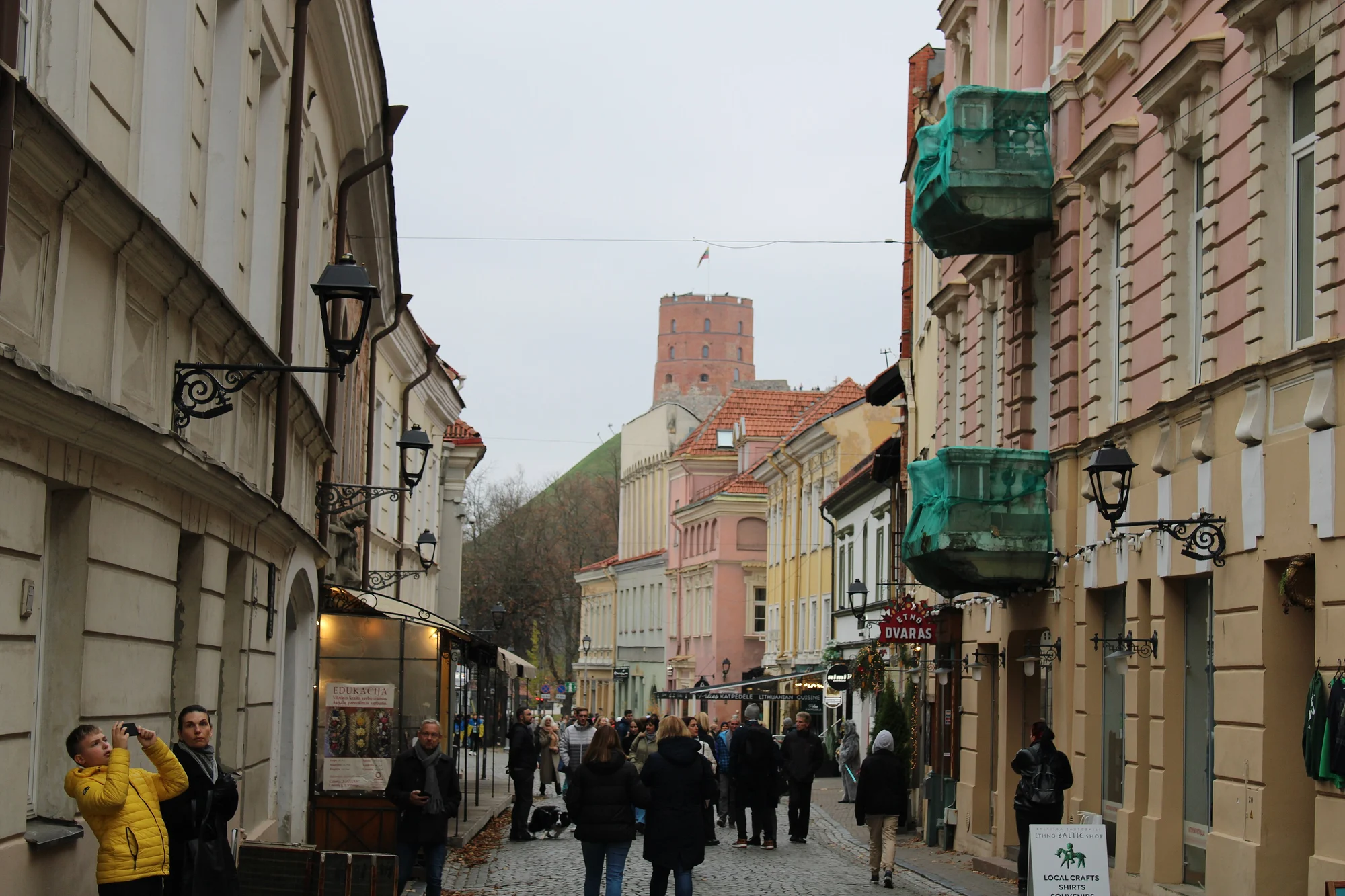
- ✓Pilies gatvė ('Castle Street') is the oldest and busiest street in the Old Town, running from Cathedral Square down towards the Town Hall.
- ✓It's the city's main pedestrian artery — souvenir stalls, amber shops, cafés and street musicians — and the spine most walking tours follow.
- ✓The smart move is to use Pilies as a route, then duck into the quieter side streets and hidden courtyards just off it.
- ✓It borders the Vilnius University ensemble and links straight to Pilies' continuation up to Cathedral Square.
- ✓Come early morning or evening for photos and a calmer feel — midday is the most crowded stretch in the city.
The Old Town's main artery
Pilies Street (Pilies gatvė) is the historic heart of Vilnius's Old Town — the oldest street in the city and the one almost every visitor walks first. It runs as a gently curving pedestrian route between Cathedral Square at the top and the Town Hall area at the bottom, lined with pastel Baroque and Gothic facades, and it has been the main commercial and ceremonial thoroughfare here for centuries. Today it's where the city's foot traffic concentrates: tour groups, street performers, craft stalls and café terraces all share the cobbles.
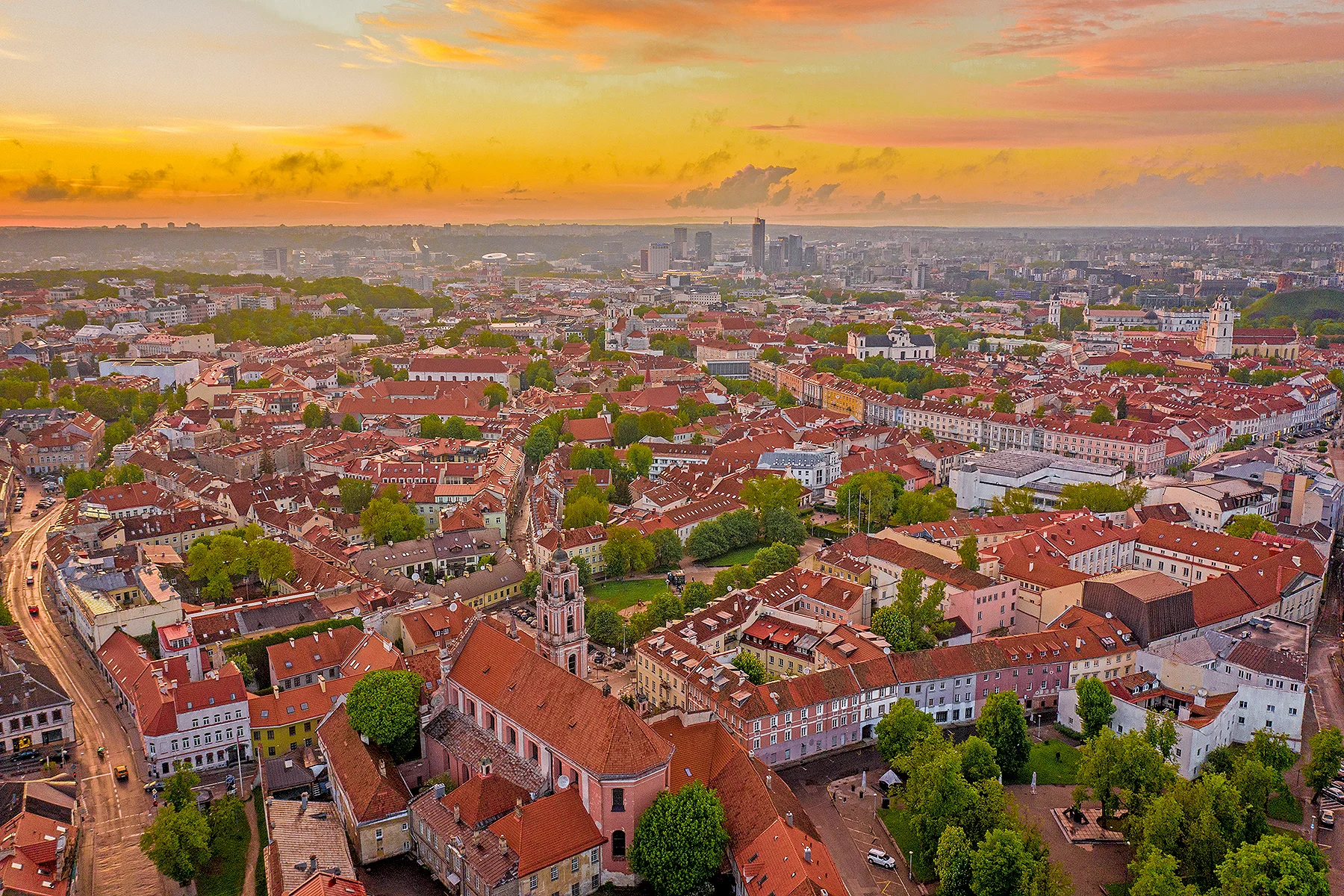
That popularity is both its appeal and its catch. Pilies is genuinely beautiful and unmissable, but the central stretch can feel like a tourist gauntlet at midday — wall-to-wall amber shops and souvenir stands. The trick to enjoying it is to treat the street as a backbone rather than a destination, using it to navigate while stepping off into the quieter lanes and courtyards that branch from it.
Shops, stalls and what to actually buy
Pilies is the city's souvenir spine, and the headline product is amber — Lithuania's 'Baltic gold'. The street is lined with amber jewellery shops and outdoor stalls, quality and price ranging widely, so it pays to compare a few before buying and to look for reputable shops if you want a genuine piece rather than a pressed or treated imitation. Alongside amber you'll find linen, hand-knitted woollens, ceramics, woodcraft and the usual fridge-magnet fare.
Open-air craft stalls cluster especially near the top of the street and around the cathedral end, and they swell into a proper market during the spring Kaziukas Fair. If you're shopping seriously rather than browsing, treat Pilies as the showcase and our wider shopping guide as the map — it covers where to find the best linen, amber, ceramics and food gifts across the city, not just on the busiest street.
- Amber jewellery — compare stalls and shops; seek reputable sellers for genuine pieces.
- Linen, wool, ceramics and woodcraft — classic Lithuanian buys found all along the street.
- Open-air craft stalls cluster near the cathedral end and explode during the Kaziukas Fair.
- Browse here, but cross-check prices off the main drag before committing.
Map pins
Map data © OpenStreetMap contributors · Tiles © OpenFreeMap
Cafés, courtyards and the university edge
The reward for slowing down on Pilies is what's just off it. The street borders the Vilnius University ensemble, and the lanes around it open into hidden courtyards — quiet, photogenic pockets that most of the crowd walks straight past. Literatų Street, branching off near the bottom, is famous for its literary-art wall, and the side streets towards the university hide some of the Old Town's nicest courtyard cafés. For coffee and a sit-down, step one block off the main run rather than queuing at the busiest terraces.
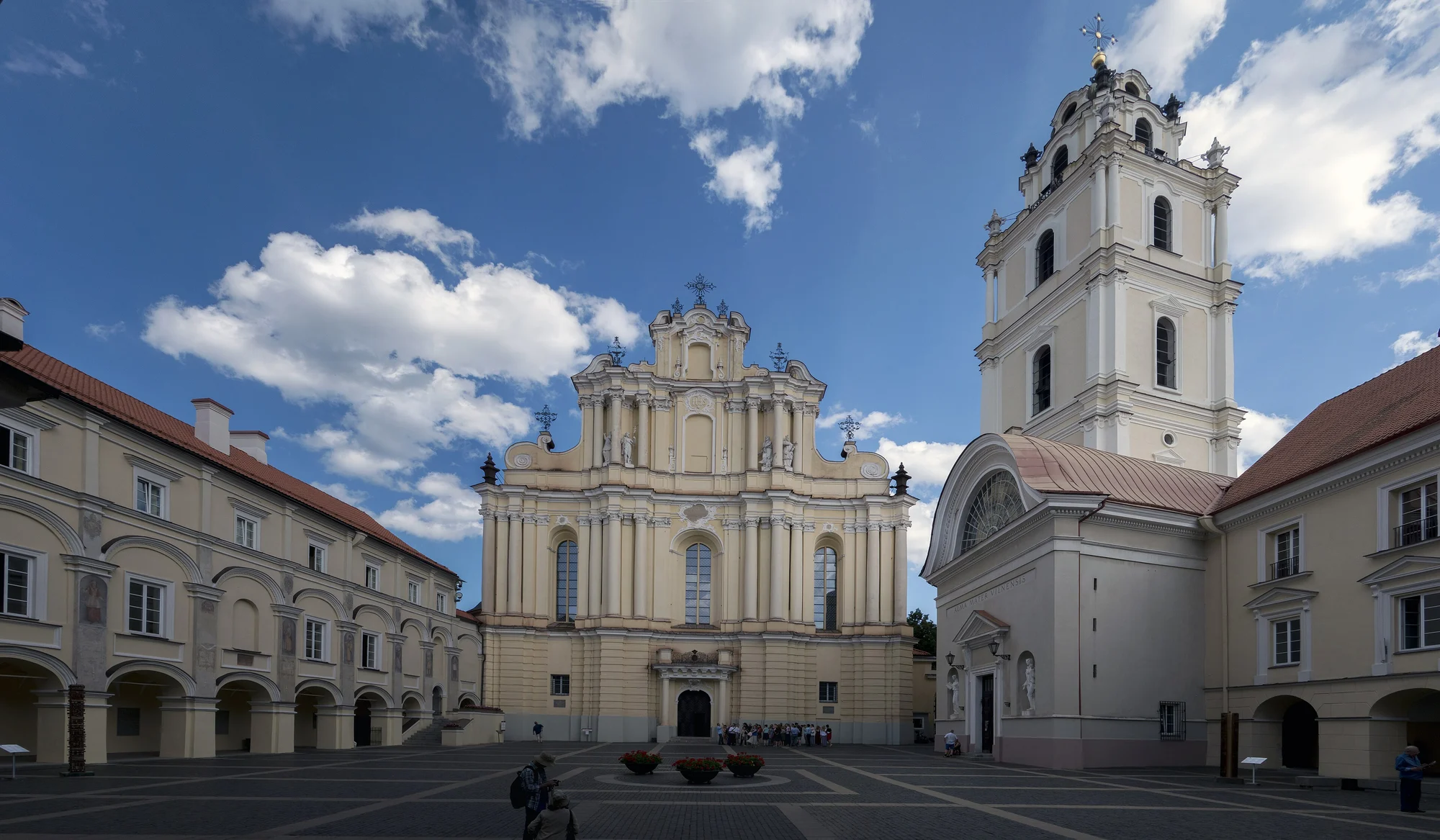
Photographically, Pilies is at its best early in the morning before the stalls open and in the soft light of evening, when the curve of the street and the Baroque facades glow and the crowds thin. Frame the view up towards the cathedral, or catch the side-lane archways and the slivers of courtyard visible through open gates. From the top of the street you can carry straight on to Cathedral Square and the Bell Tower; from the bottom you're moments from the Town Hall and the route down to the Gates of Dawn, so wherever you start, Pilies keeps you connected to the rest of the Old Town.
A street with a thousand years of history
Pilies Street is not just old — it's the original. The name means 'Castle Street', and it traces the medieval road that ran from the castle complex at the foot of Castle Hill down into the heart of the trading town. For centuries this was the route along which grand processions, royal entries and everyday commerce flowed, and the buildings lining it preserve that history in their facades: Gothic doorways, Renaissance courtyards and Baroque frontages stacked side by side, many of them now housing shops, cafés and small museums.
Look up as you walk and you'll notice the street has no single style — it's a living timeline. Several houses carry plaques marking the writers, scholars and revolutionaries who lived along it, and the lower end opens towards the Town Hall, the old civic and market heart of Vilnius. Understanding Pilies as the city's founding artery, rather than just a souvenir run, changes how you experience it: every curve and courtyard has been in use for the better part of a millennium.
Beating the crowds and when to go
Pilies Street's one drawback is its own popularity. In high season and around midday, the central stretch fills with tour groups and the souvenir stalls are at their busiest, which can make the street feel more like a market funnel than a historic lane. The fix is timing and movement: walk it early in the morning, when the cobbles are nearly empty and the light is soft, or in the evening once the day-trippers thin out and the café terraces take over.
Use the street as a corridor, not a stopping point. The crowds rarely follow you more than a few steps off Pilies, so the moment it feels too busy, turn into a side lane — towards the university courtyards, down Literatų Street, or into one of the hidden inner courtyards — and you'll find the quiet, photogenic Vilnius people come for. Save your café stop and your serious shopping for those calmer pockets rather than the busiest terraces on the main drag.
Pilies is also the natural connective tissue of any Old Town day: it links Cathedral Square and the Bell Tower at the top to the Town Hall and the route towards the Gates of Dawn at the bottom, so almost every walking route through the centre uses some of it. Treat it as your spine and branch off as you go.
One more seasonal note: the street is at its most magical in winter, when Christmas lights string across the cobbles and the smell of mulled wine drifts from the stalls, and again in early March during the Kaziukas Fair, when craft sellers from all over the country fill it shoulder to shoulder. If your visit lands on either, the crowds are worth tolerating for the atmosphere — just come early in the day to enjoy it before the crush builds.
- Walk it early morning or evening to dodge the midday crowds.
- Step one lane off Pilies for quiet courtyards, better cafés and fairer prices.
- Use the street as a corridor linking Cathedral Square to the Town Hall.
- High summer is busiest; shoulder seasons are noticeably calmer.
Related guides
Vilnius Old Town
A guide to Vilnius Old Town: the UNESCO-listed heart of the city, its gates, churches, courtyards, squares, cafés, Jewish history and best photo stops.
Read guide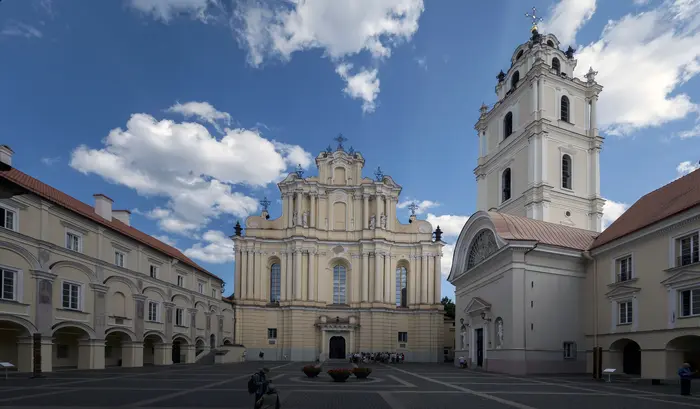
Vilnius University Courtyards
A guide to the Vilnius University ensemble: thirteen interlocking courtyards, St John's Church and its bell tower, Petras Repšys's frescoes and the ornate Littera bookshop — nearly 450 years of architecture in one walled block of the Old Town.
Read guide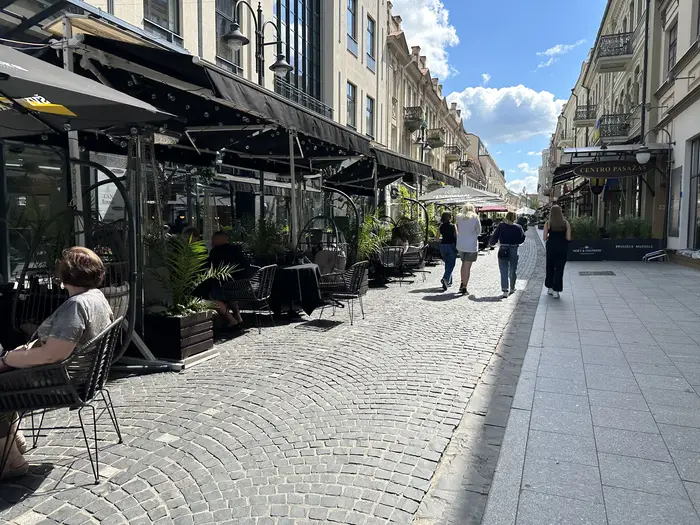
Best Cafés in Vilnius
The best cafés in Vilnius — specialty-coffee roasters, classic all-day cafés, work-friendly spots, design-forward rooms, rainy-day breaks and café routes by neighbourhood.
Read guide