
Landmarks & Architecture in Vilnius
Signature castles, bastions, university courtyards and modernist icons that map the architectural story of Vilnius — the landmarks that define the city's skyline and squares.
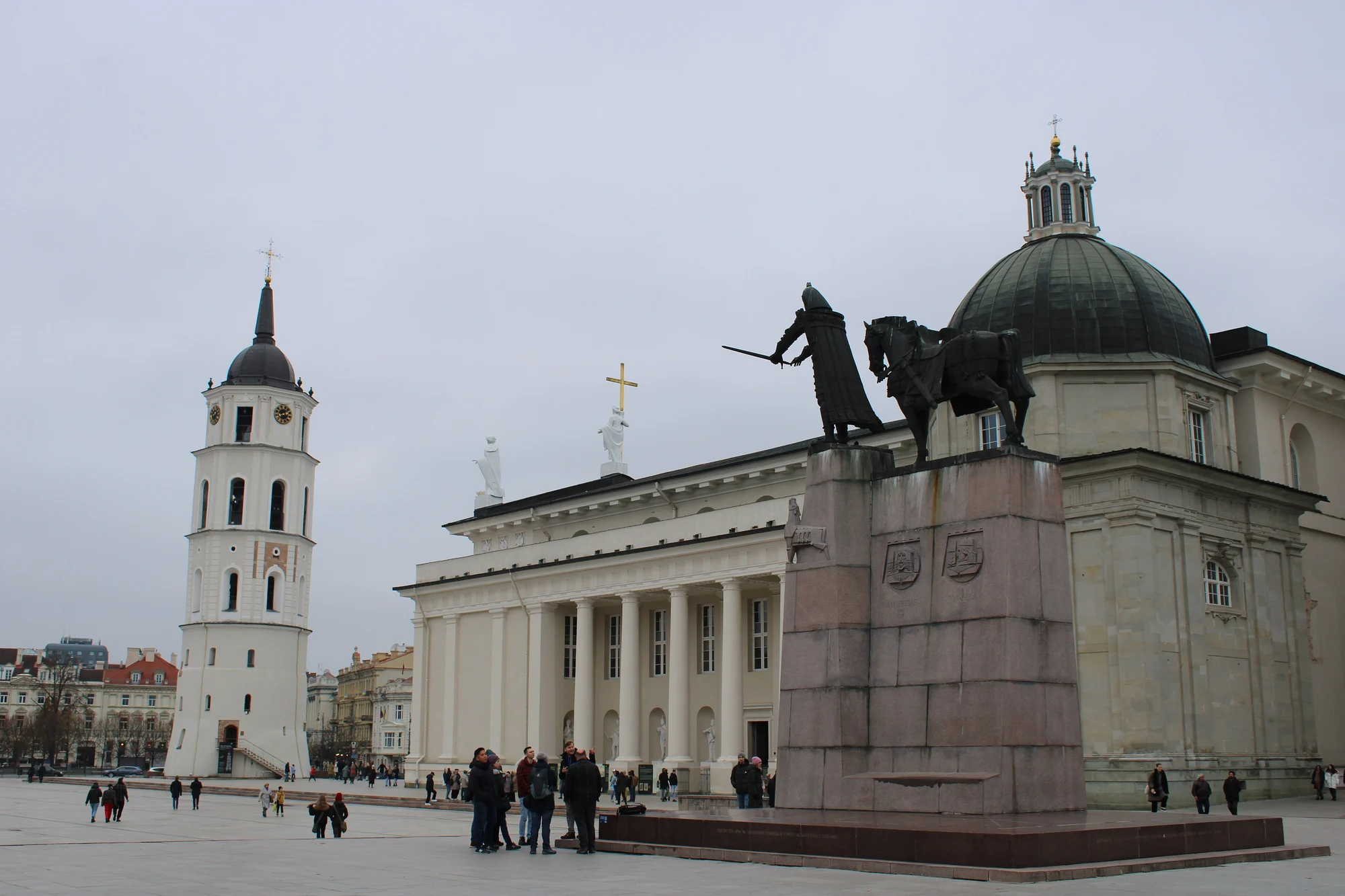
- ✓Gediminas Tower and the Palace of the Grand Dukes — the medieval power centre
- ✓Cathedral Square, the Gates of Dawn and Town Hall Square as civic set-pieces
- ✓Europe's largest Baroque old town, plus Gothic St Anne's and university courtyards
- ✓Bridges, monuments and modern landmarks like the TV Tower beyond the centre
Reading the city through its buildings
Vilnius is a UNESCO World Heritage city precisely because its architecture survived where so many others did not — one of the largest and best-preserved old towns in Eastern Europe, with Gothic, Renaissance, Baroque, Classical and modern layers piled into a walkable core. To explore the landmarks here is to read Lithuanian history in stone: the rise of a grand duchy, the Baroque flourishing under Catholic patronage, the squares where independence was declared, and the towers that still define the skyline. This page maps the built heritage; pair it with the churches taxonomy, since many of the headline landmarks are sacred buildings too.
The good news for visitors is geography. The most important landmarks cluster around Cathedral Square and Castle Hill, so a single loop on foot links the medieval power centre, the ceremonial squares and the university in an easy morning. From there the architecture radiates outward — to Užupis, to the riverbanks and to the modernist statements beyond the old core.
Part of what makes Vilnius so legible is that nothing was flattened and rebuilt from scratch. Where many Eastern European capitals lost their historic cores to war and post-war redevelopment, Vilnius kept its medieval street plan and the bulk of its old buildings, so the layers sit side by side rather than erasing one another. The result is a city you can read like a timeline simply by walking it — Gothic gable beside Baroque facade beside Classical portico — without ever needing a museum to explain the sequence.
The medieval power centre
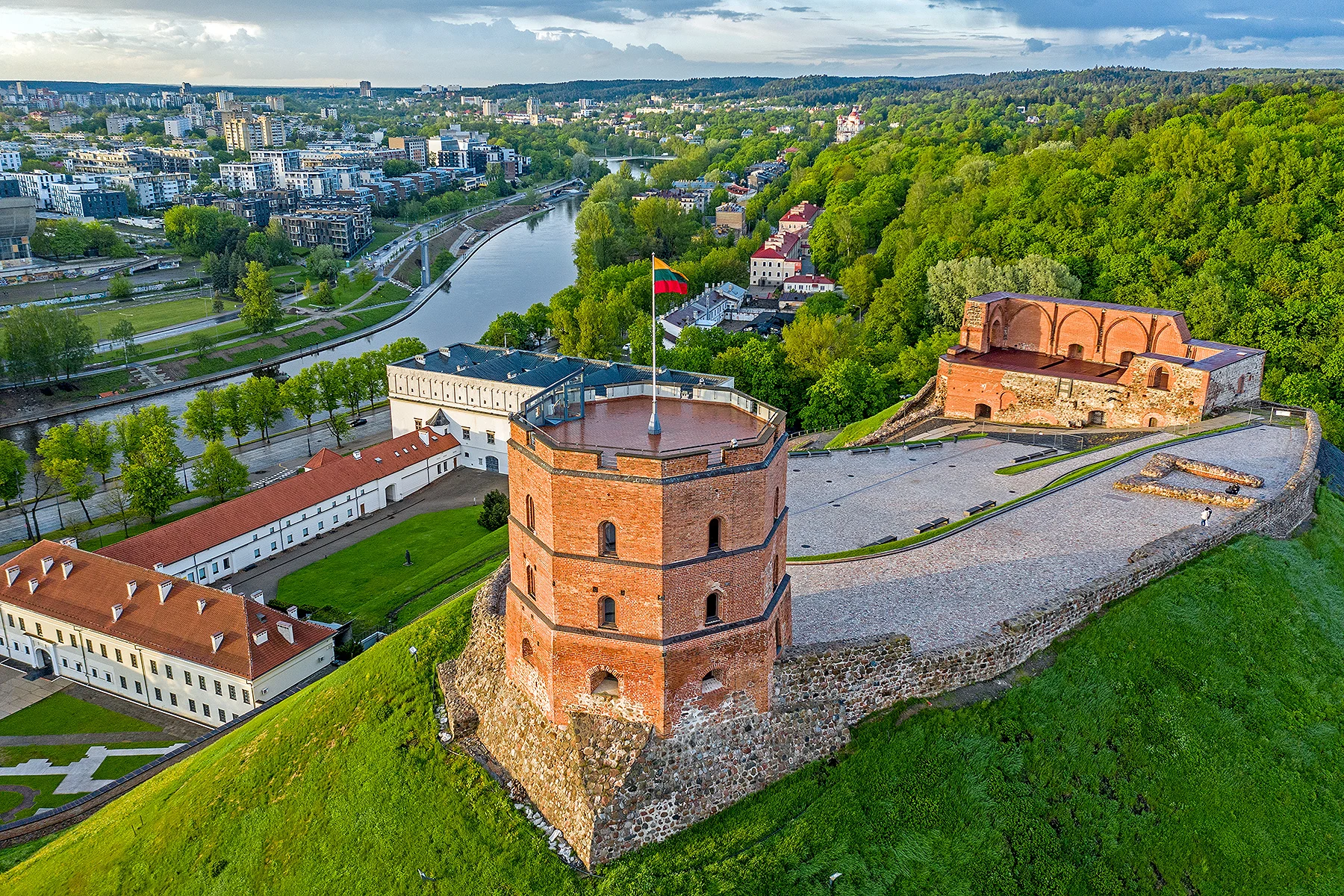
Everything begins on Castle Hill. Gediminas Tower, the surviving fragment of the Upper Castle, crowns the rise above the river junction and gives the city its emblem and its best central view. You can climb the path or take the short funicular from the Old Arsenal courtyard; the tower and funicular keep extended summer hours and shorter winter ones, so check the day's times before you go (the National Museum of Lithuania, which runs the site, publishes them). At the foot of the hill, the Palace of the Grand Dukes of Lithuania — reconstructed on its original foundations — reopens the story of the Renaissance court with restored interiors and archaeology.
Cathedral Square ties the ensemble together: the white neoclassical cathedral, its free-standing Bell Tower and the famous Stebuklas (Miracle) tile mark the symbolic centre of the country. From here the Old Town's Baroque churches, the defensive Bastion and the Bekešo and Three Crosses hills are all in sight or a short walk away.
- Gediminas Tower — hilltop tower, funicular and the classic city panorama
- Palace of the Grand Dukes — the reconstructed Renaissance court of the grand duchy
- Cathedral Square & Bell Tower — the neoclassical civic heart and Miracle tile
- Bastion of the Defensive Wall — the surviving artillery bastion and its tunnels
The reconstructed seat of the grand duchy.
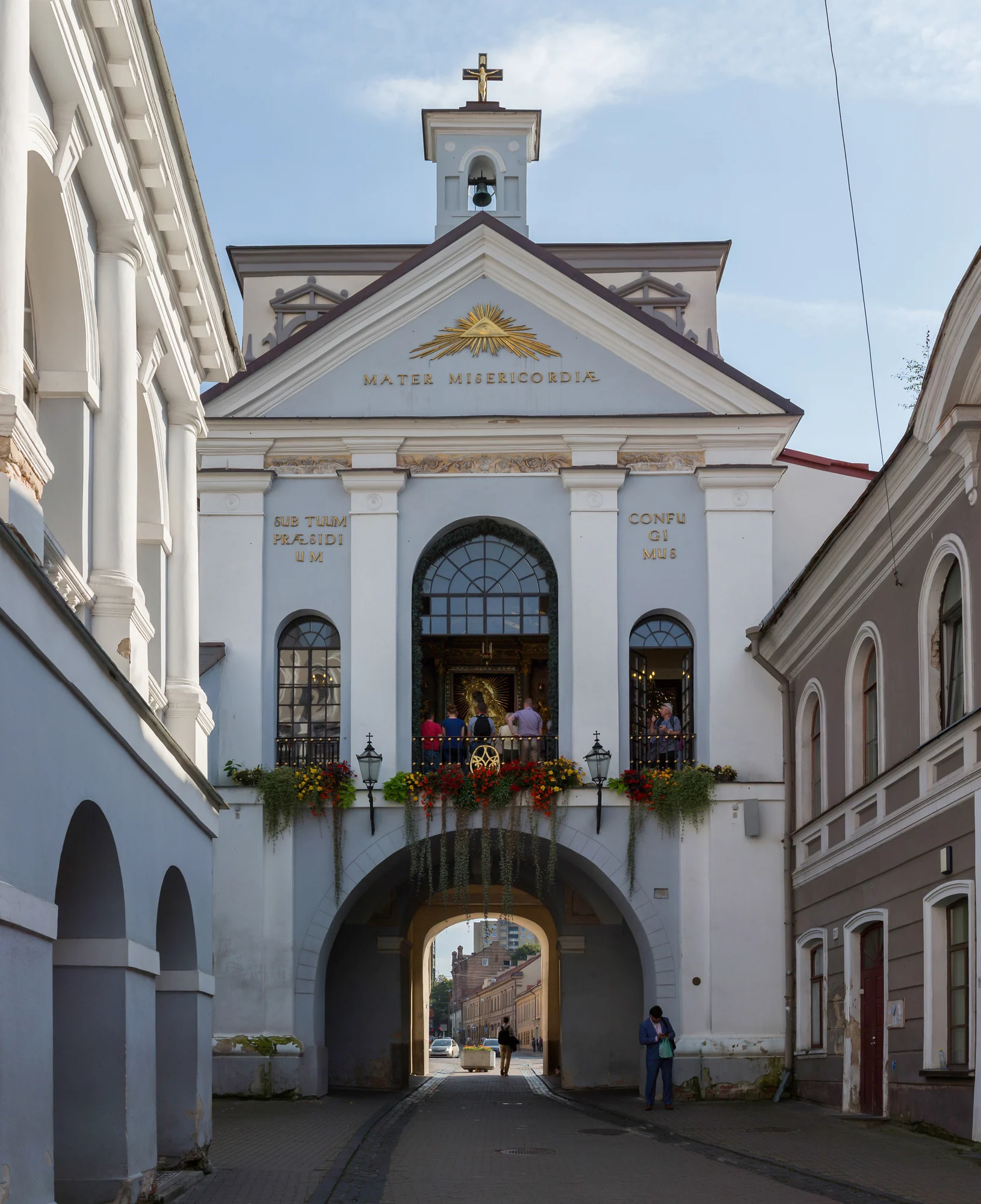
Gates of DawnThe last surviving city gate of the old defensive wall.
Map pins
Map data © OpenStreetMap contributors · Tiles © OpenFreeMap
Squares, the university and the Baroque town
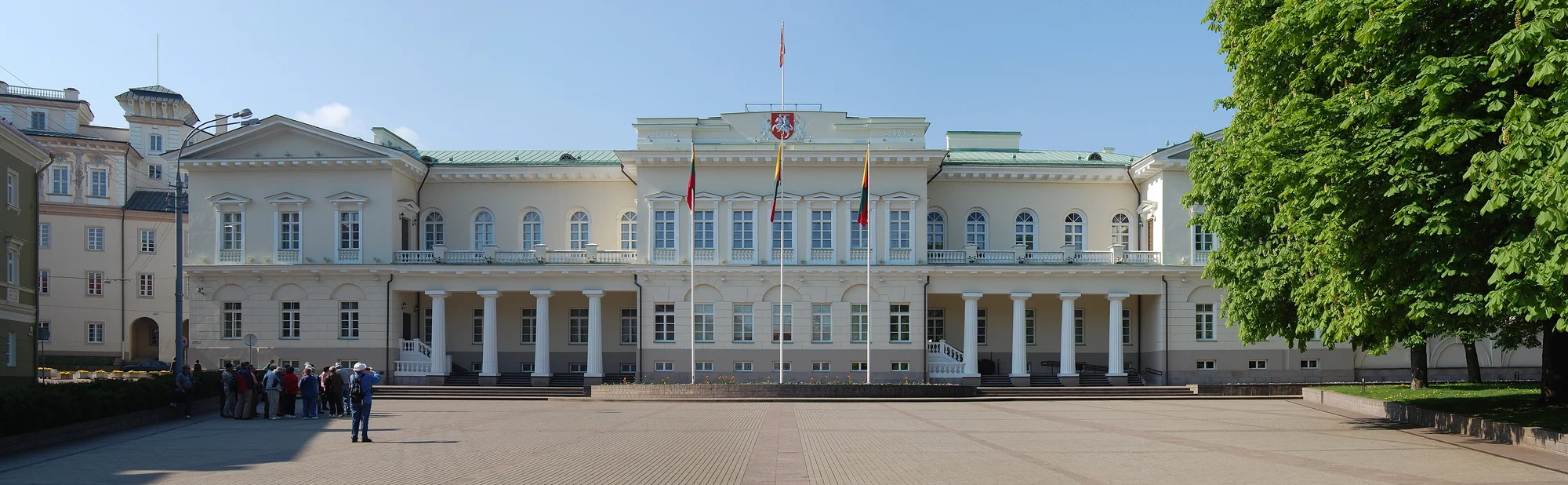
Vilnius is a city of squares. Town Hall Square, Cathedral Square, Simonas Daukantas Square outside the Presidential Palace and Independence Square at the parliament each frame a different chapter of civic life. Between them runs Pilies Street and the great set-piece of the Vilnius University courtyards — nearly five centuries of architecture wrapped around a chain of arcaded yards, with St John's Church and its soaring Baroque bell tower at the centre.
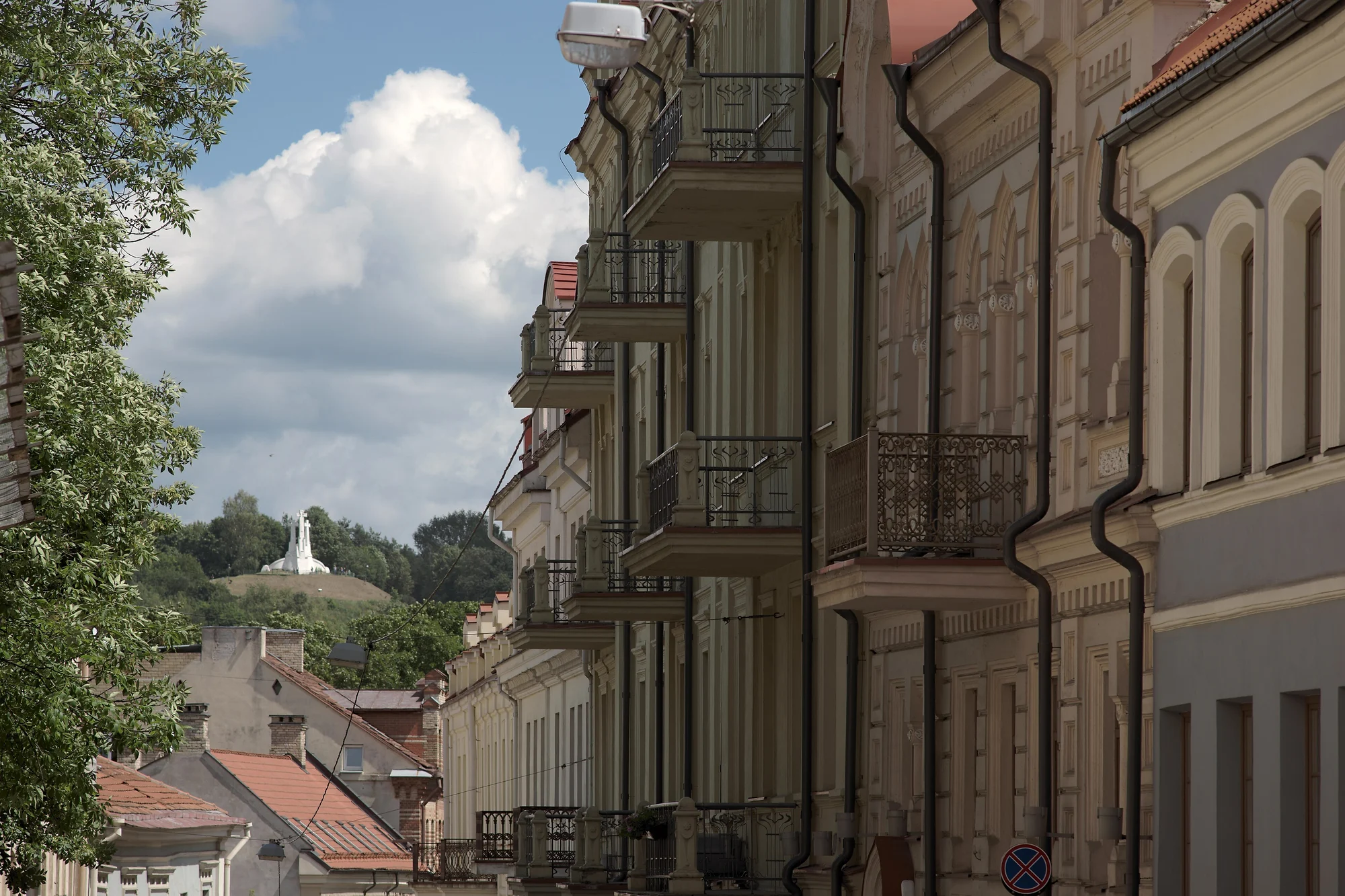
Architecturally, the Old Town is most famous for its Baroque, but the showstopper is Gothic: the red-brick Church of St Anne, so admired that Napoleon supposedly wished he could carry it back to Paris in his hand, stands beside the Bernardine ensemble as the city's most photographed building. Wander a few streets in any direction and the styles keep shifting — Renaissance palaces, Classical facades and the quiet courtyards that give Vilnius its intimate scale.
Palaces, memory and the institutions of state
Between the churches and the squares, Vilnius is studded with palaces and the buildings of state that trace its political story. The Presidential Palace and its calm grounds, the neoclassical Vileišis Palace in Antakalnis, the Hilary Raduszkiewicz and Radvila palaces, and the Signatories' House — where the 1918 Act of Independence was signed — each fix a moment of national life into stone. The Office of the President and the parliament at Independence Square keep that thread running into the present.
Memory is written into the cityscape too, and not always comfortably. The former KGB headquarters, now the Museum of Occupations and Freedom Fights, and the LRT January 13th memorial mark the twentieth century's darkest chapters, while Lukiškės Prison 2.0 — a decommissioned jail turned cultural venue — is one of the city's most striking examples of a hard place given a second life. Monuments to Gediminas, Mickiewicz and Zemach Shabad scatter the squares with reminders that Vilnius was always a plural, multi-ethnic capital.
Visiting these sites rounds out the postcard. The Baroque skyline is glorious, but the palaces, memorials and institutions are where you understand what the architecture was for — power, faith, independence and survival — and how each generation rebuilt the city in its own image.
- Presidential Palace & Simonas Daukantas Square — the calm civic set-piece
- Signatories' House — where the 1918 Act of Independence was signed
- Lukiškės Prison 2.0 — a decommissioned jail reborn as a cultural venue
Bridges, monuments and the modern city
Beyond the medieval core, the architecture turns to bridges, monuments and statements of the modern state. The Neris is crossed by the elegant King Mindaugas, White and Žvėrynas bridges, while monuments to Grand Duke Gediminas, Adam Mickiewicz and the doctor Zemach Shabad punctuate the squares with the city's plural memory. Užupis adds its own playful landmarks — the Angel, the swing under the bridge — that fit the district's contrarian character.
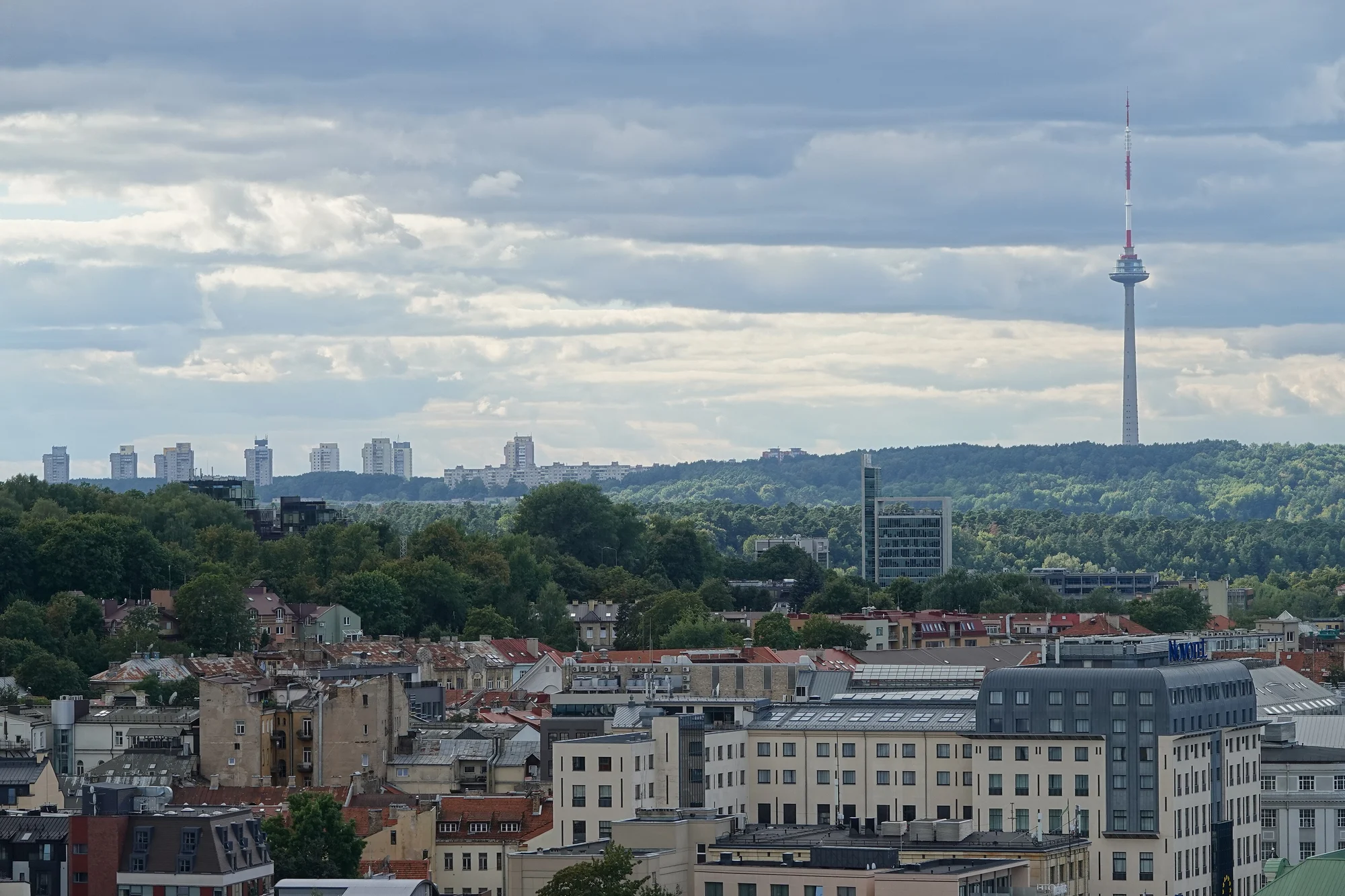
For a different register entirely, the Vilnius TV Tower rises 326 metres on the western edge of the city, both the tallest structure in Lithuania and a solemn site of the 1991 independence struggle. Together these pieces complete the picture: Vilnius's architecture is not only the Baroque postcard but a continuous, living record from grand-ducal stone to twentieth-century concrete. Always confirm opening hours and ticketing for the climbable landmarks, as they shift with the season.
Related guides
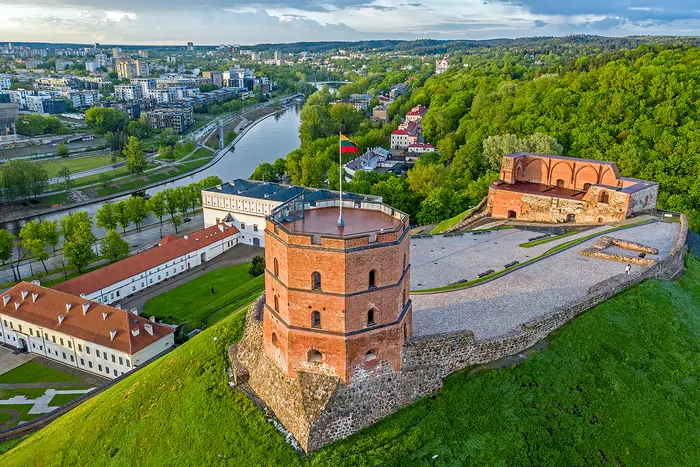
Gediminas Castle Tower
The red-brick tower on Castle Hill is the symbol of Vilnius and the easiest panoramic view in the city — reached by a steep cobbled path or a one-minute funicular, with a small history museum at the top.
Read guide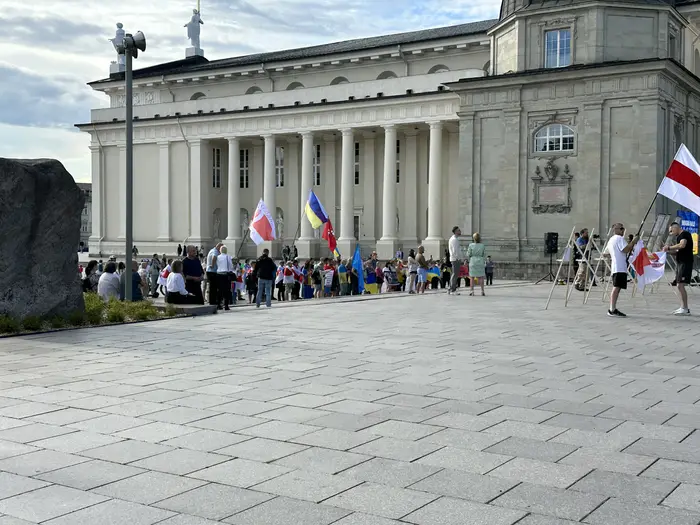
Cathedral Square (Katedros aikštė) — the heart of Vilnius
Cathedral Square is the historic heart of Vilnius — a vast plaza framed by the Cathedral and its free-standing Bell Tower, and the city's stage for festivals, parades and the Christmas market.
Read guide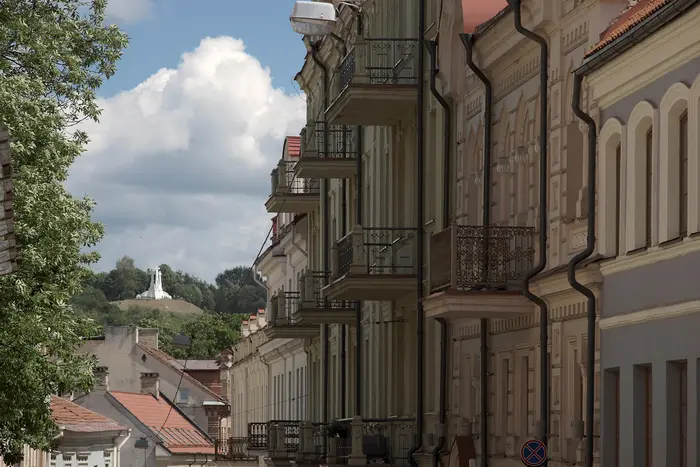
The Best Viewpoints in Vilnius
Compare the best viewpoints in Vilnius — Gediminas Tower, Three Crosses Hill, church bell towers, the TV Tower and rooftop bars — ranked by effort, payoff and the time of day to go.
Read guide