
Vilnius History Itinerary
A history route through Vilnius — from Gediminas' castle and the Cathedral to the Palace of the Grand Dukes, the difficult 20th century at the former KGB headquarters, and the sites of hard-won independence.
- ✓Vilnius wears its history in layers — medieval Grand Duchy, Polish-Lithuanian Commonwealth, Russian Empire, war, Soviet occupation and 1990s independence — all within a walkable Old Town.
- ✓First mentioned in 1323, the city became the political heart of one of medieval Europe's largest states; the UNESCO Old Town is the biggest Baroque ensemble in Central and Eastern Europe.
- ✓A natural two-day route runs from Castle Hill and the Cathedral through the Palace of the Grand Dukes, then on to the 20th-century and independence sites.
- ✓The former KGB headquarters — now the Museum of Occupations and Freedom Fights — tells the hardest chapter with its preserved prison cells; visit it with care.
- ✓End at the symbols of independence: the Žalgiris-era squares, the January 13th memorial sites and the 'miracle' tile of the 1989 Baltic Way.
Reading the city's layers
Few cities pack as much history into as small a space as Vilnius. First mentioned in writing in 1323, in a letter by Grand Duke Gediminas inviting merchants and craftsmen to his new capital, it grew into the political heart of the Grand Duchy of Lithuania — at its height one of the largest states in medieval Europe, stretching from the Baltic toward the Black Sea. Over the centuries it became a layered Central European city: Lithuanian, Polish, Jewish, Russian and Belarusian threads all knotted into the same cobbled lanes, under the Polish-Lithuanian Commonwealth, then the Russian Empire, then the upheavals of the 20th century.
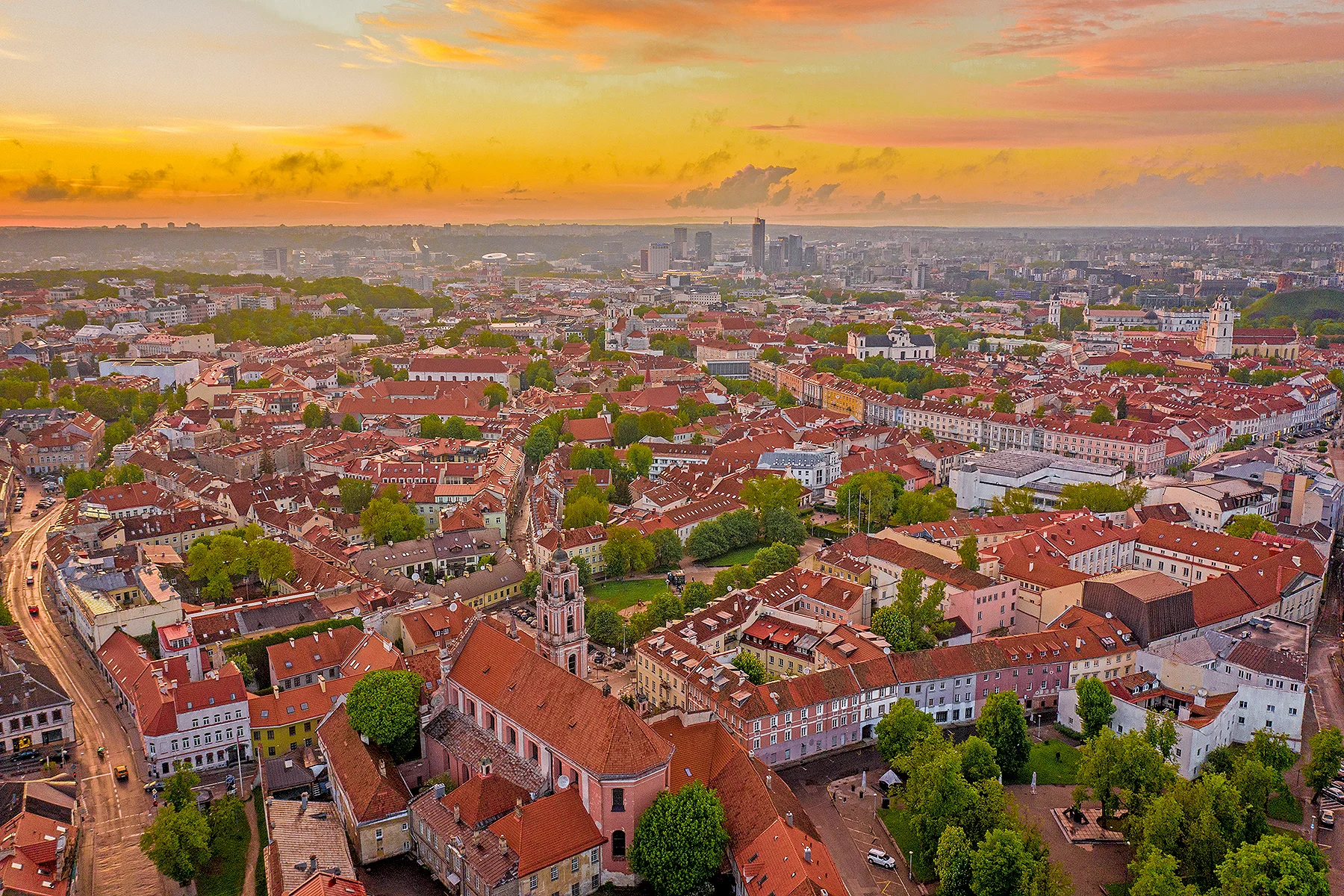
That density is the gift for a history-minded visitor. The UNESCO-listed Old Town — inscribed in 1994, around 352 hectares, and the largest Baroque ensemble in Central and Eastern Europe — preserves the medieval street plan layered with Gothic, Renaissance, Baroque and Classicist buildings. You can stand on Castle Hill where the city began, walk down to the Cathedral and the rediscovered palace of the grand dukes, and within the same afternoon reach the 20th-century sites of occupation and resistance. The whole sweep of the story is walkable.
This itinerary runs roughly chronologically over two days, with an optional third for the heavier and more reflective sites. Day one covers the medieval and royal city — castle, cathedral, palace, university; day two takes on the harder modern history — the occupations, the resistance, and the hard-won independence celebrated to this day. We've tried to write about the difficult chapters with care rather than spectacle, because understanding the layers is part of what makes a visit here so rewarding.
A practical note before you start: many of these sites are museums with their own hours, ticketing and, in some cases, guided-tour requirements, and several keep reduced winter schedules. Prices and opening times change, so confirm them against official sources before you go. The walking, though, is gentle and short — this is a history trip you do almost entirely on foot.
Day 1 — the medieval and royal city
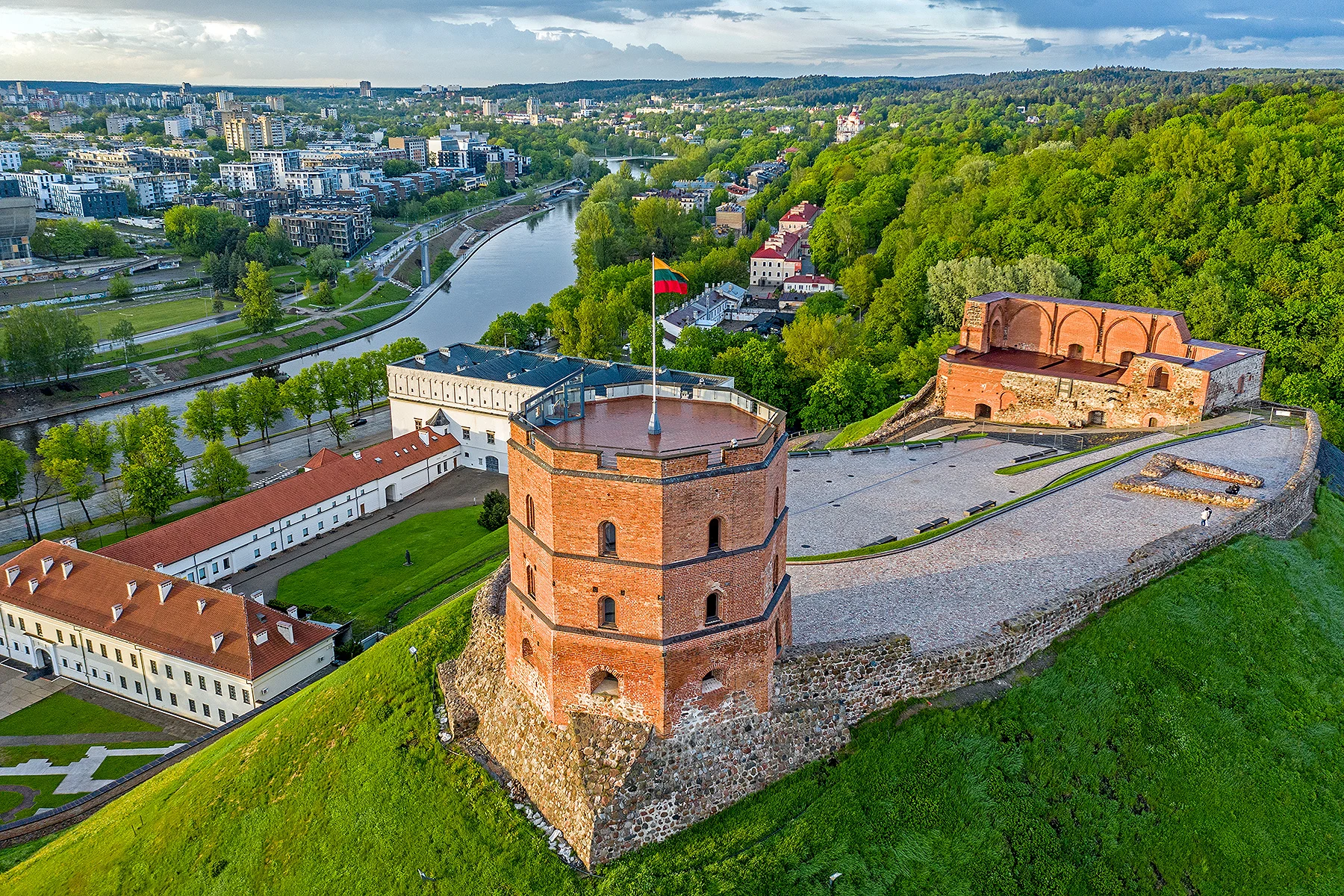
Begin where Vilnius began: Castle Hill and Gediminas' Tower. The red-brick tower is all that survives above ground of the Upper Castle, and the climb (or the funicular) up the hill gives you both the founding story and the orientation view — the Cathedral below, the river looping past, the spires of the Old Town spread out. Legend has it Gediminas dreamed of an iron wolf howling on this hill and was told to build a great city here; the tower museum tells the castle's story and displays models of how the complex once looked.
Down at the foot of the hill sits Cathedral Square, the ceremonial heart of the city. The white neoclassical Cathedral, rebuilt many times on the site of a pagan temple and an earlier Gothic church, holds the royal mausoleum and the ornate Chapel of St Casimir, patron saint of Lithuania; its crypts (visitable on a guided basis) reach down through layers of the city's past. The free-standing belfry beside it began as a tower of the lower castle's defences.
Right behind the Cathedral stands the Palace of the Grand Dukes of Lithuania — the great set-piece of the day. The original Renaissance palace, a centre of European politics in the 16th century, was demolished under Russian rule; the building you see was reconstructed and opened in 2018 on the original foundations, and its museum displays the excavated remains alongside restored state rooms, tapestries and treasures. It is the best single place to grasp the wealth and reach of the medieval and Renaissance Grand Duchy.
Spend the rest of the day in the surrounding Old Town, threading the medieval and Baroque city together: Pilies Street, the spine of the historic core; the nested courtyards of Vilnius University, one of the oldest universities in this part of Europe (founded 1579); and the great churches that mark each era — the red-brick Gothic of St Anne's, the exuberant Baroque of St Peter and St Paul, and the pilgrimage shrine at the Gates of Dawn, the last surviving gate of the city's defensive wall. It's a full day, but a gentle one, and all within a short walk.
- Castle Hill & Gediminas' Tower — where the city was founded, with the orientation view.
- Cathedral Square — the Cathedral, the royal mausoleum, the belfry and the crypts.
- Palace of the Grand Dukes — reconstructed on its foundations; the Grand Duchy's story.
- Old Town threads: Vilnius University, St Anne's, St Peter & St Paul, the Gates of Dawn.
The founding site of the city and its best orientation view.
Vilnius CathedralThe Cathedral, the royal mausoleum, St Casimir's chapel and the crypts.
Palace of the Grand DukesThe reconstructed palace-museum telling the Grand Duchy's story.
Map pins
Map data © OpenStreetMap contributors · Tiles © OpenFreeMap
Day 2 — occupation, resistance and independence
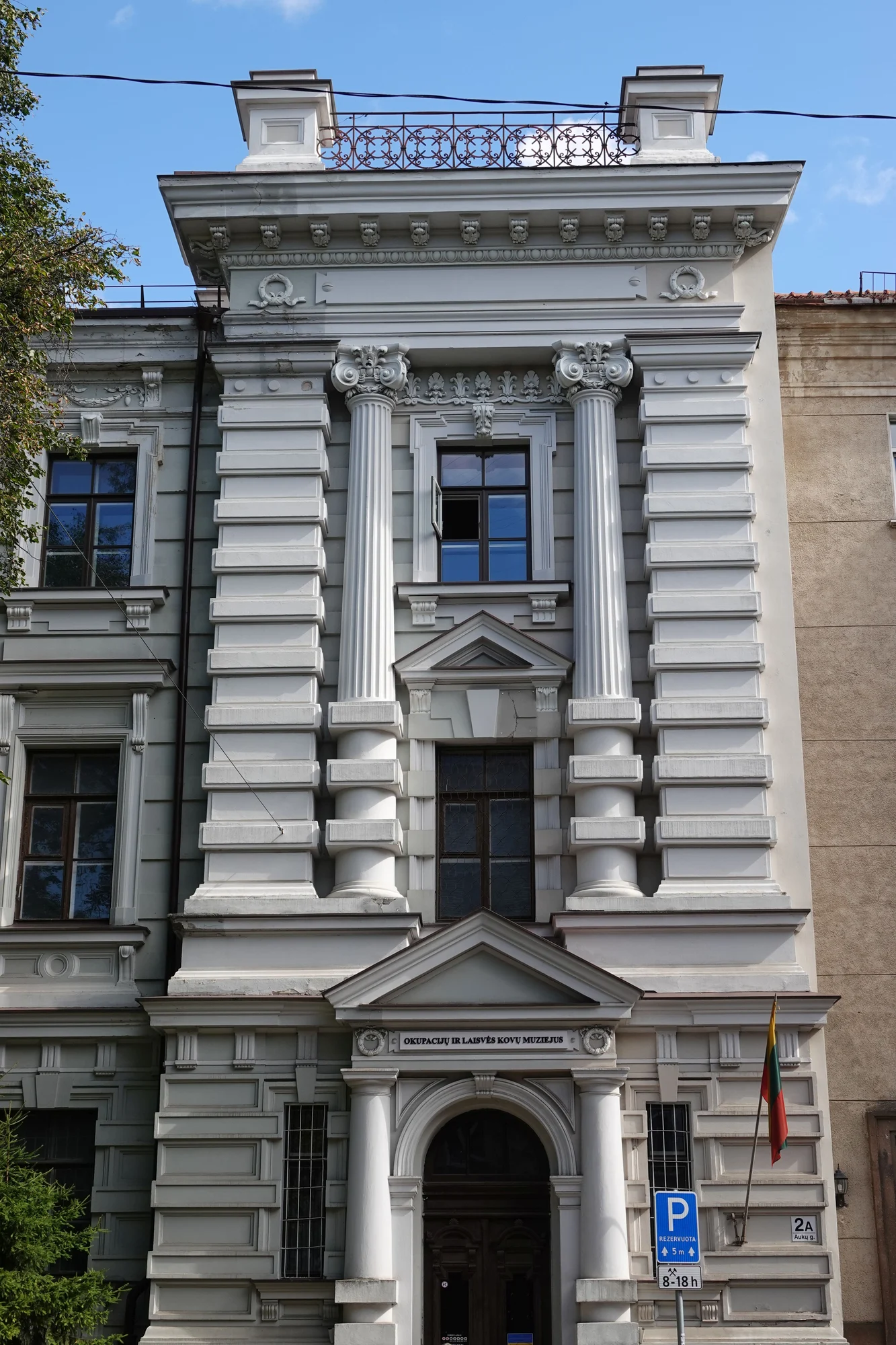
Day two turns to the 20th century, the hardest and most recent layer of the city's story, and a heavier day to pace with care. The anchor is the Museum of Occupations and Freedom Fights, housed in the former headquarters of the Gestapo and then the Soviet KGB on what is now Gedimino Avenue. The building's basement preserves the KGB prison — cells, interrogation rooms and an execution chamber — left largely as they were. It is a sobering, important visit that traces the Nazi and Soviet occupations and the partisan resistance that followed the war. Allow time, go quietly, and know that parts of it are emotionally heavy.
From there, the story moves to independence. Lithuania declared the restoration of its independence in March 1990, and the decisive moment came in January 1991, when Soviet forces moved against the TV Tower and the broadcasting centre and unarmed civilians died defending them. The events of January 13th are commemorated at memorial sites around the TV Tower and the Seimas (parliament), and they remain central to the national story; the TV Tower itself carries a memorial to those who fell.
Walk the avenues and squares where the modern republic took shape — Gedimino Avenue, the parliament, Independence Square and Lukiškės Square (long the city's main civic square, once dominated by a statue of Lenin). The recently transformed Lukiškės Prison, decommissioned and now a cultural space, is another tangible Soviet-era site you can visit, layered now with art and events. Together these places trace the arc from occupation to freedom in the space of a single walk.
Close the day back in the Old Town at the small but resonant 'stebuklas' (miracle) tile set in the pavement of Cathedral Square. It marks the end point of the Baltic Way — the human chain of some two million people that linked Vilnius, Riga and Tallinn across roughly 675 kilometres on 23 August 1989 in a peaceful demonstration for independence. Standing on it, with the Cathedral and Castle Hill in view, ties the whole sweep of the city's history together — from Gediminas' founding to the peaceful path to freedom.
- Museum of Occupations and Freedom Fights — the former KGB HQ and its preserved prison.
- January 13th sites — the TV Tower memorial and the parliament, marking the 1991 defence.
- Lukiškės Square and the former Lukiškės Prison — tangible Soviet-era civic history.
- The 'stebuklas' tile — the end point of the 1989 Baltic Way human chain.
Day 3 (optional) — cemeteries, heritage and a wider view
If you have a third day, use it to round out the picture with the quieter, more reflective sites that a two-day route skips. Rasos Cemetery, on a hillside on the city's southeastern edge, is one of the oldest and most atmospheric in the region — a beautiful, overgrown necropolis of Polish-Lithuanian memory where notable figures rest, including the heart of Marshal Józef Piłsudski. It is a moving, contemplative place and a window onto the city's layered Polish-Lithuanian identity. Go quietly and treat it with respect.
This is also the day to engage with the city's Jewish history, the great absent layer of modern Vilnius. Before the Second World War, Vilnius — 'Vilna' — was one of the world's great centres of Jewish learning, the 'Jerusalem of the North', a community almost entirely destroyed in the Holocaust. The story is too important to fold into a single afternoon, so we cover it as its own dedicated route; even a short visit to the former ghetto streets, the memorials and the Vilna Gaon museum branches adds an essential dimension to understanding the city.
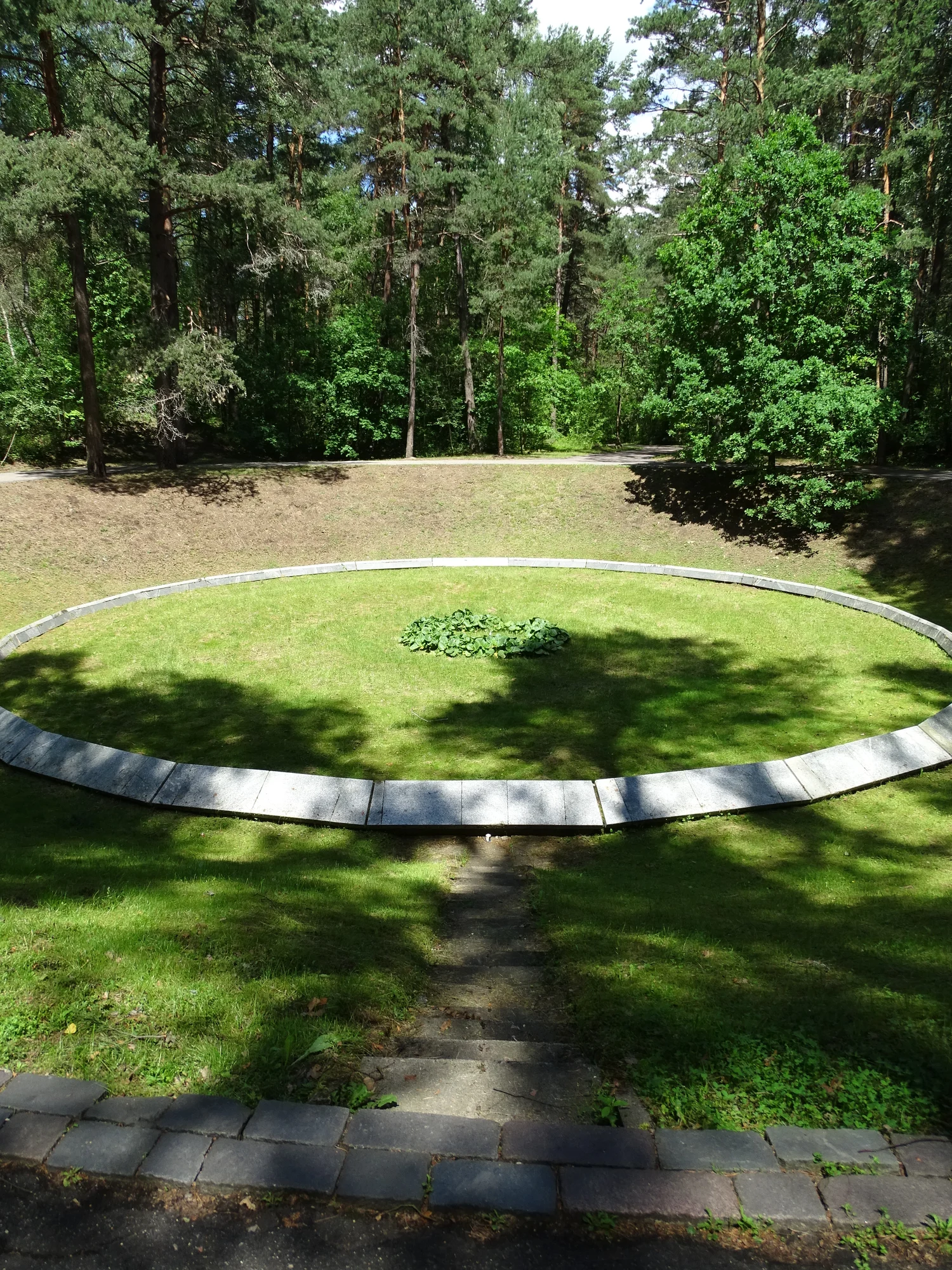
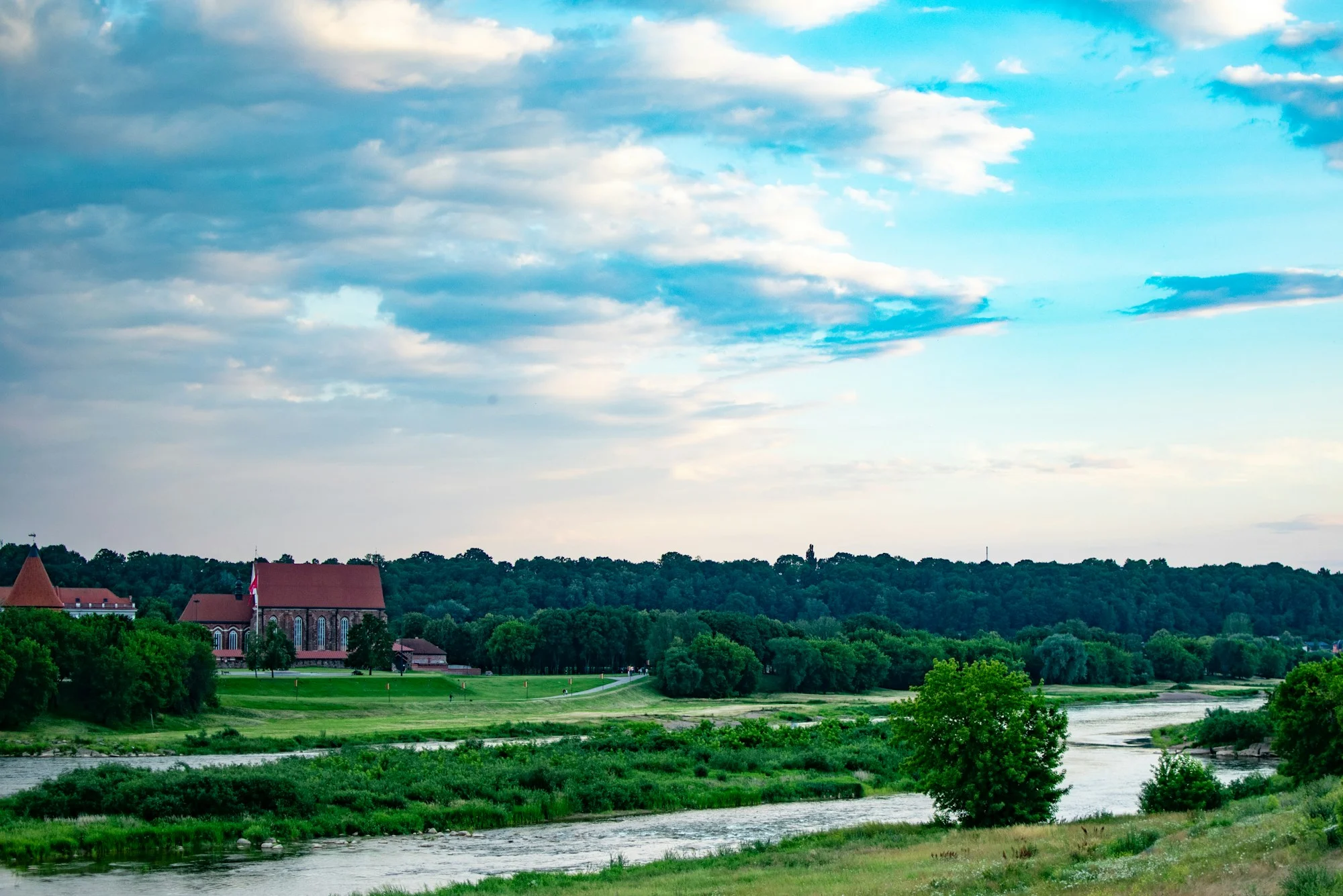
With more time still, head out to the sites beyond the centre that complete the historical sweep: the Paneriai Memorial, in the forest southwest of the city, marks the place where tens of thousands were murdered during the occupation and is a place of solemn remembrance; Trakai, with its island castle, takes the medieval story out to the lakes; and Kaunas, down the rail line, was the interwar capital and carries a different chapter of the national story. Each is a half- or full-day trip, easily done by train or bus.
However far you take it, a history trip to Vilnius rewards a thoughtful, unhurried pace. The sites are close together and the walking is light, but the subject matter is often heavy, so build in time to sit, reflect and let it land. As always, confirm opening hours, guided-tour rules and ticket prices against official sources before you visit — several of these sites have specific access requirements and reduced winter hours.
- Rasos Cemetery — atmospheric Polish-Lithuanian memory on the city's edge.
- The Jewish-heritage route — former ghetto streets, memorials and the Gaon museums.
- Paneriai Memorial — the forest site of wartime atrocities, a place of remembrance.
- Kaunas or Trakai — the interwar capital, or the medieval lakeside castle, by train or bus.
How to plan a history trip — context, guides and pacing
A little context before you go transforms a history trip here, because so much of Vilnius's story is about layers that aren't obvious on the surface. It helps to hold a rough timeline in mind: the founding under Gediminas in 1323; the golden age of the Grand Duchy and the union with Poland that created one of early-modern Europe's largest states; the partitions that brought Russian imperial rule; the brief interwar independence (when Vilnius was actually held by Poland and Kaunas served as Lithuania's temporary capital); the catastrophe of the Second World War and the Holocaust; the Soviet decades; and the peaceful road to renewed independence in 1990-91. With that arc in your head, the castles, churches, palaces and memorials stop being a list and become chapters of one story.
Consider a guide for at least part of the trip. Vilnius's history is dense, multi-ethnic and often painful, and a knowledgeable local guide — whether on a walking tour, at the KGB museum, or out at Paneriai — can tell you the things the stones and labels can't. The difficult 20th-century sites in particular benefit from someone to provide context and answer questions; the medieval and royal sites are easier to enjoy self-guided with a little reading. Either way, reading even a short history of the city beforehand pays off many times over.
Pace the days with the subject matter in mind. The medieval and royal day (castle, cathedral, palace, university) is a pleasure to do at a wandering pace, with long stops for coffee and photographs. The 20th-century day (the KGB museum, the January 13th sites, the prison) is emotionally heavy, so build in time to sit, reflect and decompress — don't schedule a packed evening straight after Paneriai or the KGB cells. Spacing the hard sites out, and balancing them with lighter ones, keeps the trip from becoming relentless.
Finally, the practical layer. Most of the core sites are walkable within the Old Town, with the TV Tower and Paneriai the main outliers (reached by transport). Several museums require timed tickets or guided entry for parts of the visit — the Cathedral crypts, for instance — and many keep reduced winter hours, so confirm opening times, tour rules and prices against official sources before you go. A history trip rewards planning more than most, precisely because the sites are richer when you understand what you're looking at.
- Hold the timeline in mind: 1323 founding, Grand Duchy, partitions, war, Soviet rule, 1990-91.
- Consider a guide for the dense, multi-ethnic and difficult chapters — especially the KGB sites.
- Pace the heavy days with time to reflect; don't pack an evening straight after Paneriai.
- Most sites are walkable; book timed/guided entries and confirm winter hours in advance.
Related guides
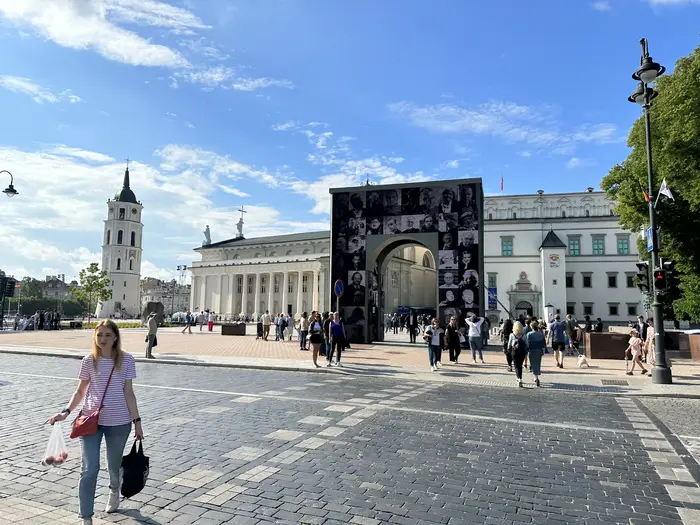
Palace of the Grand Dukes of Lithuania
A reconstructed royal residence beside Cathedral Square, now a national museum that walks you through Lithuanian history across four themed routes — archaeology, restored Gothic-to-Baroque halls, weaponry and major exhibitions.
Read guide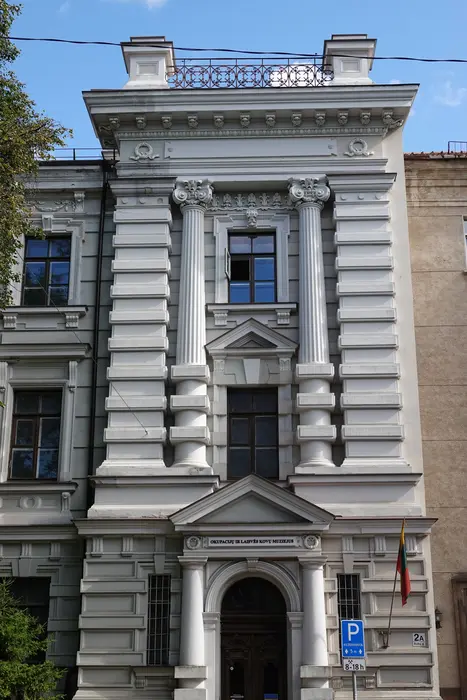
Museum of Occupations and Freedom Fights (KGB Museum)
Set in the former KGB headquarters and prison, this sobering museum tells the story of Lithuania's 20th-century occupations and resistance — including the preserved cells in the basement.
Read guide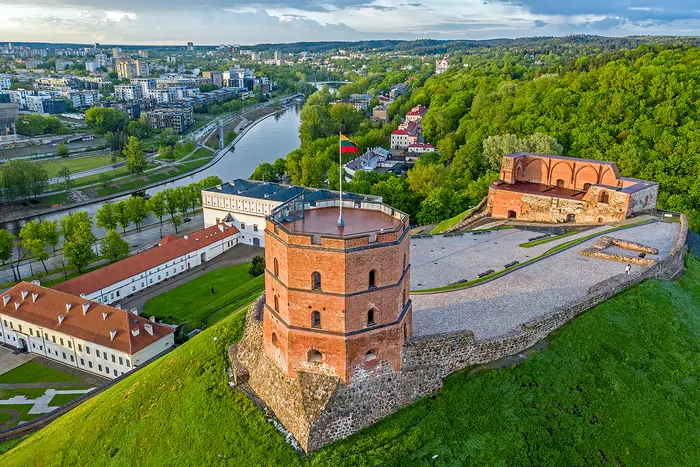
Gediminas Castle Tower
The red-brick tower on Castle Hill is the symbol of Vilnius and the easiest panoramic view in the city — reached by a steep cobbled path or a one-minute funicular, with a small history museum at the top.
Read guide