
Lazdynai Neighborhood Guide
A guide to Lazdynai, Vilnius's Lenin Prize-winning Soviet-modernist district: terraced blocks set among pine forest and hills, award-winning urban design, and how to visit this living museum of post-war planning.
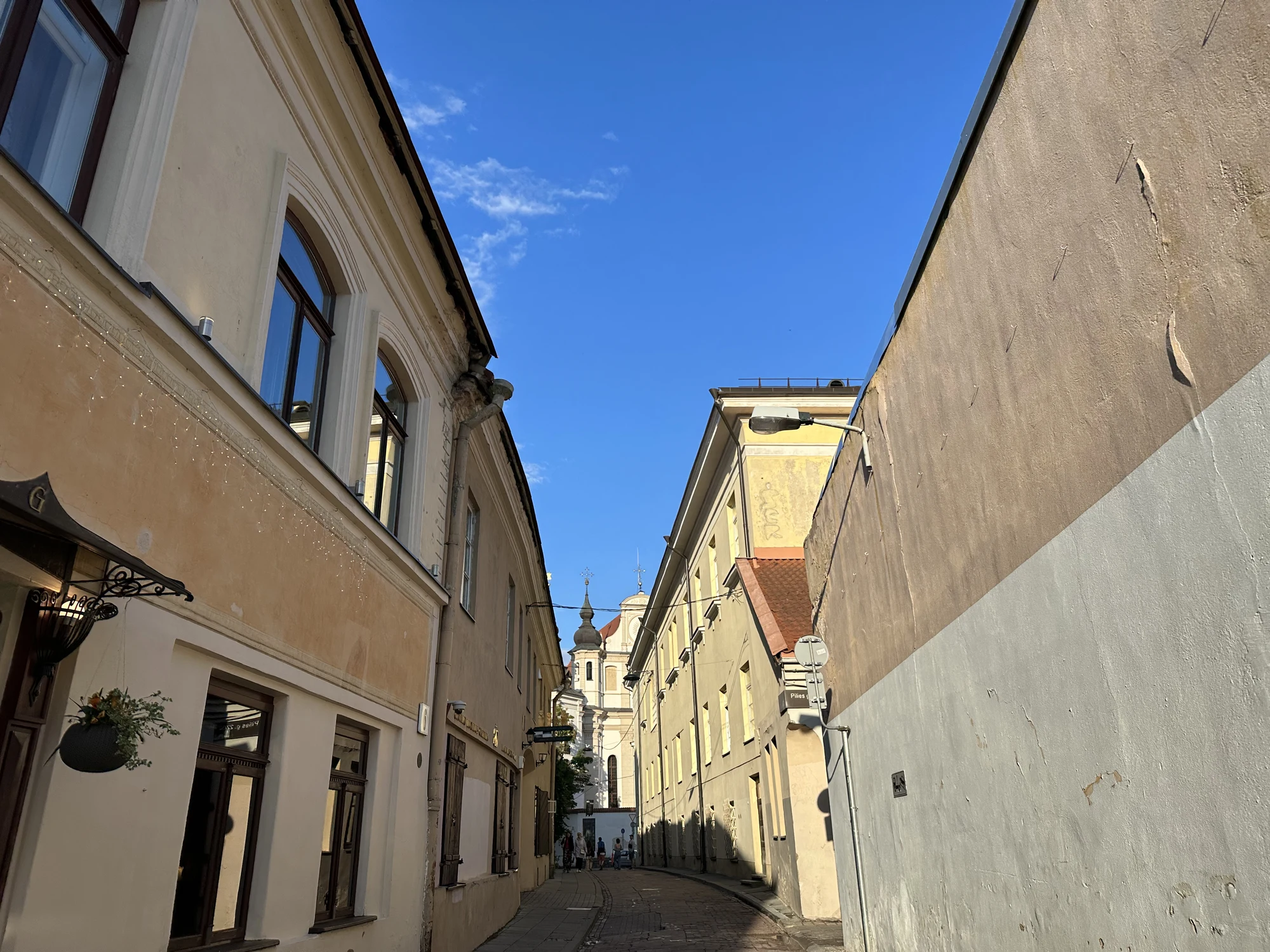
- ✓Lazdynai is a living museum of Soviet modernist architecture — the first such estate to win the prestigious Lenin Prize, in 1974.
- ✓Its terraced apartment blocks step down wooded hills among pine forest, blending nature and concrete in a way few estates manage.
- ✓The whole district follows the natural terrain, organised into distinct micro-districts around a shared public and commercial hub.
- ✓It's a quiet, green, self-contained residential area — about a 15–20 minute bus ride southwest of the centre.
- ✓For architecture and urban-planning enthusiasts it's one of the most rewarding non-touristy half-days in Vilnius.
Why Lazdynai matters
Lazdynai is a living museum of Soviet modernist architecture, a district that won the prestigious Lenin Prize in 1974 for its innovative urban design. Its distinctive terraced apartment buildings are set amongst rolling hills and pine forests, creating a unique blend of nature and concrete. This is a quiet, self-contained residential area for those who appreciate bold design and a community-oriented layout.
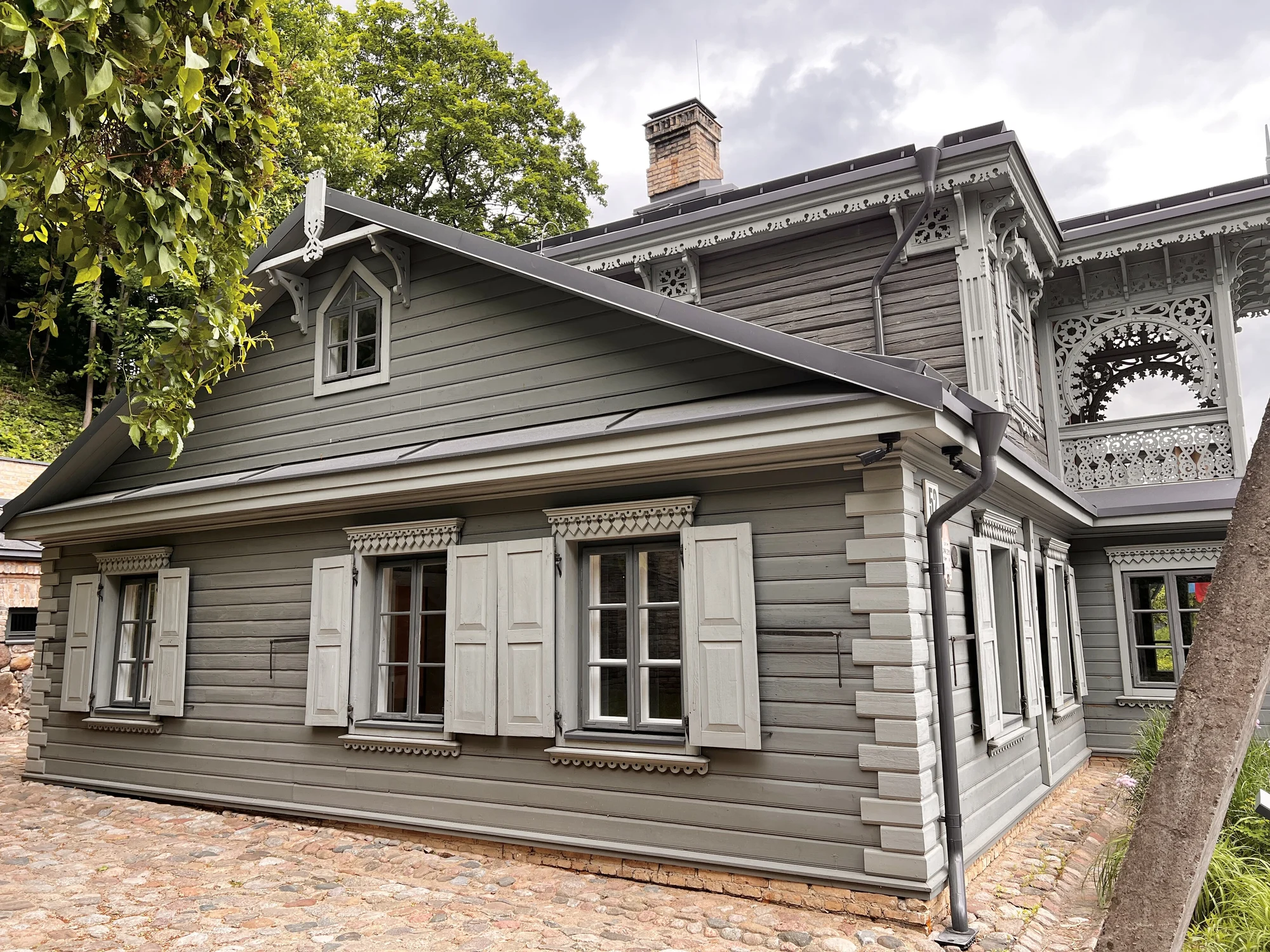
What makes Lazdynai genuinely unusual — and worth the trip out — is that it wasn't built on a flattened, cleared site. The planners worked with the existing landscape, threading the blocks between hills and stands of pine so that buildings step up and down the slopes rather than marching across them in rigid rows. The result is a Soviet-era estate that feels more like a settlement in a forest than a concrete dormitory, and it's why architects and historians still travel here to study it.
If you're at all interested in 20th-century city-making, Lazdynai pairs naturally with Žirmūnai, the city's earlier model microdistrict. Together they tell the story of how Vilnius housed a fast-growing population in the 1960s and 70s — and how Lithuanian architects pushed that brief toward something genuinely admired.
Award-winning design you can read on the ground
Lazdynai was built between the mid-1960s and mid-1970s by a team led by architects Vytautas Čekanauskas and Vytautas Brėdikis, who looked to post-war Western modernism — and the zoning ideas associated with Le Corbusier — and adapted them to the wooded Lithuanian terrain. The neighbourhood was designed to follow the natural terrain, with several distinct micro-districts each centred on its own amenities and clustered around a shared public and commercial hub.
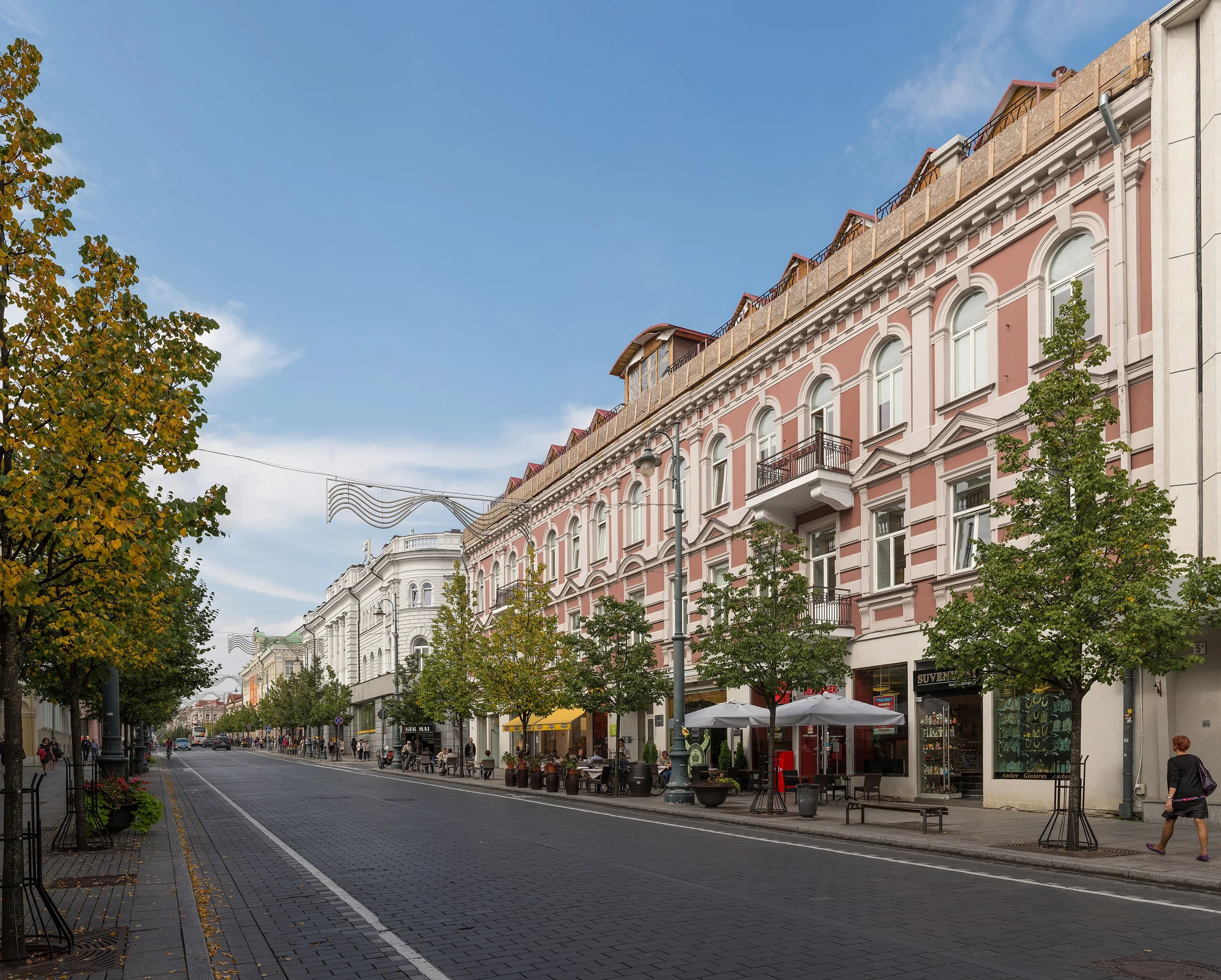
The ambition paid off: the architects and engineers behind Lazdynai were awarded the Lenin Prize in 1974, the highest Soviet honour for cultural achievement and, at the time, the first architectural project ever to receive it. For a brief moment Lazdynai became the epitome of Soviet urban planning and a model held up across the socialist bloc.
Even the name carries the landscape: 'Lazdynai' means 'hazelnut groves', a nod to the green, wooded character of the area before development. Walking it today, the design choices are still legible — the terracing on the slopes, the deliberate gaps of forest left between blocks, the way each cluster has a school and shops close at hand.
- Built c. 1966–1975 by architects Vytautas Čekanauskas and Vytautas Brėdikis and their team.
- Awarded the Lenin Prize in 1974 — the first architectural project to receive it.
- Laid out as several micro-districts following the hills, around a shared public/commercial hub.
- The name means 'hazelnut groves', reflecting the area's wooded character before construction.
Nature, hills and green character
Lazdynai's setting is its other great pleasure. The estate sits among rolling hills and pine forest, so green space isn't an afterthought tucked between buildings — it's the matrix the whole district is built into. Paths wind through the trees, the blocks open onto slopes and clearings, and on a bright day the contrast of pale concrete against dark pine is genuinely photogenic.
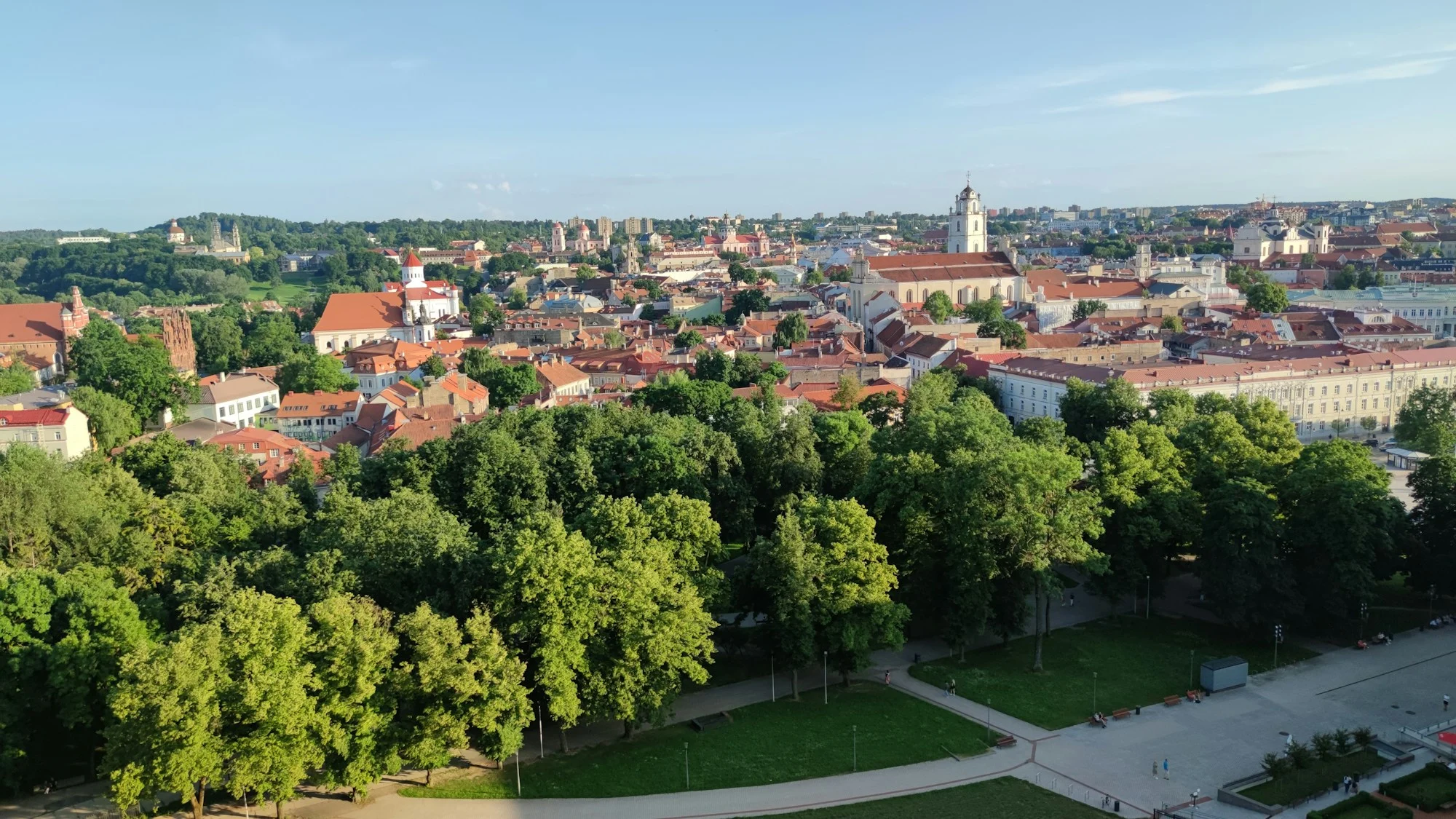
Families and walkers gravitate to the local green spots, including the much-loved Pasakų Parkas (Fairy Tale Park), a wooded park dotted with carved sculptures of folk-tale characters that's a favourite with children. Between the forest paths and the terraced topography, this is a neighbourhood that rewards simply wandering with no fixed plan — something you can rarely say of a housing estate.
The terrain does cut both ways: the hills that make Lazdynai beautiful also make walking and cycling more strenuous here than in the flat city centre, so wear comfortable shoes and don't be surprised by the gradients.
- Terraced blocks set directly among pine forest and hills.
- Pasakų Parkas (Fairy Tale Park) has carved folk-tale sculptures and is a hit with kids.
- Forest paths and slopes make it ideal for unhurried wandering and photos.
- Expect gradients — the hilly terrain is more demanding than the flat centre.
Visiting: how to get there and what to expect
Lazdynai sits in the southwest of Vilnius, and getting there is straightforward: it's roughly a 15–20 minute bus or trolleybus ride from the city centre, crossing the river via the Lazdynai Bridge and Laisvės prospektas. There's no metro in Vilnius, so public transport or a taxi/ride-hail is the way to do it; check the city route planner and current fares before you set off, as schedules and prices change.
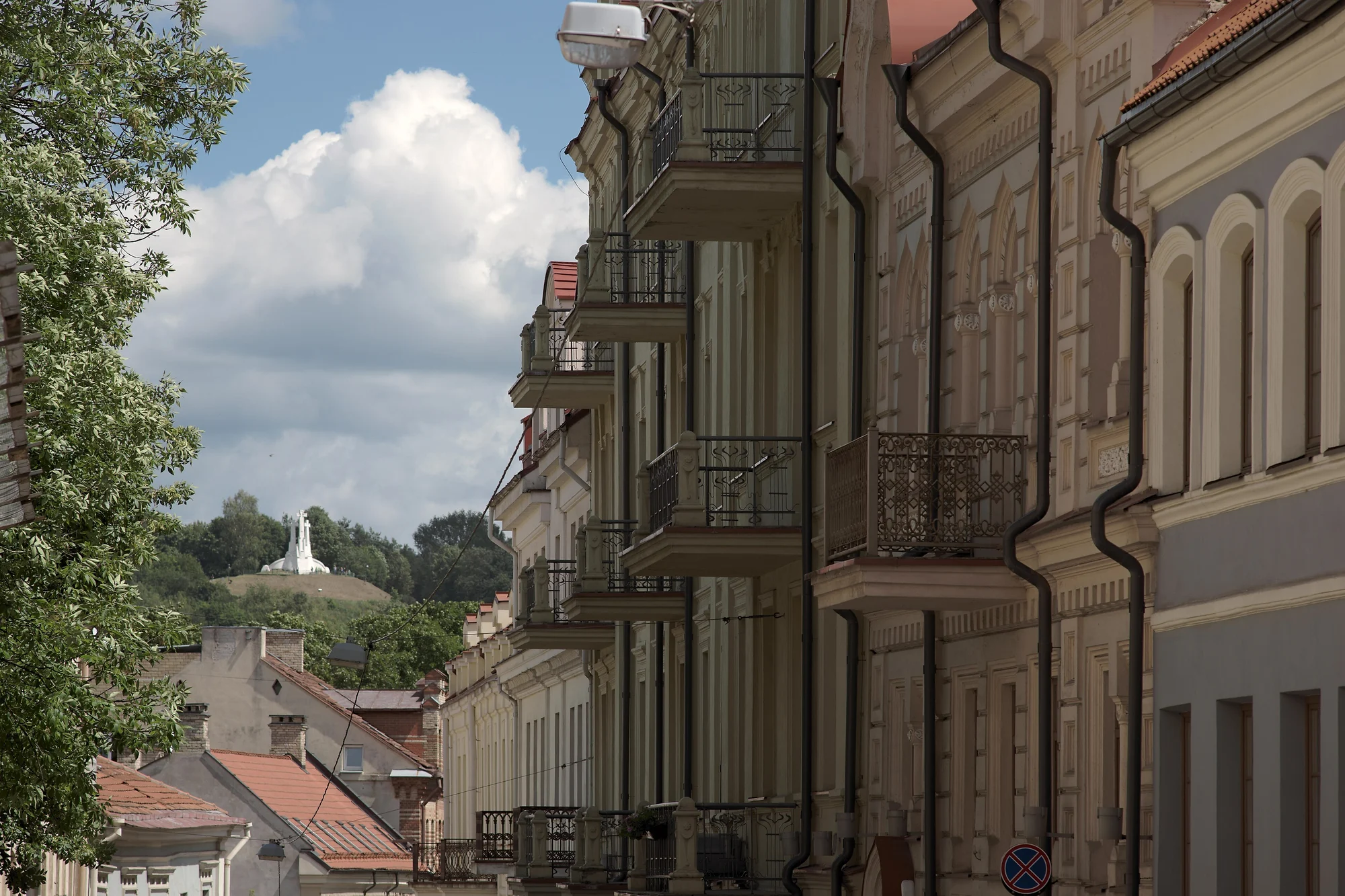
Set expectations accordingly. This is a residential district, not a sightseeing one. It has its own local shops and services, but for serious shopping you'll head to the adjacent districts, and the dining scene is modest and neighbourhood-oriented rather than a destination in itself. Come for the architecture, the forest setting and the planning story — then return to the centre for dinner.
Allow a couple of unhurried hours: ride out, walk a loop through a micro-district and its hub, climb a slope for the terraced views, dip into Pasakų Parkas if you have kids in tow, and head back. It slots neatly into a Soviet-modernism or art-and-design themed day across the city.
- About a 15–20 minute bus/trolleybus ride southwest of the centre via Lazdynai Bridge and Laisvės prospektas.
- No metro in Vilnius — use public transport or a taxi/ride-hail; check current fares and timetables.
- Local shops and services on site; major shopping is in adjacent districts.
- Best paired with Žirmūnai for a Soviet-modernism architecture day.
Reading the architecture: what to look for
Lazdynai rewards a slow, observant walk, because so much of what makes it special is in the relationship between buildings and ground rather than any single facade. Look first at how the blocks sit on the slopes: instead of being levelled into uniform rows, towers and longer 'slab' blocks are placed to follow the contours, so the skyline rises and falls with the hills and you constantly get glimpses of forest and sky between them. This is the deliberate softening of the standard Soviet panel block that earned the district its acclaim.
Next, notice the public hubs. Each micro-district was planned around its own cluster of shops, services and gathering space, with the wider estate sharing a larger public and commercial centre — the points where the community was meant to meet. Some of these mid-century commercial buildings, with their period signage, mosaics and modernist detailing, are quietly fascinating in their own right, and a reminder that this was conceived as a complete settlement, not just somewhere to sleep.
Finally, look at the green. The pine that was here before construction was kept wherever possible, so mature trees grow right up against the buildings and footpaths thread through woodland between blocks. That integration of nature and housing — unusual then and admired now — is the single most photogenic thing about Lazdynai, and the reason it reads as a settlement in a forest rather than a concrete estate. Bring a camera and aim for low, raking light, when the textures of concrete, pine and slope are at their strongest.
- Blocks step along the contours, following the hills rather than flattening them.
- Each micro-district has its own amenity cluster; the estate shares a larger central hub.
- Mid-century commercial buildings carry period mosaics, signage and detailing.
- Mature pine kept among the buildings makes it photogenic — shoot in low light.
Planning a visit and combining it with the rest of Vilnius
A trip to Lazdynai is best treated as a focused half-day rather than a full one. Ride out in late morning, walk a loop through a micro-district and its hub, climb a slope or two for the terraced views, take in Pasakų Parkas if you have children along, and head back to the centre for lunch or an early dinner. Two unhurried hours on the ground is plenty to absorb the place; the journey each way is short, but there's little reason to linger past the architecture and the forest.
The neighbourhood slots cleanly into a couple of themed days. The obvious pairing is with Žirmūnai, the city's earlier model microdistrict, for a self-guided tour of Soviet-era planning at its most ambitious — two estates, two prizes, one story of how Vilnius grew. It also fits an art-and-design or 20th-century-architecture itinerary alongside Naujamiestis's converted factories and the city's modernist landmarks, giving you a thread of bold design that runs right through the trip.
Set practical expectations and you won't be disappointed. This is a residential district: it has its own local shops and services, but major shopping is found in adjacent districts, and dining is modest and neighbourhood-oriented rather than a draw in itself. Come for the design, the setting and the planning story — among the most rewarding non-touristy outings in the city — then return to the centre to eat. As always in Vilnius, there's no metro, so check the route planner and current fares for the bus or trolleybus before you set out.
- Treat it as a focused half-day: ride out, walk a loop, climb for views, head back.
- Pair with Žirmūnai for Soviet planning, or with Naujamiestis for a design theme.
- Residential district — eat back in the centre; shopping is in adjacent areas.
- No metro; check the route planner and current fares before travelling.
Why Lazdynai still matters today
It would be easy to file Lazdynai under 'Soviet relic' and move on, but that misses why architects and urbanists keep returning to it. At a moment when cities everywhere are wrestling with how to build dense, affordable, liveable housing, the district is studied as a surprisingly humane answer from half a century ago: high-density living that nonetheless gives residents forest on their doorstep, amenities within walking distance, and a real sense of place. The questions it tried to answer — how to house thousands of people well, how to weave nature through a city, how to make a community rather than a dormitory — are exactly the ones planners are asking again now.
It's also a candid record of its era. Like all large estates of its kind, Lazdynai has aged unevenly: the original architectural ideals sit alongside the wear of decades, the panel-block construction methods of the time, and the ordinary compromises of any place where tens of thousands of people actually live. Seeing the ambition and the limitations side by side — the bold plan and the lived reality — is part of what makes a visit thought-provoking rather than merely nostalgic.
For the traveller, the takeaway is simple: Lazdynai is one of the most interesting non-touristy half-days in Vilnius precisely because it asks you to look at a city differently. You leave the Baroque centre behind and spend a couple of hours among pine, concrete and slope, reading a vision of the future as it looked in the 1970s. Few capitals let you do that so easily, and fewer still have a district that did it well enough to be honoured across an entire bloc.
- Studied today as a surprisingly humane model of dense, green, walkable housing.
- A candid record of its era — original ideals alongside the wear of decades.
- Thought-provoking rather than nostalgic: ambition and limitations side by side.
- One of the most interesting non-touristy half-days in the city.
Related guides
Vilnius Neighborhoods Guide
A guide to the neighborhoods of Vilnius — from the UNESCO Old Town and bohemian Užupis to the riverside New Town, Soviet-era microdistricts and leafy residential quarters — and how to pick the right base for your stay.
Read guide
Žirmūnai Neighborhood Guide
A local's guide to Žirmūnai, one of Vilnius's first and largest Soviet-era microdistricts: riverside paths, model-district history, easy transport into the centre, and where it fits on a longer Vilnius trip.
Read guide
Local Vilnius: Beyond the Old Town
Where to find the real, lived-in Vilnius after the classic Old Town sights: the New Town's reborn factories, leafy Žvėrynas, Antakalnis, Paupys, riverside paths, markets and street art — and how to spend a second day like a local.
Read guide