
Naujamiestis (New Town) Neighborhood Guide
A guide to Naujamiestis, Vilnius's creative engine in transition: converted factories, third-wave cafés and wine bars, the MO Museum, indie venues and a base between the station and the Old Town that leans local, not touristy.
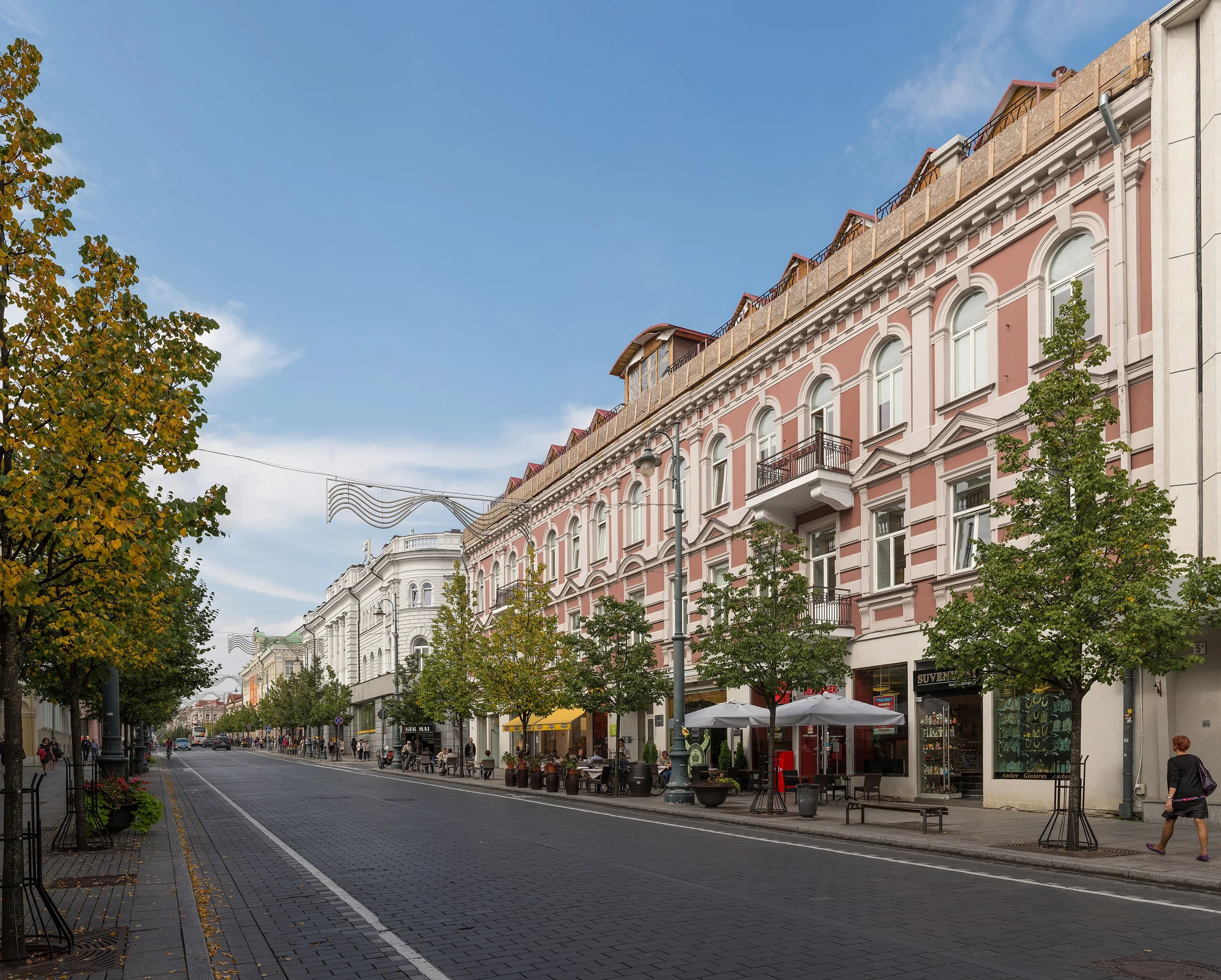
- ✓Naujamiestis is Vilnius's creative engine in transition — 19th-century blocks and old factories reborn as cafés, galleries and startup hubs.
- ✓It hugs the southern half of Gedimino prospektas and runs toward the rail yards, just west of and below the Old Town.
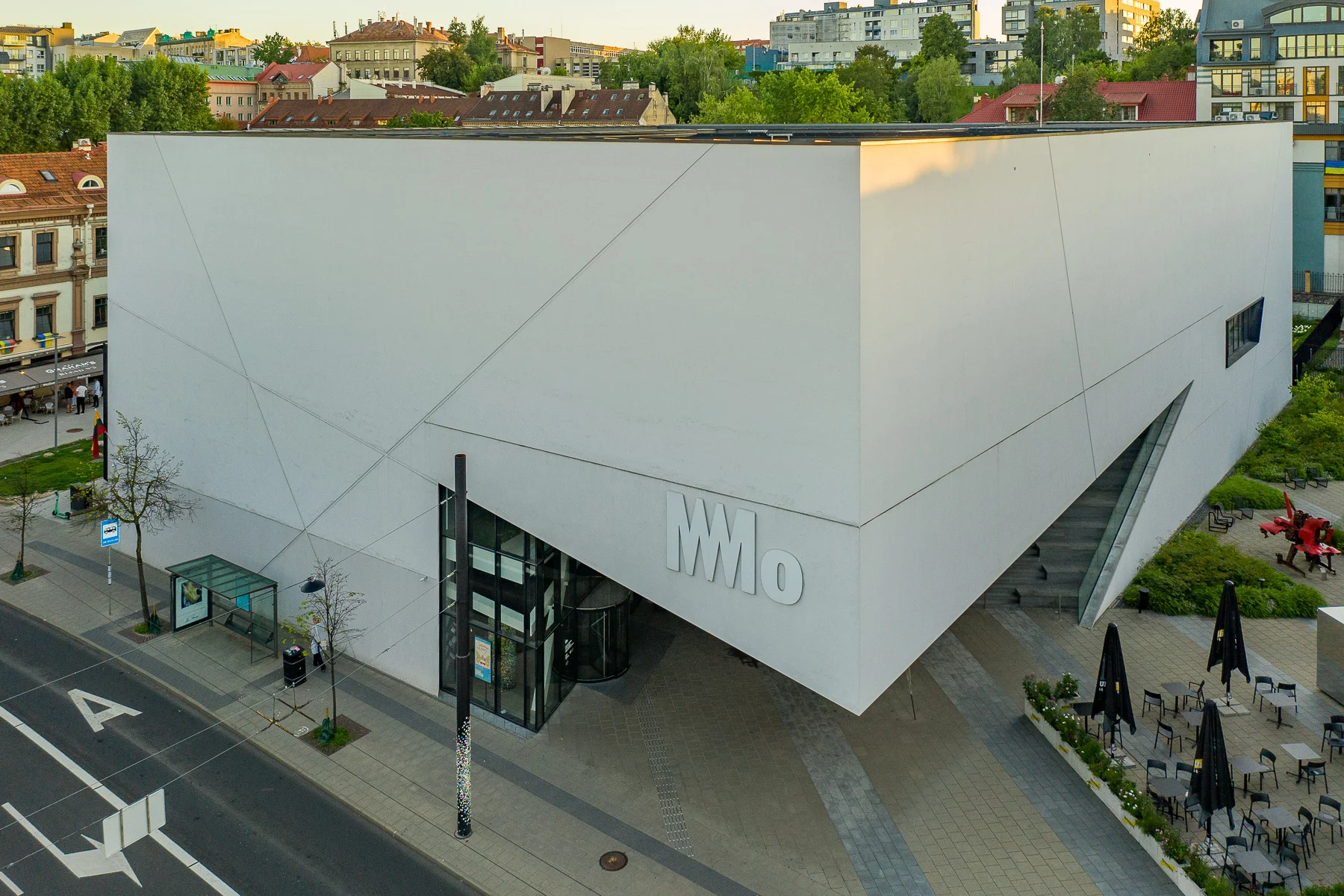
- ✓The Daniel Libeskind-designed MO Museum anchors the area's contemporary-art scene on Pylimo Street.
- ✓Mindaugo and Pylimo streets form a café corridor of third-wave coffee, natural-wine bars and bakeries popular with locals.
- ✓A good base if you want cafés, indie venues and a creative community near the station and Old Town, over tourist crowds.
Vilnius's creative quarter in transition
Naujamiestis hugs the southern half of Gedimino prospektas and stretches toward the rail yards, mixing 19th-century apartment blocks with factories reborn as cafes, galleries, and startup hubs. It is Vilnius's creative engine in transition, where daily local life collides with experimental nightlife and culture.
The name simply means 'New Town' — new, that is, relative to the medieval Senamiestis it sits beside. Laid out largely in the 19th and early 20th centuries as the city expanded westward from the old core, it grew up as a district of apartment houses, workshops and small industry. That industrial DNA is exactly what's driving its current reinvention: the warehouses, printworks and factory courtyards that once made things are now full of coffee roasters, design studios, music venues and coworking desks.
The result is a neighbourhood with two speeds running at once. By day it's workaday and residential, full of people going about ordinary city life; by night and at weekends it turns into one of the city's most interesting cultural quarters. It's the antidote to the Old Town's polish — rougher, younger, more in-progress — and increasingly where Vilniečiai go to eat, drink and hear something new.
From factory to culture: art, music and the MO Museum
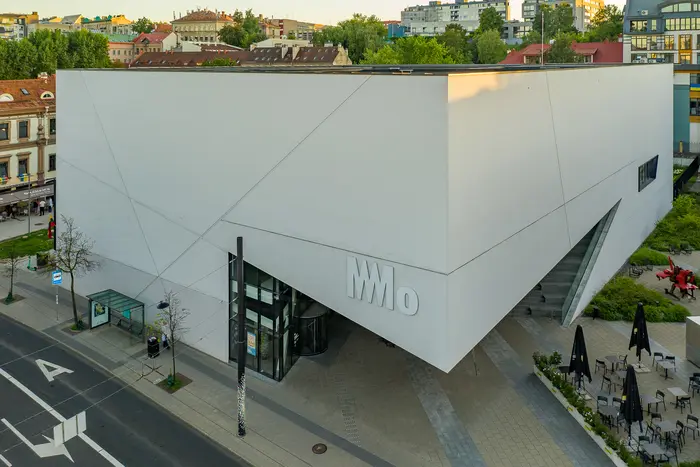
The clearest symbol of Naujamiestis's reinvention is the MO Museum, a private museum of modern and contemporary Lithuanian art on Pylimo Street designed by the world-famous architect Daniel Libeskind. Opened in 2018, its sharp white form — with an interior 'street' and staircase cutting through the building to a roof terrace — was conceived as a cultural gateway linking the historic old town and the modern city, and it's become the area's anchor attraction. Check current opening hours and ticket prices on the museum's own website before you go, as these change seasonally.
Around it, the factory-to-culture story plays out in the courtyards. Loftas and the surrounding former industrial blocks host concerts, design fairs and late-night markets inside old warehouses; smaller galleries, studios and creative agencies fill the spaces between. The same impulse spills into the city's street-art scene, with murals and interventions a regular feature of the district's walls — Naujamiestis is one of the better areas to go looking for them.
It's an easy area to fold into a culture-led day: pair the MO Museum with a wander to spot street art, a stop at Loftas to see what's on, and a long café break. The creative energy here is the point as much as any single venue.
- MO Museum (Pylimo Street): Libeskind-designed home of modern and contemporary Lithuanian art.
- Loftas and nearby factory courtyards host concerts, design fairs and late-night markets.
- One of the best districts for spotting Vilnius street art.
- Easy to combine museum, street art and café-hopping into a single day.
The Libeskind-designed modern-art museum at the heart of the district.
Vilnius Street ArtWhere to find the city's murals and interventions, many of them here.
Map pins
Map data © OpenStreetMap contributors · Tiles © OpenFreeMap
The café corridor: where to eat and drink
If the MO Museum is the headline, the everyday pleasure of Naujamiestis is its food and drink. Mindaugo and Pylimo streets are lined with third-wave cafes, natural wine bars, and bakeries popular with locals — a genuine café corridor where you can spend a whole morning over good coffee and pastries, then slide into a glass of natural wine come evening. This is where much of Vilnius's contemporary café culture actually happens, away from the tourist terraces of the Old Town.
The experimental streak carries into the nightlife. Alongside the wine bars there are indie music venues, late-opening courtyards and the kind of one-off events — markets, gigs, pop-ups — that the factory spaces lend themselves to. It's a district that rewards checking what's on rather than relying on a fixed list, because the programme shifts constantly.
Because the scene is local and evolving, individual cafés, bars and venues keep their own (often changing) hours and many are closed on quieter weekdays — it's worth checking ahead for anywhere specific. But the general rule holds: for the best contemporary coffee and a relaxed, in-the-know evening, this is the part of the city to aim for.
- Mindaugo and Pylimo streets: a corridor of third-wave coffee, natural-wine bars and bakeries.
- Indie music venues and factory courtyards drive an experimental nightlife.
- Expect pop-up markets, gigs and design fairs — check what's on rather than a fixed list.
- Hours vary and many spots are quiet midweek; check ahead for specific venues.
Getting around, staying, and practicalities
Naujamiestis is well connected and central. Gedimino prospektas shifts into J. Jasinskio, Pylimo, and Mindaugo streets here, all covered by frequent bus and trolleybus routes, and the district sits between the Old Town and the main train and bus stations — handy if you're arriving by rail or planning day trips. Much of it is walkable from the Old Town, and the MO Museum in particular is an easy stroll from Cathedral Square.
Staying here suits a specific traveller: someone who loves converted factories, indie venues and coworking spaces with a strong creative community, and who wants a base near the station and Old Town that leans toward cafés, startups and evolving neighbourhoods over tourist crowds. You trade some of the Old Town's instant postcard charm for better coffee, lower-key streets and a more local feel — while staying within walking distance of all the headline sights.
A few honest practicalities: the area is actively changing, so expect active construction and occasional street closures as warehouses turn into offices, hotels and housing. Street parking is scarce around the creative quarter, where residents rely on shared garages or permits, so don't plan on easy on-street parking. And as everywhere in central Vilnius, there's no metro — you'll get around on foot, by bus or trolleybus, or by taxi/ride-hail.
- Frequent buses and trolleybuses along Gedimino, J. Jasinskio, Pylimo and Mindaugo streets.
- Central and walkable — between the Old Town and the main station.
- A strong base for creatives wanting cafés and community over crowds.
- Expect ongoing construction and scarce street parking; no metro in the city.
Layout and character: how to find your way around
Naujamiestis is large and loosely defined, so it helps to picture it as the swathe of city west and southwest of the Old Town, draped along the lower half of Gedimino prospektas and sloping down toward the railway. Its great organising line is Gedimino itself, the city's main boulevard, which runs out of the Old Town past shops, offices and cafés before the district softens into the gridded residential streets — Pylimo, Mindaugo, J. Jasinskio, Vytenio, Panerių — that hold most of its character.
Within that grid, a few pockets stand out. Around Pylimo and Mindaugo you get the café-and-wine-bar corridor and the MO Museum. Toward Vytenio and Panerių, coworking spaces and creative agencies cluster, keeping foot traffic young and energetic. Old factory courtyards scattered through the area, with Loftas the best known, host the gigs, markets and design fairs. There's no single 'centre' to tick off — the pleasure is in moving between these pockets and seeing the contrasts of grand boulevard, faded apartment block and reborn warehouse within a few hundred metres.
Because the district is so walkable from the Old Town, it's easy to slide into without realising you've crossed a boundary: head west along Gedimino or south down Pylimo and you're in Naujamiestis. That seamlessness is part of its appeal as a base — you get a more local, lived-in setting while staying within easy walking distance of the historic sights.
- Sits west/southwest of the Old Town, along lower Gedimino prospektas toward the railway.
- Character lives in the grid: Pylimo, Mindaugo, J. Jasinskio, Vytenio, Panerių.
- Café corridor and MO Museum around Pylimo/Mindaugo; coworking near Vytenio/Panerių.
- No single centre — the appeal is moving between boulevard, blocks and reborn factories.
Who should base here, and how it fits a trip
Naujamiestis is the right base for a particular kind of traveller. If you love converted factories, indie venues and coworking spaces with a strong creative community, and you'd rather wake up among third-wave cafés and natural-wine bars than tour-group terraces, this is your part of the city. It also makes practical sense for anyone arriving by train or planning day trips, since it sits between the Old Town and the main station — close enough to walk into the sights, handy enough to slip out of the city by rail.
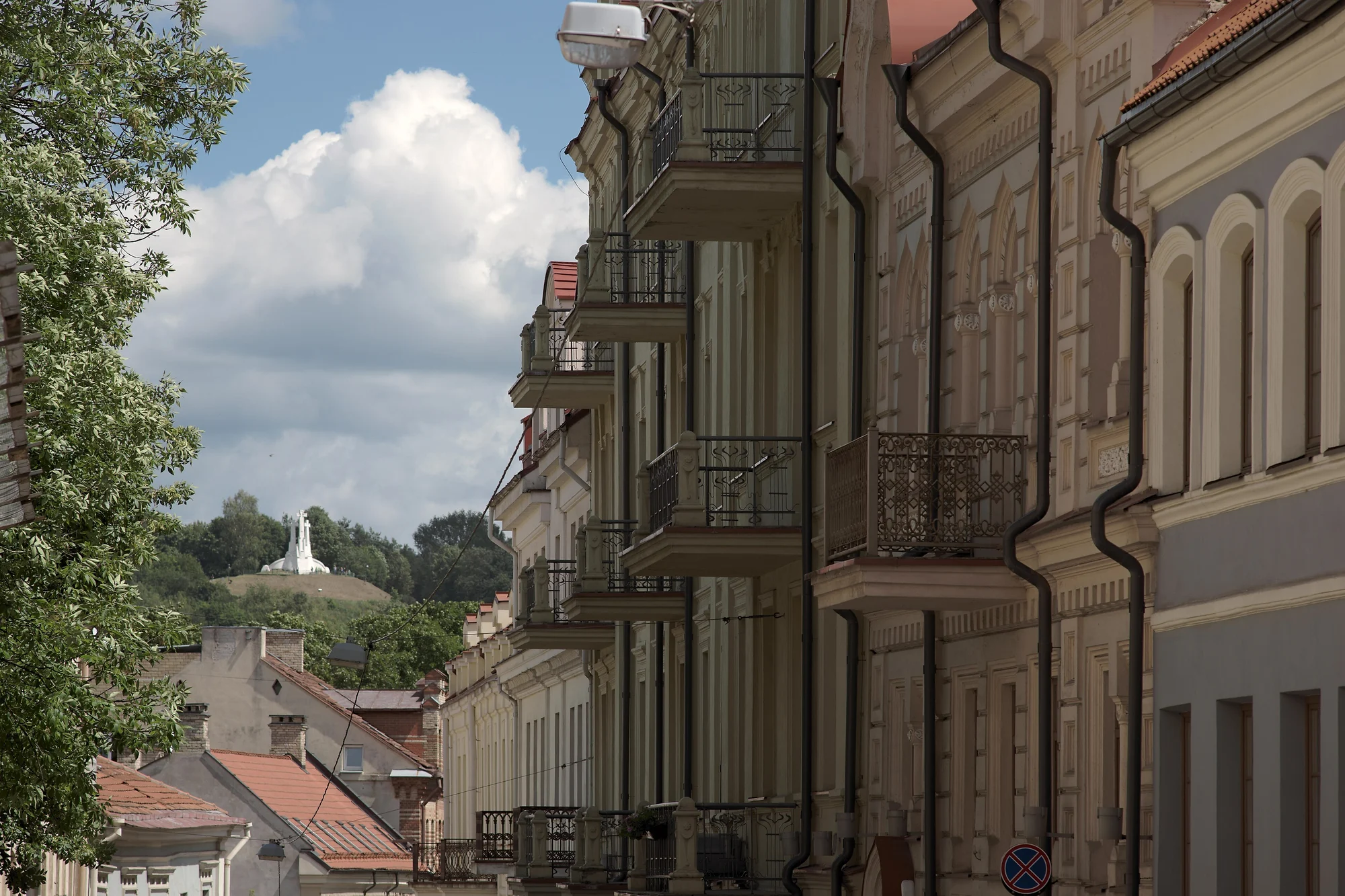
The trade-offs are honest. You swap a little of the Old Town's instant postcard charm and its on-the-doorstep monuments for better coffee, lower-key streets and a more local feel — and you accept that the area is a work in progress, with active construction and occasional street closures as warehouses turn into offices, hotels and housing, plus scarce street parking around the creative quarter. For travellers who want polish and history first, the Old Town remains the obvious pick; for those who want atmosphere, food and a sense of where the city is heading, Naujamiestis wins.
However you use it, the neighbourhood fits naturally into a culture-and-coffee thread through a Vilnius trip: a morning at the MO Museum, an afternoon hunting street art and dipping into Loftas's courtyards, a long café break on Pylimo, and an evening of wine bars and a gig — all a short walk from the Old Town you'll return to for the headline sights. Treat it as the city's creative engine room, and let it balance the heritage of the centre with something younger and more alive.
- Best for travellers who want cafés, creativity and local life over tourist polish.
- Practical for rail arrivals and day trips — between the Old Town and the station.
- Trade-offs: less instant charm, ongoing construction, scarce street parking.
- Slots into a culture-and-coffee day: MO Museum, street art, Loftas, wine bars.
A day in Naujamiestis: a suggested route
Because the district has no single must-do landmark, a loose route helps you make the most of it. Start mid-morning on Gedimino prospektas and walk west out of the Old Town, watching the grand boulevard gradually give way to the working streets of Naujamiestis. Turn down toward Pylimo for your first coffee of the day at one of the third-wave cafés that line the corridor — this is some of the best coffee in the city, served without the tourist mark-up of the centre.
Make the MO Museum your cultural anchor: the Libeskind building alone is worth the walk, and the rotating shows of modern and contemporary Lithuanian art rarely disappoint. (Check current opening hours and tickets on the museum's site, as both change seasonally.) From there, spend an hour wandering the surrounding streets with your eyes open for street art and the courtyards of former factories; look in at Loftas and its neighbours to see whether a market, exhibition or gig is on while you're in town. The pleasure here is discovery, so leave room to follow whatever you stumble on.
As the afternoon goes long, settle into the café-and-wine-bar life along Mindaugo and Pylimo — a pastry and a flat white sliding into a glass of natural wine — and, if you've timed it right, round off the evening at one of the area's indie music venues. It's an unhurried, distinctly local day that shows you a different Vilnius from the Baroque centre, and it's all within walking distance of the Old Town you'll return to for the headline sights and a grander dinner.
- Walk west out of the Old Town along Gedimino into Naujamiestis for morning coffee.
- Anchor the day at the MO Museum — check hours and tickets on its site first.
- Hunt street art and look in at Loftas's courtyards for whatever's on.
- Finish with the Mindaugo–Pylimo café-and-wine-bar corridor and an indie gig.
The industrial past behind the creative present
Naujamiestis makes more sense once you know what it used to be. As Vilnius spread west of its medieval core through the 19th and early 20th centuries, this is where the city put the things a historic centre had no room for: apartment houses for a growing population, workshops, printworks, depots and small factories strung toward the railway. For generations it was a working district — practical, slightly gritty, defined by labour rather than leisure — and that inheritance of solid brick warehouses, wide-windowed workshops and factory courtyards is precisely the raw material its current revival is built on.
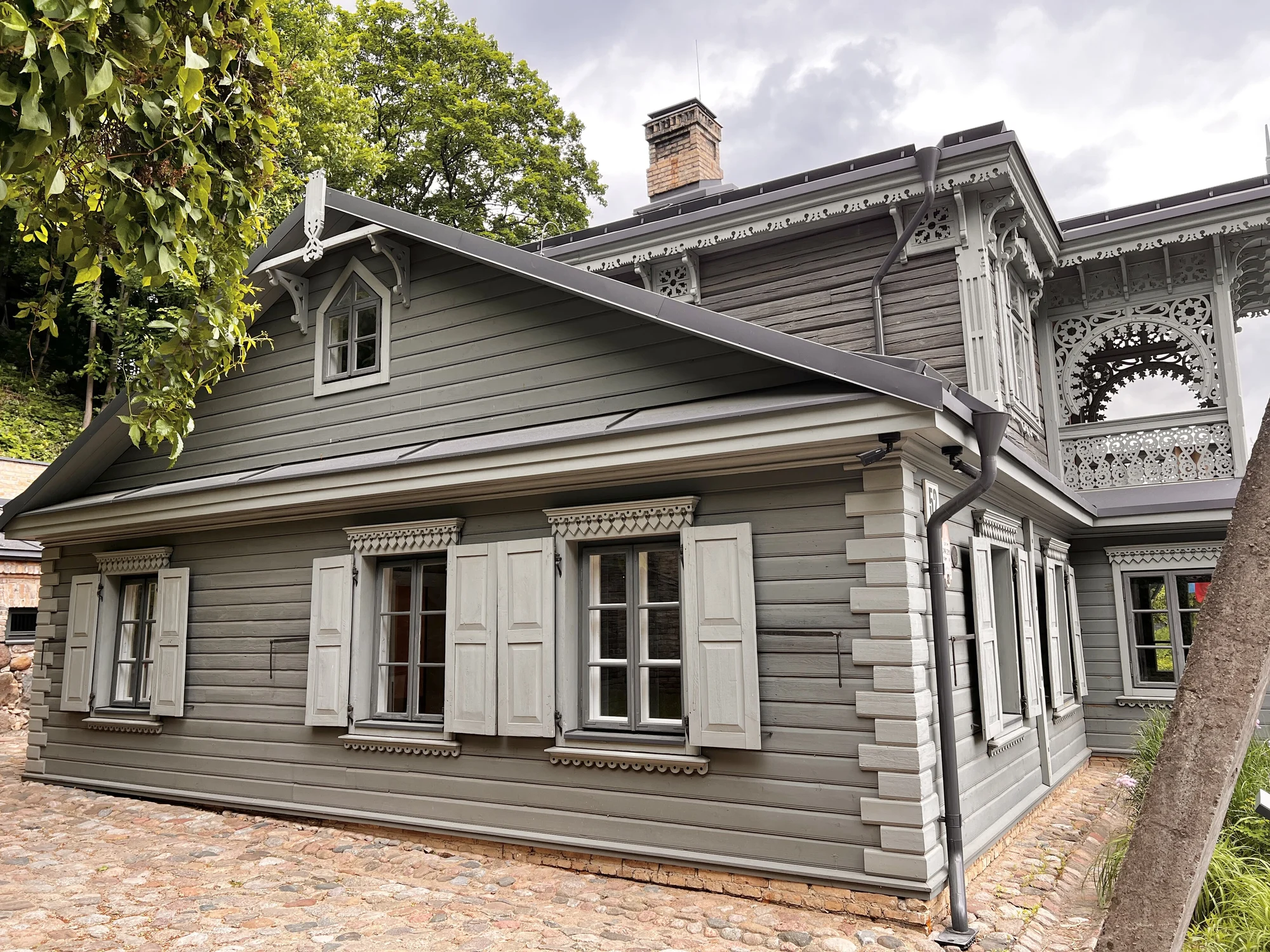
What's happening now is adaptive reuse on a neighbourhood scale: factories reborn as cafes, galleries, and startup hubs, with Loftas and the surrounding courtyards turning former industrial blocks into concert and market spaces, and coworking outfits and creative agencies filling old commercial floors. Instead of demolishing the industrial fabric, Vilnius is moving into it — which is why a coffee here might be served in a former workshop, and a gig staged where machinery once ran. The texture of the past is part of the appeal, not something hidden away.
That said, the transformation is genuinely in progress, not finished. Expect active construction and occasional street closures as warehouses turn into offices, hotels, and housing, and a streetscape where a polished new café can sit beside a building still waiting its turn. For a curious traveller that's a feature rather than a flaw: Naujamiestis lets you watch a city remaking itself in real time, layering a young creative culture onto an honest industrial frame — a different, more forward-looking Vilnius than the Baroque postcard across in the Old Town.
- Grew up as a 19th–20th-century district of housing, workshops and small industry.
- Its brick warehouses and factory courtyards are the raw material of today's revival.
- Adaptive reuse: factories now hold cafés, galleries, venues and coworking spaces.
- Still visibly in progress — construction and closures are part of the picture.
Related guides
MO Museum guide
Tickets, exhibitions, architecture, family fit, bistro and how MO fits a modern-art and rainy-day Vilnius day.
Read guide
Vilnius Street Art & the Open Gallery
A walking guide to Vilnius street art — the Open Gallery courtyard in Naujamiestis, station-district murals, Užupis and Old Town pieces, photo stops and respectful routing.
Read guide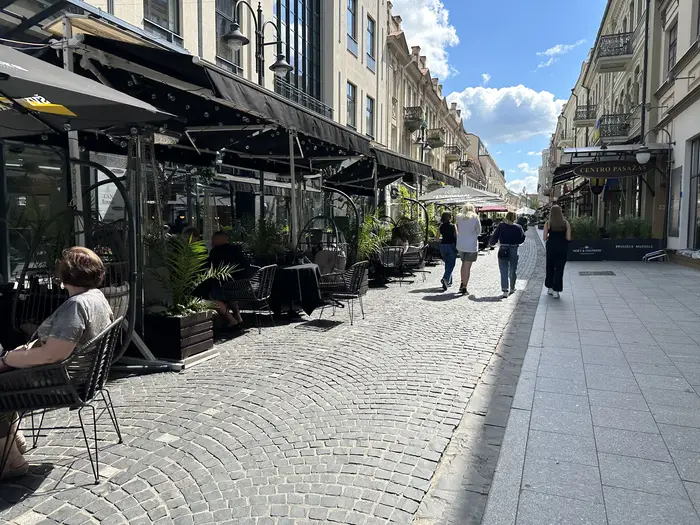
Best Cafés in Vilnius
The best cafés in Vilnius — specialty-coffee roasters, classic all-day cafés, work-friendly spots, design-forward rooms, rainy-day breaks and café routes by neighbourhood.
Read guide