
Žirmūnai Neighborhood Guide
A local's guide to Žirmūnai, one of Vilnius's first and largest Soviet-era microdistricts: riverside paths, model-district history, easy transport into the centre, and where it fits on a longer Vilnius trip.
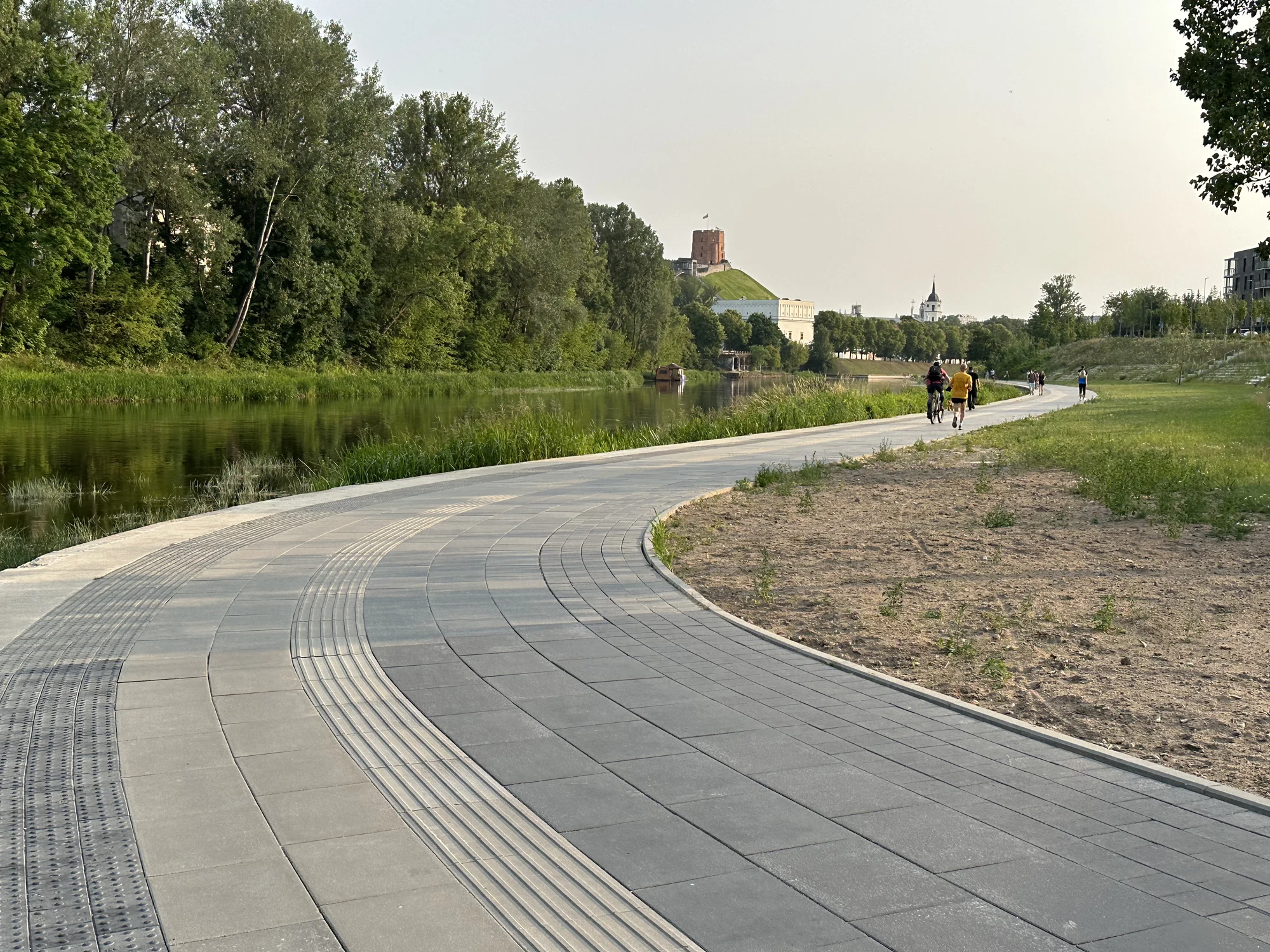
- ✓Žirmūnai is one of Vilnius's first and largest Soviet-era microdistricts — a window into everyday city life well away from the tourist crowds.
- ✓It stretches along the right bank of the Neris, so riverside walking and cycling paths are effectively on the doorstep.
- ✓Trolleybuses and buses along Kalvarijų and Žirmūnų streets reach the centre in roughly 10–15 minutes.
- ✓Built as a 'model' district, it bundled schools, shops and clinics within walking distance — planning you can still read in the streets today.
- ✓This is a place to stay or wander for an affordable, residential, genuinely local Vilnius rather than headline sights.
What Žirmūnai is — and why you'd come here
As one of Vilnius's first and largest Soviet-era microdistricts, Žirmūnai offers a glimpse into authentic city life away from the tourist crowds. Stretching along the right bank of the Neris River, it's a primarily residential area defined by its functional apartment blocks, abundant green spaces, and excellent public transport links. It's a practical and well-connected neighborhood that balances urban convenience with riverside tranquility.
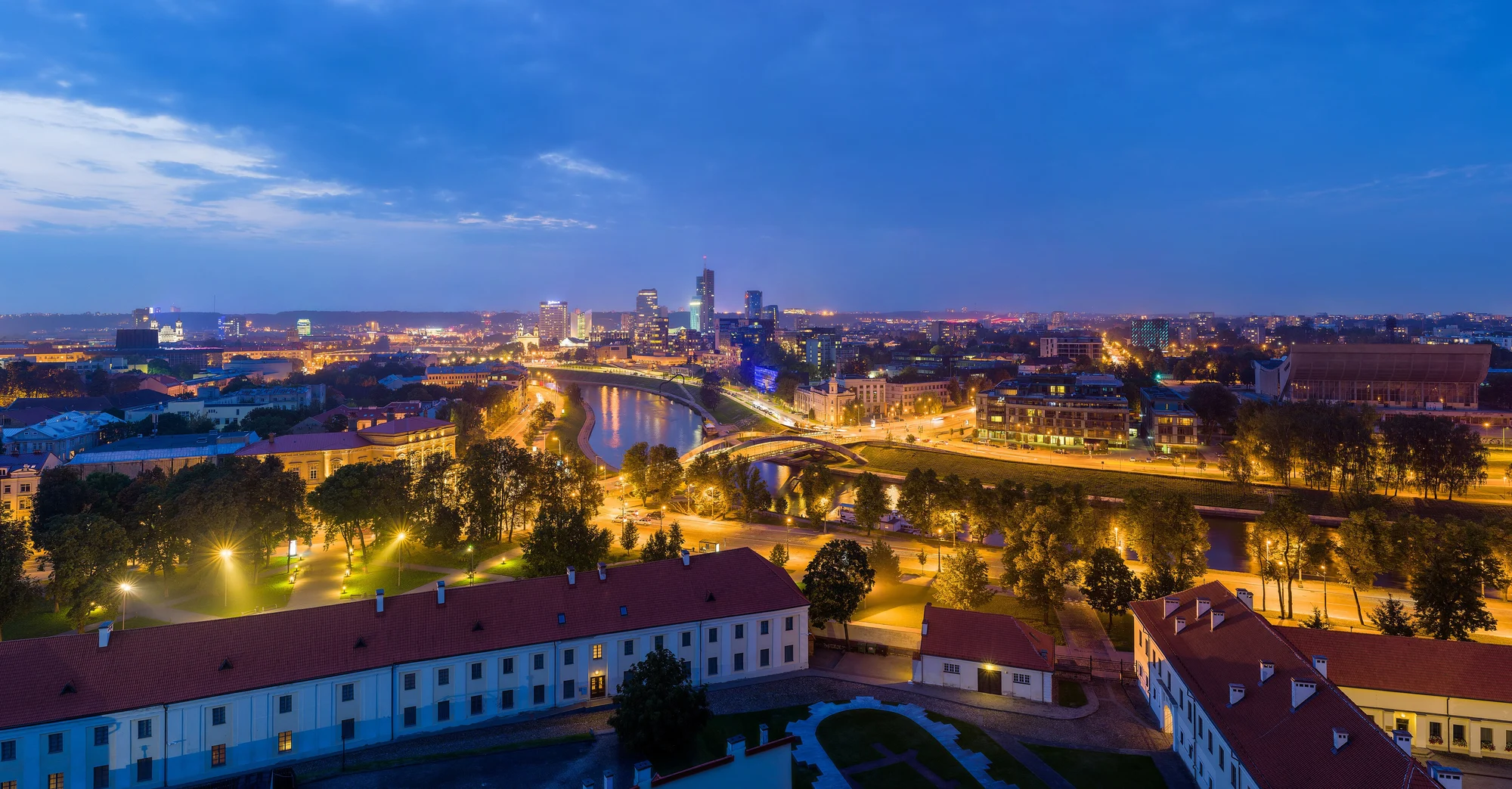
Most visitors meet Žirmūnai by accident — passing through on a bus, crossing one of its bridges, or jogging the riverbank from the centre — rather than setting out for it. That's exactly its appeal. There are no queues, no ticket desks, and no curated 'old town' polish here. What you get instead is the texture of how a few tens of thousands of Vilniečiai actually live: courtyards between the blocks, kiosks and bakeries, kids' playgrounds, allotment gardens, and a river that the locals treat as their back garden.
If your trip is built around the Baroque spires and cobbles, Žirmūnai is a half-day curiosity at most. But if you like understanding a city through its ordinary neighbourhoods — or you're staying longer, travelling on a budget, or simply want a run or ride along the water each morning — it earns its place. It pairs naturally with the wider 'real Vilnius' beyond the centre and with the riverside, leafy districts on the same side of the Neris.
A model Soviet microdistrict — the history in the streets
Žirmūnai is the city's first large-scale Soviet-era housing estate, laid out in the early 1960s on what was then the edge of town. It was designed as a 'microdistrict' (mikrorajonas) — a self-contained unit where everything a household needed sat within walking distance, so that schools, shops, clinics and kindergartens were all built in alongside the apartment blocks rather than bolted on afterwards. Walk the inner courtyards and you can still read that intention: the blocks frame green space, and amenities are scattered through the estate instead of crammed onto one high street.
The district became a showpiece. Its early phase was singled out at the all-Union review of Soviet architecture and went on to win a state prize for residential design — a rare distinction that turned Žirmūnai into a reference point for mass housing across the bloc and helped pave the way for the even more celebrated estate at Lazdynai a few years later. For anyone interested in 20th-century urban planning, the two districts are best understood as a pair.
None of this means Žirmūnai is a museum. The buildings have been re-clad, insulated and repainted over the decades, balconies glazed in, ground floors filled with small businesses. It's a living, lived-in place — which is precisely what makes the underlying blueprint so legible.
- Designed in the early 1960s as Vilnius's first major Soviet microdistrict.
- Planned so schools, shops and clinics sit within walking distance of the apartment blocks.
- Recognised with a state prize for residential design and treated as a model for later estates.
- Best read alongside Lazdynai, the city's other landmark Soviet-modernist district.
The Lenin Prize-winning modernist estate that Žirmūnai helped pave the way for.
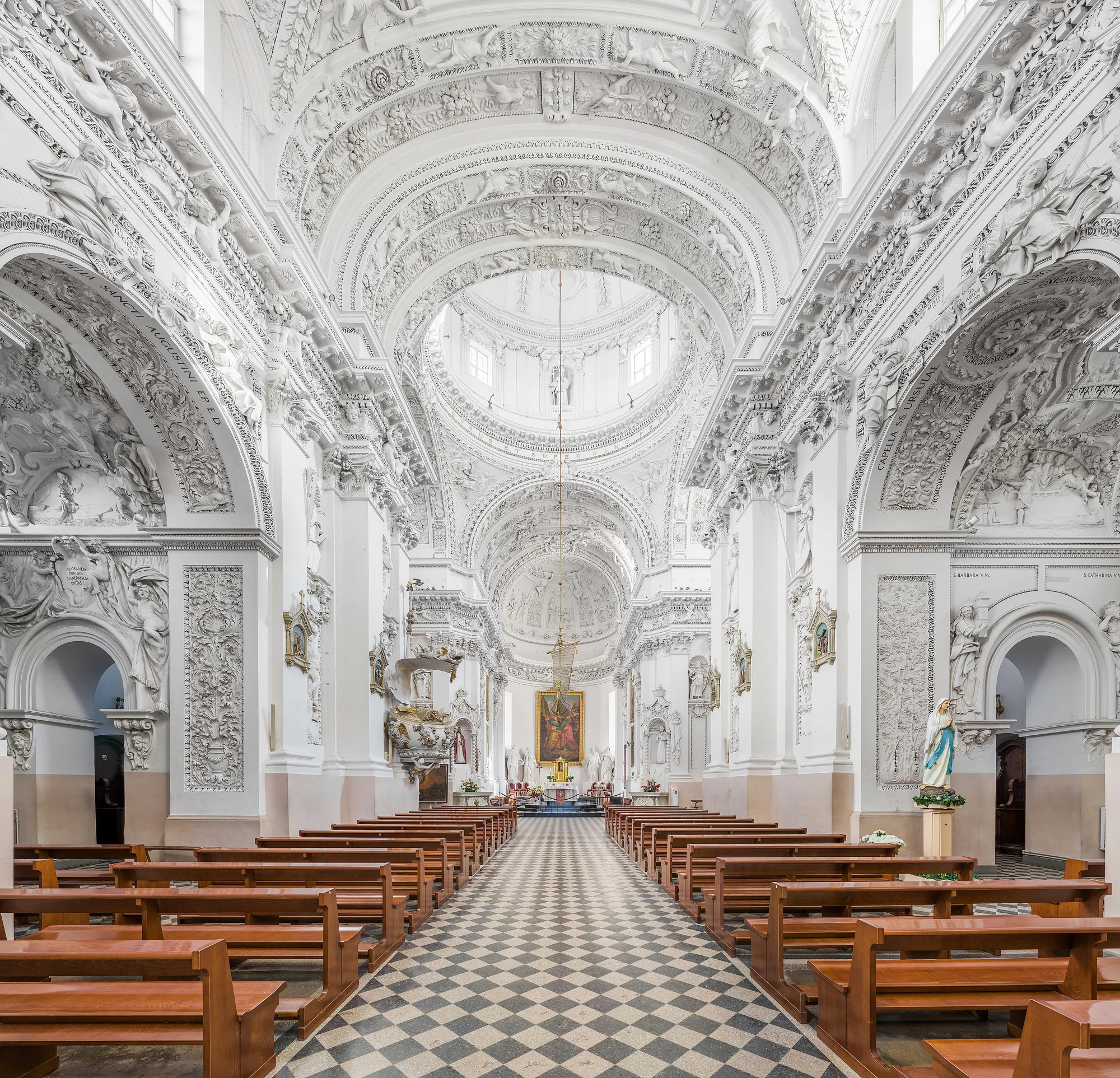
Antakalnis GuideThe leafy riverside district next door, with grander history and the city's loveliest church.
Map pins
Map data © OpenStreetMap contributors · Tiles © OpenFreeMap
The river is the reason to walk here
The single best thing about Žirmūnai is the Neris. The right-bank embankment is one of the city's favourite stretches for running, cycling and an unhurried evening stroll, with walking trails and sports facilities threaded along the water. Follow it upstream and you reach the Valakampiai area, where the river beaches are a genuine summer institution — locals decamp here on hot days to swim, sunbathe and barbecue, a world away from the Old Town's terraces.
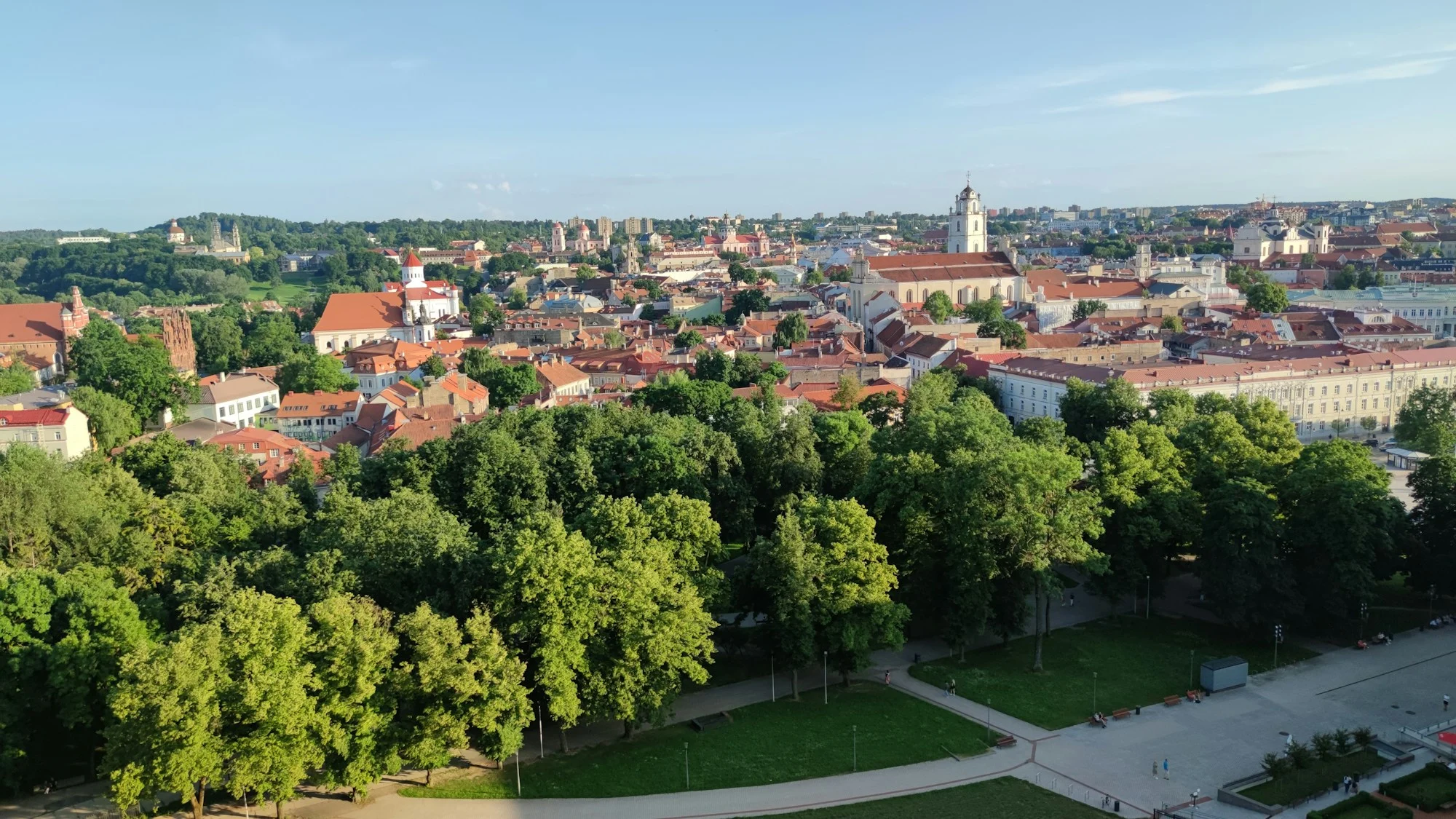
Several bridges stitch Žirmūnai to the rest of the city, including the Žirmūnai and Valakampiai crossings, so you can easily loop across the river and back on foot or by bike. If you've rented a bike in the centre, the riverside path makes this one of the most relaxed two-wheel outings in Vilnius — flat, green, and almost entirely separated from traffic.
Because the district is large, your experience shifts depending on where you are: closer to the river it's calm and green; nearer the main arteries of Kalvarijų and Žirmūnų streets it's busier and more workaday. For walking and views, aim for the water.
- Riverside trails for running and cycling run the length of the right bank.
- Valakampiai beaches upstream are a long-standing local summer spot for swimming and barbecues.
- Žirmūnai and Valakampiai bridges let you loop across the Neris on foot or by bike.
- The neighbourhood is mostly flat and very walkable, with clear pedestrian paths.
Getting around and staying here
Žirmūnai's strongest practical card is connectivity. Excellent trolleybus and bus connections run along Kalvarijų and Žirmūnų streets, reaching the centre in roughly 10–15 minutes, so you can base yourself here, pay residential rather than Old Town prices, and still be in Cathedral Square in a quarter of an hour. The district is also mostly flat and very walkable, with clear pedestrian paths — easy going for everyday errands and riverside outings alike.
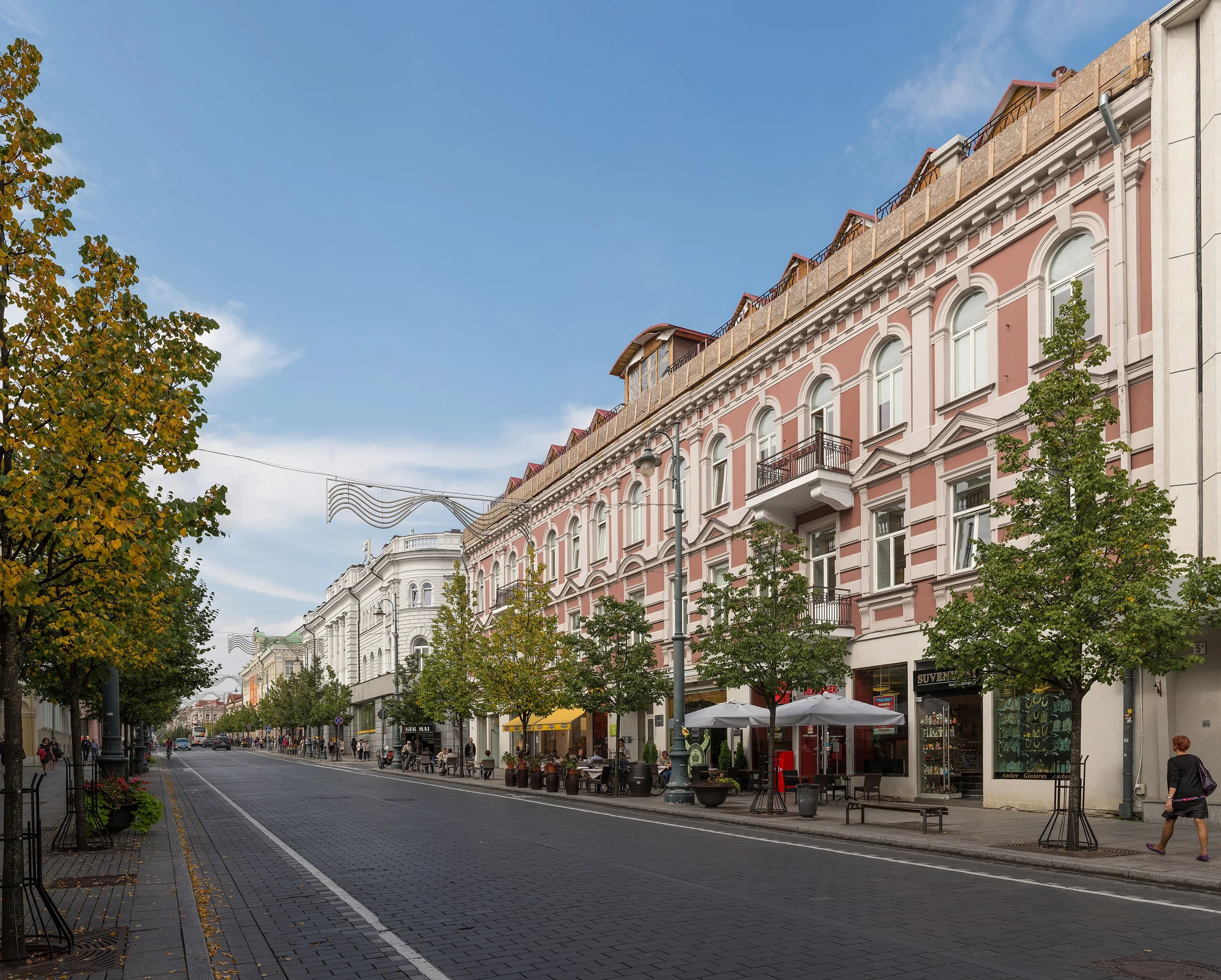
It's a large area, so where you land matters: a flat near the embankment feels green and quiet, while one near the busy main streets is more urban and trafficked. For daily life it's well stocked — several large supermarkets and local service centres make groceries and errands straightforward — but it is resolutely residential, so don't expect a dense restaurant-and-bar scene on every corner. Plan your evenings around the centre, Užupis or Naujamiestis and treat Žirmūnai as your calm, well-connected base.
Public transport tickets work across buses and trolleybuses on the same city network; check current fares and the route planner before you travel, as timetables and prices change.
- Centre in about 10–15 minutes by trolleybus or bus along Kalvarijų and Žirmūnų streets.
- Flat, walkable terrain with clear pedestrian paths.
- Several large supermarkets and service centres for easy daily errands.
- Quieter near the river, busier near the main streets — choose accordingly.
Everyday life and the rhythm of the district
To understand Žirmūnai, it helps to picture how a day unfolds here rather than what monuments to tick off. Mornings see commuters streaming toward the trolleybus stops on the main streets, dog-walkers and runners out along the embankment, and the small bakeries and kiosks doing brisk trade. By mid-morning the courtyards belong to parents with prams, retirees on benches and kids cycling between the blocks. It is, in the best sense, unremarkable — the ordinary fabric of a capital that most visitors never slow down enough to notice.
That ordinariness is the experience on offer. Because the estate bundles schools, clinics, shops and services in among the housing, daily life happens at a walkable, human scale: you can do a full day's errands without crossing a main road, and the green courtyards between blocks function as shared front gardens. The district has several large supermarkets and local service centres, so it's an easy place to self-cater if you're staying in an apartment, and the lack of a tourist mark-up means a coffee, a loaf of dark rye or a bag of groceries costs what locals pay.
Seasonally, the neighbourhood changes character with the river. In summer the embankment and the Valakampiai beaches upstream draw crowds of locals to swim, picnic and barbecue; in autumn the riverside trees turn and the paths are at their loveliest for a walk; in winter the same routes are quiet and crisp, a brisk way to clear your head a short ride from the centre. Whenever you come, the water is the organising principle of life on this side of the Neris.
- A genuinely residential rhythm — commuters, dog-walkers and prams, not tour groups.
- Walkable daily life: errands, schools and shops all within the estate.
- Easy and affordable for self-catering, with local (non-tourist) prices.
- The riverside changes with the seasons — beaches in summer, quiet walks in winter.
How Žirmūnai fits into your trip
Be honest with yourself about why you'd come. Žirmūnai is not a sightseeing destination, and it would be a strange first stop on a short city break — there are no must-see museums or landmark churches to anchor a visit. What it offers instead is context and calm: a chance to see how Vilnius actually houses and moves its people, and a green, riverside base that's cheaper and quieter than the centre while staying genuinely close to it.
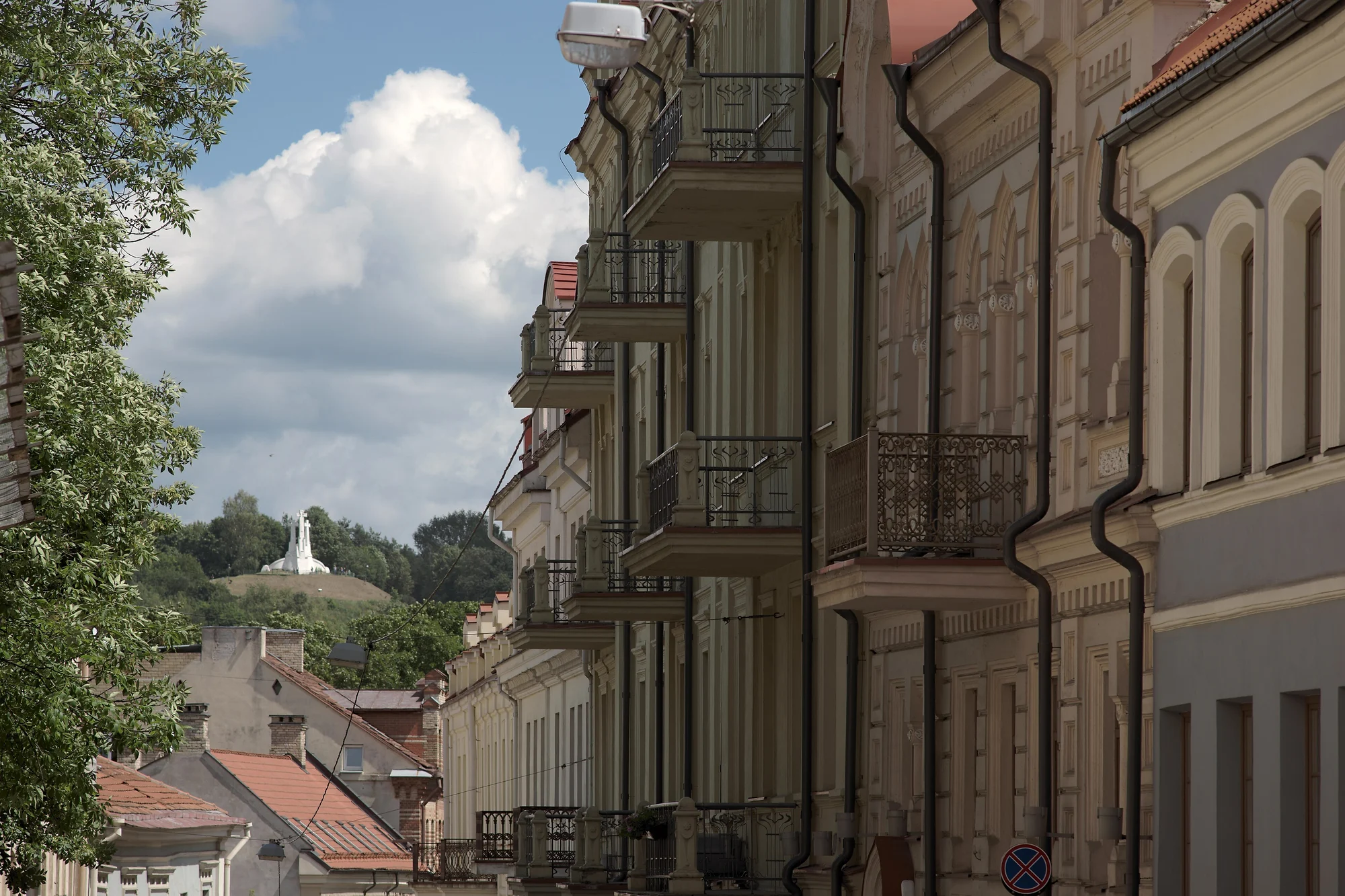
For most travellers, the right way to use Žirmūnai is to fold it into something larger. Runners and cyclists can make the embankment their daily loop. Architecture and history buffs can pair it with Lazdynai for a Soviet-modernism theme. Anyone staying a week or more, travelling on a budget, or renting an apartment can treat it as a practical home base, riding 10–15 minutes into the centre for the sights and out again for a quiet night. And if you simply want one afternoon of 'real' Vilnius away from the cobbles, a riverside walk here delivers it.
Think of it as the counterweight to the Old Town: where Senamiestis is dense, historic and busy, Žirmūnai is open, modern and local. Together they give you a fuller, more honest picture of the city than either could alone — which is exactly why it's worth knowing about, even if you only dip in for a morning.
- Not a sightseeing stop — come for context, calm and the riverside, not landmarks.
- Pair with Lazdynai for a Soviet-modernism architecture theme.
- A practical, affordable base for longer or budget-minded stays.
- The local, modern counterweight to the historic Old Town.
A self-guided Žirmūnai walk
If you'd like a loose plan rather than aimless drifting, the most rewarding way to experience Žirmūnai is a riverside loop combined with a short cut through the blocks. Start by getting yourself to the embankment — a 10–15 minute trolleybus or bus ride from the centre along Kalvarijų or Žirmūnų streets drops you within easy reach of the water — and pick up the right-bank trail. From here the whole walk is flat, green and almost entirely traffic-free.
Follow the path upstream, with the Neris on one side and the district rising on the other. You'll pass joggers, cyclists and dog-walkers, sports facilities and small beaches, and the bridges that tie the neighbourhood to the rest of the city. Push on toward Valakampiai and the river beaches if the weather's warm and you fancy seeing where locals come to swim; otherwise turn inland at one of the bridges and cut back through a residential micro-district to read the Soviet planning up close — the framed courtyards, the schools and shops set among the housing, the green between the blocks.
Cap it however suits you: a coffee or an ice cream from a local kiosk, a supermarket stop if you're self-catering, then the short ride back into the centre for the evening. It's not a grand sightseeing itinerary, and it isn't meant to be — it's a calm, photogenic, genuinely local couple of hours that most visitors never think to take, and a fine antidote to a day of cobbles and crowds in the Old Town.
- Ride 10–15 minutes to the embankment, then walk the flat, traffic-free right-bank trail.
- Head upstream toward Valakampiai for the river beaches in warm weather.
- Cut inland through a micro-district to see the Soviet planning up close.
- Finish with a local coffee or a supermarket stop, then ride back to the centre.
Related guides
Vilnius Neighborhoods Guide
A guide to the neighborhoods of Vilnius — from the UNESCO Old Town and bohemian Užupis to the riverside New Town, Soviet-era microdistricts and leafy residential quarters — and how to pick the right base for your stay.
Read guide
Local Vilnius: Beyond the Old Town
Where to find the real, lived-in Vilnius after the classic Old Town sights: the New Town's reborn factories, leafy Žvėrynas, Antakalnis, Paupys, riverside paths, markets and street art — and how to spend a second day like a local.
Read guide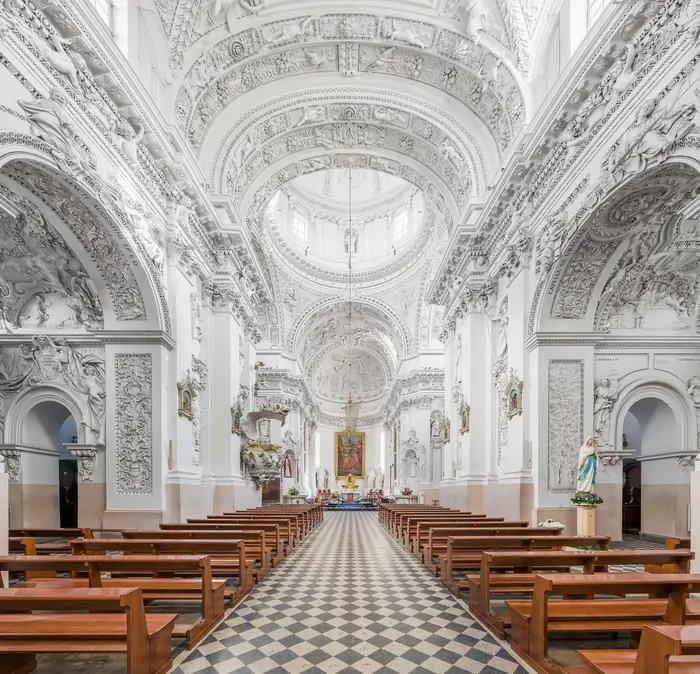
Antakalnis: Vilnius's Leafy Riverside District
A guide to Antakalnis, a vast, prestigious Vilnius district along the Neris: the Baroque masterpiece of St Peter and St Paul, the restored Sapieha Palace, Antakalnis Cemetery, university and clinic streets, parks and a tranquil residential pace.
Read guide