
Užupis Neighborhood Guide
A guide to Užupis, Vilnius's self-declared bohemian 'republic' across the Vilnia: its tongue-in-cheek constitution, galleries and sculptures, café-and-wine-bar afternoons, and how to spend time in the city's artistic heart.
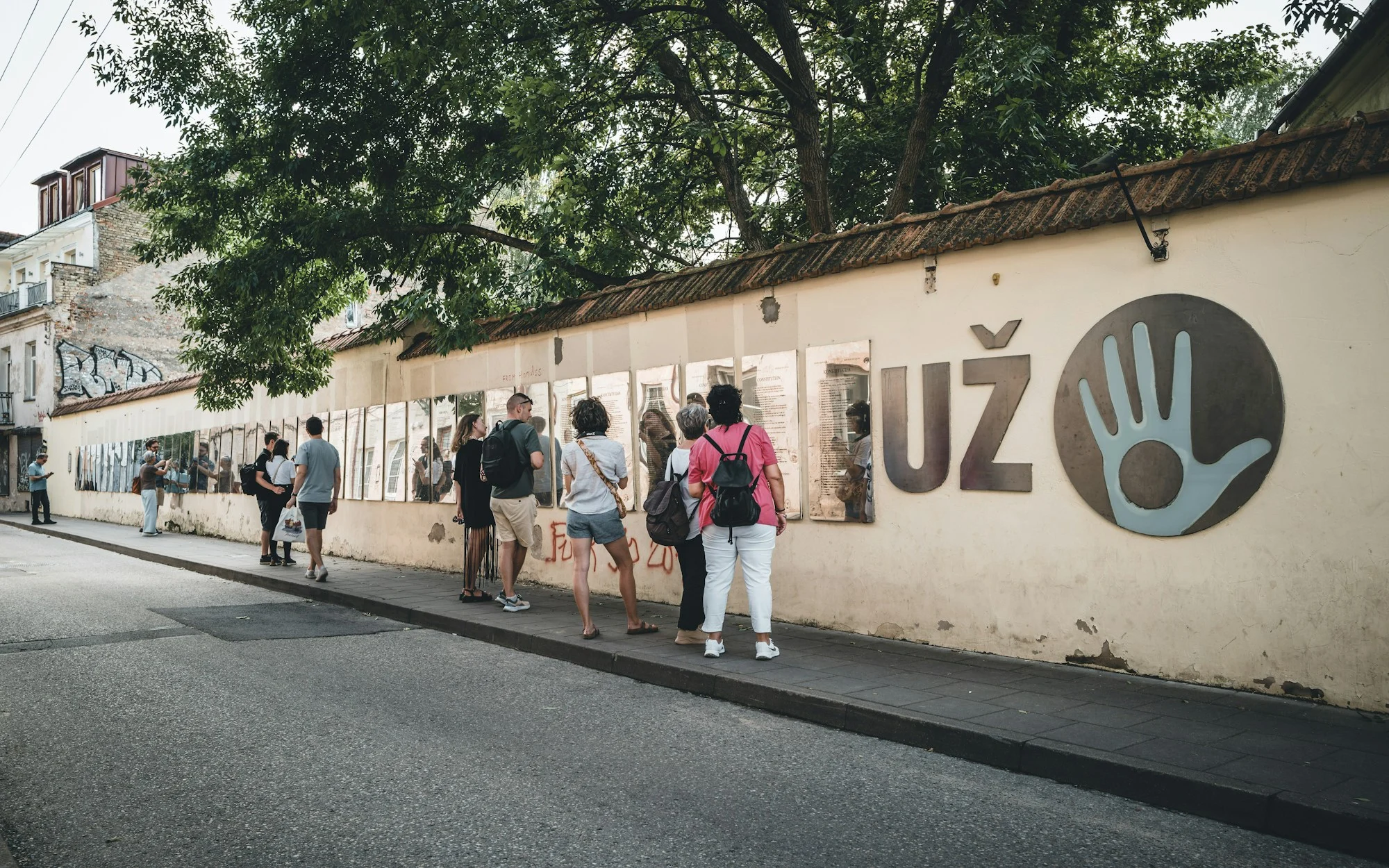
- ✓Often compared to Montmartre, Užupis is a self-declared 'republic' with its own constitution, president and artistic soul.
- ✓It declared 'independence' on 1 April 1997 — April Fool's Day — and celebrates it with parades and concerts each year.
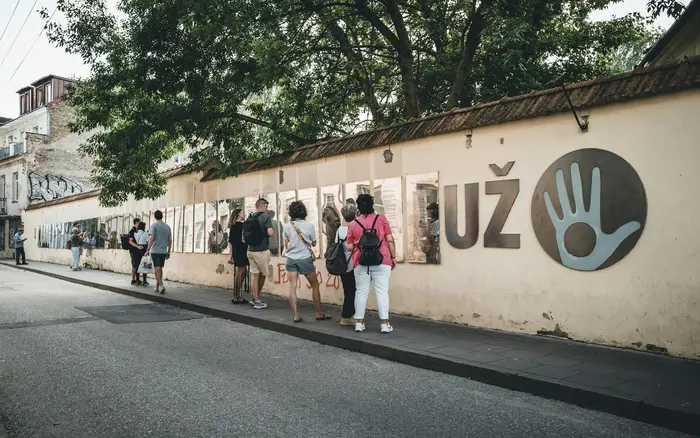
- ✓The Užupis Constitution, with its 41 articles now in dozens of languages, is mounted on a wall on Paupio Street.
- ✓Separated from the Old Town only by the Vilnia River, it's a few minutes' walk yet feels like a village apart.
- ✓Best explored on foot — galleries, quirky sculptures and cozy cafés reward slow, aimless wandering.
The republic across the river
Often compared to Montmartre in Paris, Užupis is a self-declared 'republic' with its own constitution, president, and artistic soul. This bohemian enclave across the Vilnia River is packed with art galleries, quirky sculptures, and cozy cafes. It's a haven for creatives and free spirits who value community and independence.
Geographically, Užupis is tiny — the city's smallest district — and separated from the Old Town only by the narrow Vilnia (Vilnelė) River, crossed by a handful of small bridges. That closeness is part of the magic: you step off a busy Old Town street, cross a footbridge over the water, and within a minute the pace drops, the lanes narrow, and the polish gives way to something scruffier, greener and more handmade. It feels like a village folded into the middle of a capital.
Once a run-down quarter, Užupis became the artists' district as creatives moved into its cheap, neglected buildings, and the bohemian identity stuck. Today it's where Vilnius keeps its sense of humour and its softer, romantic edge — the part of the city couples and curious wanderers tend to fall hardest for.
The constitution, the angel and the independence-day spirit
Užupis's signature attraction is its tongue-in-cheek statehood. On 1 April 1997 — April Fool's Day, which sets the tone perfectly — residents declared 'independence', complete with a constitution, an anthem, a president and the trappings of a micro-state held together by a free spirit rather than any border. Reportedly written in a matter of hours by Romas Lileikis and Tomas Čepaitis, the Užupis Constitution runs to 41 gently absurd, oddly moving articles ('Everyone has the right to be happy'; 'A dog has the right to be a dog') and is now translated into dozens of languages.
You'll find the constitution displayed on a wall of mirrored plaques on Paupio Street, each panel a different language — reading a few is a small ritual every visitor performs. The neighbourhood marks its founding every year on 1 April with Užupis Independence Day, when there are parades, concerts and general good-humoured revelry, and (in the spirit of the joke) you can even get a passport stamp on the day.
The other emblem is the Angel of Užupis, a bronze trumpeting angel on a column in the main square that has become the district's symbol of artistic freedom and rebirth. Around it cluster the galleries, studios and oddities — the Mermaid statue peering out from the riverbank, the inscriptions of Tibet Square — that give Užupis its playful, creative atmosphere.
- Declared 'independence' on 1 April 1997; celebrates Užupis Independence Day every April 1st.
- The 41-article constitution, on Paupio Street, is now in dozens of languages.
- The bronze Angel of Užupis on the main square is the district's emblem.
- Look out for the Mermaid on the riverbank and the inscriptions at Tibet Square.
The bronze angel that became the symbol of the artists' republic.
Užupis — sights & heritageThe constitution, sculptures and corners of Užupis covered in detail.
Map pins
Map data © OpenStreetMap contributors · Tiles © OpenFreeMap
How to spend an afternoon here
Užupis is the kind of place to wander without a goal. Best explored on foot due to its compact size and narrow streets, it rewards drifting: cross a bridge, follow the river, dip into a gallery, read a few articles of the constitution, find a bench above the water. There's no must-see checklist that takes longer than an hour — the point is the atmosphere, not the ticking-off.
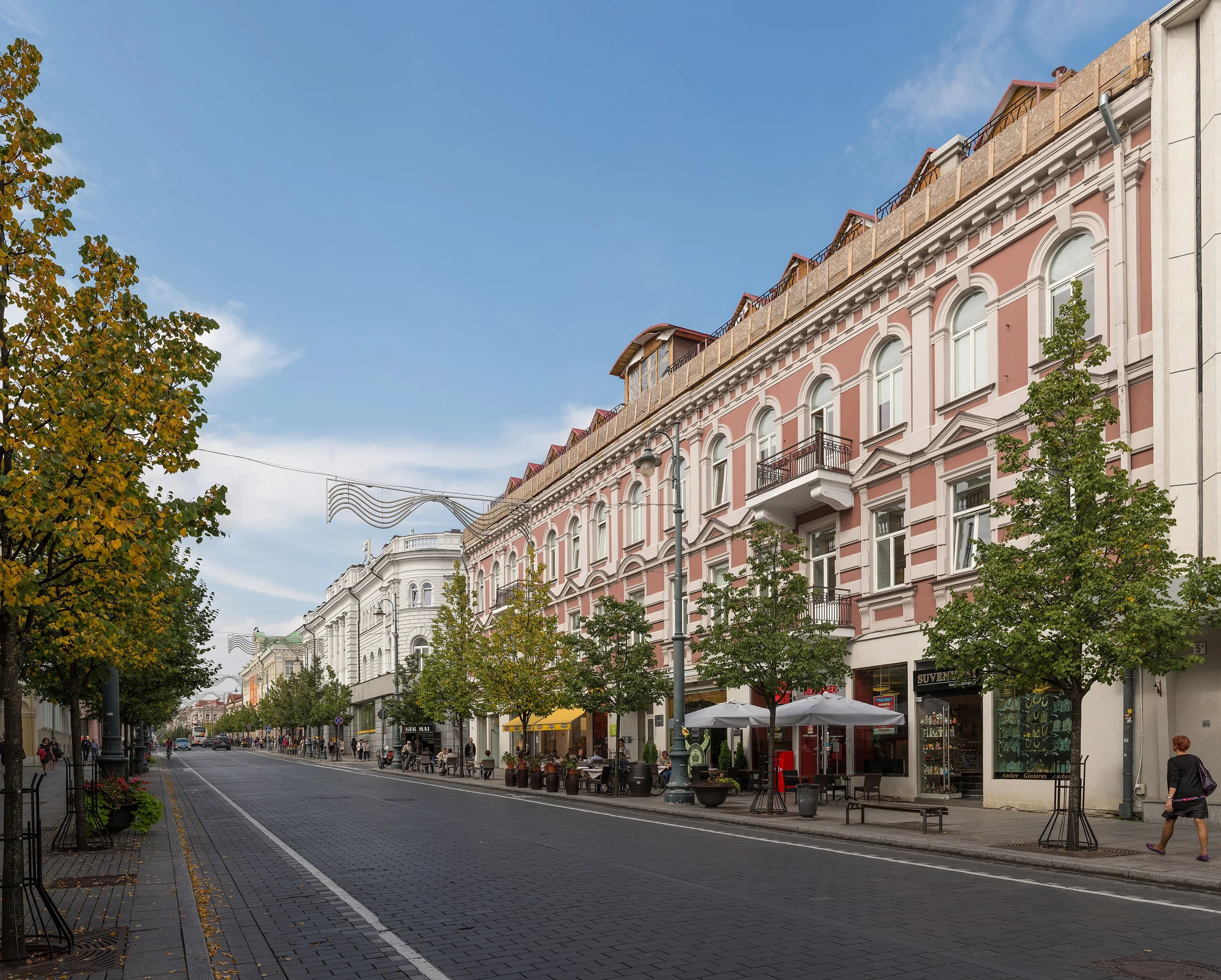
Make it an afternoon. The district is dotted with cozy cafés, wine bars and small restaurants, many with terraces or river views, and it's an unhurried place to settle in as the light goes long. Couples in particular tend to make this their golden-hour neighbourhood — a glass of wine by the Vilnia, the angel catching the last sun, the lanes emptying out. A romantic riverside walk through Užupis and back into the Old Town is one of the loveliest short routes in the city.
One honest note on timing: while charming by day, the area can be very quiet at night compared to the main Old Town, and quieter still midweek. That's a feature if you want calm and atmosphere, less so if you're after buzz — for a livelier evening, the Old Town and Naujamiestis are both close at hand.
- Best explored on foot; the compact, narrow streets reward aimless wandering.
- Plenty of cozy cafés, wine bars and small restaurants, several with river terraces.
- A favourite golden-hour and date spot — pair it with a riverside walk.
- Quiet at night compared with the Old Town; calm by design, not buzzy.
Getting there, staying and practicalities
Reaching Užupis couldn't be simpler: it's separated from the Old Town by the Vilnia River and connected by several small bridges, so from almost anywhere in Senamiestis you just walk down to the water and cross. There's limited public transport within the 'republic' itself — by design, it's a place for feet, not buses — but it's easily accessible from the edges, and a short walk from Cathedral Square or the Bernardine Garden brings you straight in.
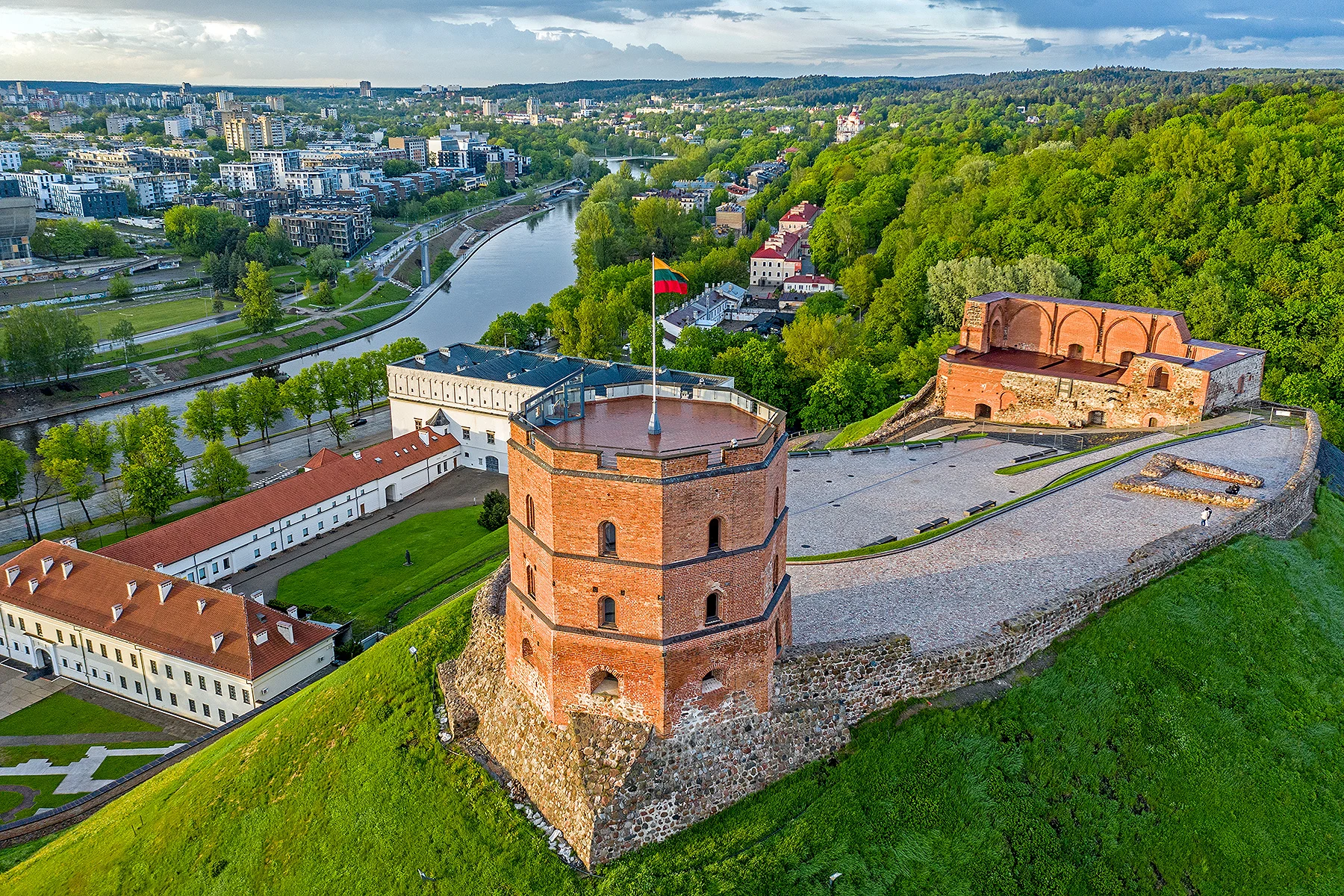
Staying in Užupis suits a particular traveller: an artist, writer or creative soul looking for an inspiring, unconventional base, or anyone who prefers a tight-knit community vibe over the anonymity of a larger district. You're a few minutes from all the Old Town sights but wake up somewhere quieter and more characterful. The trade-offs are the same ones that make it lovely — fewer services, narrow lanes, and genuinely quiet nights — so weigh that against the buzz you'd get inside the Old Town proper.
Practical reminders: it's compact and walkable but the cobbles and slopes near the river call for sensible shoes; and as with the rest of central Vilnius, there's no metro, so you'll arrive on foot or by taxi/ride-hail. Check current opening times directly with individual galleries and cafés, which keep their own (and often seasonal) hours.
- Connected to the Old Town by several small bridges — arrive on foot.
- Limited transport inside the district itself, but easy to reach from the edges.
- A great base for creatives who want quiet and character near the centre.
- Wear sensible shoes for the riverside cobbles and slopes.
The art scene: galleries, studios and street oddities
Strip away the jokey statehood and Užupis is, at heart, a working artists' quarter — that's where the 'republic' came from in the first place. When the district was still run-down and cheap, painters, sculptors, musicians and writers moved into its neglected buildings, and the creative community they built is still its defining feature. Today the lanes are dotted with art galleries, artists' studios, craft workshops and small project spaces, many of which you can step into freely; it's a place to browse and stumble on things rather than follow a fixed gallery trail.
The art also spills out of doors and onto the streets, which is half the fun. Quirky sculptures and installations turn up where you least expect them — the trumpeting Angel on its column, the Mermaid gazing out from a niche above the Vilnia, the swing slung over the river, the inscribed plaques and small monuments tucked into corners like Tibet Square. Wandering with your eyes up and around, finding these for yourself, is the most rewarding way to 'do' Užupis; a checklist misses the point.
Among the more atmospheric corners is the old Bernardine Cemetery on the slopes above the district, a romantically overgrown, tree-shaded burial ground that's one of the most peaceful and photogenic spots in the area. Between the galleries, the river and the green hillsides, Užupis manages to feel both deeply arty and genuinely tranquil — a rare combination so close to a capital's centre.
- A real working artists' quarter — galleries, studios and workshops, many free to enter.
- Public art is everywhere: the Angel, the Mermaid, the river swing, Tibet Square.
- Browse and stumble rather than follow a fixed trail — that's the point.
- The overgrown Bernardine Cemetery on the slopes is a peaceful, photogenic detour.
Where Užupis fits — and why couples love it
For all its whimsy, Užupis plays a specific and valuable role on a Vilnius trip: it's the city's romantic, bohemian counterpoint to the grand Baroque of the Old Town. Where Senamiestis impresses, Užupis charms. It's small enough to see in an afternoon yet rich enough in atmosphere to keep pulling you back, and because it sits right against the historic core, you lose nothing by building it into even a short stay — a couple of hours across the river is one of the easiest, highest-reward additions you can make to a Vilnius itinerary.
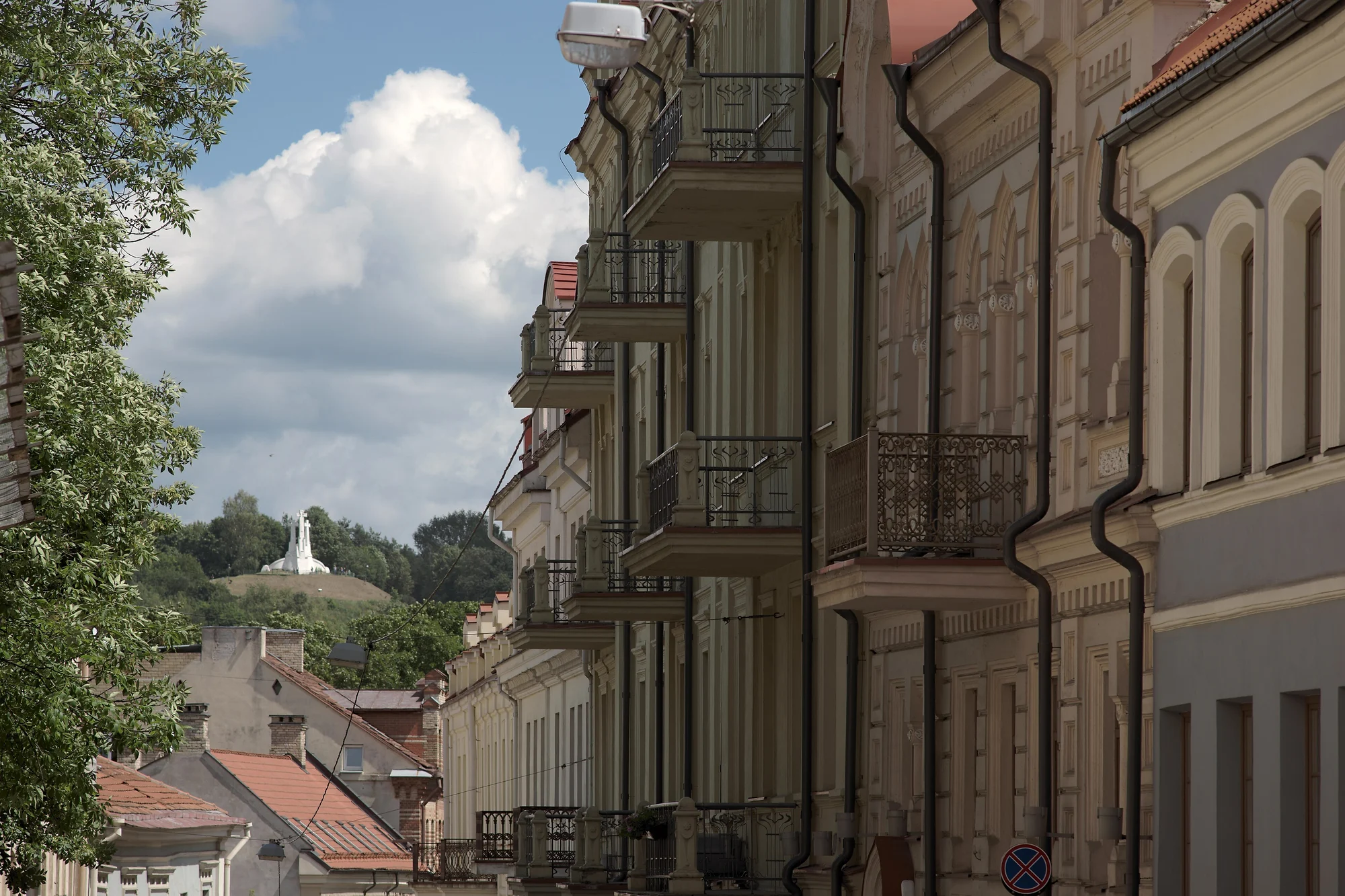
Couples in particular tend to fall hardest for this corner of the city, and it's easy to see why: the riverside benches, the wine bars with terraces over the water, the Angel catching the late light, the quiet lanes and the gentle absurdity of a 'republic' built on humour and free spirit all add up to something genuinely romantic. A slow loop — read the constitution, find the swing, settle in for a glass of wine at golden hour, then wander back across a bridge into the Old Town as the lights come on — is about as lovely as a Vilnius evening gets.
Seasonally, it shifts in character: leafy and lively in summer, gold-and-russet and atmospheric in autumn, hushed and almost secretive under winter snow, and at its most festive on 1 April for Independence Day. Whenever you visit, treat Užupis less as a sight to be ticked off and more as a mood to step into — a small, self-declared republic of art, river and easygoing freedom, a few minutes' walk from the heart of the capital.
- The romantic, bohemian counterpoint to the Old Town's grand Baroque.
- Small enough for an afternoon, atmospheric enough to keep returning to.
- A favourite for couples — riverside wine bars, the Angel at golden hour, quiet lanes.
- Lovely year-round; most festive on 1 April for Independence Day.
From run-down quarter to bohemian icon
Užupis didn't always charm. For much of the 20th century it was a neglected, somewhat rough quarter on the wrong side of the river — cheap, crumbling, and overlooked by a city that kept its grandeur on the Old Town bank. That neglect is precisely what made the place. As rents stayed low and buildings stood half-empty, artists, students and free spirits moved in, drawn by the space and the freedom, and slowly turned a forgotten district into a creative colony. The self-declared 'republic' of 1997 was less a sudden stunt than a flag planted on a transformation that was already underway.
Since then the district has gentrified, as artists' quarters tend to, with galleries, cafés and renovated houses replacing some of the rougher edges. But Užupis has kept its identity better than most — the constitution still hangs on Paupio Street, the Angel still presides over the square, the studios are still working, and 1 April still brings the parades and the passport stamps. The result is a neighbourhood that wears its history lightly: bohemian by heritage and by ongoing practice, not merely as a marketing line.
Understanding that arc helps you read what you're looking at. The slightly scruffy-romantic texture — the peeling paint beside the polished gallery, the handmade sculpture next to the wine bar — isn't an accident or a theme-park effect. It's the visible record of a place that came up from neglect on the strength of its own creativity, and that tension between rough and refined is exactly what gives Užupis its enduring appeal.
- Once a neglected, rough quarter across the river from the Old Town's grandeur.
- Low rents drew artists and free spirits, who turned it into a creative colony.
- The 1997 'republic' flagged a transformation already underway.
- Gentrified since, but it has kept its bohemian identity and rituals intact.
Practical tips and what's nearby
A few practicalities make an Užupis visit smoother. Because it's best explored on foot over cobbles, riverbanks and gentle slopes, wear comfortable shoes — and watch your footing near the water after rain. There are no big-ticket attractions with set opening hours here, so you won't need to book or queue for anything; the galleries, cafés and small project spaces keep their own (often seasonal) hours, so if there's a specific place you want to visit, check ahead. And while the district is small, allow more time than you'd expect: it has a way of slowing visitors right down.
Etiquette is simple but worth stating: this is a real, lived-in neighbourhood as much as a curiosity, with residents, studios and homes among the galleries. Enjoy the public art and the constitution, but keep noise down in the quieter lanes, especially in the evening, and treat the place with the easy respect you'd want shown to your own street. The famous good humour of Užupis runs both ways.
On location, you're superbly placed. Užupis sits directly against the Old Town across the Vilnia, so the Cathedral, Pilies Street and the Bernardine Garden are minutes away on foot; the green slopes and the old Bernardine Cemetery rise just behind the district; and the Paupys area and riverside walks extend the route downstream. That makes Užupis the ideal hinge between a morning of Old Town sights and a relaxed riverside afternoon — see the grand churches, then cross a bridge into the republic for art, wine and a slower pace, all without ever needing transport.
- Wear comfortable shoes for cobbles, riverbanks and slopes; mind your footing after rain.
- No ticketed must-sees — galleries and cafés keep their own seasonal hours, so check ahead.
- It's a lived-in neighbourhood: keep noise down in the quiet lanes, especially at night.
- Minutes on foot from the Old Town, Bernardine Garden and riverside walks.
Related guides
Užupis guide
Explore the self-declared republic: constitution, the Angel, river bridges, galleries, cafés and April 1 spirit.
Read guide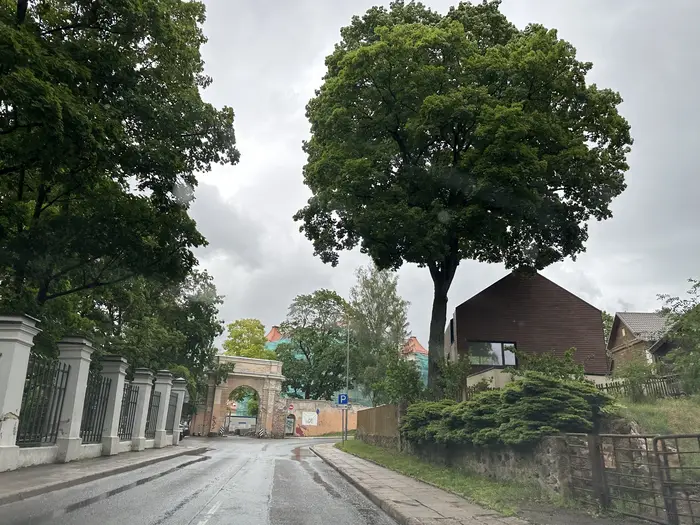
Angel of Užupis
The bronze angel that crowns the central square of Užupis — the symbol of Vilnius's self-declared bohemian 'republic' and one of the city's most-loved photo spots.
Read guide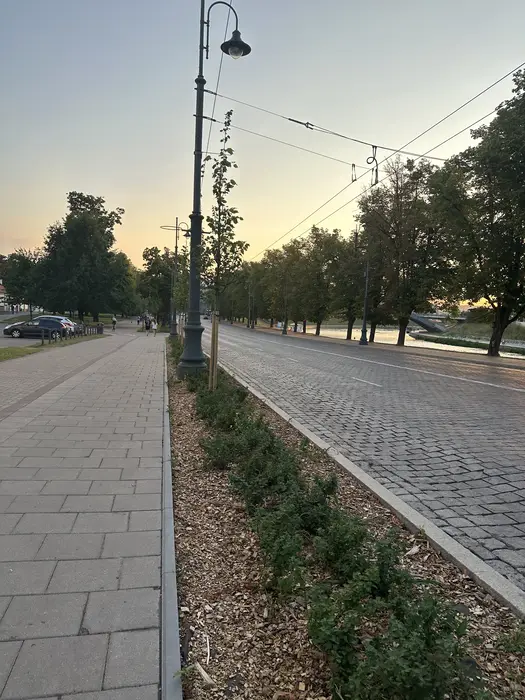
Romantic Walks in Vilnius
The most romantic walks in Vilnius for two: Old Town lanes, the Vilnia river edges of Užupis, the Bernardine Garden, the climb to Three Crosses, and the Neris bridges in winter light.
Read guide