
Jewish Quarter Vilnius guide
A respectful guide to Vilnius's former Jewish quarter and ghetto streets: the lanes of old Jewish Vilna, the site of the Great Synagogue, the Vilna Gaon's legacy, the ghetto memorials and where to find context before you walk.
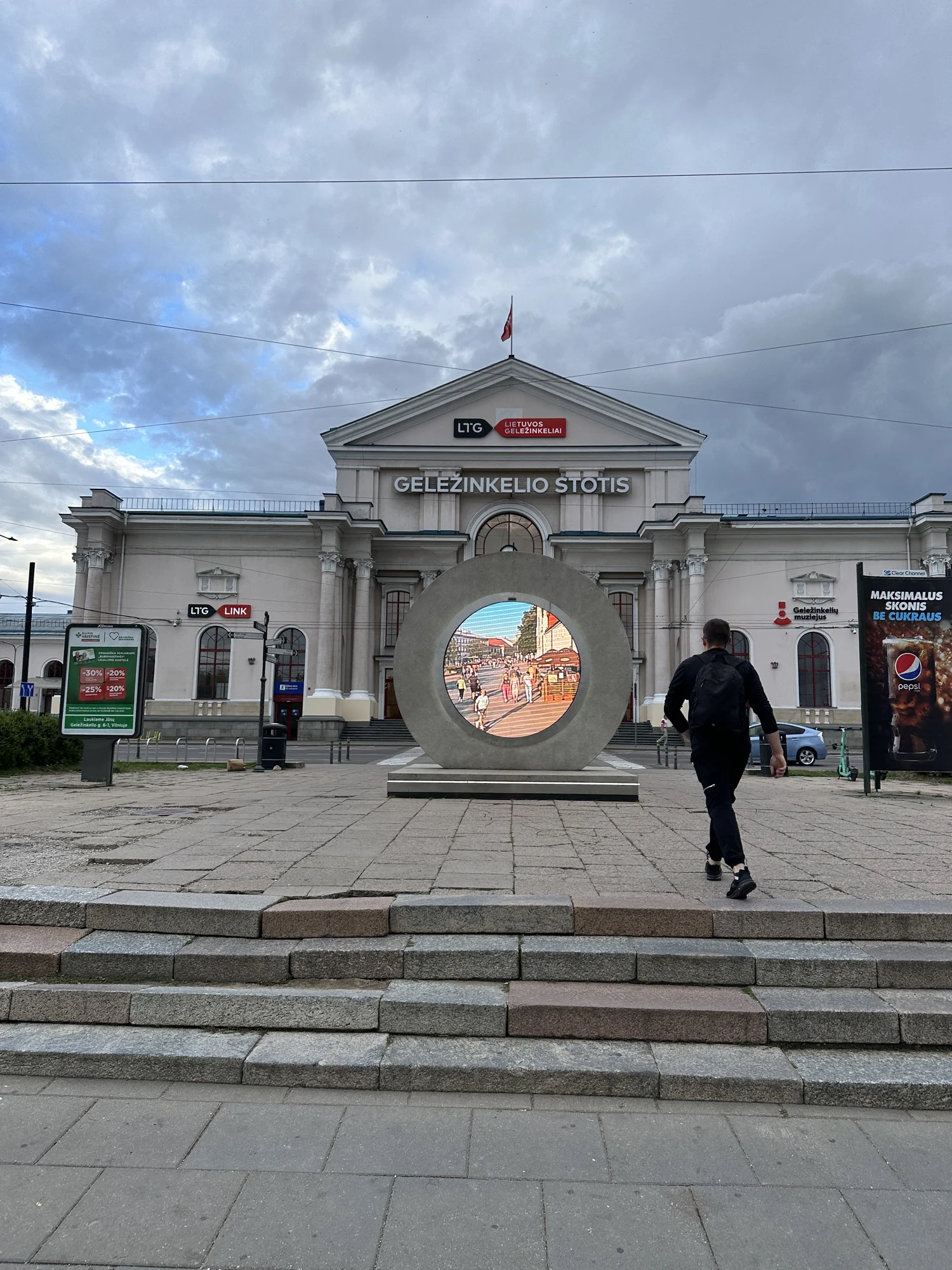
- ✓The narrow Old Town lanes — Žydų, Stiklių, Gaono, Mėsinių — that formed the heart of Jewish Vilna
- ✓The site of the Great Synagogue and the Shulhoyf courtyard complex, lost in the twentieth century
- ✓Memorials marking the gates of the WWII ghetto and the world that was destroyed here
- ✓How to read the quarter today, where almost nothing original survives above ground
Jewish Vilna: the 'Jerusalem of the North'
For centuries Vilnius — Vilna to its Jewish residents — was one of the great centres of Jewish life and learning in Europe, so renowned for its scholarship that it was called the Jerusalem of the North. By the early twentieth century, Jews made up a very large share of the city's population, and the dense lattice of streets at the heart of today's Old Town was the living core of that world: synagogues and study houses, presses and bookshops, markets, charities and the courtyards where daily life unfolded.
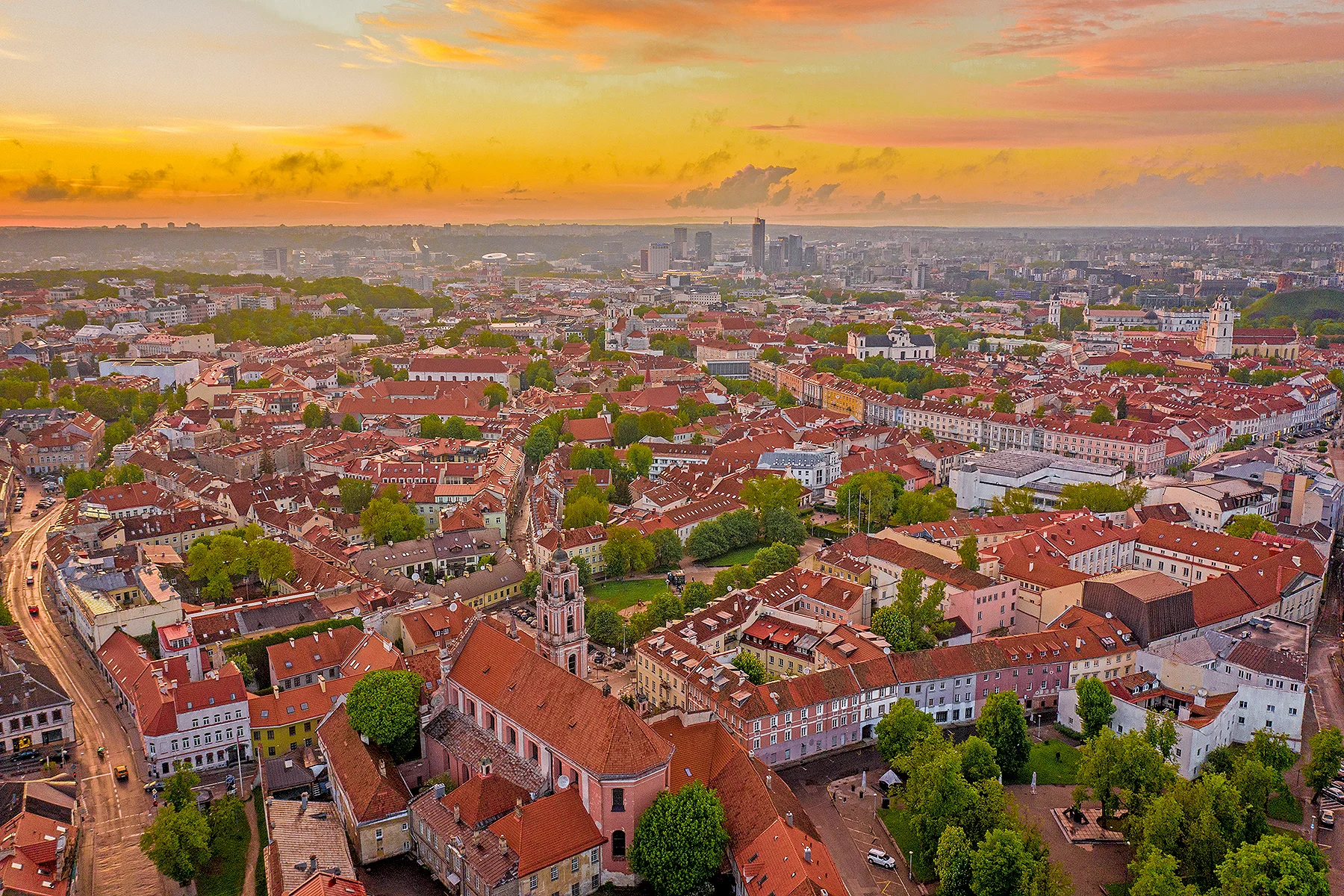
That world was almost entirely destroyed during the Holocaust, and the physical traces above ground are scarce: the Great Synagogue is gone, most prayer houses did not survive, and the streets were rebuilt and renamed. Visiting the quarter today is therefore an act of imagination and memory as much as sightseeing. This guide walks you through what is here, what is marked, and what is absent — and our companion heritage guide goes deeper into the history and the museums.
A word on respect: this is the ground of a community that was murdered, and descendants and a small living Jewish community remain in the city. Walk the lanes quietly, read the plaques, and consider a knowledgeable guide. The point is not to tick off sites but to understand what stood here and what was lost.
It also helps to know what you will not see. There is no preserved 'Jewish quarter' in the way some European cities retain a marked, intact ghetto with standing synagogues. Vilnius's Jewish heart was so thoroughly destroyed — first by the Holocaust, then by Soviet-era demolition and rebuilding — that the quarter survives mainly as street names, foundations, plaques and the careful work of memory. Setting that expectation honestly is the kindest thing a guide can do; this is a place to understand, not a set to photograph.
Where is the quarter, exactly? It occupies the dense block of Old Town lanes south-west of the Cathedral and Town Hall, roughly bounded by Vokiečių, Dominikonų and Pylimo streets. You will almost certainly pass through it without trying — these are some of the most-walked tourist lanes in Vilnius — which is precisely why a little knowledge transforms the experience. This guide is built to be read on your phone as you walk, pausing at each marker; or read it first for context and let the streets speak for themselves.
The streets of the old quarter
The historic Jewish quarter sat in the dense block of lanes south-west of the Cathedral, bounded roughly by today's Vokiečių, Dominikonų and Pylimo streets. The names still carry the memory. Žydų gatvė — Jews' Street — was the spine; Stiklių (Glaziers'), Gaono, Mėsinių (Butchers') and Antokolskio streets formed the surrounding web. They are some of the prettiest lanes in the Old Town now, lined with cafés and small shops, and most visitors stroll them without realising what they were.
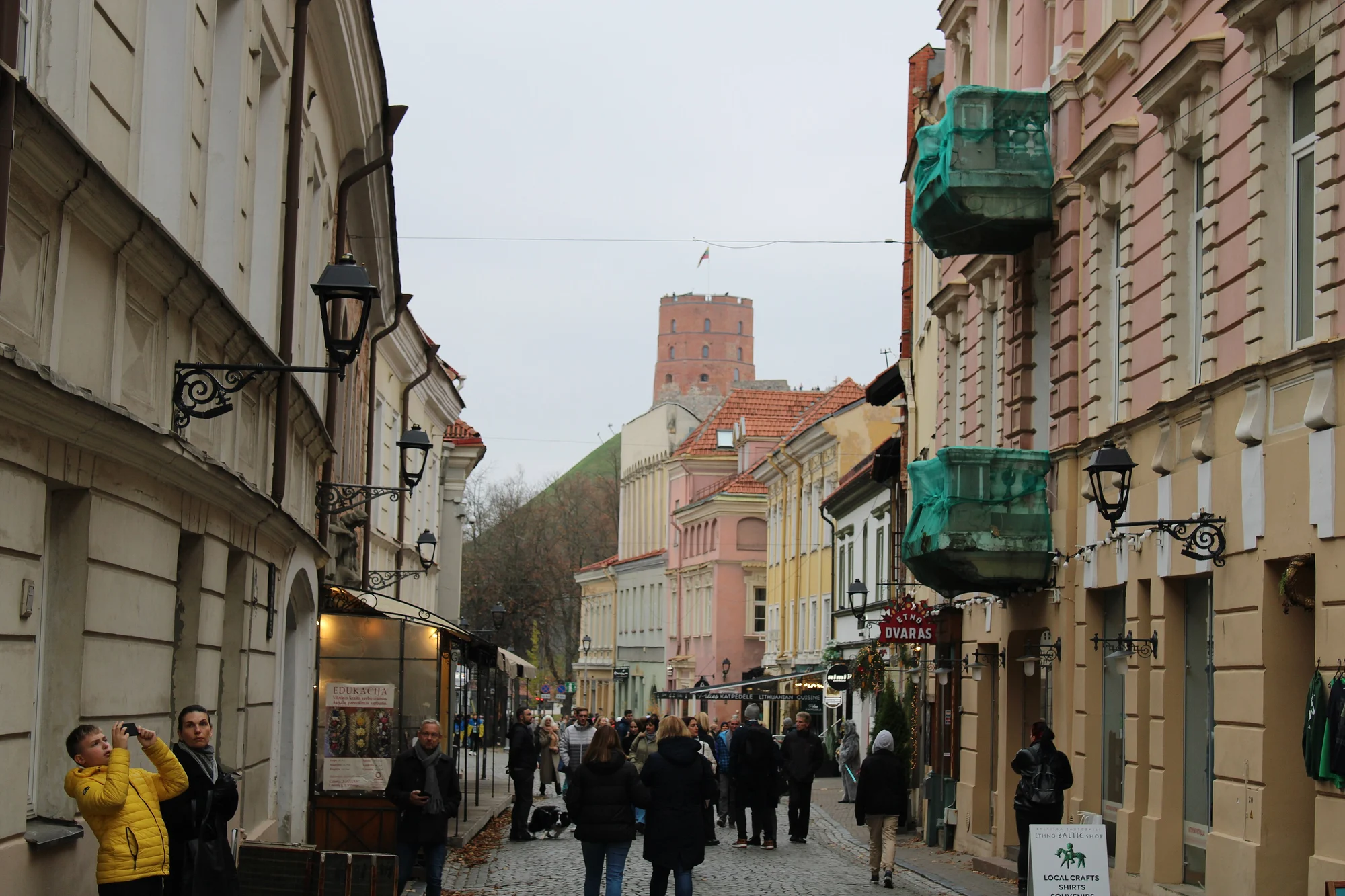
On Gaono Street, a plaque and bust near house number 3 commemorate the Vilna Gaon, Rabbi Elijah ben Solomon, the towering eighteenth-century scholar whose name the city's Jewish museum carries and whose presence made Vilna a magnet for students of the Talmud from across Europe. A short walk away, look for the small monument to Tsemakh Shabad — the beloved doctor said to have inspired the children's character Doctor Aboilit (Doctor Dolittle's Yiddish cousin) — depicted with a little girl and her cat.
Take the lanes slowly. The scale is intimate, the cobbles are uneven, and the rewards are in the details: a Hebrew inscription, a plaque, the line of a courtyard. A self-guided wander is rewarding, but a specialist Jewish-heritage guide will show you doorways and stories you would never find alone.
The street pattern itself is the oldest survivor here. The quarter was officially established in the seventeenth century, with restrictions on where Jews could live and worship, and over time it grew into the dense, inward-looking warren of courtyards typical of old European Jewish neighbourhoods — buildings turned around shared yards, with prayer houses, workshops and homes stacked together. Even after rebuilding, the lanes keep that crowded, looping geometry, and walking them you can still feel how tightly life was packed into this small block of the Old Town.
Look up and around as you go. Some buildings retain carved doorframes or window niches that once held a mezuzah; occasional Yiddish or Hebrew lettering survives on a wall or has been restored; and the contrast between the lively café terraces of today and the weight of what these streets witnessed is, in itself, part of the experience. Read it slowly and the ordinary becomes extraordinary.
- Core lanes: Žydų (Jews'), Stiklių, Gaono, Mėsinių, Antokolskio
- Gaono Street: plaque and bust to the Vilna Gaon near no. 3
- Monument to Tsemakh Shabad, the doctor who inspired 'Doctor Aboilit'
The statue honouring the beloved Vilna doctor and public figure.
Vilna Gaon MuseumThe state museum of Jewish history named for the great scholar.
Map pins
Map data © OpenStreetMap contributors · Tiles © OpenFreeMap
The Great Synagogue and the Shulhoyf
The spiritual centre of Jewish Vilna was the Great Synagogue and the surrounding Shulhoyf — a courtyard complex of prayer houses, the famous Strashun library, ritual baths and communal buildings, packed into the block between Žydų, Gaono and adjacent lanes. Built so as not to rise above the city's churches, the synagogue was sunk partly below ground and was, by all accounts, magnificent inside.
It was ransacked during the Holocaust and its ruins were demolished in the Soviet period; a school was built over much of the site. For decades almost nothing marked it. In recent years archaeological excavations have uncovered remains of the synagogue and the bimah beneath the ground, and the site is gradually being studied and commemorated — a slow, careful recovery of a place that was deliberately erased. Check locally for the current state of the excavation and any visitor access, which changes from season to season.
Standing on this ordinary-looking spot, knowing what lies beneath and what once rose above, is one of the most powerful moments in the quarter. It is also a lesson in how thoroughly a community can be removed from a cityscape — and how memory is being painstakingly returned to it.
The Shulhoyf was not only the Great Synagogue. Crowded into the same courtyards were smaller prayer houses for different trades and congregations, communal institutions, ritual baths and the celebrated Strashun library, one of the great Jewish libraries of Europe, whose collection was scattered and partly destroyed during the war. To imagine the place at its height is to picture a few narrow lanes holding an entire civilisation's worth of worship, study, charity and argument — and then to register that all of it is gone. That absence is the quarter's most important fact, and the reason a thoughtful visit lingers here.
Beyond the lanes: synagogue, theatre and Yiddish Vilna
Jewish Vilna was never only the religious quarter. By the early twentieth century the city was a powerhouse of secular Yiddish culture too — a centre of publishing, theatre, education and political life that reached far beyond these few streets. The YIVO Institute for Jewish Research, the great scholarly body of Yiddish-speaking Jewry, was founded in Vilnius in the 1920s, and the city's presses, schools, newspapers and theatres made it one of the intellectual capitals of the Jewish world. Understanding the quarter means remembering that it anchored a whole modern culture, not just a set of synagogues.
A short walk from the old lanes, on Pylimo Street at the edge of the historic quarter, stands the Choral Synagogue — the only one of Vilnius's many synagogues still standing and in regular use. Built in the early 1900s in a Moorish-influenced style for the city's more reform-minded congregation, it survived the war largely because the occupiers used it for storage. Today it serves the small living Jewish community of Vilnius. Visitors are generally welcome at appropriate times, with respect for prayer, photography limits and dress conventions; check current visiting arrangements before you go.
Seeing the surviving synagogue and walking the lost quarter on the same afternoon is instructive. One is a working house of prayer; the other is a near-total absence marked by plaques. Together they tell you both what endured and what was destroyed — and they make the case for visiting the city's Jewish-history museums, where the fuller story of Vilna's culture is documented and kept.
- YIVO Institute for Jewish Research was founded in Vilnius in the 1920s
- Choral Synagogue (Pylimo St): the city's only surviving working synagogue
- Visit with respect — check prayer times, dress and photography rules
The ghetto streets and how to visit with care
When the Nazis occupied Vilnius in 1941, they forced the city's Jews into two sealed ghettos carved out of these same streets. The Small Ghetto, around Stiklių, Gaono and Žydų streets, was liquidated within weeks. The Large Ghetto, centred on Rūdninkų, Mėsinių and the surrounding lanes, held tens of thousands of people and was destroyed in 1943; the vast majority of its inhabitants were murdered at Paneriai in the forest outside the city. A plaque at Rūdninkų 18 marks the main gate of the Large Ghetto and shows a plan of its boundaries.
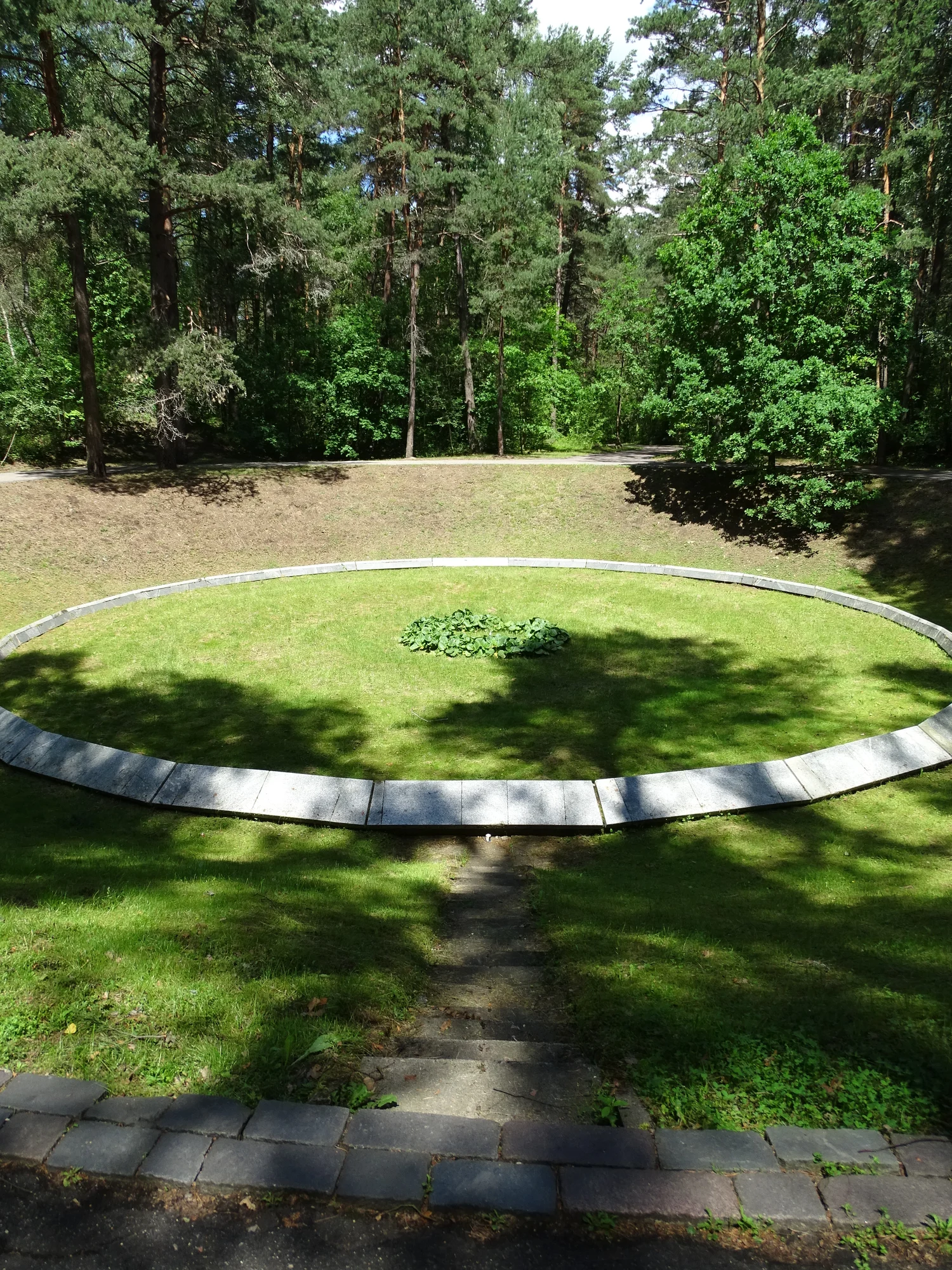
Walking these streets means walking the geography of that catastrophe. The lanes that were once full of life became, for two years, a place of confinement and terror, and then emptiness. Reading the ghetto memorials in sequence — the gate plaque, the markers along the boundary streets — gives the modern, café-lined quarter a second, sombre layer.
To understand fully, pair the quarter with Paneriai, where the killings happened, and with the city's Jewish-history museum for documentary context. A respectful, guided heritage route ties the threads together. However you go, go quietly, and remember that for many visitors and residents this is not history but family.
The Large Ghetto held an extraordinary, defiant cultural life in its short existence — a library, schools, concerts, a theatre, even sporting events — organised by people who knew their situation was desperate. It was also the centre of armed resistance: the United Partisan Organisation (FPO) formed here, and on the eve of the ghetto's liquidation in 1943 some fighters slipped out through the sewers to join partisans in the forests. Knowing this changes how you read the quiet streets; they were the setting not only for destruction but for dignity and resistance under impossible conditions.
Take time at the boundary plaques and let the geography do its work. From the gate marker at Rūdninkų you can trace the lines of the ghetto along the surrounding lanes, picturing the wall, the gate and the crowding within. A handful of small monuments and the occasional name on a wall are most of what remains; the rest you must supply with imagination and what you have learned. That act of careful attention is itself the visit.
- Two WWII ghettos were carved from the old quarter; both were destroyed by 1943
- Plaque at Rūdninkų 18 marks the main gate of the Large Ghetto with a map
- The Large Ghetto held a library, schools, theatre and an armed resistance (FPO)
- Pair with Paneriai Memorial and the Vilna Gaon Museum for full context
Planning a walk through the quarter
A self-guided wander through the quarter takes about an hour at a gentle pace, though you can easily spend a morning if you stop to read the plaques and let the history settle. A natural loop starts near the Town Hall, threads up Žydų and Stiklių, pauses at the Gaon plaque on Gaono Street and the Shabad monument, takes in the former Great Synagogue site, and continues toward Rūdninkų and the ghetto-gate marker. None of it is far; the quarter is small, which is part of its poignancy.
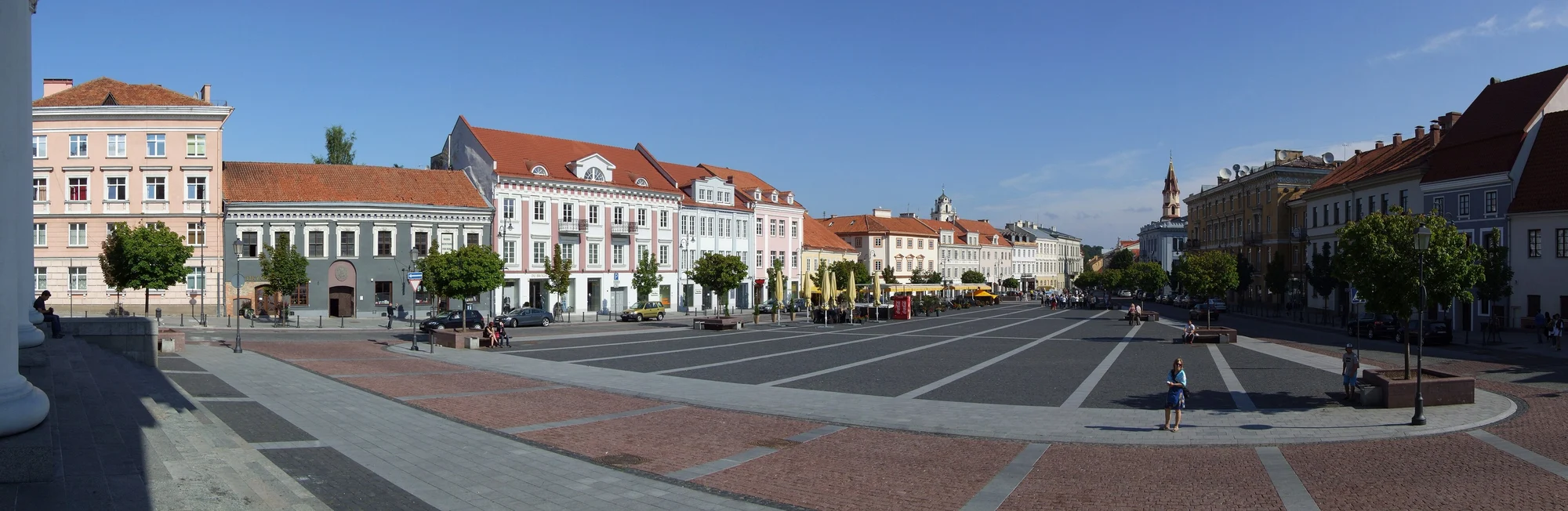
Wear comfortable shoes for the cobbles, and pick up a map or a self-guided trail from the city's Jewish-heritage resources so you know what you are looking at — without context, these are just attractive Old Town lanes. If you can, take a guided Jewish-heritage walk; the best guides bring out the human stories, point to doorways and details you would never spot, and handle the difficult history with the care it needs.
Then go further. The quarter is the beginning of the story, not the whole of it. Visit the city's Jewish-history museum branches for documentary depth, and make the trip to the Paneriai Memorial, where most of the people who lived in these streets were murdered. Our Jewish Vilnius heritage guide and our heritage itinerary tie everything together into a respectful, well-sequenced visit — and remind you, throughout, to treat this as memory rather than spectacle.
- A self-guided loop takes about an hour; a morning if you read and reflect
- Suggested route: Town Hall → Žydų/Stiklių → Gaon & Shabad → synagogue site → Rūdninkų gate
- Go deeper with the museum branches, Paneriai and a specialist guide
Related guides

Jewish Vilnius heritage guide
A careful, full guide to Jewish Vilnius — the 'Jerusalem of the North': the Vilna Gaon and the city's scholarship, the surviving synagogue, the ghetto streets and memorials, the Vilna Gaon Museum branches, Paneriai and how to plan a respectful visit.
Read guide
Vilna Gaon Museum guide
How to use Vilnius's state Jewish-history museum — the Vilna Gaon Museum of Jewish History — and its branches, from the Tolerance Centre and the Holocaust exhibition to the Samuel Bak and Litvak museums and the Paneriai Memorial.
Read guide
Paneriai Memorial: Visiting from Vilnius
A respectful guide to visiting the Paneriai (Ponary) Holocaust Memorial from Vilnius: how to get there by train, taxi, or tour, the history, time needed, and how to visit with care.
Read guide