
Best Vilnius Tours
The best tours in Vilnius: when to book walking, food, Jewish-heritage, Soviet-history, Trakai, hot-air-balloon and bike tours — and when to go it alone.
- ✓Vilnius is easy to explore alone — but a few tours genuinely add something a guidebook can't.
- ✓A free walking tour is the smartest first move: locals in something yellow meet daily on the Town Hall steps.
- ✓For the heavy, complicated history — Jewish Vilnius and the Soviet era — a guide is worth paying for.
- ✓Food and beer tours unlock the markets and Lithuanian dishes you'd otherwise walk past.
- ✓Trakai, balloon flights and bike tours cover the things that work better with logistics handled for you.
Do you even need a tour in Vilnius?
Vilnius is one of the more self-guidable capitals in Europe. The Old Town is compact, safe and walkable, English is widely spoken, and the headline sights are easy to find and mostly free to enter. You can absolutely have a wonderful few days here without booking a single tour. So this guide is not a hard sell — it is an honest sort of where a guide actually earns its keep, where a tour just buys you convenience, and where you are better off on your own with a map and an afternoon.
The short version: take a free walking tour early to get oriented; pay for a guide where the story is complicated and the physical traces are thin (Jewish Vilnius, the Soviet era); book a tour for the experiences with logistics (food and beer crawls, Trakai, ballooning, biking); and skip guided tours for the things that reward aimless wandering, like Užupis or a church crawl. The rough hierarchy of value runs free walking tour first, then a themed history tour if the subject grabs you, then an experience tour (food, balloon, day trip) for the occasion, with general 'highlights' bus or group tours coming last in a city this walkable.
It's also worth thinking about format. Free walking tours and group tours are sociable and cheap but move at the pace of the slowest; private guides cost more but tailor everything to you and are excellent for families, for accessibility needs, or for anyone with a specific interest; and self-guided audio tours and apps split the difference. Below we break it down tour type by tour type, with what each one is good for, who should book it, and how. Where prices, schedules or meeting points matter, treat the specifics as a starting point and confirm with the operator before you go.
Walking tours: start here
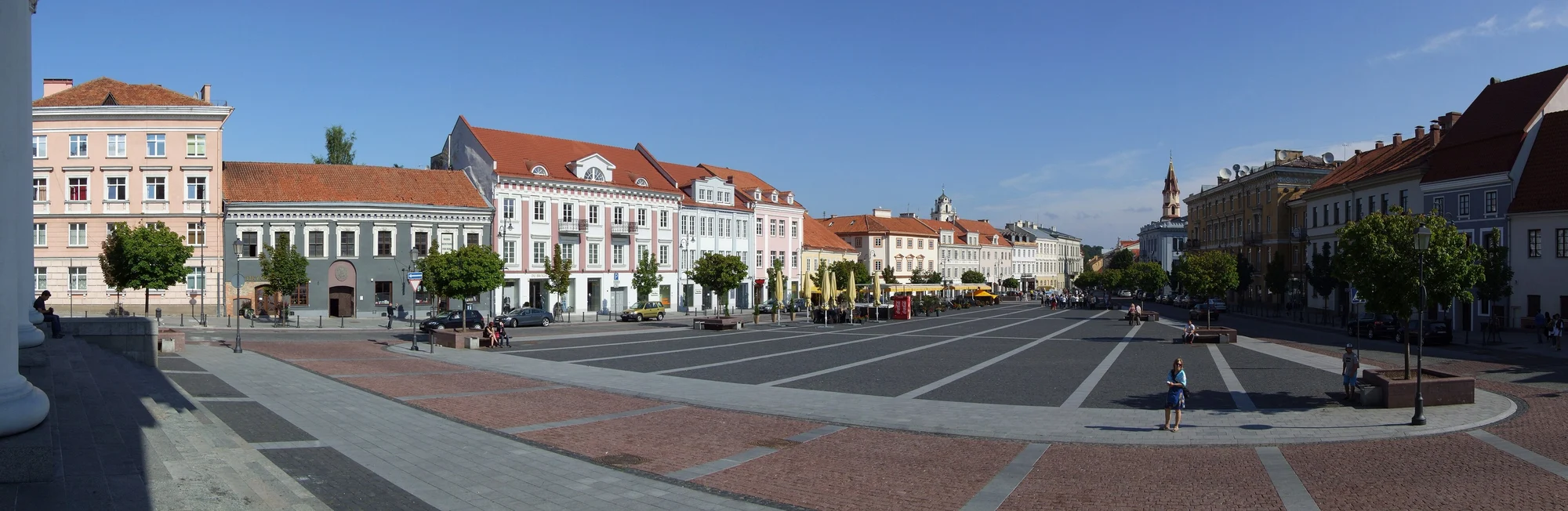
The single best first move in Vilnius is a free walking tour. Several operators run them daily; guides are typically recognisable by something yellow — a bag, a name tag, an umbrella — and gather on the steps of the Vilnius Town Hall on Didžioji Street (number 31). A typical Old Town tour starts around late morning (commonly 11:00) and runs roughly two to two-and-a-half hours, threading the narrow streets of the UNESCO-listed centre, the former Jewish quarter, St. Anne's, Užupis and a few hidden corners, with the history joined up in a way a map can't manage. They are tip-based rather than genuinely free, so come with cash and reward a good guide properly — the guiding here is generally excellent, and a tip of what you'd happily pay for a couple of hours is the right spirit.
Beyond the free tours, paid small-group and private walking tours go deeper on specific themes — architecture, legends, the university, photography, even haunted Vilnius. Private guides are worth the outlay for families, for travellers with mobility needs who want a tailored pace, or for anyone with a niche interest the free tour only glances at. If you only do one organised thing in Vilnius, make it a walking tour on your first morning: it gives you the lay of the land, the stories behind the buildings, the orientation that makes the rest of the trip easier, and a local you can ask for restaurant and bar tips. After two hours with a good guide you will navigate the city with far more confidence — and you'll have a shortlist of places to come back to.
- Free walking tours meet daily on the Town Hall steps (Didžioji 31); look for guides in yellow.
- Old Town tours run roughly 2–2.5 hours and cover the centre, Jewish quarter and Užupis.
- Tip-based — pay what the tour was worth to you; book ahead in peak season as groups fill.
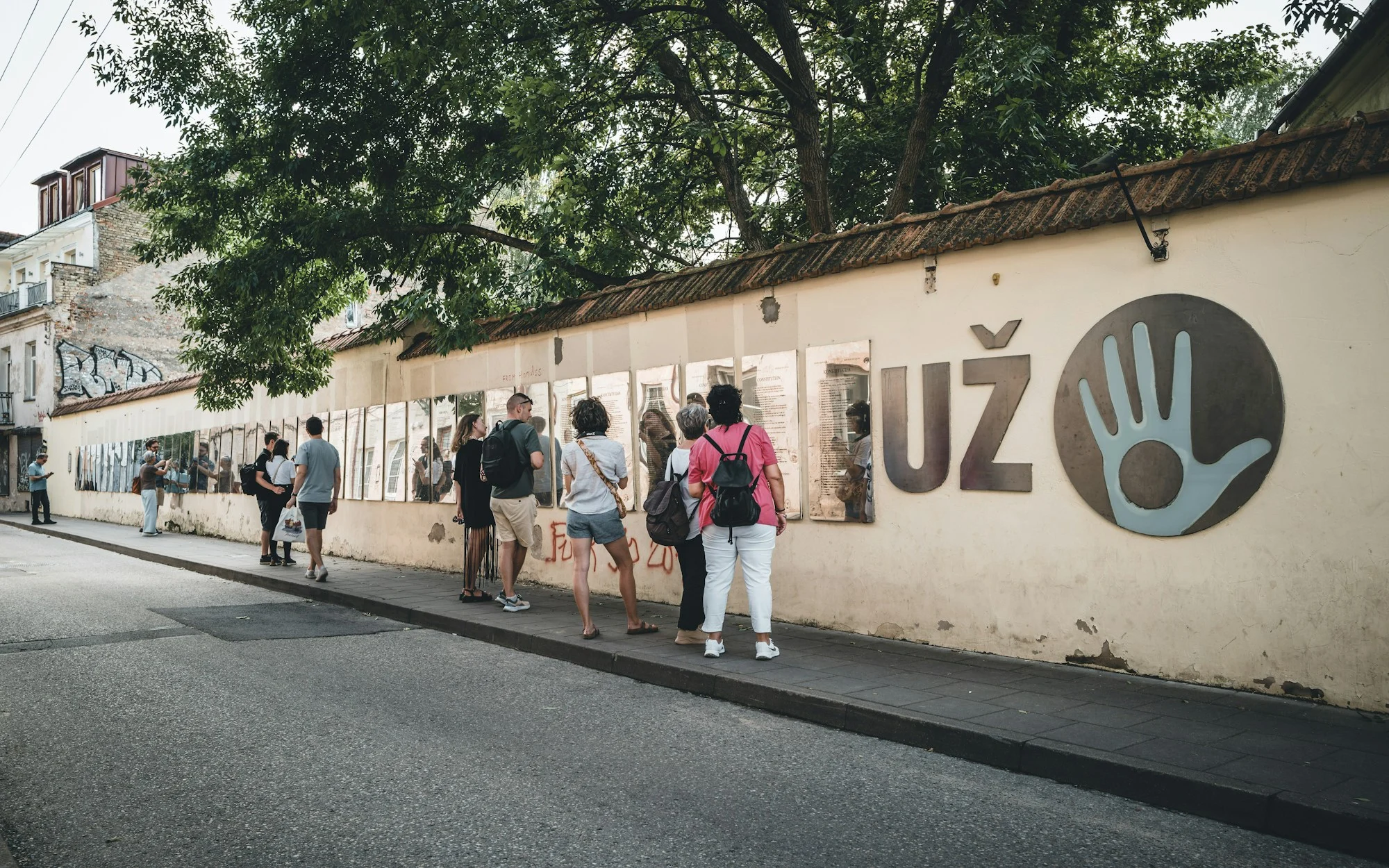
The artists' 'republic' most walking tours pass through — and easy to explore alone.
Old Town (Senamiestis)The historic core every walking tour is built around.
Map pins
Map data © OpenStreetMap contributors · Tiles © OpenFreeMap
History tours worth paying for: Jewish Vilnius and the Soviet era
Two strands of Vilnius history are hard to grasp without a guide, because so much of the physical evidence is gone or hidden. The first is Jewish Vilnius — the 'Jerusalem of Lithuania', once one of Europe's great centres of Jewish learning and the home of the Vilna Gaon, almost entirely destroyed in the Holocaust. Themed Jewish-heritage walking tours start from the Town Hall and lead through the streets of the former Jewish quarter and the areas of the two WWII-era ghettos, pointing out where the Great Synagogue stood, the surviving fragments, and the memorials, and filling in a layer of the city that is otherwise easy to walk straight past. For this subject, a knowledgeable guide is genuinely the difference between seeing ordinary streets and understanding the world that was erased from them.
The second is the Soviet era and the fight for independence. Soviet-themed tours typically start in the afternoon — one well-known route begins at the Gediminas monument on Cathedral Square in the mid-afternoon and runs about two and a half hours — connecting the dots between the former KGB building, the January 1991 events at the TV Tower (where 14 unarmed defenders were killed), the partisan resistance, and the everyday texture of life under occupation, from queues to surveillance. Pair a Soviet walking tour with the Museum of Occupations and Freedom Fights in the old KGB headquarters for the full, sobering picture; together they are among the most powerful few hours you can spend in the city. These are the tours where the cost clearly buys you something a guidebook can't — context, eyewitness-flavoured detail, and answers to the questions a museum panel can't field.
Food, beer and market tours
Food tours are one of the best-value organised experiences in Vilnius, because Lithuanian cuisine is not always obvious to a visitor and a good guide gets you past the tourist-menu version. A typical food tour weaves through the markets and a handful of restaurants and bars over two to three hours, with tastings of the classics — cepelinai, šaltibarščiai, smoked meats and cheeses, dark rye bread, curd-cheese desserts, and the honey-spiced spirits — plus the context for why Lithuanians eat what they eat, shaped by long winters, forests and a farming calendar. Halės Market is a common anchor, and a good guide will introduce you to stallholders and producers you'd never approach alone. You finish full, a little tipsy, and with a mental map of where to eat for the rest of the trip — which is exactly why a food tour pays off early rather than late.
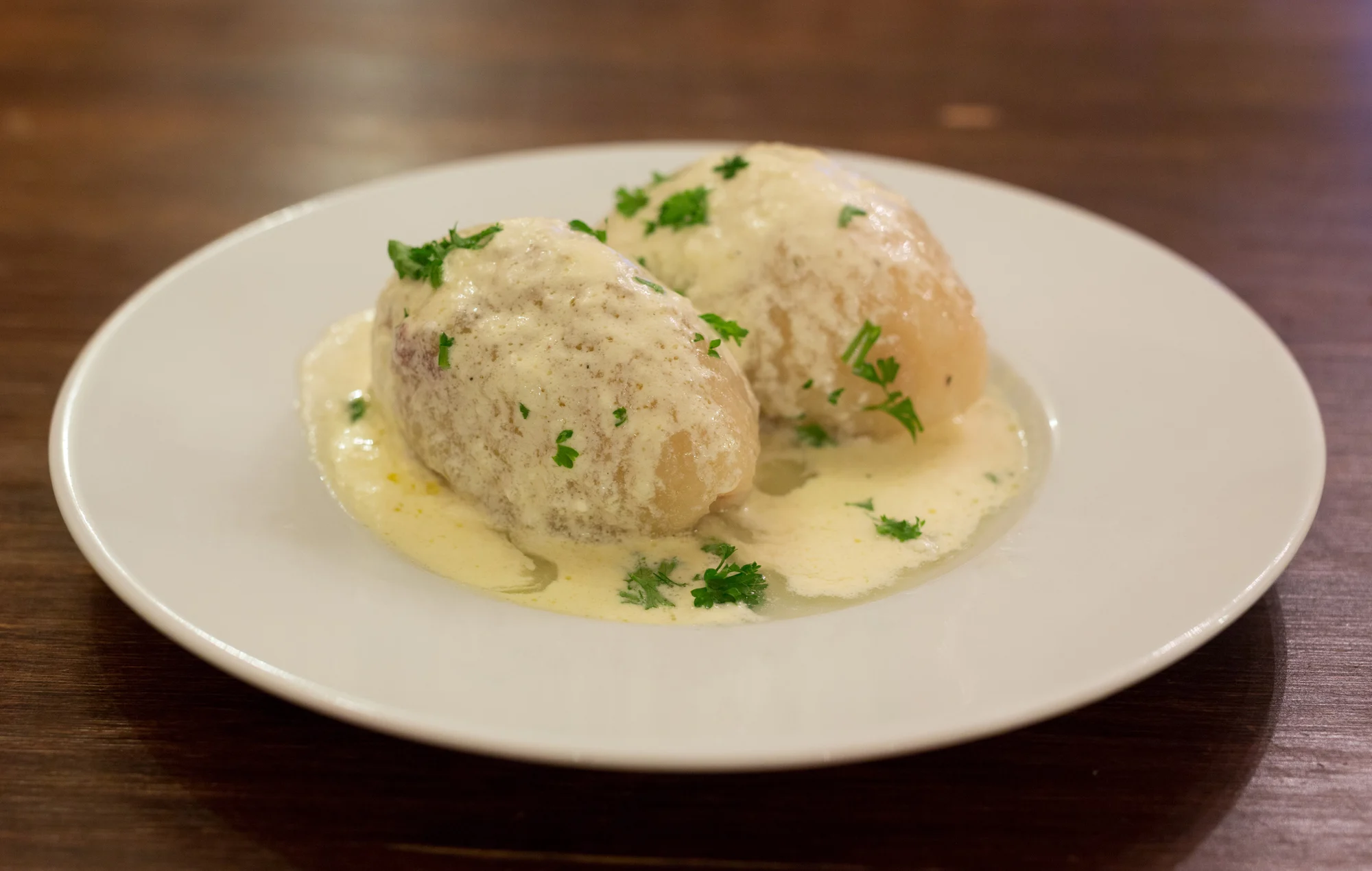
Craft-beer and bar tours are the boozier cousin: Lithuania has a deep, distinctive brewing tradition — including farmhouse ales and the baked 'keptinis' beers that survive almost nowhere else — that rewards a guided crawl through taprooms and bars you would not find on your own, with the brewing history explained between rounds and the right beer snacks ordered for you. There are also more specialised options: Jewish-food tastings, dedicated market tours, and Lithuanian fine-dining experiences. If you would rather DIY, the markets and the better Lithuanian restaurants are easy enough to visit independently and we'd never insist on a tour — but for a social, low-effort way to compress a lot of eating and drinking into one evening, especially at the start of a trip when you're still finding your feet, food and beer tours are hard to beat.
When to skip the tour (and go it alone)
Plenty of Vilnius is best with no guide at all. Užupis rewards aimless wandering far more than a led walk — the whole charm of the artists' 'republic' is stumbling on its constitution wall, its angel, its quirky details and riverside corners at your own pace. The same goes for a church crawl, a viewpoint climb up Gediminas' Tower or Three Crosses Hill, a stroll along Pilies Street, or an afternoon poking through the Old Town's courtyards and shops. None of these need explaining; they need time and curiosity.
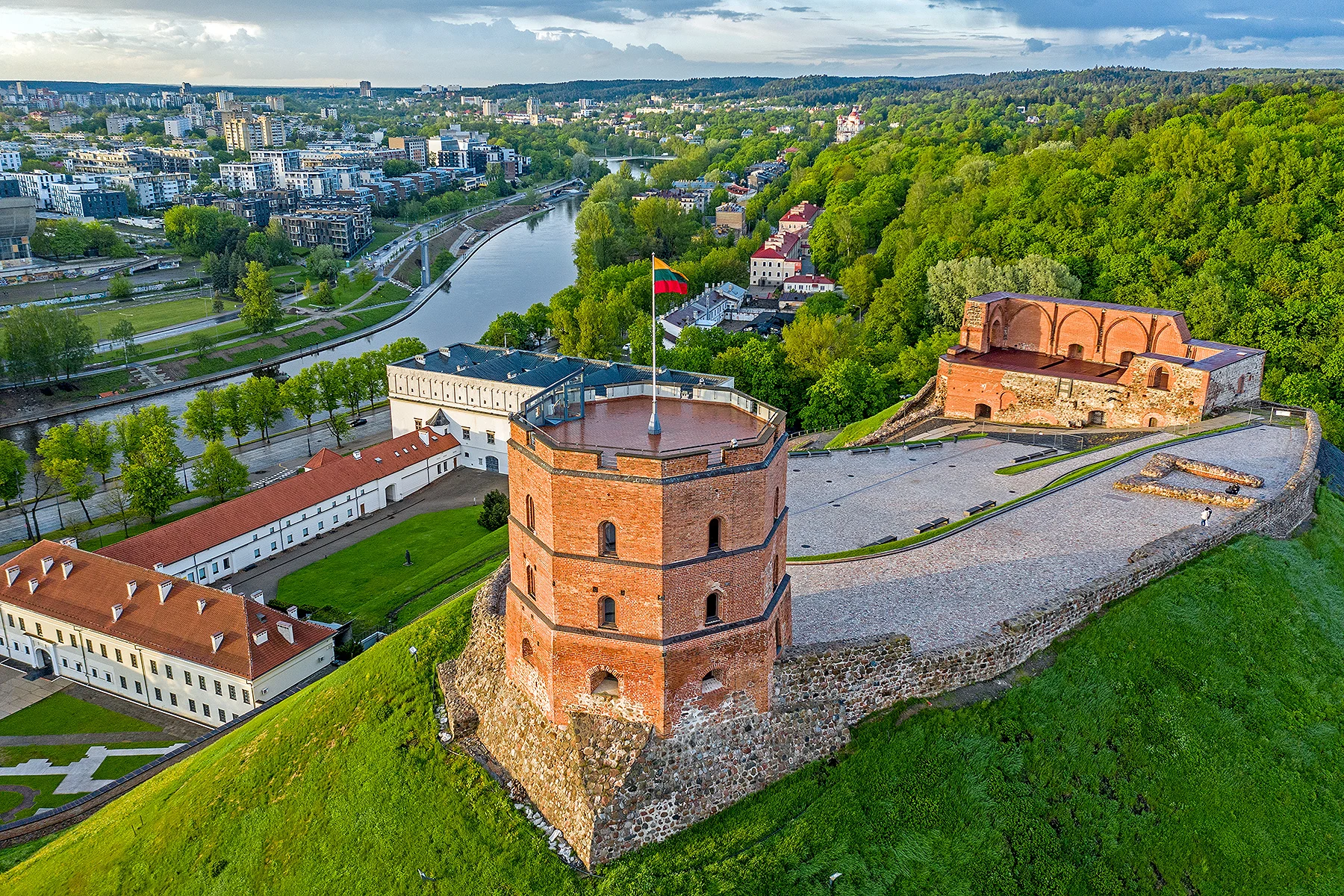
For self-guided structure without a live guide, the city is well served by walking-route apps and downloadable audio tours, and our own walking routes and neighbourhood guides string the highlights together if you'd rather plan it yourself. The general 'hop-on hop-off' style bus tours, common in bigger cities, add little in a centre this compact and walkable — save your money. As a rule of thumb: pay a guide for stories and context you can't get from a plaque (history, food, heritage), and go solo for everything that's about atmosphere, views and wandering.
Day trips, balloons and bikes
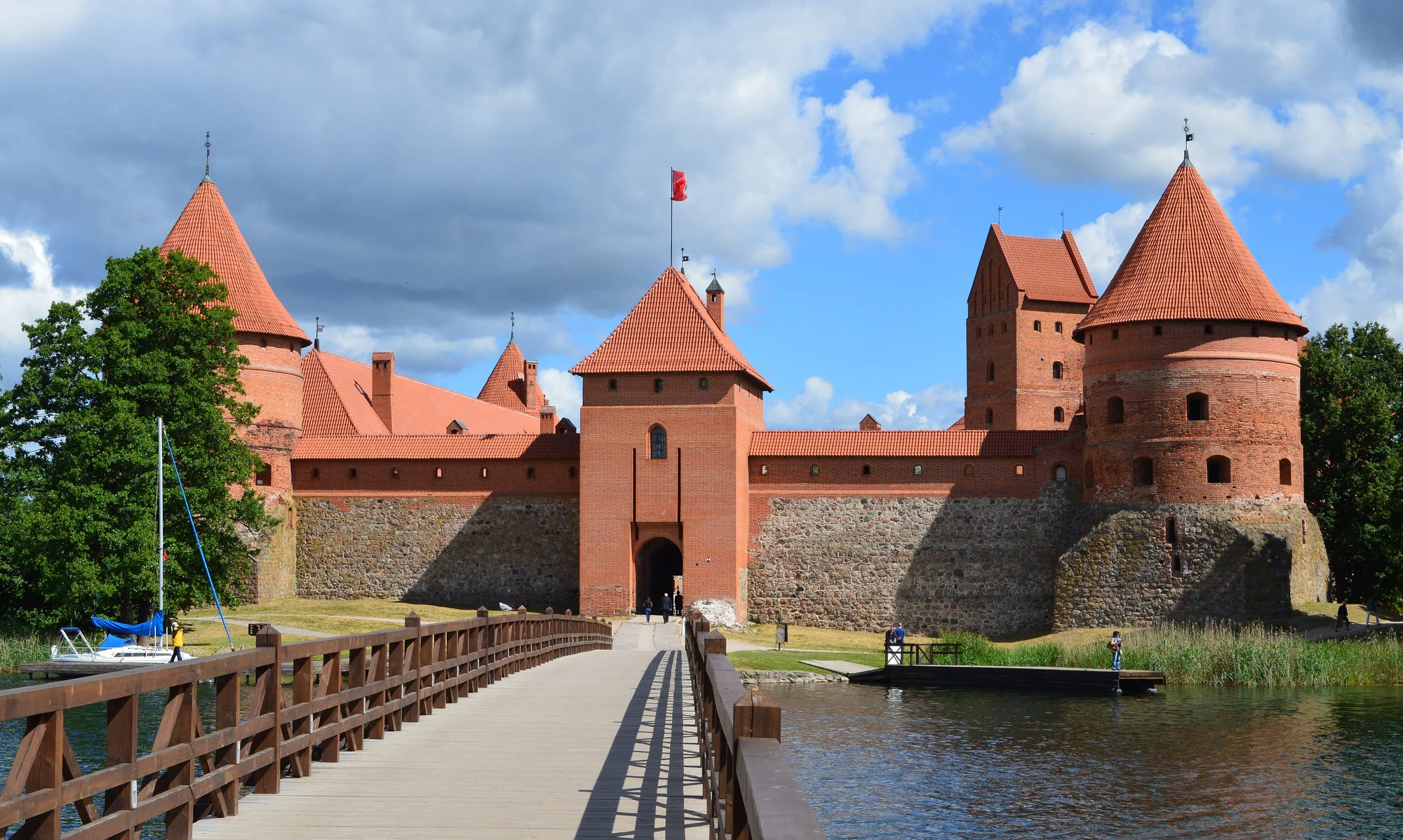
Some experiences are simply easier with the logistics handled. Trakai — the red-brick island castle on Lake Galvė, about 40 minutes from the city — is reachable independently by train or bus, and we'd happily send confident travellers to do it themselves, but organised half-day tours bundle the transport, the castle entry and often a kibinai tasting into one tidy package, which suits travellers short on time or unsure of the timetables. The same goes for other day trips: tours to the Hill of Crosses near Šiauliai, the Cold War-era underground missile base in the Žemaitija forest, Kaunas, Kernavė, or the KGB and partisan sites further afield take the driving and planning off your plate and turn a logistically fiddly day into an easy one.
For something more memorable, Vilnius is one of very few European capitals where hot-air balloons are allowed to fly over the historic centre, and flights over the city or over Trakai are a genuine bucket-list experience. The season runs roughly spring to autumn, flights go at sunrise or sunset only, and everything depends on the weather — so book early in your stay and keep a spare day in case of a postponement. Bike tours are the active alternative — flat riverside routes and neighbourhood loops with a guide, including dedicated street-art and architecture rides, with e-bikes available for less athletic groups. There are also kayak trips on the Vilnia and Neris in summer, and Segway and e-scooter tours for covering ground quickly. For all of these, book ahead in peak season, dress for the conditions, and treat the weather as the deciding factor for anything that flies or floats.
- Trakai half-day tours bundle transport, the lake castle and kibinai — handy if time is tight.
- Hot-air-balloon flights over Vilnius or Trakai run spring to autumn, weather permitting.
- Bike, e-bike, kayak and Segway tours cover the city actively, including street-art rides.
- Day-trip tours reach the Hill of Crosses, the missile base, Kaunas and Kernavė.
How to book, and what tours cost
Booking in Vilnius is easy. The big online marketplaces — GetYourGuide, Viator and similar — list most walking, food, day-trip and balloon tours with reviews, instant confirmation and (usually) free cancellation up to a day or so before, which makes them a low-risk way to lock in popular experiences, especially in summer. Booking direct with a local operator can be cheaper and puts more of your money in local hands; for free walking tours you generally just turn up, though some ask you to register online so they know how many guides to send. Hotels and the tourist information office can also point you to reputable operators on the day.
On price, Vilnius is gentle on the wallet by European standards. Free walking tours cost only what you tip; paid group walking and food tours are modest; private guides and balloon flights are the bigger-ticket items. Day trips sit in between, depending on distance and whether entry fees are included. Always check what a price covers — transport, entry tickets, tastings, transfers — because two similarly priced tours can include very different things. And read the cancellation terms, particularly for weather-dependent experiences like ballooning and kayaking.
A final tip on timing: book the experiences that sell out or depend on weather (balloon flights, popular food tours, long day trips) as soon as your dates are firm, and leave the flexible, turn-up-and-go options (free walking tours, self-guided wanders) for filling gaps once you're there. That way the things that can't be rearranged are secured, and the rest of the trip stays loose.
Related guides
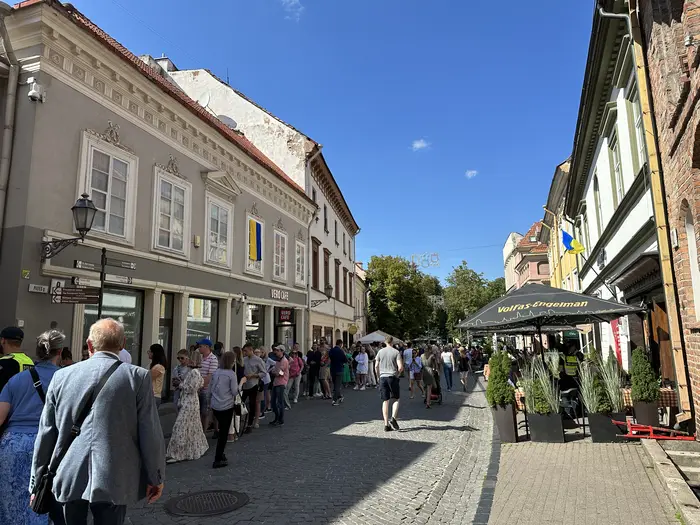
Best Vilnius Food Tours
How to choose a Vilnius food tour: compare market tastings, Lithuanian-classics walks, craft-beer crawls and Jewish-heritage food tours by neighborhood, budget and group size, and decide whether a tour is worth it at all.
Read guide
Jewish Vilnius heritage guide
A careful, full guide to Jewish Vilnius — the 'Jerusalem of the North': the Vilna Gaon and the city's scholarship, the surviving synagogue, the ghetto streets and memorials, the Vilna Gaon Museum branches, Paneriai and how to plan a respectful visit.
Read guide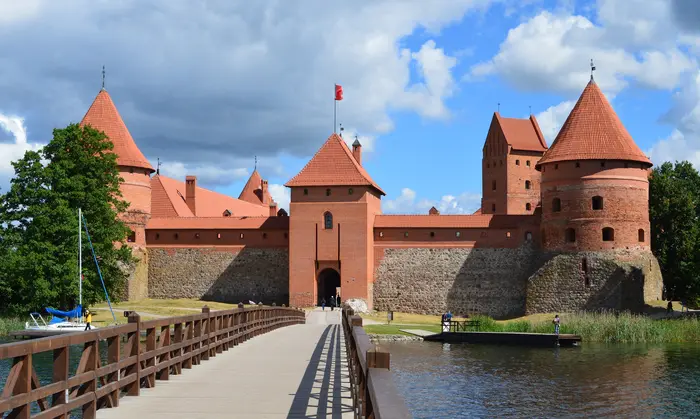
Trakai Day Trip
A complete Trakai day trip from Vilnius: how to get there, the island castle, Karaim kibinai, lake boating and a relaxed plan that doesn't feel rushed.
Read guide