
Three Days in Vilnius: The Ideal Itinerary
A three-day Vilnius itinerary that pairs the Old Town, viewpoints, Užupis and the MO Museum with proper food and one easy half-day trip to lakeside Trakai Castle — paced for couples who would rather know one city well.
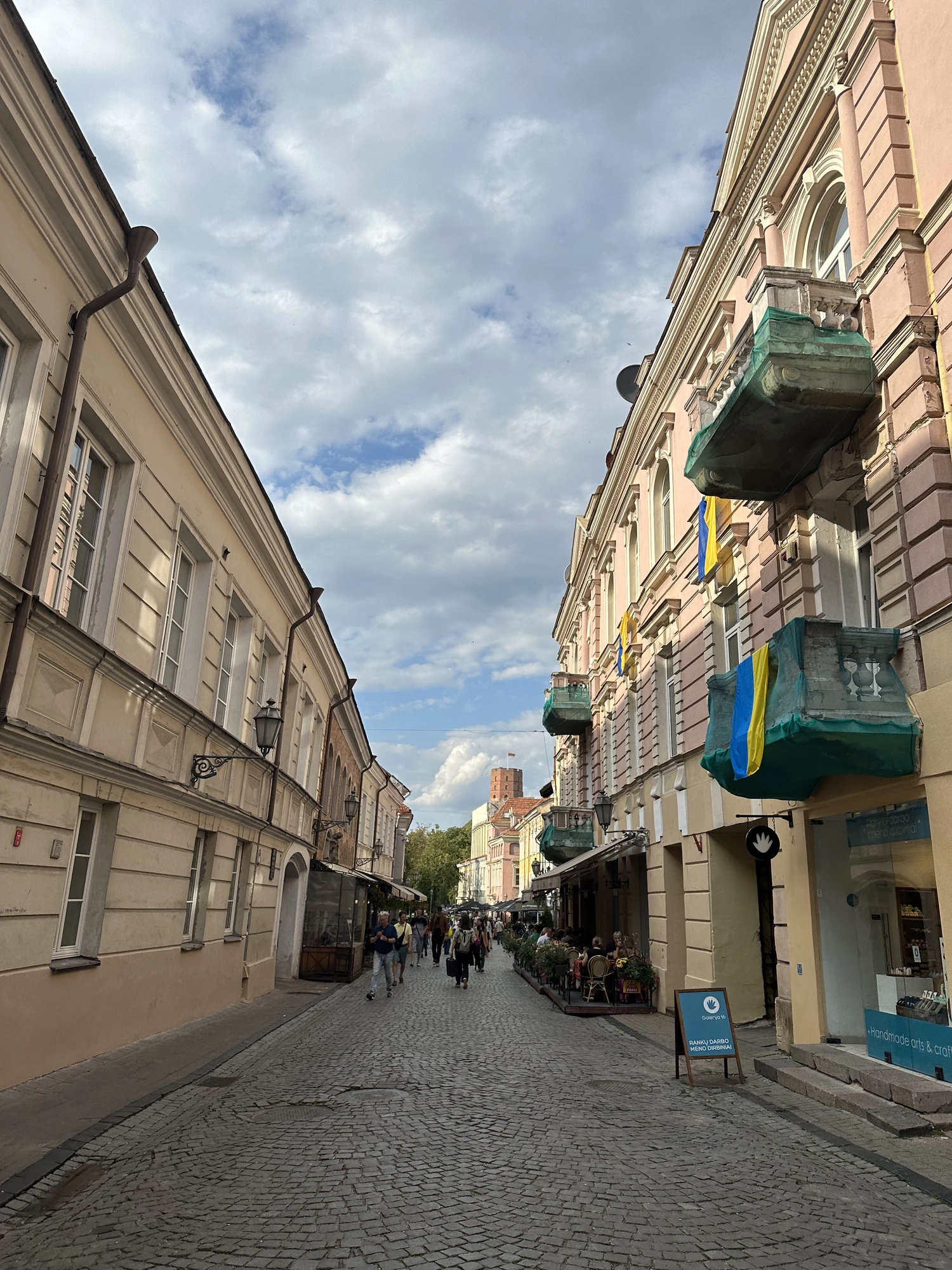
- ✓Three days is the ideal length for a first Vilnius trip: the highlights, plus room for a museum, a long lunch and a half-day at Trakai.
- ✓Day one covers the Old Town and a sunset; day two adds Užupis, the MO Museum and the riverside; day three escapes to lakeside Trakai Castle.
- ✓Trakai is a genuine half-day: about 30 minutes by train or bus, a fairy-tale red-brick castle on an island, back in the city for dinner.
- ✓The city core is compact and walkable, so two of the three days run entirely on foot; only the Trakai trip needs transport.
- ✓This pace deliberately leaves slack — a food tour, a second viewpoint, or simply a slow afternoon — because that is where Vilnius shines.
Why three days is the sweet spot
If you ask which is the right length for a first visit to Vilnius, the honest answer is three days. Two days covers the essentials but leaves no slack; four or more is wonderful but more than many trips allow. Three is the Goldilocks number: you keep all the highlights — the UNESCO Old Town, a sunset viewpoint, bohemian Užupis — and still have room for a museum, an unhurried plate of cepelinai, and one easy day trip to the lakeside castle at Trakai, without anything ever feeling squeezed.
This itinerary is structured as three distinct days. Day one is the Old Town done properly, ending above the city at sunset. Day two crosses the Vilnia for Užupis, the MO Museum and the regenerated Paupys riverside, with the evening kept free for food and bars. Day three leaves the city entirely for a half-day at Trakai, returning in time for a final Vilnius dinner. Each day is a self-contained loop, so you can reorder them around the weather, an opening day, or a museum's closing day.
As ever in Vilnius, the timings are a rhythm rather than a schedule. The city is small, flat and walkable — you can cross the historic core in about twenty minutes — so the plan has built-in margin. Use it. The food tour you add, the church you wander into, the second beer as the spires turn gold: those are the parts you will actually remember.
This plan suits almost everyone — couples on a romantic break, first-timers who want the full picture, friends after a long-weekend-plus. The only people it does not quite fit are those set on a deep dive into the city's neighbourhoods and heritage, who should add a fourth day, or anyone with a single day, who should follow our tighter one-day route. For most, three days is exactly enough to feel you know the place without ever feeling you rushed it.
Day one: the Old Town and a sunset
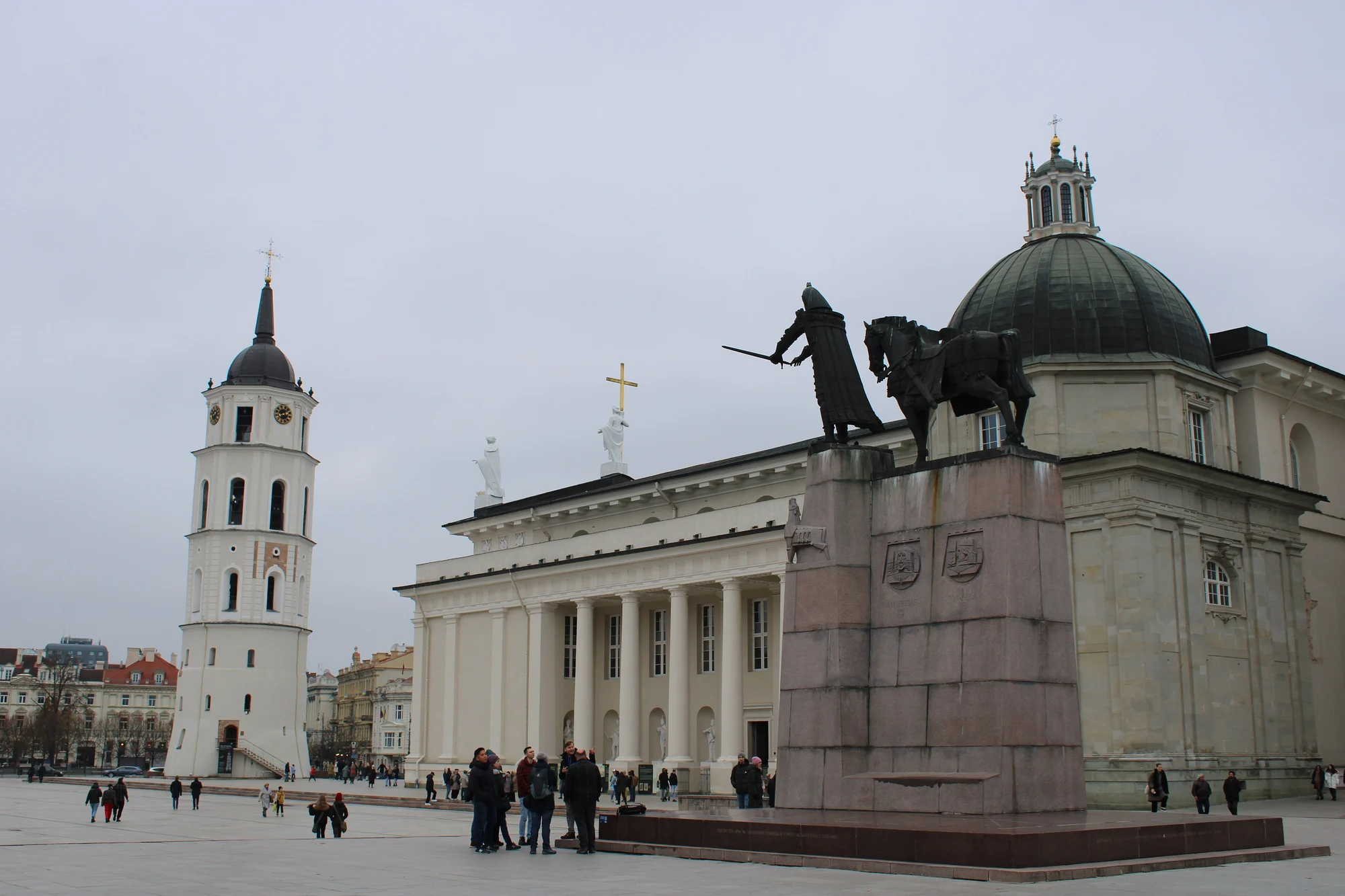
Spend the whole first day in and above the Old Town. Begin at Cathedral Square — the white Cathedral and its bell tower, Gediminas Hill rising behind, and the Stebuklas "miracle" tile underfoot, where the 1989 Baltic Way human chain began. From there walk the cobbled Pilies–Didžioji spine south toward the Gate of Dawn, detouring into the Vilnius University courtyards and the Presidential Palace square along the way. Give the morning no firmer plan than getting pleasantly lost and finding good coffee.
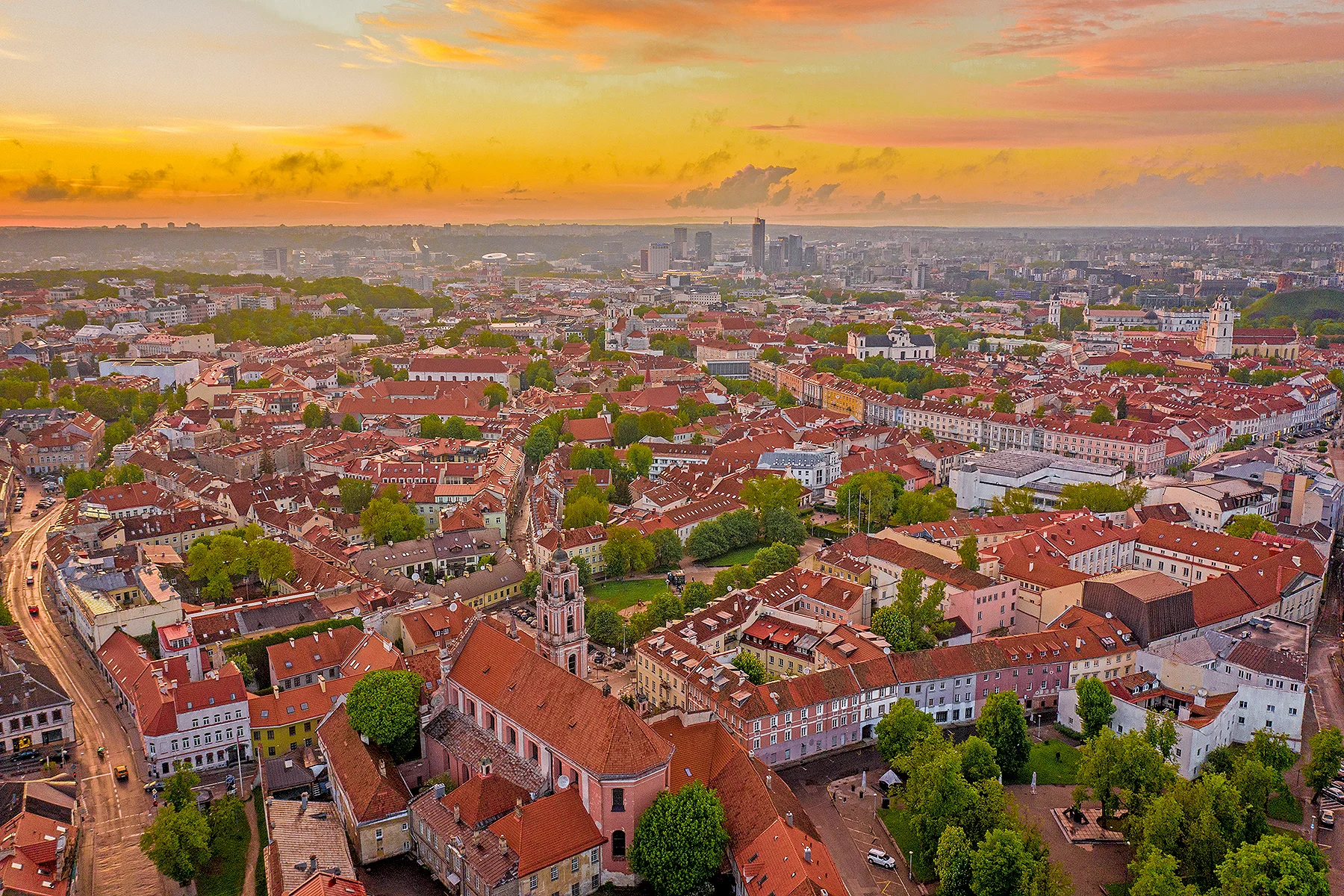
After a long Lithuanian lunch — cepelinai, cold beetroot soup in summer, dark rye bread — spend the afternoon on the churches that are the city's real art collection: red-brick Gothic St. Anne's, the stucco-filled St. Peter and St. Paul, and the Gate of Dawn chapel with its revered Madonna. Almost all are free; dress modestly and keep clear of services.
There is more to day one if you have the appetite. The Vilnius University ensemble — thirteen courtyards and the frescoed St. John's Church — repays a slow wander, and the adjoining St. John's Bell Tower, at 68 metres the tallest structure in the Old Town, has a lift to a deck looking straight down onto the red roofs. The Bernardine Garden along the Vilnia is a lovely, free green pause, and the Literatų Street wall of small artworks honouring writers is an easy detour. None of this is compulsory; the joy of day one is choosing a few and letting the rest go.
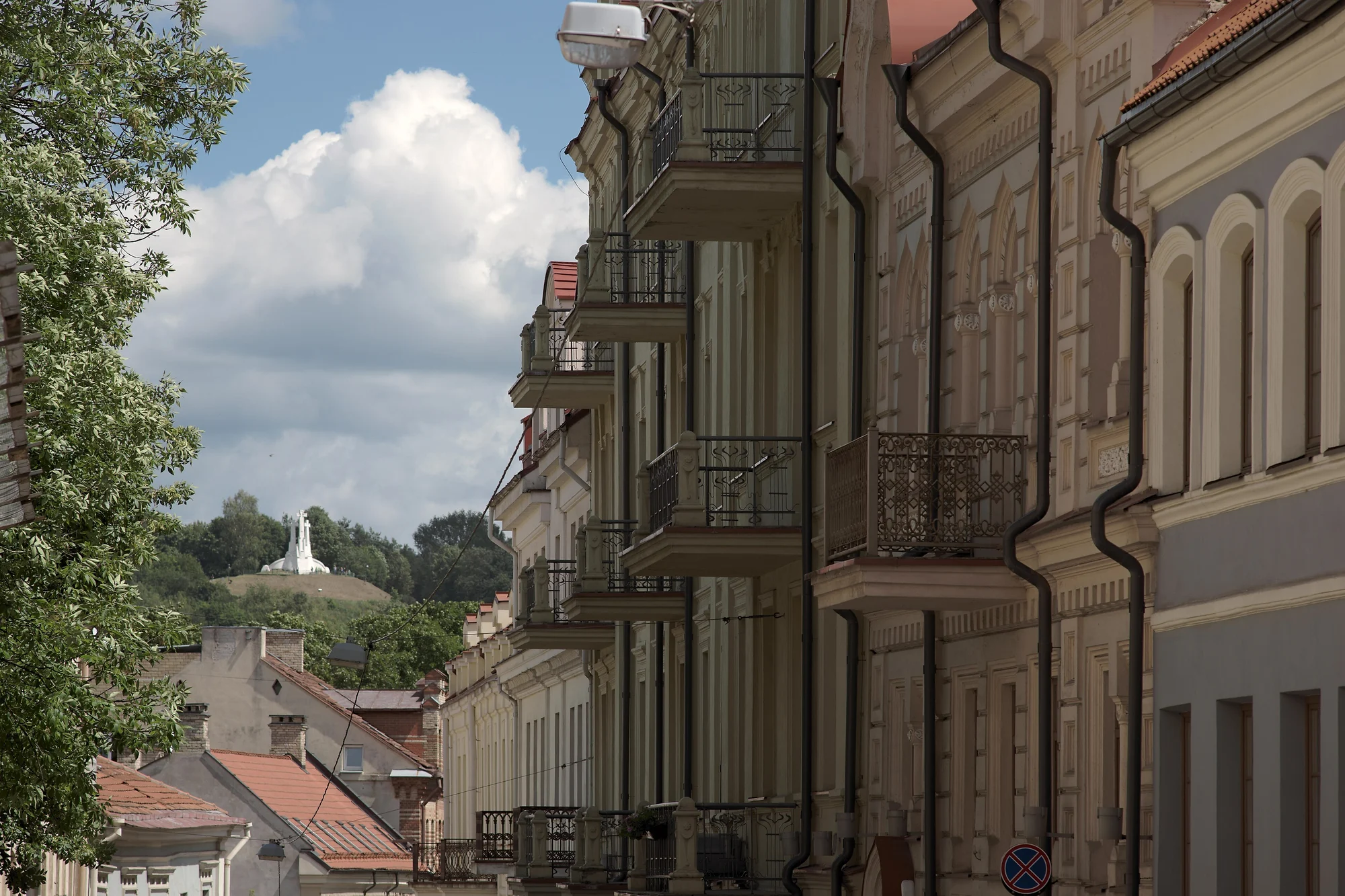
End the day above the rooftops. Climb to Gediminas' Tower (a steep cobbled path or a short funicular, roughly €2 each way, with a modest separate tower entry) or walk ten minutes uphill from the Bernardine Garden to the free Three Crosses monument, which arguably has the better panorama. Time either for sunset, then drop back into the Old Town for dinner. Funicular and tower hours shift seasonally, so confirm before you climb.
- Mostly free day: Cathedral Square, the Pilies walk, church interiors, and the Three Crosses viewpoint.
- Small tickets: University courtyards, St. John's Bell Tower, the Gediminas funicular and tower.
- Save at least one viewpoint for golden hour — the Baroque spires glow.
The historic core in depth.
Three Crosses HillThe free panorama to aim for at sunset.
Gediminas' TowerThe funicular, the climb and the city's signature view.
Map pins
Map data © OpenStreetMap contributors · Tiles © OpenFreeMap
Day two: Užupis, the MO Museum and the river
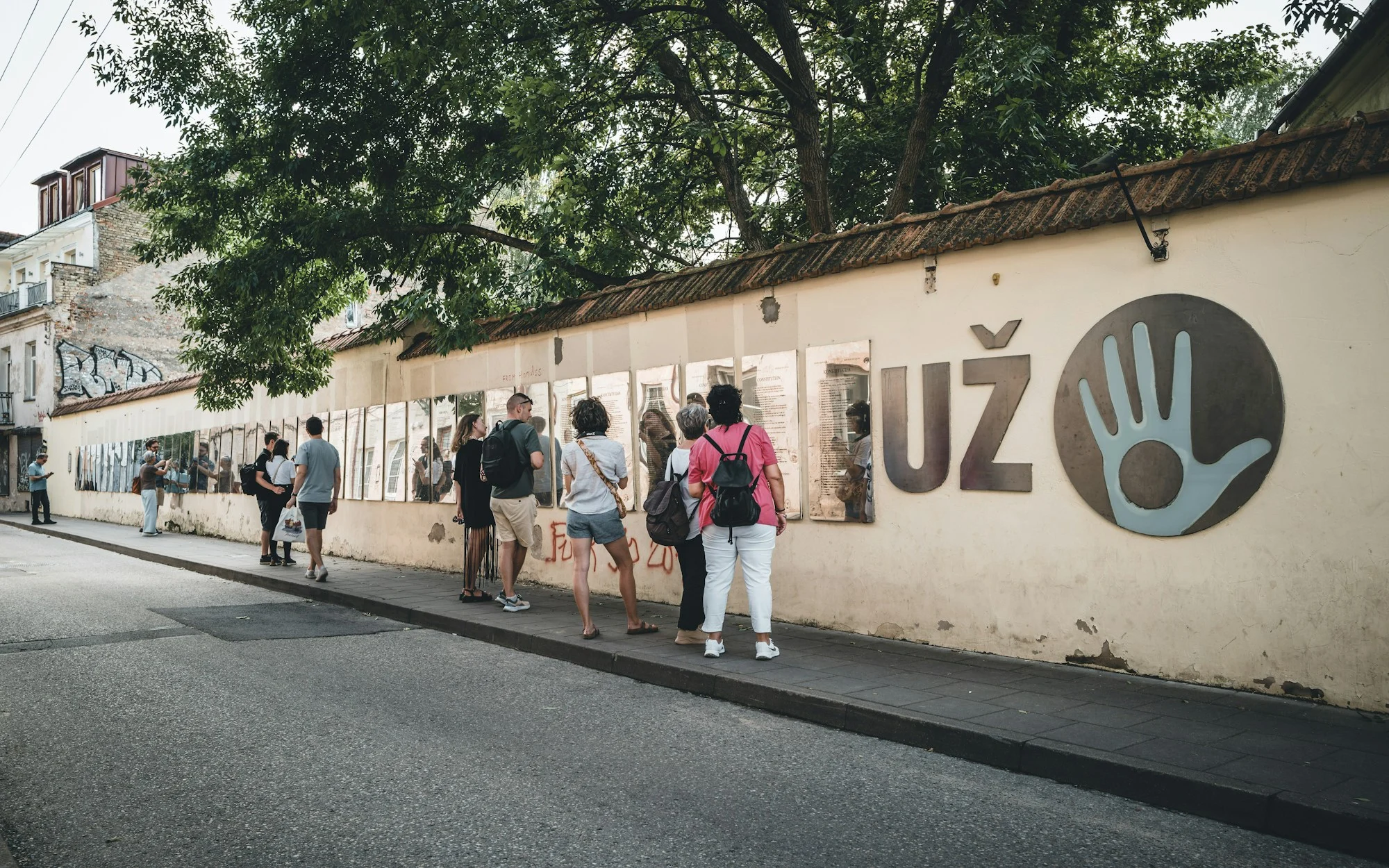
Day two changes the mood. Start at the MO Museum on the edge of the New Town — the Libeskind-designed home of modern Lithuanian art, with strong temporary shows and a good café, and an easy couple of hours (adult admission around €11; closed Tuesdays, so reshuffle if needed). Then walk back toward the river and cross the small bridge over the Vilnia into Užupis, the artists' "republic" that declared independence on April Fool's Day in 1997. Read its playful constitution on the wall in Paupio Street, find the bronze angel and the swing over the water, and let an hour or two go soft in a gallery or wine bar.
Drift downstream to Paupys, the regenerated riverside quarter, and graze through Paupys Market (Paupio turgus) — a bright food hall of Lithuanian and global small plates with riverside seating. It is the easy, varied answer for lunch. From there a flat ten-minute riverside walk returns you to the Old Town with the afternoon still open.
If contemporary art is not your thing, day two flexes easily. Swap MO for the Museum of Occupations and Freedom Fights — the former KGB headquarters, a sobering account of the Soviet decades and the resistance to them — or simply give the extra time to Užupis and the riverside. The shape of the day holds either way: a morning with a purpose, an afternoon across the water, an evening kept loose.
This is the day to consider a guided food tour, which threads markets, cellars and Lithuanian classics with the stories behind them and is a genuinely good use of a few hours here. Keep the evening for dinner and a bar — Vilnius has a serious cocktail and craft-beer scene for a city its size, much of it within the Old Town and Paupys.
Day three: a half-day trip to Trakai Castle
On day three, leave the city for Trakai — the postcard red-brick castle on an island in Lake Galvė, about 28 km west and the single best day trip from Vilnius. It is an easy half-day: trains from Vilnius station take just under 35 minutes (a return ticket is roughly €6), and buses from the main bus station take about 30 minutes (around €3.60 one way) and run frequently. From Trakai station it is a 30-to-45-minute lakeside walk, or a quick Bolt ride, to the wooden footbridges out to the island.
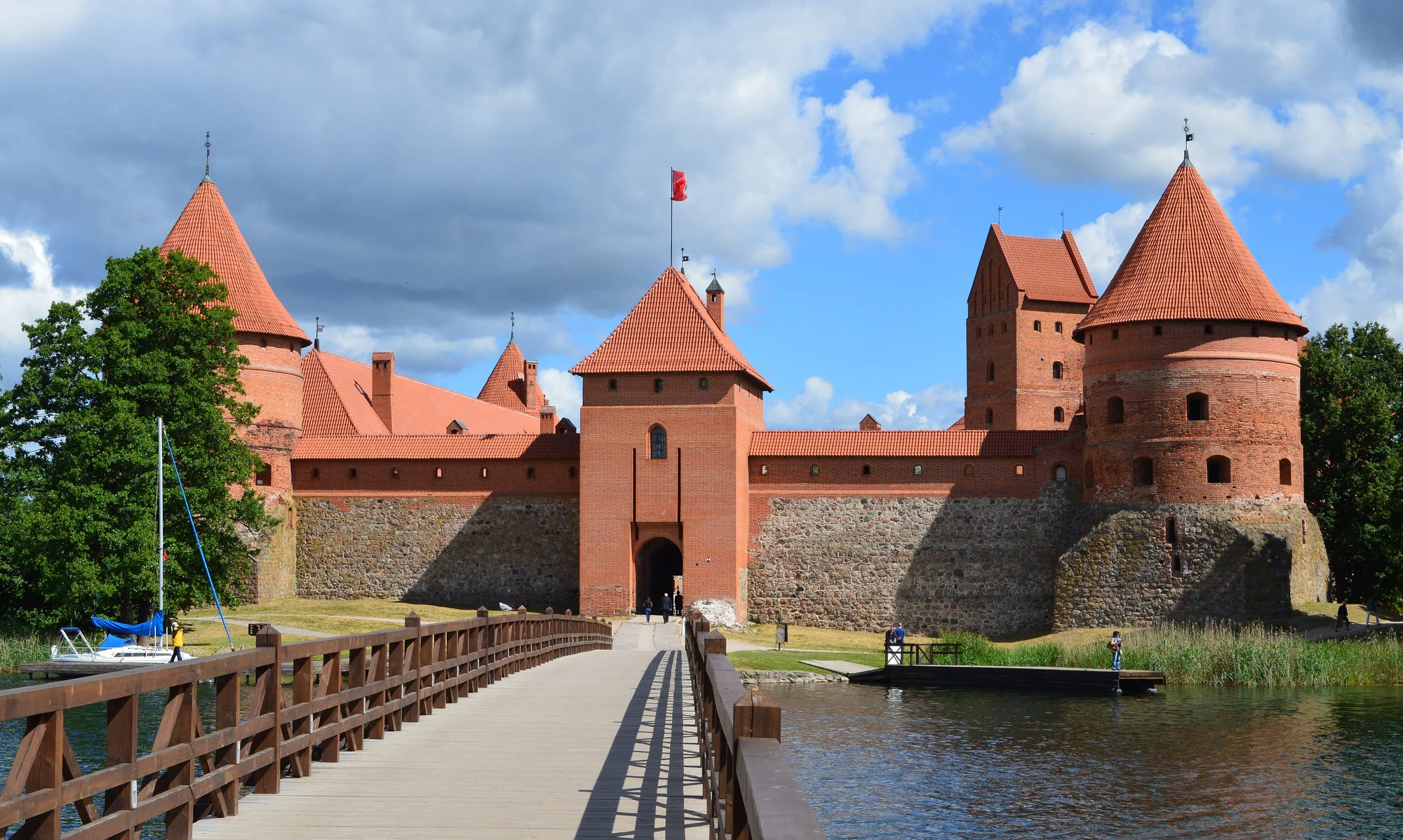
The castle itself — a 14th–15th-century Grand Duchy stronghold, lovingly reconstructed — houses a museum across its towers and courtyards. Admission runs about €10–12 for adults depending on the season; it is open daily, with shorter hours in winter, so check current times and prices before you travel. Beyond the castle, Trakai is worth the lake itself: rent a paddleboat or kayak in summer, walk the wooded shore, and try a kibinas, the savoury baked pastry of the local Karaim community whose presence here dates back six centuries.
If a castle does not pull you, day three flexes. You could give it instead to the city's neighbourhoods — Antakalnis, Žvėrynas, the parks along the Neris — or to a deeper dive into one theme, such as the Jewish heritage of the "Jerusalem of the North" or the Soviet-era history at the former KGB building. Trakai is the classic and the easiest win, but three days is enough to choose your own third act.
Aim to be back in Vilnius by late afternoon. A half-day at Trakai leaves the evening for a final, unhurried dinner in the Old Town — the right way to close a three-day trip that has shown you the city, its bohemian edge, and the lake country beyond it, all without a single rushed morning.
- Train: ~35 min, ~€6 return, from Vilnius railway station (Geležinkelio g. 16).
- Bus: ~30 min, ~€3.60 one way, frequent departures from the main bus station.
- Castle entry: roughly €10–12 adults (higher in summer); open daily, shorter winter hours — confirm before you go.
- Try the Karaim kibinas and, in summer, a paddleboat on Lake Galvė.
When to come, and how the seasons reshape three days
Three days flexes across the calendar, but the season changes the texture of the trip. Late spring and summer (May to August) bring long days — light past nine in midsummer — that stretch the viewpoints and make the Trakai lake day a joy, with paddleboats, lakeside cafés and warm evenings on Old Town terraces. It is peak season, so book hotels and the best dinners ahead and expect company at the headline sights. June's midsummer (Joninės) and the summer street-festival calendar add to the buzz.
Autumn (September to October) is many locals' favourite: the parks turn gold, the light goes soft and photogenic, the crowds thin and the prices ease, while the weather is usually still kind enough for the walks and the day trip. Spring (March to April) is the shoulder twin — changeable but cheap and quiet, with the Kaziukas craft fair in early March a genuine highlight if your dates align.
Winter (November to February) trades daylight for atmosphere. Days are short and cold, so the plan tilts indoors — museums, cafés, a sauna — but late November to early January brings one of Europe's prettiest Christmas markets to Cathedral Square, the spires are floodlit against the dark, and a Trakai castle dusted with snow is its own reward. Pack warm, slow down, and lean into the cosy version of the city. Whenever you come, the three-day structure holds; only the emphasis shifts.
- Summer: long light evenings, best for viewpoints and the Trakai lake — but peak prices and crowds.
- Autumn/spring: golden or quiet shoulder seasons, lower prices, fewer people.
- Winter: short cold days, but a standout Christmas market and floodlit, cosy interiors.
Eating and drinking across three days
Three days gives you time to eat Vilnius properly, and the food is a bigger part of the appeal than first-time visitors expect. Start with the classics: cepelinai, the zeppelin-shaped potato dumplings stuffed with meat and dressed in bacon and sour cream; šaltibarščiai, the electric-pink cold beetroot soup that is a summer institution; koldūnai dumplings, dark rye bread, smoked cheese and honey cakes. The Old Town has plenty of atmospheric tavern-style rooms for these, while a wave of modern bistros reinterprets Lithuanian produce with a lighter, seasonal touch.
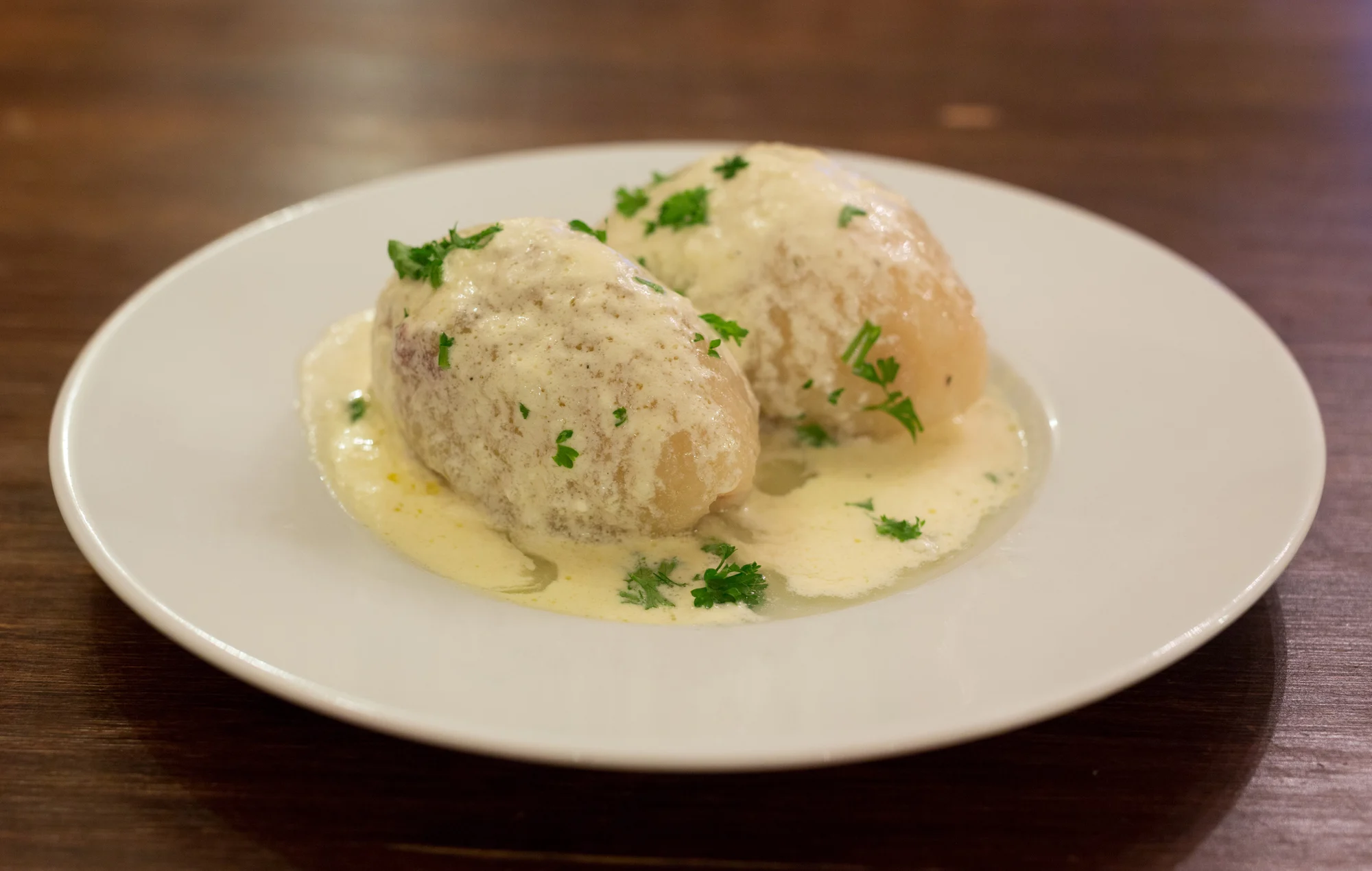
Spread your meals across the city rather than orbiting your hotel. Graze a market lunch at Paupys or Hales, take a long dinner in an Old Town cellar, and earmark one evening for the city's drinks scene — Vilnius has a genuinely good run of cocktail bars, natural-wine spots and craft-beer taprooms, much of it walkable from the centre. Coffee culture is strong too; the third-wave cafés around the Old Town and the New Town are worth a slow morning.
With three days you can also justify a guided food tour, which is the single most efficient way to understand the cuisine — threading markets, bakeries, cellars and tastings with the history behind each dish. Slot it into day two, when you are already on the riverside, and you turn lunch into the trip's most memorable couple of hours.
Practical notes for three days
A little planning keeps three days frictionless. The euro is the currency and cards work everywhere, including contactless on buses and trolleybuses, so cash is optional. Vilnius is among Europe's safest capitals and the centre is compact and well-lit, so the late walk back from dinner is a pleasure, not a worry. English is widely spoken in the tourist core. Tap water is safe and good.
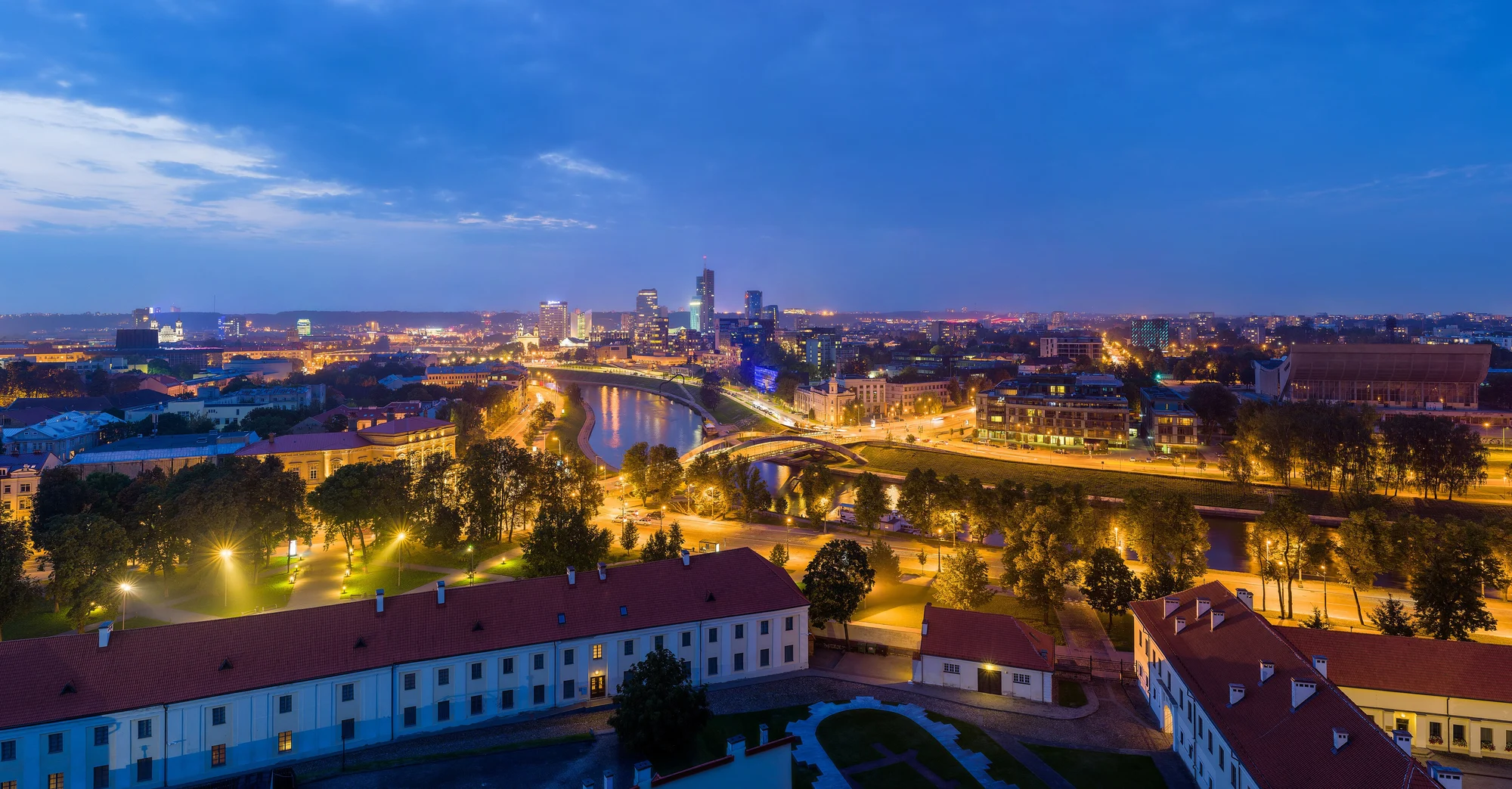
Time the indoor stops around closures: the MO Museum is shut on Tuesdays, and the Gediminas funicular and tower run shorter hours in winter — so if a Tuesday falls in your three days, make it the Old Town or Trakai day. For Trakai, check the day's train and bus schedule the night before; both run frequently, but the last comfortable returns thin out in the evening, and in peak summer it is worth pre-booking castle tickets online to skip the queue.
On when to come: late spring to early autumn brings long, light evenings ideal for sunset viewpoints and lake time at Trakai, while winter trades daylight for a beautiful Christmas market and cosy, candlelit interiors. Whatever the season, the plan flexes — swap an outdoor afternoon for a museum or a sauna when the Baltic weather turns.
- Euro; cards and contactless accepted everywhere, including public transport.
- MO closed Tuesdays; funicular/tower keep shorter winter hours — plan around them.
- Check Trakai return times the night before; pre-book castle tickets in peak summer.
- Very safe, walkable centre; tap water safe; English widely spoken.
Where to stay, and where this plan can go next
For three days, base yourself in or beside the Old Town so the two city days run on foot and the Trakai morning is a short walk to the station or bus terminal. The Old Town and the Gediminas Avenue edge of the New Town are the natural choice for couples; the river side around Paupys is quieter and design-led, and the station district is better value while still walkable. Our best-neighbourhoods guide lays out the trade-offs.
If your trip grows, the next day belongs either to a second, bigger day trip — Kaunas, the interwar capital, an hour away by train — or to going deeper into Vilnius's own neighbourhoods and its Jewish heritage. Our four-day itinerary builds exactly that, folding Antakalnis, Paupys, the former ghetto streets and a Kaunas option into the same easy rhythm.
Whatever you add, keep the principle: plan a little less than you think you can manage. Three days here, paced this way, is plenty to fall for the city — and to start plotting the return before you have even left.
Related guides
Vilnius Itineraries
Ready-made Vilnius routes for every kind of trip — one day, a weekend, two or three days, plus themed plans for food, history, families, romance and Christmas. Pick a plan and go.
Read guide
Two Days in Vilnius: The Perfect 48-Hour Itinerary
A balanced two-day Vilnius itinerary: the Baroque Old Town and Gediminas Hill on day one, the MO Museum, bohemian Užupis and the Paupys riverside on day two, paced for couples with time for slow coffee and a sunset.
Read guide
Four Days in Vilnius: A Slower, Deeper Itinerary
A four-day Vilnius itinerary that goes beyond the Old Town: the historic core and viewpoints, Užupis and the riverside, a day of neighbourhoods and Jewish heritage, and a full day trip to Trakai or Kaunas — for travellers who would rather know a city well.
Read guide