
Two Days in Vilnius: The Perfect 48-Hour Itinerary
A balanced two-day Vilnius itinerary: the Baroque Old Town and Gediminas Hill on day one, the MO Museum, bohemian Užupis and the Paupys riverside on day two, paced for couples with time for slow coffee and a sunset.
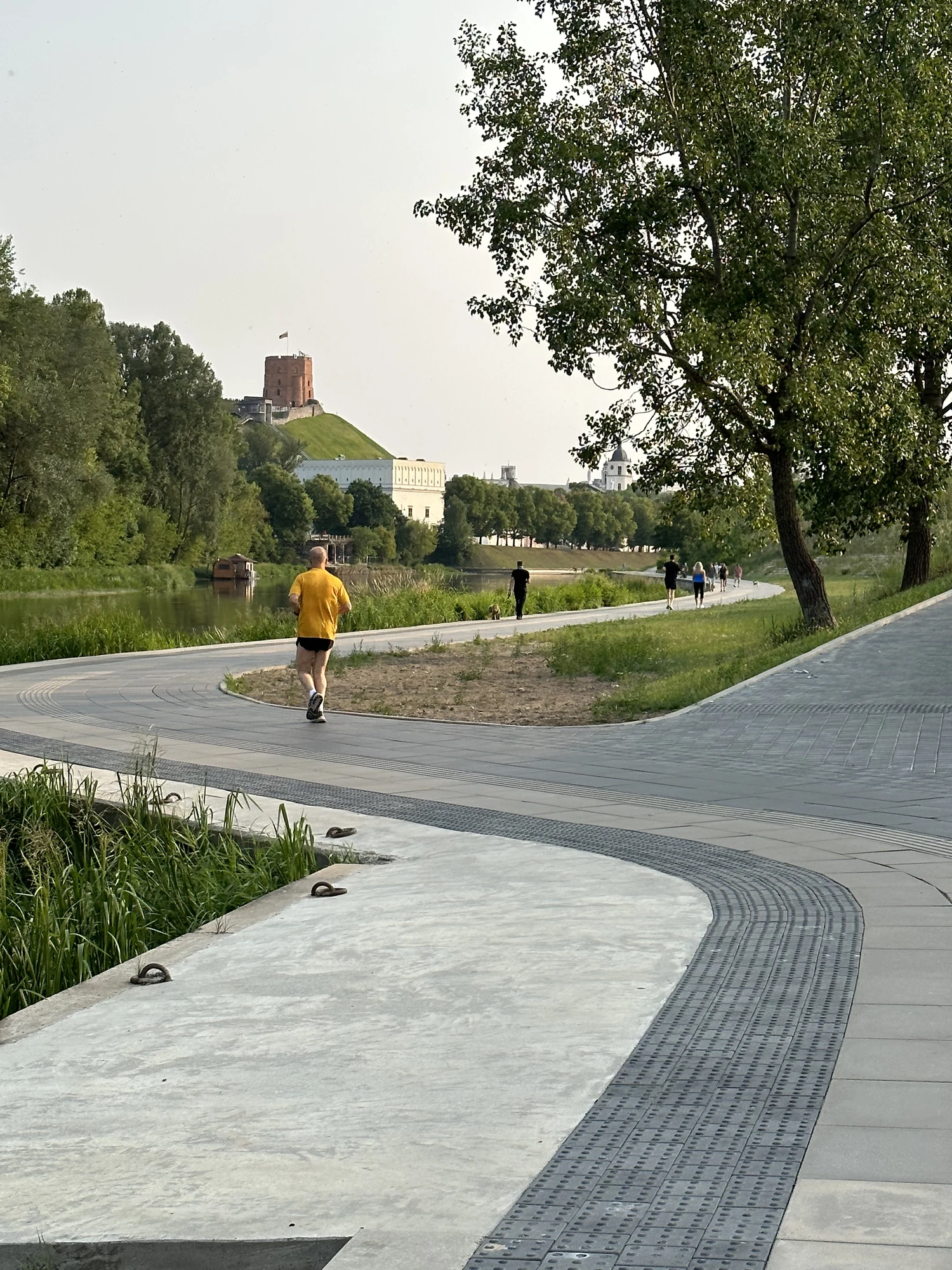
- ✓Two days is the realistic sweet spot for a first visit — enough for the Old Town, one viewpoint, Užupis and a museum without rushing.
- ✓Vilnius is compact and flat: you can cross the historic core on foot in about twenty minutes, so this whole plan runs without taxis.
- ✓Day one anchors on the UNESCO Old Town and a Gediminas Hill or Three Crosses sunset; day two crosses the Vilnia into Užupis and the regenerated Paupys quarter.
- ✓Most of the marquee sights — churches, courtyards, hilltop walks and riverside paths — are free, so the budget goes on food, coffee and one or two museum tickets.
- ✓Build in slack. The best Vilnius memories tend to happen in the gaps between the planned stops.
How to use this two-day plan
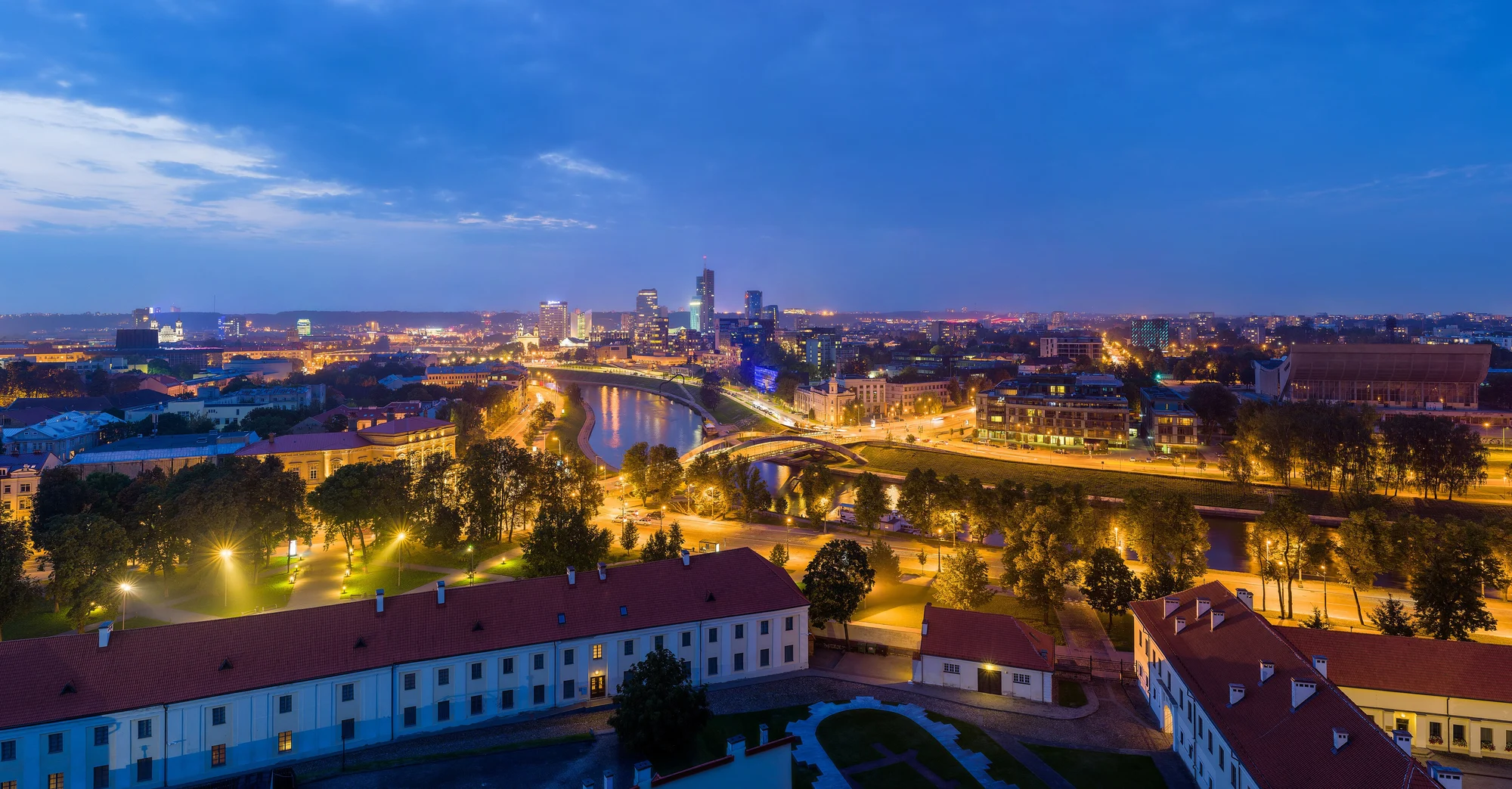
Two days in Vilnius is the length most first-time visitors actually have, and happily it suits the city better than almost anywhere. Vilnius wears its history lightly across a small, walkable centre: one of the largest Baroque old towns in Europe, a castle hill in the middle of it, a self-declared artists' republic a few minutes' walk away, and rivers on two sides. You do not need to choose between the headline sights and a sense of the place — in 48 hours you can have both.
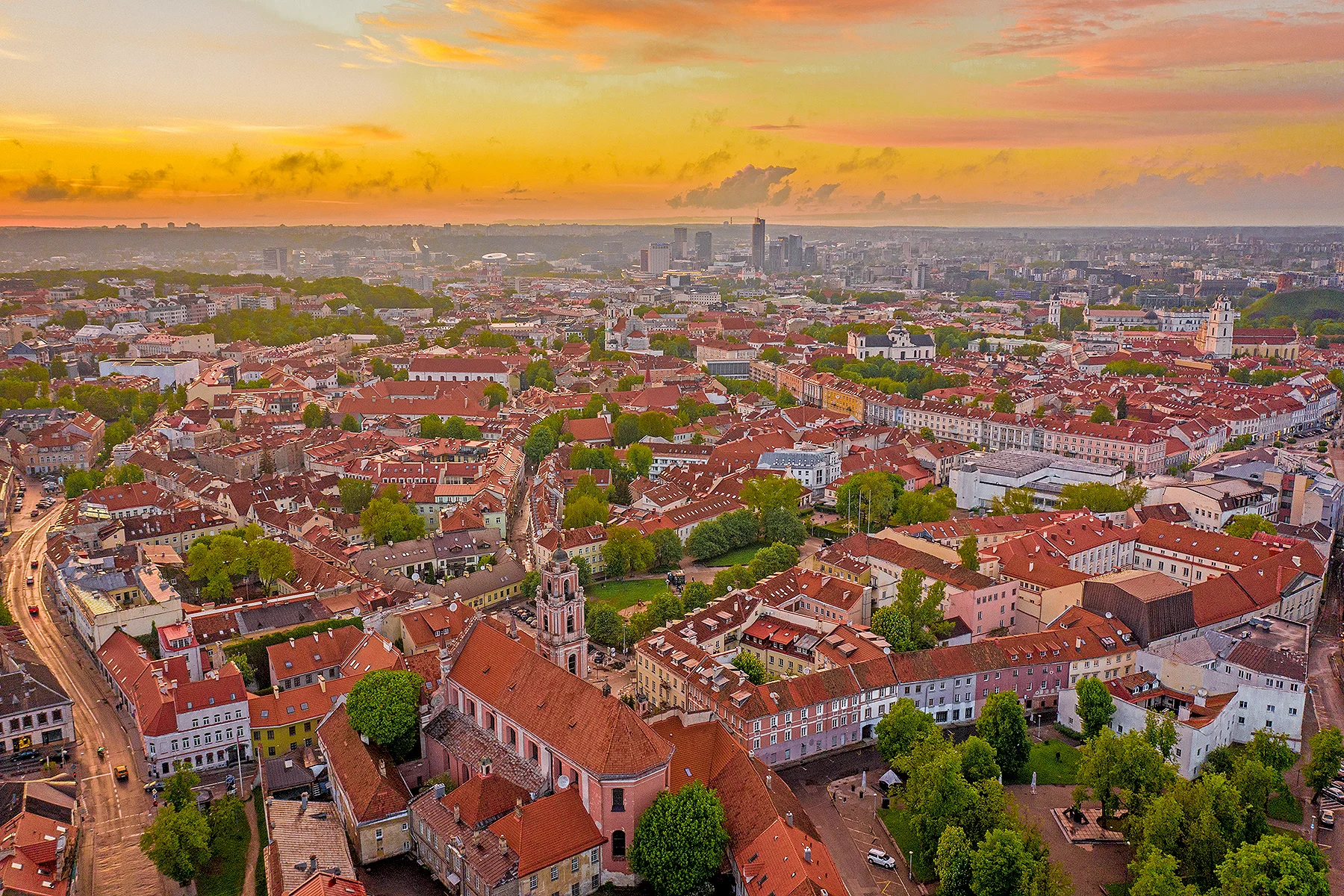
This itinerary is built as two loosely-themed days. Day one stays in and above the Old Town: Cathedral Square, the Pilies–Didžioji spine, the university courtyards, the Gate of Dawn, and a climb for sunset. Day two crosses the Vilnia river into Užupis, takes in the MO Museum and the regenerated Paupys riverside, and leaves the late afternoon open for whatever you have fallen for. Each day is a walking loop you can shorten or pad as your energy and the weather dictate.
Treat the timings as a rhythm, not a schedule. Lithuanians do not rush a coffee or a plate of cepelinai, and you should not either. If you only take one thing from this plan, make it the habit of leaving gaps — the swing over the river in Užupis, the unplanned church you wander into, the second beer as the spires turn gold are the bits people remember.
If you arrive on a Friday evening for a city break, the two days map cleanly onto a Saturday and Sunday; see our dedicated weekend plan for the booking-and-bars version of the same trip.
Day one, morning: Cathedral Square and the Old Town spine
Start where the city starts. Cathedral Square is the open heart of Vilnius — the white neoclassical Cathedral with its free-standing bell tower on one side, Gediminas Hill rising behind it, and the busy meeting point that locals use for everything from protests to New Year. Look down for the Stebuklas ("miracle") tile in the paving: step on it, turn a full circle, and make a wish, the local tradition goes. It marks the spot where the 1989 Baltic Way human chain to Tallinn began.
From the square, walk south into the Old Town along Pilies Street, the cobbled tourist spine that flows into Didžioji and then Aušros Vartų toward the Gate of Dawn. Resist the urge to march straight down it. The pleasure here is sideways: duck through archways into university courtyards, follow open church doors, and let the lanes off Pilies pull you off route. Give the morning no firmer plan than "get lost slowly and find coffee."
Two stops are worth being deliberate about. The Presidential Palace courtyard and the vast Vilnius University ensemble — thirteen interlinked courtyards and the frescoed St. John's Church — both sit just west of Pilies and reward a short detour. If the university bell tower is open, the climb (or lift) up the tallest structure in the Old Town is the best orientation you will get on day one.
- Free, and good first thing: Cathedral Square, the Stebuklas tile, the Pilies–Didžioji walk, and most church interiors.
- The University courtyards usually charge a small entry; St. John's Bell Tower has a separate ticket but a modern lift to the deck.
- Coffee stops cluster around Pilies and the smaller Stiklių and Literatų lanes — the latter studded with literary plaques.
The historic core in depth — what to see and where to linger.
Cathedral SquareThe city's central square and the Stebuklas miracle tile.
Vilnius CathedralThe neoclassical cathedral and its bell tower.
Map pins
Map data © OpenStreetMap contributors · Tiles © OpenFreeMap
Day one, afternoon: the Gate of Dawn and the churches
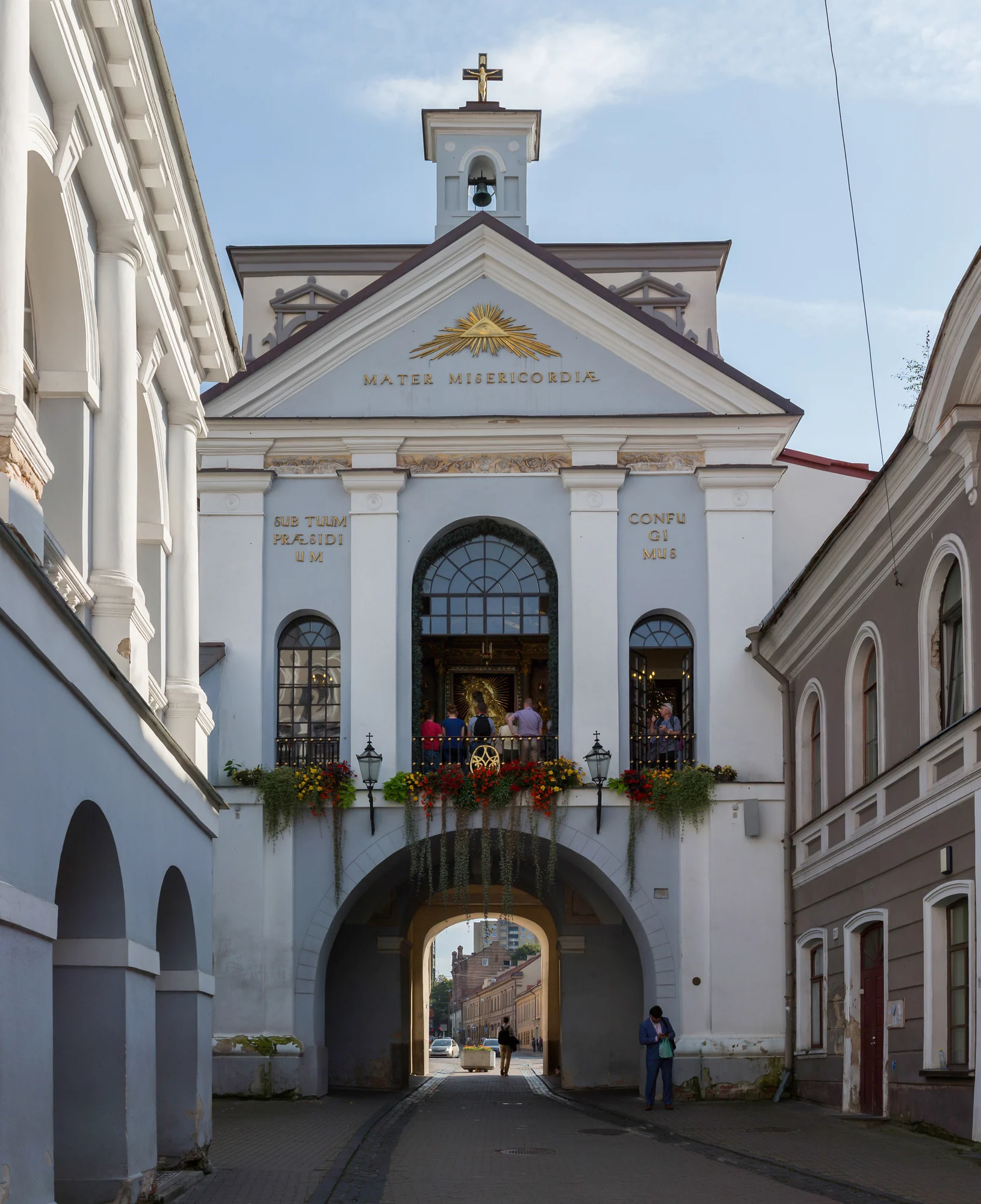
Keep heading south to the Gate of Dawn (Aušros Vartai), the last surviving gate of the old city wall and the spiritual full stop of the Old Town. Climb the stairs beside the chapel to see the revered icon of the Madonna, a pilgrimage site for Catholics across the region; it is free, but it is a working chapel, so keep voices low. On the walk back up you pass St. Theresa's Church and the pink Orthodox Church of the Holy Spirit, a reminder that Vilnius has always been a city of many faiths.
Even if churches are not usually your thing, Vilnius's are the city's great works of art, and entry is almost always free. The two to prioritise: St. Anne's, a flamboyant red-brick Gothic confection so pretty that Napoleon supposedly wished he could carry it home to Paris, and the Church of St. Peter and St. Paul out toward Antakalnis, whose plain exterior hides an interior of some two thousand white stucco figures. Dress modestly and avoid wandering through during Mass.
By mid-afternoon you have earned a long lunch. The Old Town is thick with options for traditional Lithuanian food — cepelinai (potato dumplings stuffed with meat), cold beetroot soup (šaltibarščiai) in summer, and dark rye bread — alongside a strong modern bistro scene. Eat slowly; you have a hill to climb later.
Day one, sunset: Gediminas Hill or Three Crosses
End the first day above the city. Two viewpoints dominate, and on a clear evening you cannot really go wrong. Gediminas' Tower, the red-brick stub crowning Castle Hill directly behind the Cathedral, is the icon: reach it by a steep cobbled path or the small funicular on the hill's eastern flank. The funicular runs roughly 10:00 to 20:00 (later in summer) and costs only a couple of euros each way; the tower museum charges a modest separate entry, though the open terrace views are the real draw. Check current funicular and tower hours and prices before you go, as they shift seasonally.
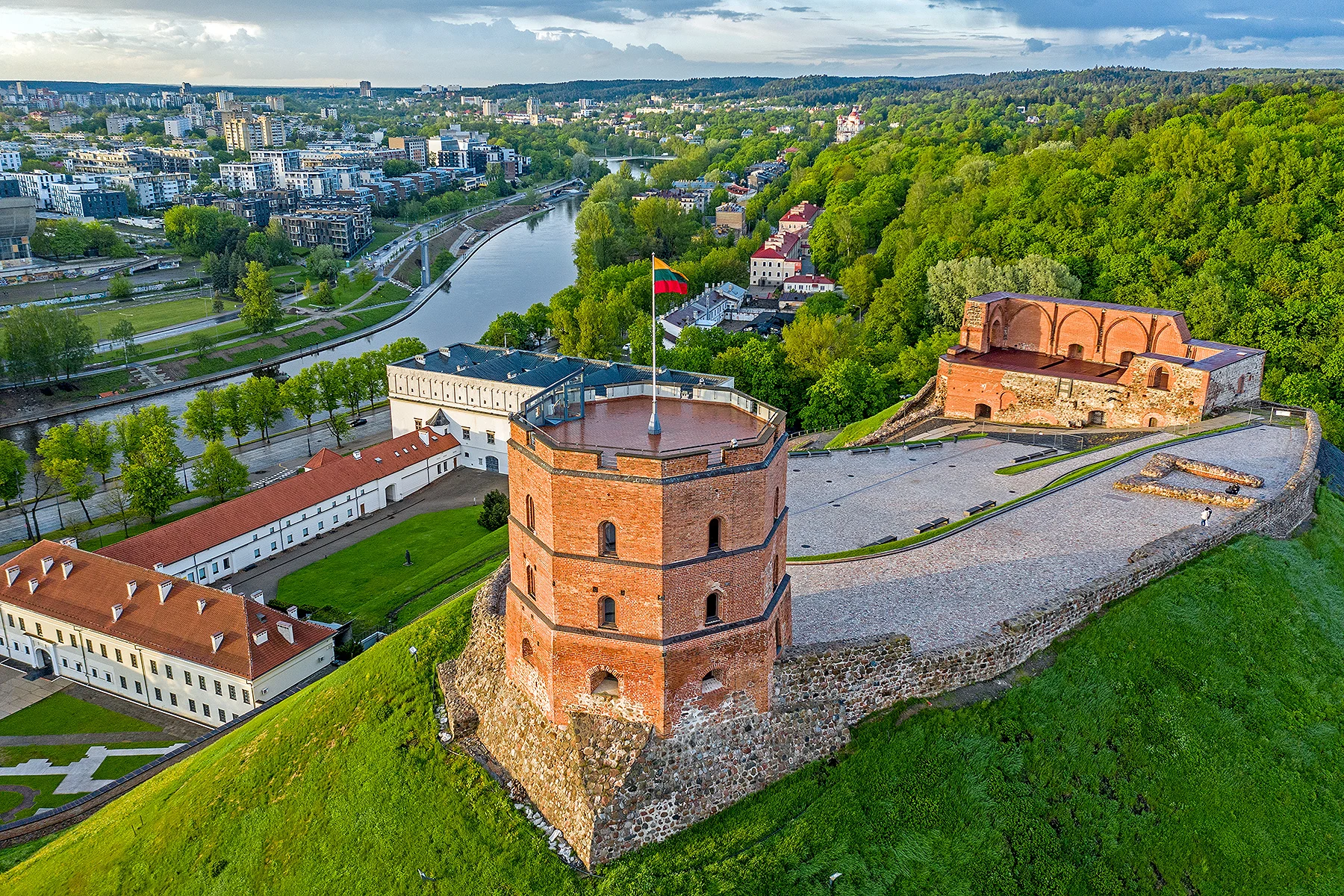
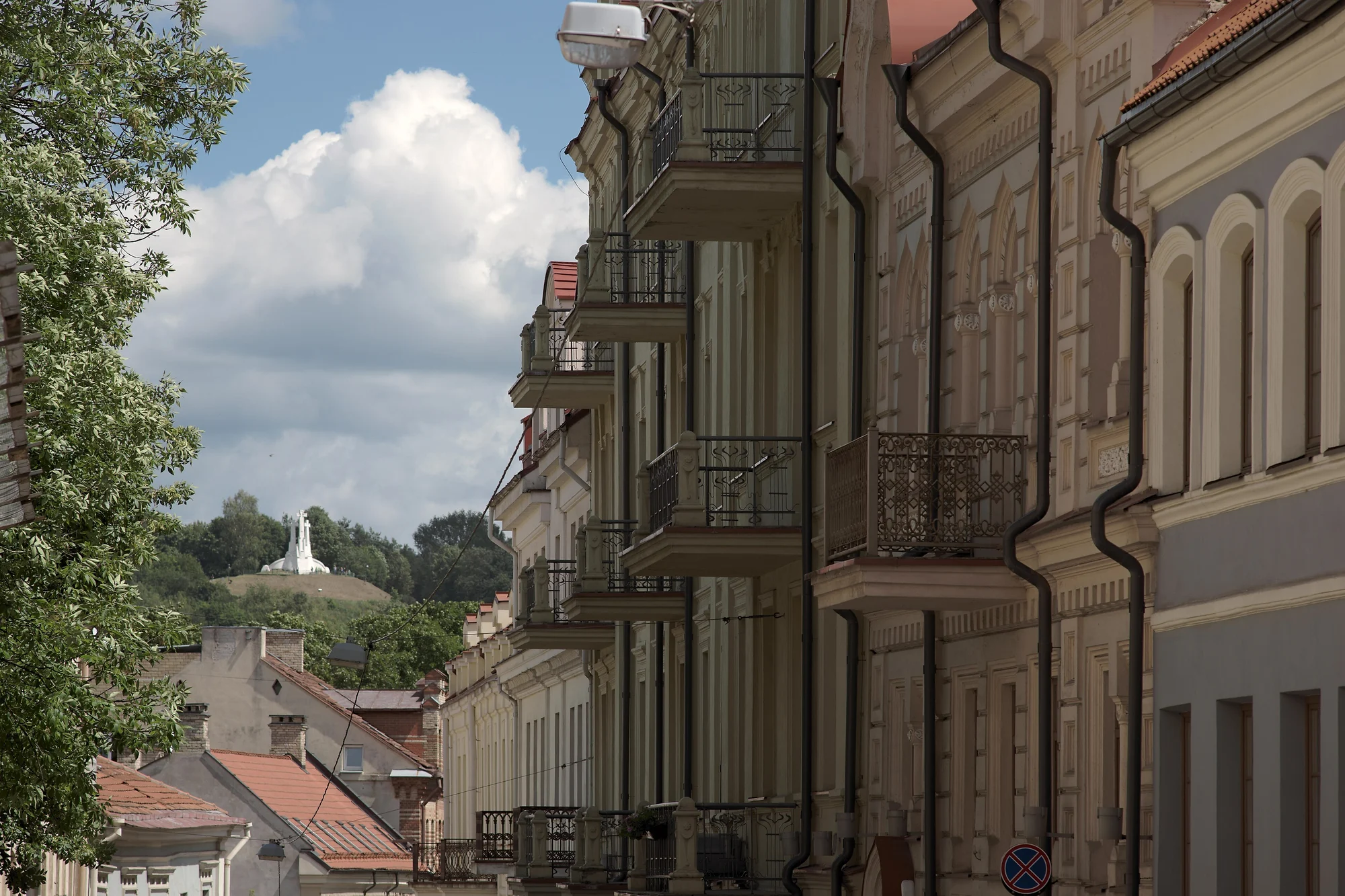
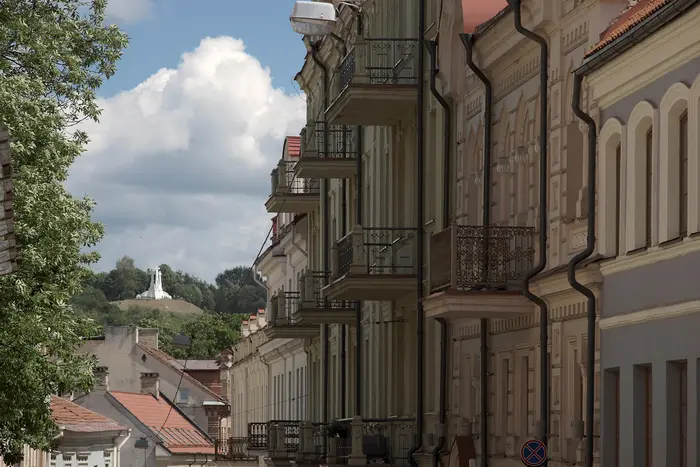
Across the valley to the east, the white Three Crosses monument on Bleak Hill arguably has the better panorama: the whole Old Town, the Cathedral and Gediminas Hill laid out in front of you, with nothing in the way. It is a free, ten-minute uphill walk from the Bernardine Garden through woodland, and it is the local choice for golden hour. Bring a drink and stay for the moment the Baroque spires catch the last light.
Whichever you pick, time it for sunset and budget a relaxed dinner afterwards back in the Old Town. Day one is intentionally a single neighbourhood done well; tomorrow you cross the river.
- Gediminas funicular: roughly €2 one-way / €3 return; tower entry around €8 for adults — confirm seasonal hours.
- Three Crosses is free and open all hours; the climb is short but unlit, so come before full dark.
- Either viewpoint works for sunrise too, and you will likely have it to yourself.
Day two, morning: the MO Museum and the New Town
Begin the second day with a complete change of register. A short walk southwest of the Old Town, on the edge of the New Town (Naujamiestis), the MO Museum is the city's standout contemporary art space — a clean, Daniel Libeskind-designed building housing a private collection of modern Lithuanian art, with sharp temporary shows and a good café. It is an easy, satisfying couple of hours and the obvious wet-weather anchor. Standard adult admission is around €11; note that MO is closed on Tuesdays, so flip this plan if your second day lands on one. Check current prices and opening days before setting out.
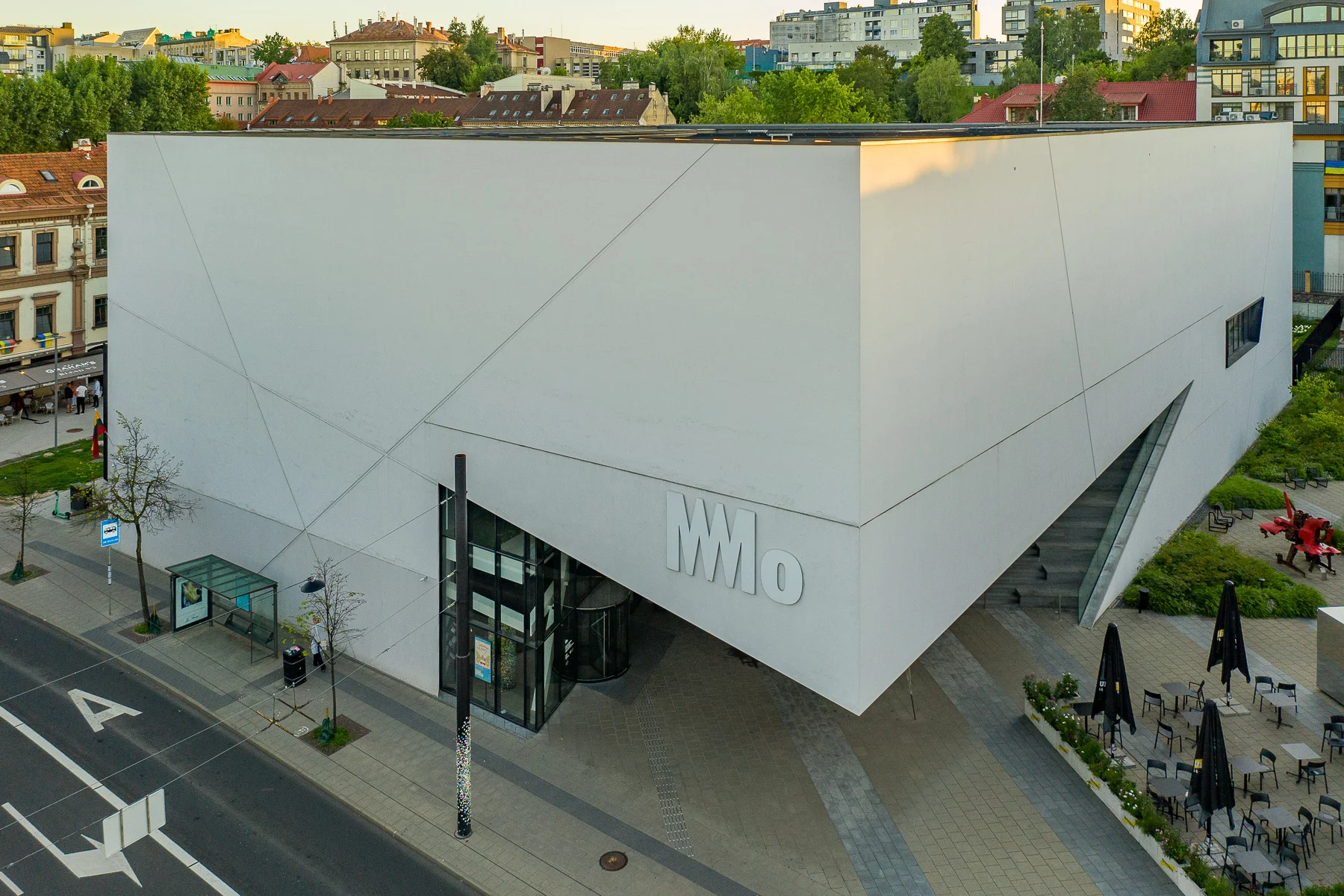
From MO, wander north through the New Town. This is everyday, working Vilnius — wider avenues, Gediminas Avenue's shops and cafés, Lukiškės Square with its monument and the former prison now reborn as a culture-and-events space — and a useful counterpoint to the Old Town's beauty. If museums are not your morning mood, swap MO for a slow brunch and a stroll up Gediminas Avenue instead; the rest of the day still works.
Either way, aim to be crossing back toward the river by lunchtime. The afternoon belongs to the most romantic corner of the city.
Day two, afternoon: Užupis and the Paupys riverside
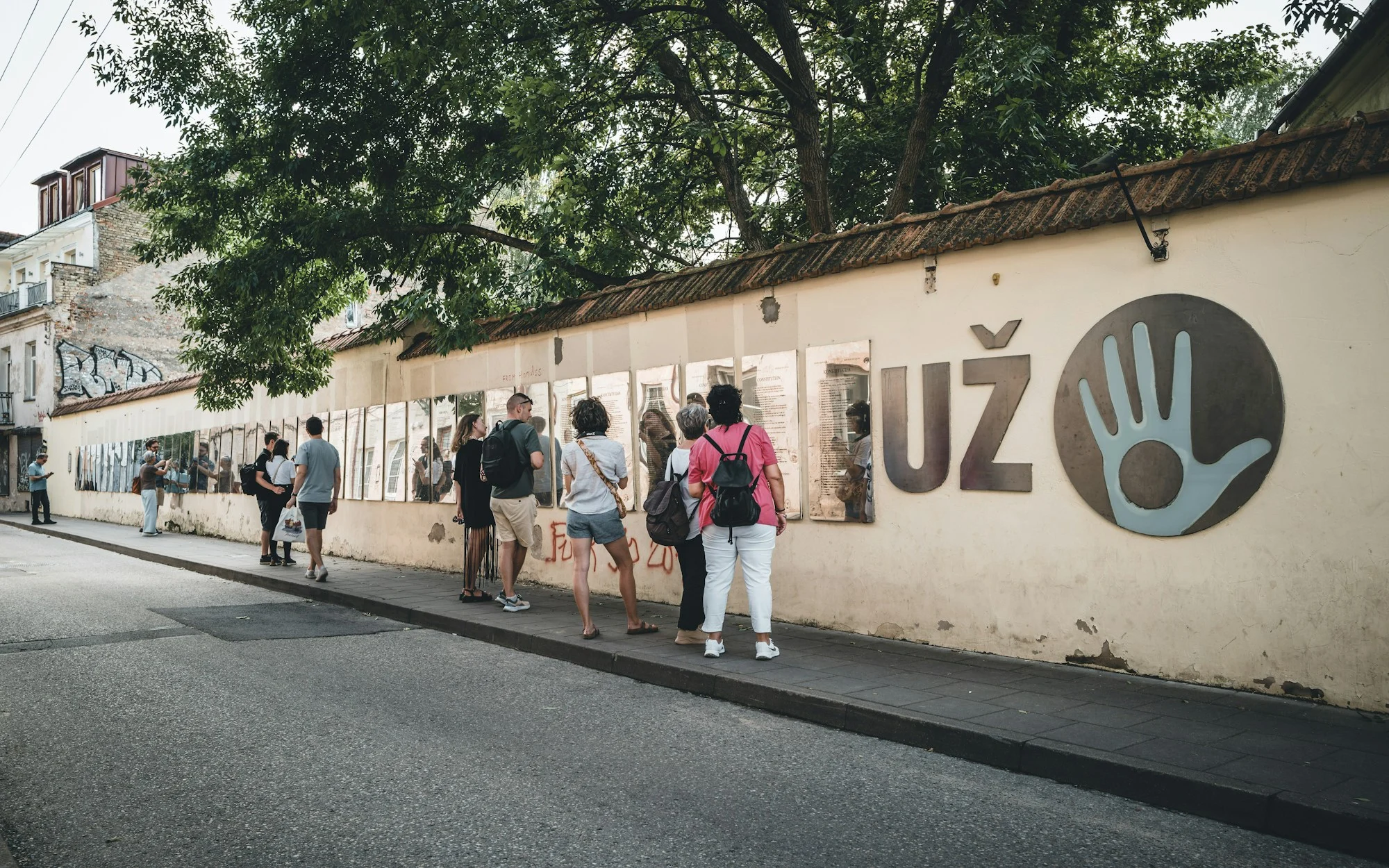
Cross the little bridge over the Vilnia and you are in Užupis, the self-declared "republic" that a group of artists proclaimed on April Fool's Day in 1997, complete with a tongue-in-cheek constitution mounted in dozens of languages on a wall in Paupio Street ("Everyone has the right to be happy"; "A dog has the right to be a dog"). Once a run-down quarter, it is now the bohemian heart of the city: galleries, a bronze angel on the main square, riverside benches and a swing over the water. This is the part of the trip couples fall hardest for, and the best way to do it is without a goal — read the constitution, find the swing, settle into a wine bar as the afternoon stretches.
Just downstream, the regenerated Paupys district shows the city's other face. Its centrepiece is Paupys Market (Paupio turgus), a bright modern food hall in a former industrial building, ringed by riverside walkways and new architecture. It is the place to graze through Lithuanian and global small plates, pick up local produce, and sit by the water with a craft beer. From here it is a flat ten-minute riverside walk back to the Old Town, which makes Paupys an ideal last stop.
Keep the early evening unstructured. You have seen the essentials; now spend the gold-hour back over a final dinner, or climb back to Three Crosses for a second, better-lit-than-you-expect sunset. Two days in Vilnius is short — but done at this pace, it is enough to leave already planning the return.
- Užupis is free to wander; the constitution wall, the angel and the swing are the obvious stops.
- Paupys Market is open daily and is the easy answer for an informal, varied lunch or early dinner.
- The riverside path links Užupis, Paupys and the Old Town without a single road crossing of note.
What to skip (and what to swap in)
Two days forces some honest editing, and the trick is to skip without regret. The single biggest time-saver is to resist queuing for paid interiors that have free equals. You do not need the paid Gediminas Tower museum to get the view — the open terrace and the free Three Crosses panorama both deliver it — and you do not need to tick off every church; two or three great ones beat ten merely good ones. Likewise, a full day trip does not fit a two-day visit; save Trakai for a third day rather than amputating an afternoon of the city to squeeze it in.
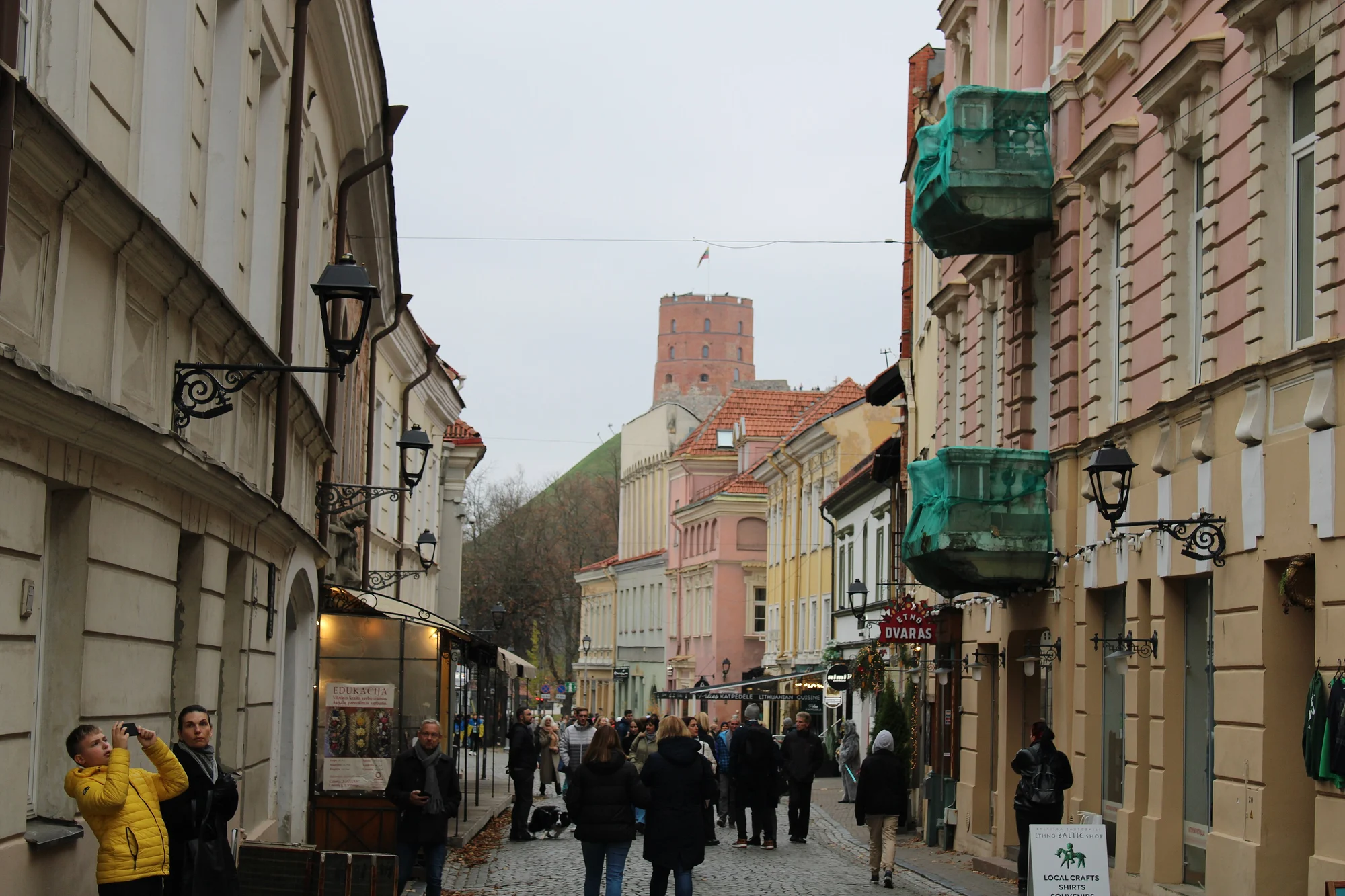
The flip side is knowing what is worth the time. The walk itself — Pilies to the Gate of Dawn, the river crossing into Užupis, the riverside path through Paupys — is the trip, not the connective tissue between "sights," so do not rush it to reach the next pin on the map. One sit-down Lithuanian meal, one good coffee stop, one unhurried sunset: protect those three, and the two days will feel full rather than frantic.
If something on this plan does not appeal, swap rather than add. Not a museum person? Trade MO for a longer Užupis afternoon or a food tour. Travelling with kids? Swap a church crawl for the funicular, the TV Tower or a park. The structure — Old Town and a sunset on day one, the river and a neighbourhood on day two — is robust enough to carry whatever you slot into it.
- Skip: paid interiors with free equals, a rushed day trip, ticking off every church.
- Protect: the walk itself, one proper Lithuanian meal, one good coffee, one slow sunset.
- Swap, don't add: trade a stop you do not want for one you do, rather than overfilling the day.
Practical notes for a smooth 48 hours
A few practicalities make two days here run effortlessly. Vilnius is one of Europe's safest capitals, the centre is small and well-lit at night, and English is widely spoken in hotels, restaurants and shops. The currency is the euro, and cards — including contactless on your phone — work almost everywhere, even for a single bus ride or a market stall, so you barely need cash. Tap water is safe to drink, which keeps both costs and plastic down.
Getting in from the airport is quick: it sits only about 6 km from the centre, reachable by a cheap public bus, a short train to the central station, or an inexpensive taxi or Bolt in well under half an hour. Once you are in the centre, you will walk almost everywhere on this plan; the only ride you might want is the Gediminas funicular or a bus out to St. Peter and St. Paul if you are short on time.
Timing matters for the two paid indoor stops. The MO Museum is closed on Tuesdays, and the Gediminas funicular and tower keep shorter hours in winter (roughly 10:00–20:00, later in summer), so if your 48 hours include a Tuesday, do MO-free day one and reshuffle. Many churches close to tourists during services, especially Sunday mornings, so save church interiors for the afternoon if you visit on a Sunday. Finally, pack for the Baltic: layers and comfortable shoes for the cobbles, whatever the forecast.
If you are choosing when to come, late spring through early autumn gives the long evenings that make a short trip feel generous, while December wraps the Old Town in one of Europe's prettiest Christmas markets. There is no bad season here — only different ones — and the walkable core means a day is never measured in kilometres.
- Euro currency; cards and phone-contactless accepted almost everywhere, including on buses.
- Airport is ~6 km out — cheap bus, train or a short taxi/Bolt into the centre.
- MO Museum closed Tuesdays; funicular/tower keep shorter winter hours; check before you go.
- Vilnius is very safe and walkable; bring layers and shoes for cobbles.
Where to stay, and stretching the trip
For a two-day trip, stay inside or right on the edge of the Old Town. It puts both days within walking distance, lets you drop bags and change plans on a whim, and means the late-evening walk home is part of the pleasure rather than a logistics problem. The Old Town and the immediate streets of the New Town around Gediminas Avenue are the sweet spot for couples; the design-led river side around Paupys is quieter, and the station district is better value while still walkable. See our where-to-stay overview for the trade-offs between the historic core, the river side and the station district.
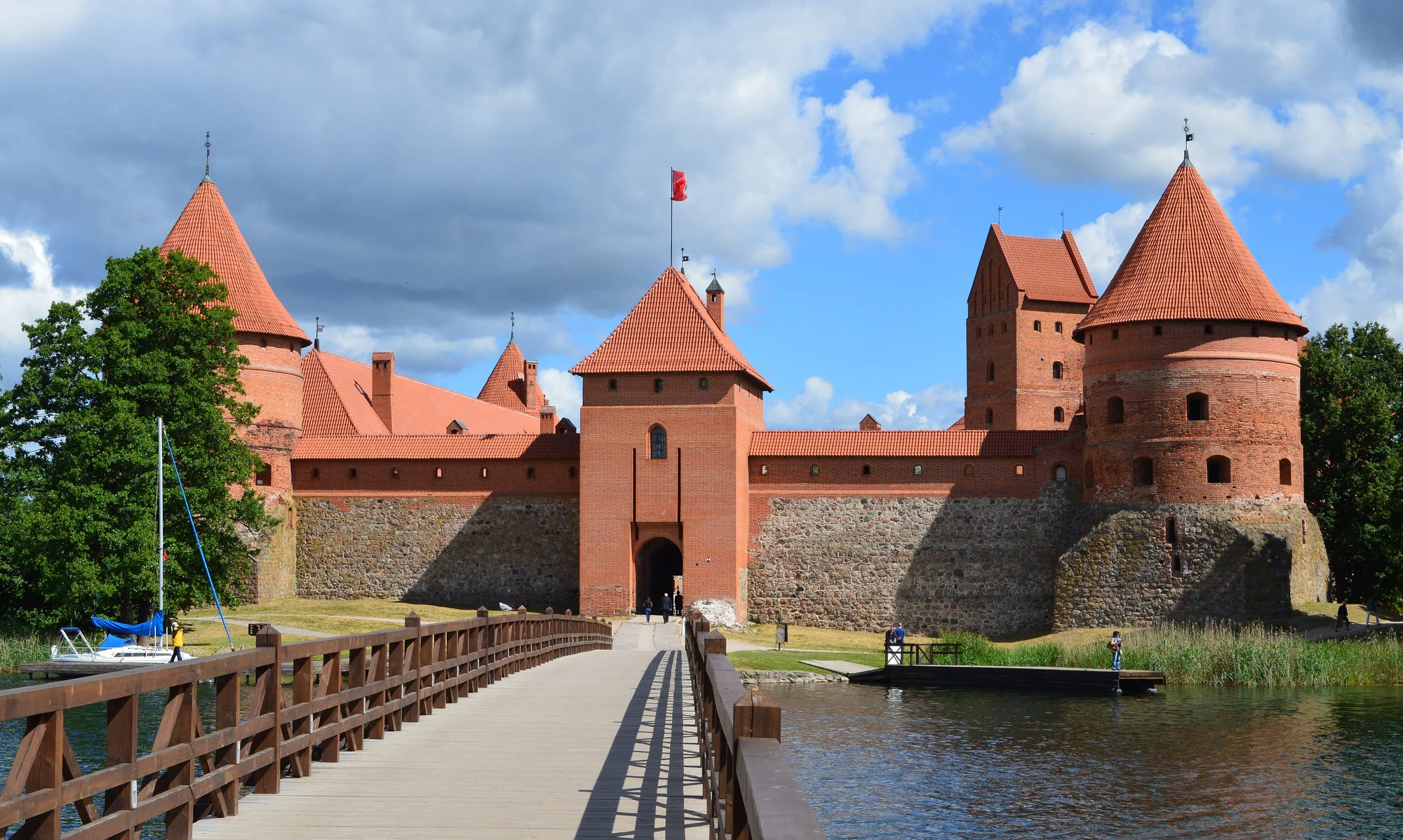
If you can add even a half day, the obvious extension is Trakai — the lakeside red-brick castle about 30 minutes away by train (~€6 return) or bus (~€3.60 one way), which turns this into a three-day trip without changing the city portion at all. If you have a full third day, our three-day itinerary folds a Trakai day trip and a deeper food-and-museums afternoon into the same easy rhythm. Travelling with children, or after a more themed trip? The family, food-and-beer, history and art-and-design itineraries reshuffle the same sights around a single interest.
A last word on pace. Two days is short, and the temptation is to cram — a third museum, a fourth church, a rushed day trip. Resist it. The version of this trip people remember is the one with a slow coffee in a courtyard, an unplanned hour in Užupis, and a sunset they did not hurry away from. Vilnius is not measured in kilometres but in unhurried hours. Plan a little less than you think you can fit, and the city does the rest.
Related guides
Vilnius Itineraries
Ready-made Vilnius routes for every kind of trip — one day, a weekend, two or three days, plus themed plans for food, history, families, romance and Christmas. Pick a plan and go.
Read guide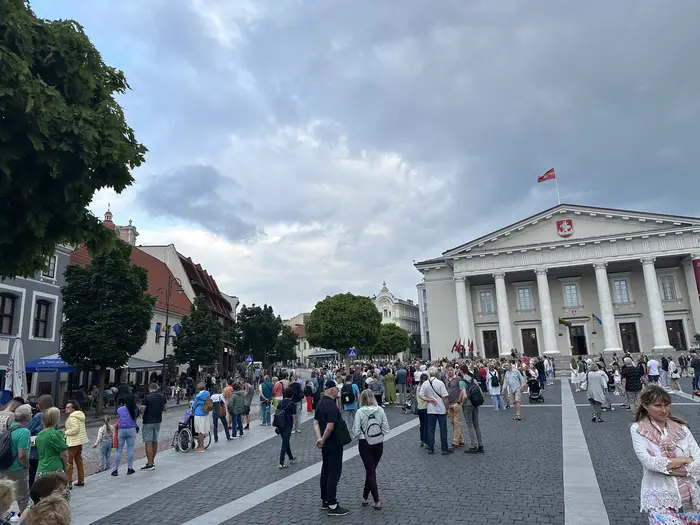
A Weekend in Vilnius: Friday-to-Sunday City Break
A Friday-to-Sunday weekend in Vilnius: where to stay, what to book ahead, the Old Town and a sunset on Saturday, Užupis and the riverside on Sunday, plus the best brunch, cocktail bars and a relaxed pace built for two.
Read guide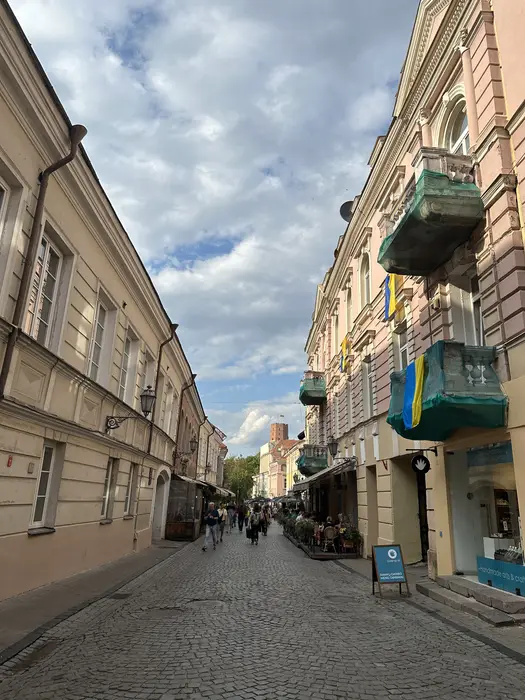
Three Days in Vilnius: The Ideal Itinerary
A three-day Vilnius itinerary that pairs the Old Town, viewpoints, Užupis and the MO Museum with proper food and one easy half-day trip to lakeside Trakai Castle — paced for couples who would rather know one city well.
Read guide