
Romantic Walks in Vilnius
The most romantic walks in Vilnius for two: Old Town lanes, the Vilnia river edges of Užupis, the Bernardine Garden, the climb to Three Crosses, and the Neris bridges in winter light.
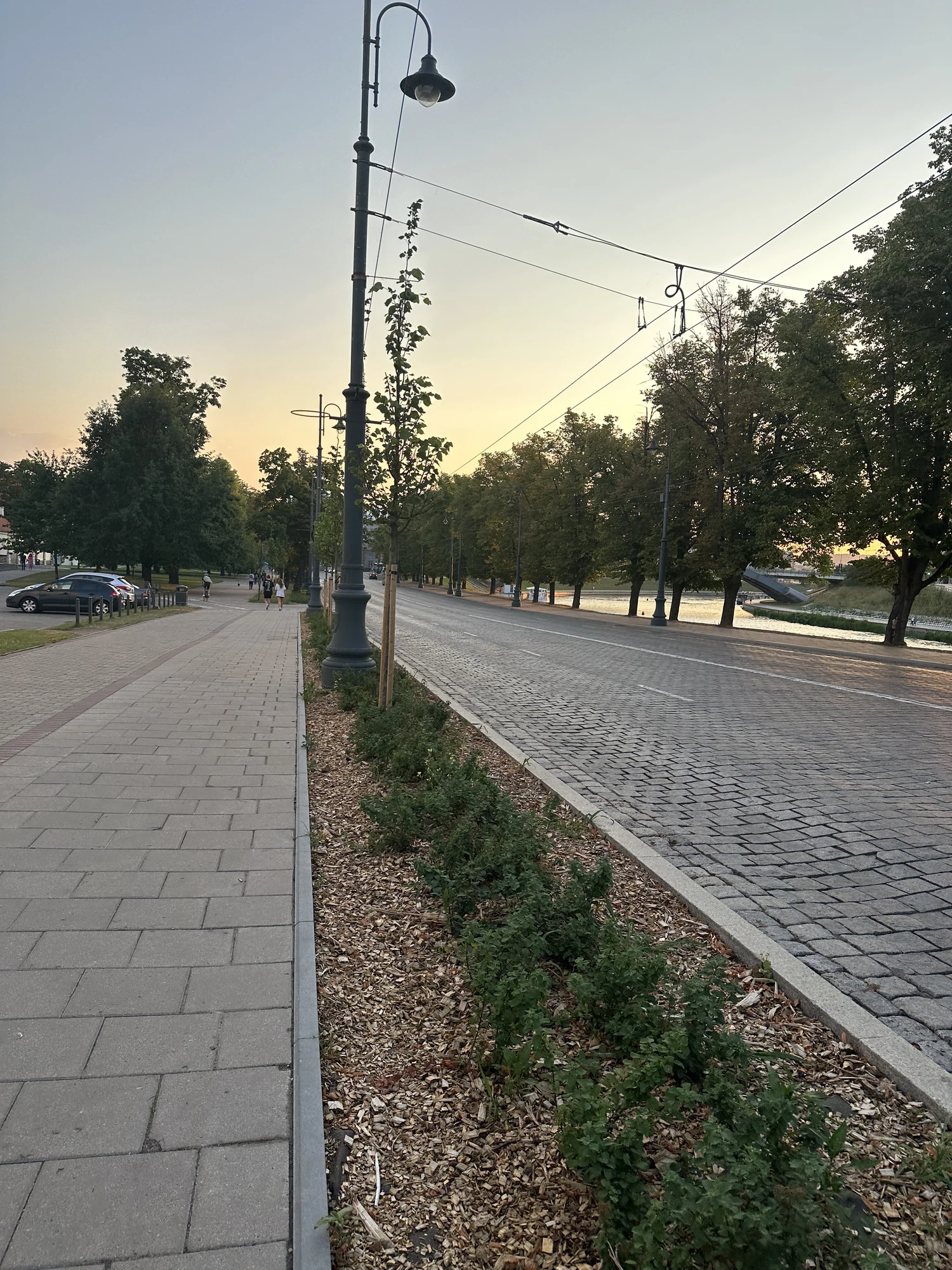
- ✓Vilnius is built for walking together — the Old Town is barely a kilometre across, so a romantic route is a matter of mood, not stamina.
- ✓The best couples' loop pairs the cobbled core with the river: Pilies Street, the Bernardine Garden, then a footbridge into Užupis.
- ✓Three Crosses gives you the city's most romantic payoff — the whole Old Town glowing below at golden hour — for the price of a 15-minute climb.
- ✓Winter is underrated for two: snow on the spires, lit windows, and the short afternoon makes a 4 pm dusk walk feel indulgent rather than rushed.
- ✓Almost every route here is free, flat enough for most, and ends within steps of a wine bar or a cellar restaurant.
Why Vilnius is a walking city for two
Some cities you tour; Vilnius you wander. The historic core — Senamiestis, one of the largest surviving Baroque old towns in Europe — is compact enough that you can cross it on foot in twenty unhurried minutes, which is exactly the wrong way to do it. The point isn't to get anywhere. The reward is in the detail: a half-open church door, a courtyard you didn't know was there, a side lane that pulls you off your route and into a quieter one. For couples, that scale is the gift. You're never far from a café when feet get cold, never far from the river when you want air, and never lost for long.

What follows isn't a single forced march but a set of romantic walks you can take whole or in pieces — a slow Old Town loop, a river-and-garden stretch, a hilltop climb for the view, and a couple of seasonal variations for long summer light or deep winter dusk. Stitch them together over an afternoon and evening, or pick one and let it spill into dinner. The city rewards both. Wear comfortable soles: the cobbles are beautiful and entirely unforgiving of heels, and many of the prettiest lanes slope gently up toward Castle Hill.
A word on pacing, because it's the whole secret here. The temptation in a small, sight-dense city is to march between landmarks; resist it. The couples who love Vilnius most are the ones who treat the walk itself as the destination — stopping for coffee twice, reading the constitution on the Užupis wall properly rather than photographing it, sitting on a bench by the Vilnia until the light changes. Build in margin. Pick a single anchor for each outing (a sunset, a wine bar, a particular church courtyard) and let everything else be improvised around it. The routes below are written to be looped, reversed, shortened or strung together, not followed to the letter.
The Old Town loop: cobbles, courtyards and candlelight
Start where the city does, at Cathedral Square, with the white Cathedral and its free-standing belfry on one side and the green slope of Castle Hill behind. From here the spine of the Old Town runs south as Pilies Street, then Didžioji, then Aušros Vartų, all the way down to the Gate of Dawn. Walk it slowly. Pilies is the busy, pretty one — souvenir stalls, buskers, amber in the windows — but the romance is in stepping off it. Duck into the Vilnius University ensemble and its layered courtyards, or into the side lanes around St. Anne's, the Gothic church so delicate that Napoleon supposedly wished he could carry it back to Paris in the palm of his hand.

Save this loop for late afternoon, when the low sun turns the rendered facades honey-coloured and the crowds thin. As the light goes, the Old Town becomes one of the most quietly romantic places in northern Europe: lamplit lanes, the glow from cellar restaurant windows, the occasional bell. End the loop near the Gate of Dawn, where a revered Madonna icon watches over the last gate of the old city wall, then double back to a candlelit table — you'll be no more than a few minutes' walk from one.
- Route: Cathedral Square → Pilies Street → University courtyards → St. Anne's & the Bernardines → Gate of Dawn (about 1.5 km, take an hour or two).
- Best light: the hour before sunset, when the facades warm up and day-trippers leave.
- Detour worth taking: the Literatų Street wall, studded with small artworks honouring writers tied to the city.
The full neighbourhood guide to the historic core and its hidden corners.
Cathedral SquareWhere the loop begins, beneath Castle Hill.
Map pins
Map data © OpenStreetMap contributors · Tiles © OpenFreeMap
The river-and-garden stretch: Bernardine Garden to Užupis
For the gentlest, greenest of the romantic walks, leave the cobbles for the water. Behind St. Anne's and the Bernardine church lies the Bernardine Garden (Bernardinų sodas), a restored 19th-century park on the bank of the little Vilnia river. It's all gravel paths, a botanical bed, a rose garden in summer, and a musical fountain that draws couples on warm evenings — the kind of place to slow down, sit on a bench, and watch the light move on the water. In spring the blossom is lovely; in autumn the maples turn; in winter, with a dusting of snow, it's almost empty and all the better for it.
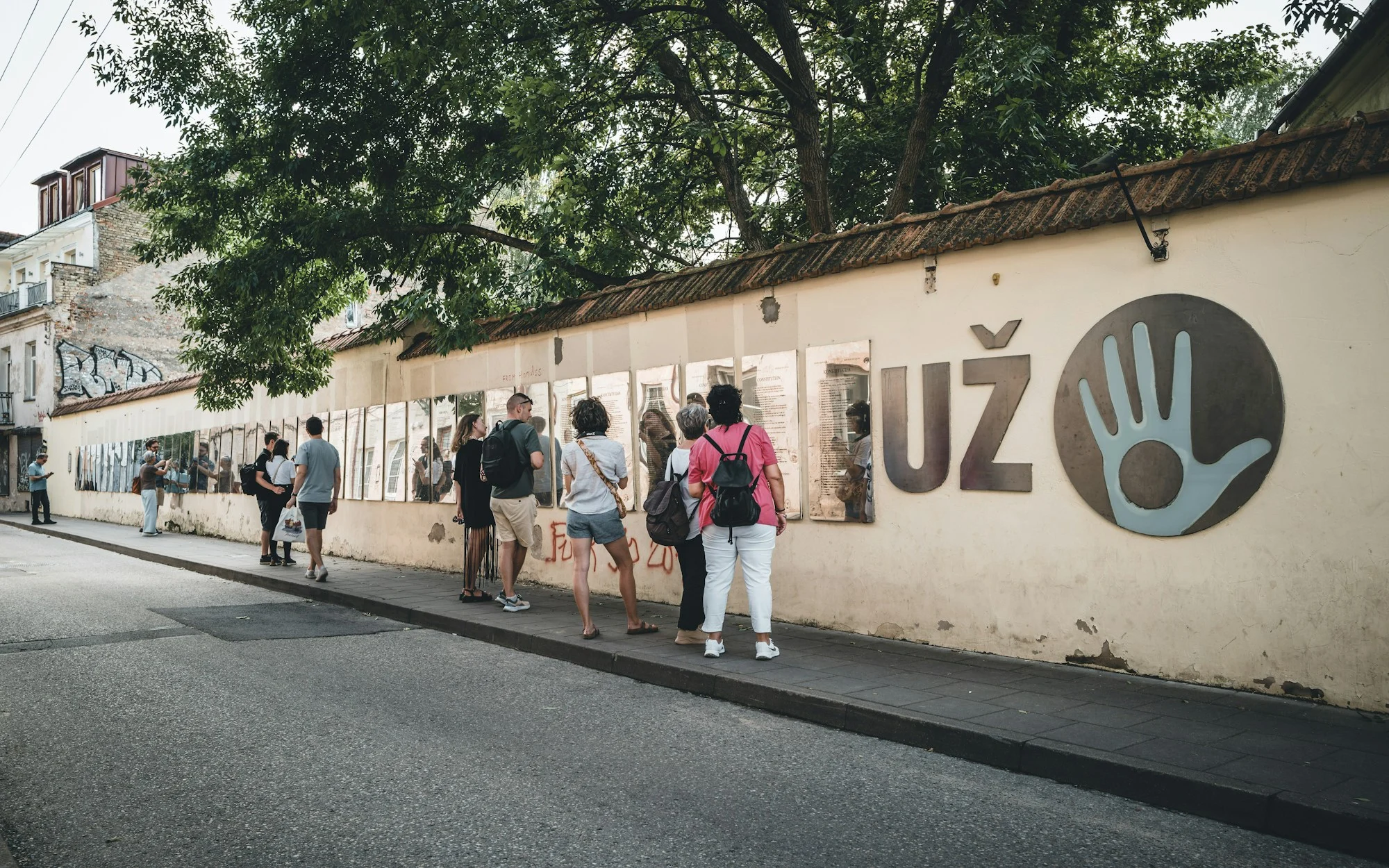
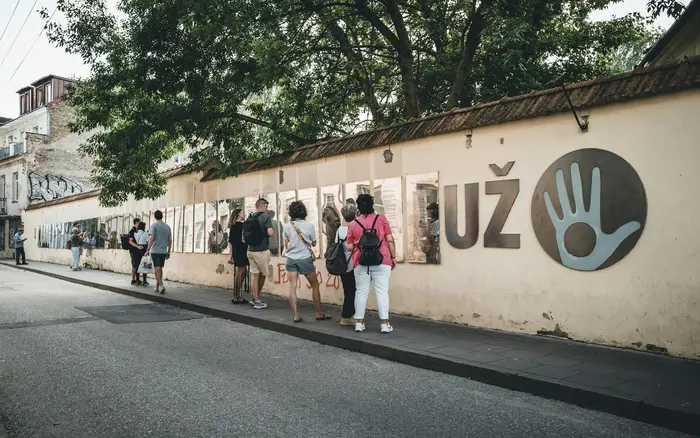
From the garden, cross one of the small footbridges over the Vilnia and you're in Užupis — the bohemian quarter that cheekily declared itself an independent 'republic' on the first of April in 1997, constitution and all. Padlocks cluster on the river railings, a bronze angel presides over the main square, and a swing hangs over the water. It is the city's most romantic corner by general agreement: scruffy, artistic, intimate, and best explored without a plan. Wind up at a riverside wine bar or a tiny café and let the afternoon go long.
- The Bernardine Garden's musical fountain runs in the warmer months — check the day's schedule on site before you go.
- Look for the river swing and the constitution wall in Užupis, where the text is mounted in dozens of languages.
- This stretch is flat and short — under a kilometre — so it suits a slow, hand-in-hand pace.
The climb for the view: Three Crosses at golden hour
Every romantic walk in Vilnius wants a high point, literally, and the best one is Three Crosses (Trys kryžiai). The white concrete monument stands on a wooded hill on the eastern edge of the Old Town, facing the city across a small valley. The walk up takes about fifteen minutes on a path through the trees from the Užupis side or from the Kalnų Park entrance, and it climbs steadily rather than steeply — manageable for most, though the last stretch has steps. What you get at the top is, for many couples, the single most romantic view in the city: the whole Baroque skyline laid out below, Gediminas' Tower opposite, the river beyond, and the spires catching the last of the sun.
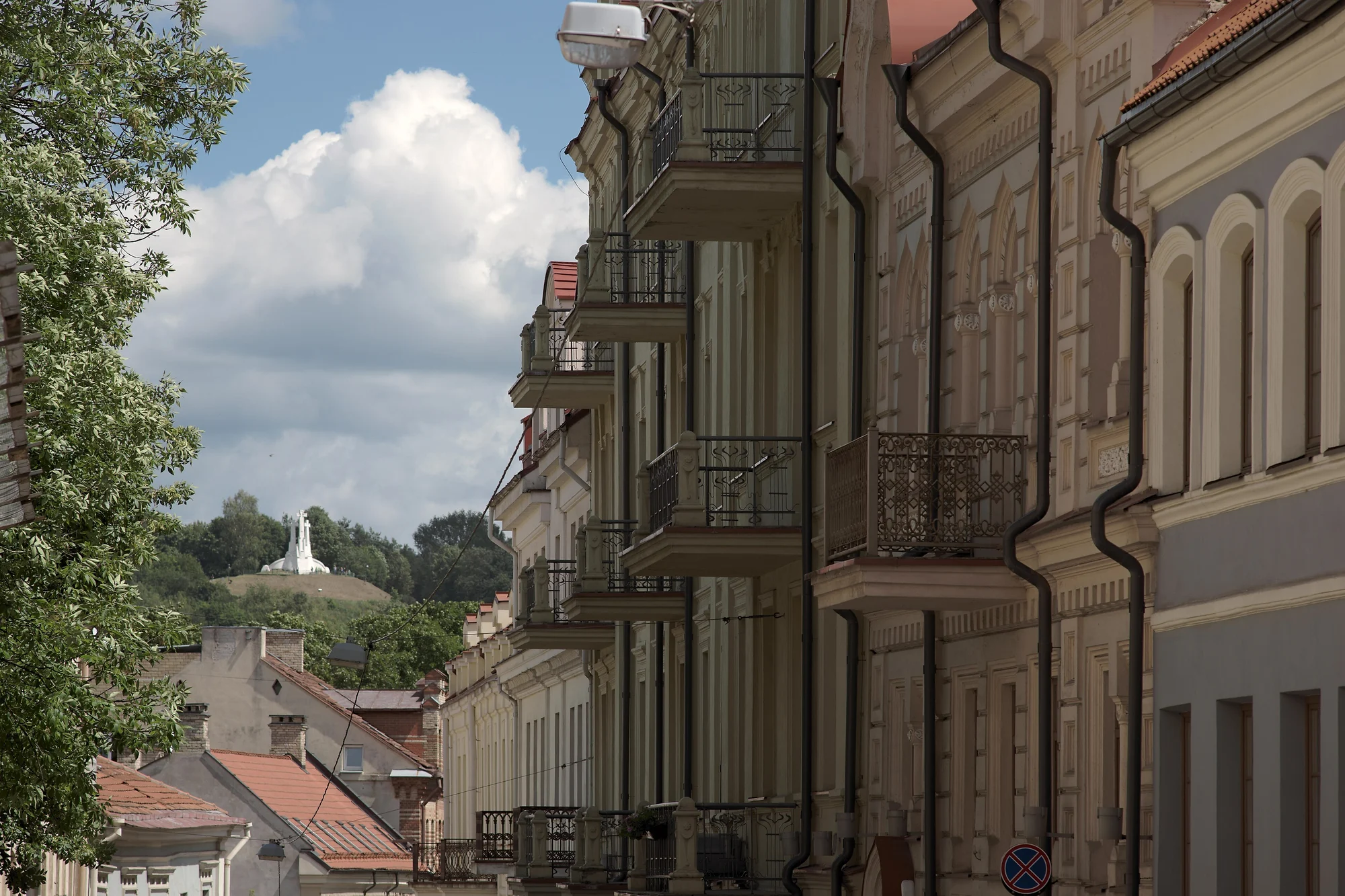
Because the monument faces roughly west over the Old Town, the sun sets behind the city rather than in your eyes — which means easy watching and forgiving photographs. Time your climb to arrive twenty or thirty minutes before the day's sunset, settle on the terrace, and stay for the blue hour afterwards, when the monuments light up and the sky deepens. It's free, it's open at all hours, and it costs you nothing but the walk. Bring a flask in winter; bring a bottle and two cups in summer.
- Allow about 15 minutes up from Užupis or Kalnų Park; the final approach has steps.
- Face is roughly westward over the Old Town, so it works for both sunset watching and photos.
- Stay past sunset for the 'blue hour', when the lit monuments often outshine the sunset itself.
Bridges, the Neris and a winter variation
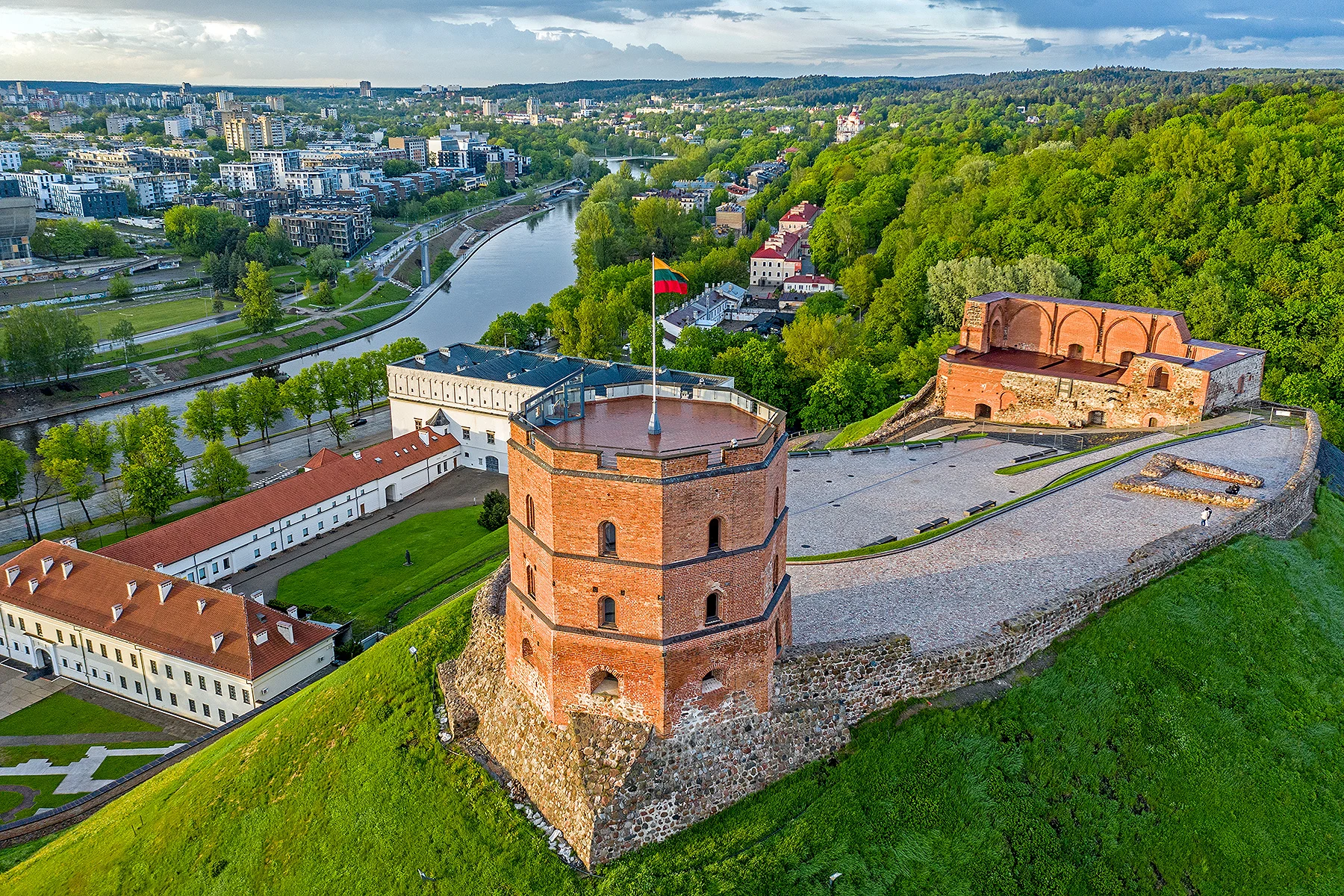
When you want a flatter, broader walk — and the relief of an open horizon after the close lanes of the Old Town — head down to the Neris, the larger river that curves along the northern edge of the centre. The embankment paths on both banks make for an easy, level stroll, and the bridges are the romantic punctuation: the King Mindaugas Bridge by the National Museum, the white footbridges further along, and the views back to the green hump of Castle Hill with Gediminas' Tower on top. It's a good late-evening walk when the Old Town feels busy, and a fine way to link the centre with the modern skyline of glass towers across the water.
Don't write off winter for any of this. Vilnius does cold beautifully: snow softens the cobbles, the spires wear white, café windows glow, and the very short December afternoon — the sun can be gone by just before four — turns an early dusk walk into the natural centrepiece of the day rather than an afterthought. Wrap up properly, plan your route to end at a warm room, and let the season do the work. A snow-quiet Old Town loop followed by mulled wine is as romantic as Vilnius gets. The flip side is summer, when the northern light lingers past 10 pm and a 'sunset' walk can comfortably follow dinner rather than replace it; the river paths and the Bernardine Garden stay pleasant deep into the evening, and the long dusk gives you hours of soft, photogenic light to wander through. Spring brings blossom to the gardens and the university grounds; autumn turns the wooded hills around Three Crosses and Kalnų Park gold. There is, genuinely, no wrong season for walking here — only different ones, each with its own mood to lean into.
- The Neris embankments are flat and stroller-friendly, with bridge views back to Castle Hill.
- In deep winter, sunset can fall just before 4 pm — plan a short afternoon walk that ends somewhere warm.
- In midsummer, light lingers past 10 pm — a long evening walk can follow dinner.
- End any cold-weather route at a cellar bar or café for mulled wine or hot chocolate.
A few quieter detours worth weaving in
Once you've done the headline routes, the romance of Vilnius is often strongest in its smaller, in-between corners — the kind of places you find by accident and then return to on purpose. Just off the main spine, the courtyards behind Vilnius University reward a slow loop: linked arcaded yards, the Baroque ensemble of St. John's Church and its bell tower, and a stillness the busy streets outside don't have. A short way south, the leafy Sereikiškės end of the Bernardine Garden and the riverbanks of the Vilnia give you water, willows and benches with hardly anyone about on a weekday morning. And the lanes around Literatų Street and Bernardinų Street — narrow, lamplit and lined with quiet wine bars — are made for an aimless after-dinner wander.

For a slightly longer escape on foot, climb beyond Three Crosses into Kalnų Park and the wooded ridge behind it, where gravel paths thread through the trees and open now and then onto views over the city. It feels almost rural, yet you're ten minutes from the Old Town. On the other side of the centre, the Tymo and Paupys riverside areas across the Vilnia have grown into relaxed, modern pockets with a market hall, cafés and water views — a contemporary counterpoint to the Baroque core, and a nice way to round off a romantic walk with a coffee or a glass of something. None of these need planning; they're simply the corners couples tend to fall hardest for, and they're all within the same easy, compact reach as everything else.
- Vilnius University courtyards: linked arcaded yards and St. John's bell tower, quietly grand.
- Sereikiškės / Vilnia riverbanks: willows, benches and water, often near-empty on weekday mornings.
- Kalnų Park ridge above Three Crosses: a near-rural wooded walk ten minutes from the centre.
- Tymo and Paupys across the river: modern, relaxed riverside cafés to finish a walk.
Related guides
Užupis guide
Explore the self-declared republic: constitution, the Angel, river bridges, galleries, cafés and April 1 spirit.
Read guide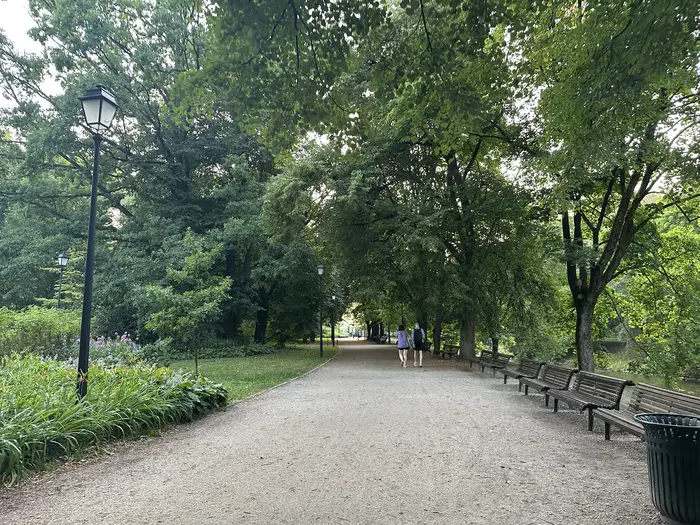
Bernardine Garden — Vilnius
A beautifully restored 7.8-hectare 19th-century garden along the Vilnelė river in Vilnius Old Town, with botanical displays, a musical fountain, playgrounds and the city's oldest oak.
Read guide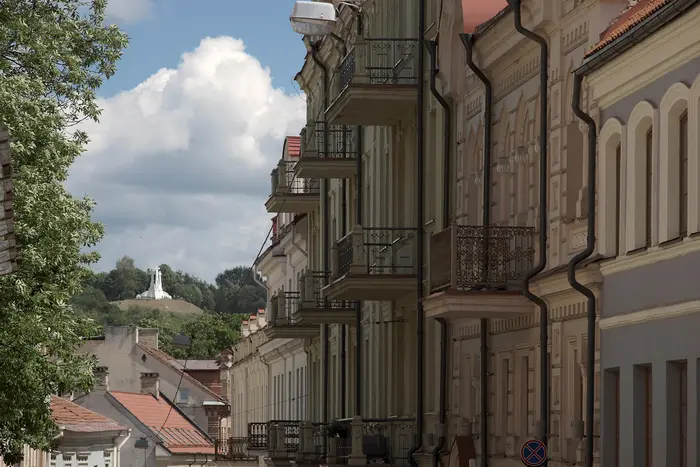
Three Crosses Hill guide
Climb for classic Vilnius views, with route choices, sunrise/sunset timing, winter caution and photo angles.
Read guide